Hepper is reader-supported. When you buy via links on our site, we may earn an affiliate commission at no cost to you. Learn more.
How Do Parakeets Mate? Vet-Reviewed Courting & Breeding Behavior


In this article
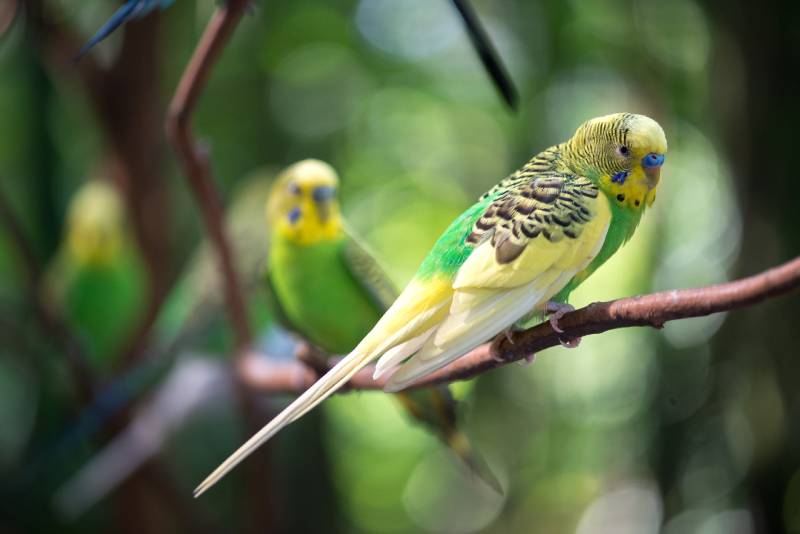
Parakeets are a group of small parrots with long tails. Budgerigars (often referred to as parakeets but actually only once species), are one of the world's most commonly kept companion birds. So, if you share your home (and heart) with some, you’re definitely in great company.
As a bird owner, you may be curious about how parakeets breed, and we’re here to answer your questions today, focusing on the budgerigar (Melopsittacus undulatus). Read on to learn more about courtship and breeding behaviors and what to expect once a successful mating session has taken place.

How Do Parakeets Court One Another?
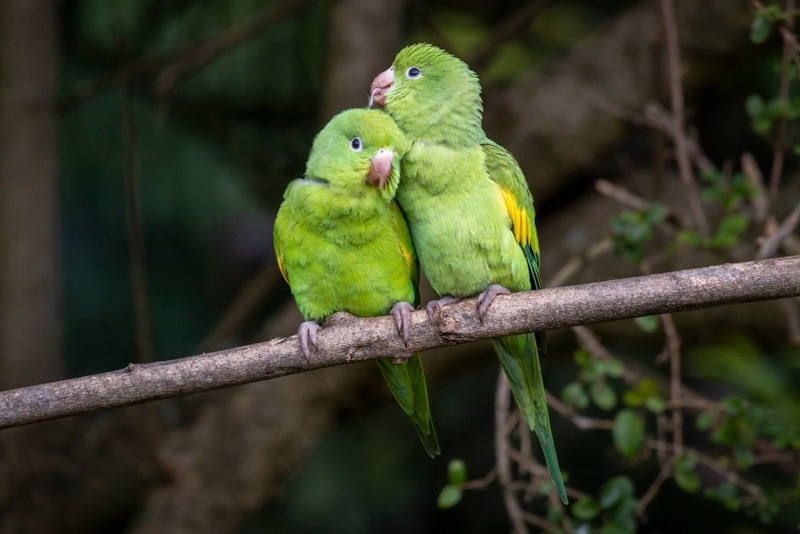
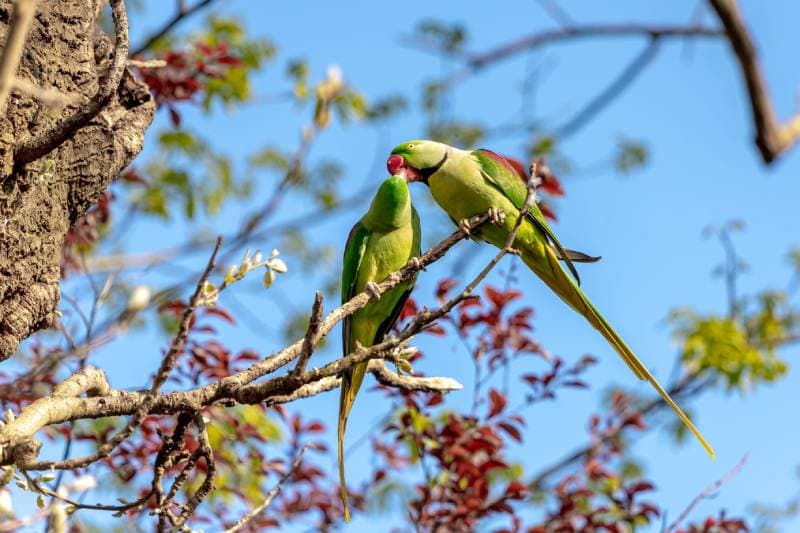
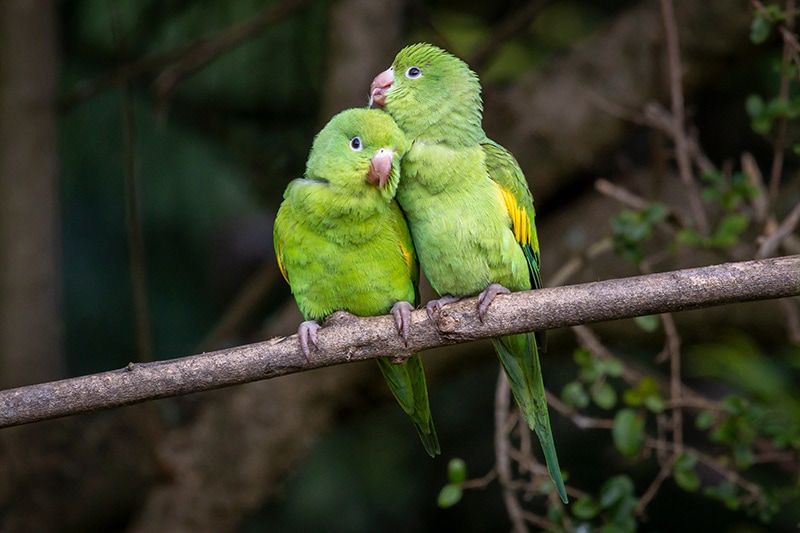
Before parakeets are ready to mate, they’ll send each other many signals that they’re prepared to begin breeding. The two will start perching together and feeding and preening one another. The male will make gestures like head bobbing and feather fluffing to let the female know he’s prepared. He’ll also sing a very bubbly song while dancing eagerly.
Females are a little more laidback with the courting behavior, watching and listening to their male partner closely but not joining in. She has a breeding season chirrup sound she makes, and the male will sometimes join her when she makes it.
How Do Parakeets Mate?
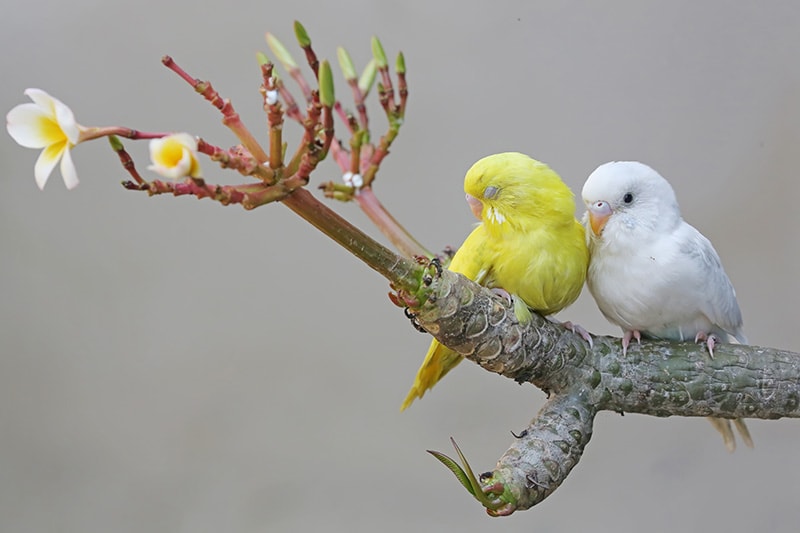
When the two birds are ready to mate, the male will let the female know by tapping his beak on hers. If she is receptive, she will lift her tail in the air and raise her wings to tell the male that she’s been successfully wooed by his courting gestures. The male will then position himself over top of her and rub his vent against hers, depositing his sperm. They may mate several times per day, as not every mating session will result in fertilized eggs.

When Will the Female Lay Her First Egg?
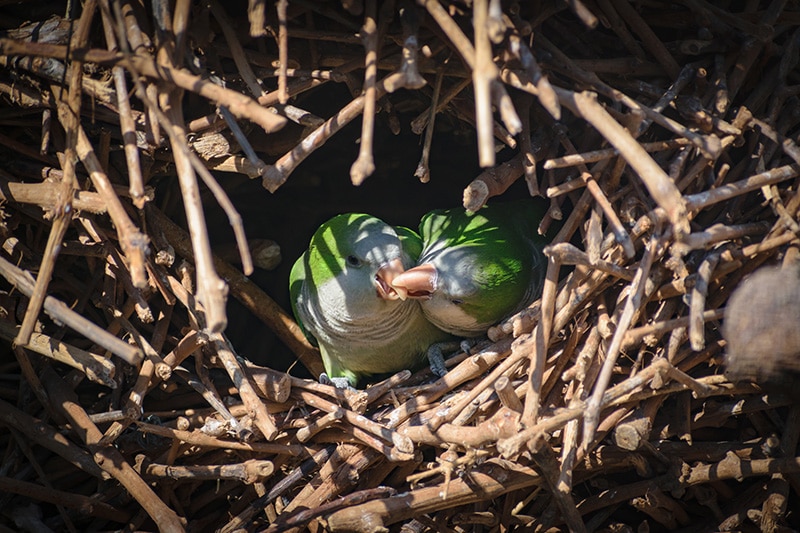
Around ten days after the successful mating session, the female will lay her first egg. When she is ready to begin laying eggs she may shred paper to create a nest or rearrange nesting material. She’ll also start spending more time inside the nesting box, only emerging to eat food and feed on the mineral block. Her abdomen and vent will begin to look swollen as the eggs develop. Additionally, her droppings may be larger than typical and may appear a different color as her body stockpiles the protein and minerals she needs for egg laying.
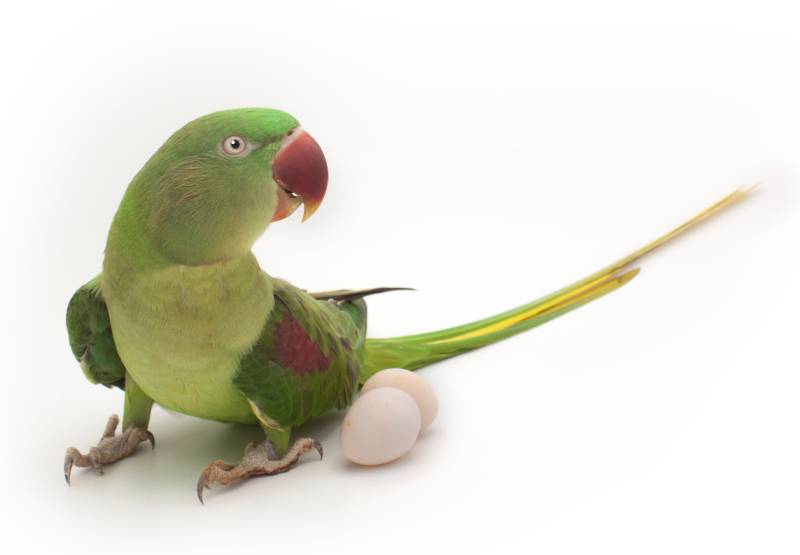
Finally, when it comes time to lay the eggs, she will do so one at a time and one every second day. You should expect her to lay an average of 4 but up to 8 eggs.
Don’t be surprised if she doesn’t sit on the first or second egg; most will not start incubating until they’ve laid two or three. It’s totally normal to see one or two eggs neglected in the nest when she first starts laying.
When Will the Eggs Hatch?
You’ll want to keep your eyes open for the first hatchling after approximately 18 to 21 days of incubation. A cracked shell will be the first sign that the egg is about to start hatching. It can take a few hours for the hatchlings to emerge from their shells, so don’t be tempted to help them.
If any eggs haven’t hatched after 23 days, it’s recommended to throw them out. These eggs likely won’t hatch at all, or if they do, the chicks inside won’t be healthy.
What Happens After the Eggs Hatch?
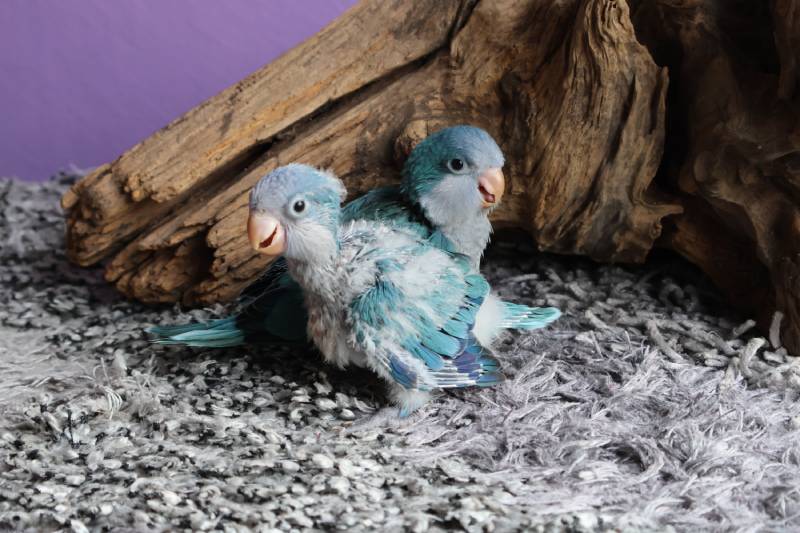
Once the chicks have hatched, allow the parents to do what comes naturally to them. Typically, people who choose to breed parakeets will enable the parents to raise their young until they’re able to be weaned. The father will usually feed the female as she’s in the nest, and she’ll then distribute the food to her chicks.
If the parents do not appear interested in their babies, the breeder will need to step in and may need to hand rear. However, it is not advisable to handle the chicks until they are 2 weeks old unless absolutely necessary. Handling them from 2 weeks onwards helps them to be hand-tame by the time they fledge.
Budgerigar chicks can hold their heads up after 7 days and have their eyes open after 10 days. Birds are fully weaned and ready to leave the nest 30-40 days after hatching.
Weaning usually begins around the five-to-six-week mark. Hand-raised parakeets often take longer to wean than parent-raised ones. The chicks will then need to be offered a variety of healthy foods to ensure their nutritional needs are being met. A seed-only diet is not recommended.
How Can Breeding Be Prevented?
The easiest and most reliable approach is keeping your birds in two cages. Preventing access to the mate and being distracted by new surroundings should help move the female out of breeding mode.
Removing the nesting box is another critical step in preventing breeding behaviors among parakeets. The presence of the nesting box makes an inviting space for the birds to lay eggs and raise chicks, so breeding behaviors may be discouraged without access to such things.
Limiting daylight can also discourage continuous breeding. Limiting how much natural light your parakeets get can curb reproductive instincts. Try covering their cage at around 6 p.m. to create an artificial evening to regulate their biological clocks and effectively disrupt their natural breeding cycle.
Conclusion
If you’re interested in breeding parakeets, we recommend speaking with your avian vet for further advice and recommendations. It is a far more involved process than what we’ve outlined in this article, requiring much more education than we could possibly provide in this space.
Sources
Featured Image Credit: Fernando Calmon, Shutterstock
Get Hepper In Your Inbox


Pet care tips from our vets and experts, straight to your inbox.
You may opt-out at any time. View our Privacy Policy for more information.
Chantelle's life revolves around two passions: writing and animals. Raised on the prairies of Canada amidst a menagerie of pets, she now lives with five cats, two guinea pigs, and a bearded dragon. Together with her husband and child, Chantelle delights in being an exemplary animal parent, going as far as installing wall-mounted cat shelves to give their cats an indoor playground. When she's not cozying up with her cats or snapping their amusing antics, she enjoys venturing into the Rocky Mountains, binge-watching her favorite Netflix shows, and indulging in spontaneous reading adventures.
Join the conversation
Ask a question, share your story, or send private feedback.