Hepper blog

Search our database of over 9,984 posts with up-to-date information from our experts and veterinarians.

Hepper is reader-supported. When you buy via links on our site, we may earn an affiliate commission at no cost to you. Learn more.

Why Do Parakeets Kiss Each Other? Vet-Approved Bird Behavior Explanation

By Codee Chessher · Reviewed & fact-checked by Dr. Luqman JavedVet Approved
Dr. Luqman Javed
Reviewed & Fact-Checked byDr. Luqman JavedDVM (Veterinarian)
Dr. Luqman grew up with an extreme fondness for animals and turned a childhood dream into reality by becoming a veterinarian. His goals are now focused on helping pet owners understand their pets better in order to ensure the best quality of life for all pets globally. He is passionate about wildlife, exotic pets, pet owner education, and animal welfare. Luqman has 3 years of professional experience working with a variety of animal species. He has skills in demonstrating proper animal husbandry and training some exotic species, such as parrots. Additionally, he has decades of personal experience with keeping many exotic pets: freshwater fish, parrots, songbirds, chickens, ducks, turtles, and hamsters.View authorThe information is current and up-to-date in accordance with the latest veterinarian research. Read about our vets
Share
Ask us a question in the comments
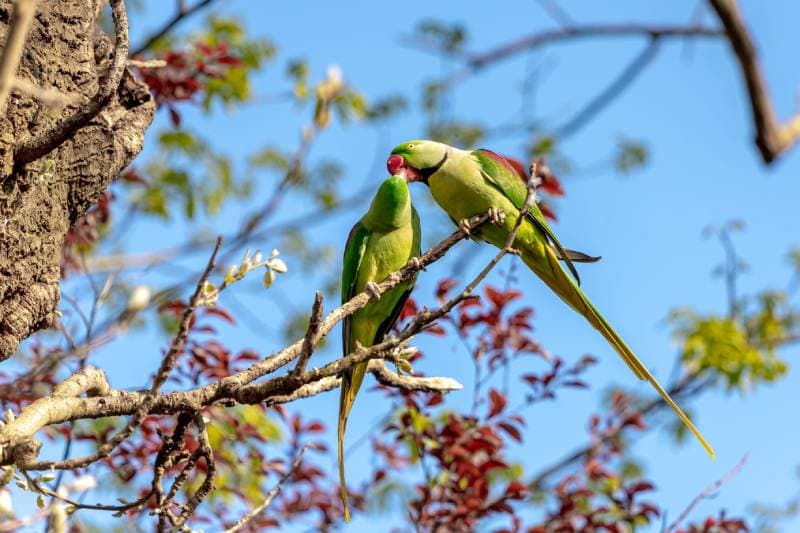
Two male and female rose-ringed parakeet also known as the ring-necked parakeet is on the tree

Parakeets are some of the most adorable and affectionate avian pets you can own, and they’re famous for kissing each other, like lovebirds. While parakeet kisses aren’t exactly like our wet, mushy lip locks, they still kiss to show affection and bond with their mates. Other times, you are just not looking closely enough and they’re simply grooming or preening each other. In that way, many people think that parakeet kisses really are very similar to romantic human smooches! That said, parakeet kisses are usually a sign of courtship and are an attempt at feeding their mate (known as allofeeding).

If you’ve ever wondered about how parakeets show affection or if there’s a difference between parakeet kisses and preening, you’re in the right place. Let’s check out a bit about both of those topics, as well as how you can encourage your parakeets to bond and show affection.

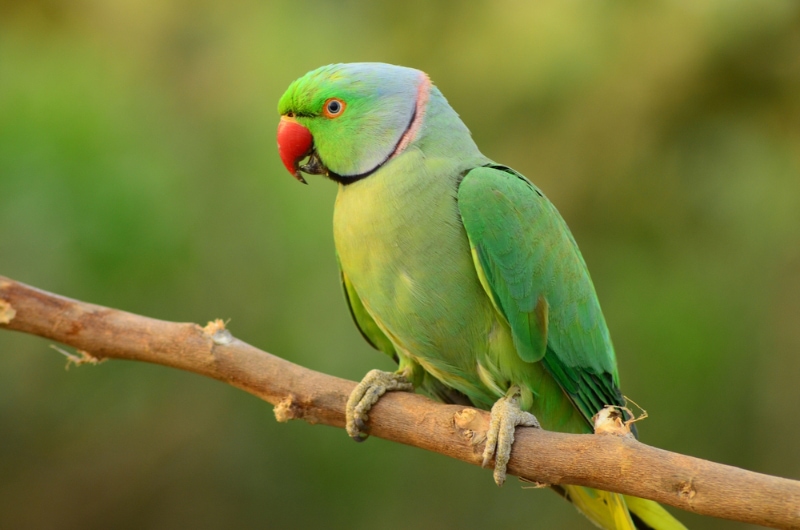
Species Disclaimer: The term “parakeet” isn't a taxonomical reference to any genus or family of parrots. Instead, the word itself is a term given to several small to medium-sized species of parrots with long tail feathers. In this article, we’ll be specifically focusing on the ring-necked parakeet (Psittacula krameri). However, this information is also transferable to many other species of parrots that are sometimes referred to as parakeets.

Signs of Parakeet Affection

You probably already know that your parakeets love or at least like each other if they’re kissing, but that’s far from the only sign that your birds are bonding. Parakeets show their affection in several other ways besides superficial face pecks.

Signs of Parakeet Affection:

  • Spending time together: Bonded parakeets appear inseparable, preferring to perch, sleep, and spend time together when possible.
  • Preening: Preening is a healthy grooming activity that allows your parrots to water-proof and organize their feathers, dislodge feather dander and damaged feathers, and it keeps their feathers in showy shape. Bonded parakeets may scratch and preen each other’s heads.
  • “Kissing”: What we perceive as “kissing” is in fact an attempt at allofeeding, where one parakeet (often the male) tries to pass food from his crop to his mate. This indicates his ability to provide for her and is an important part of their courtship. Female parrots may also partake in this “kissing” ritual. This form of allofeeding is also how they feed their hatchlings.

Are My Parakeets Kissing or Fighting? How to Tell
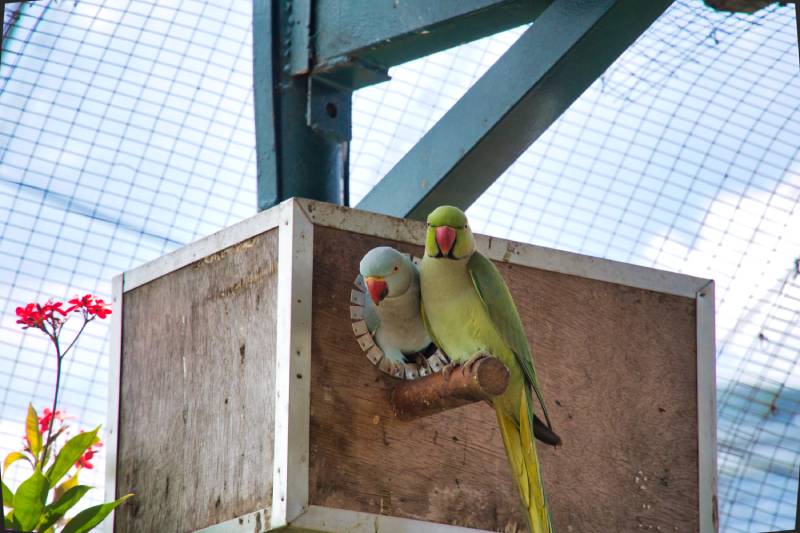
Pair of indian ring-neck parakeet sitting at the bird house
Image Credit by: Redha Ali, Shutterstock

For someone new to pet birds, kissing and fighting look a lot alike in our bird’s cage, and it’s not always apparent how to tell aggression from affection.

Generally speaking, parakeets have a strong flock drive and readily get along with each other when housed together. They enjoy the companionship other parakeets offer them. However, squabbles can break out, especially when there are multiple parakeets keen on mating but limited nest boxes in their aviary or enclosure.

Find out the difference by looking for some common signs of parakeet aggression just below.

Signs of Aggression in Parakeets:

  • Aggressive posture: Dominant parakeets may fluff up their feathers, pin their iris, and lunge at another parakeet to assert dominance.
  • Chasing: If one parakeet is persistently chasing the other and biting them, their “kisses” are more harassment than affection.
  • Squawking and screaming: Unusually loud screams or squawks when your birds interact may be a sign that one bird is uncomfortable with the situation.
  • Resource guarding: Parakeets usually don’t fight over resources, but a bonded pair may turn aggressive if food, water, or nesting boxes are limited in their enclosure.
  • Perching Levels: Within a flock, the more dominant members prefer to perch higher up on a tree or branches. You may be able to pick up signs of aggression if you notice one parakeet persistently preventing another one from accessing a higher perch.

Parakeet Kisses vs. Preening: What’s the Difference?

It can be hard to tell at a glance whether your birds are kissing to show love or simply to preen or groom each other. Like all birds and many other animals, parakeets will groom family members, friends, or mates to show each other love. Communal preening helps your birds remove dirt and damaged feathers and spread oils from the preening glands through the feathers.

“Kissing,” on the other hand, involves the contact of their beaks. At times, a pet parakeet may attempt to “kiss” you as well. This is because, as pets, they often view you as a member of their flock.

How Can I Get My Parakeets to Bond?
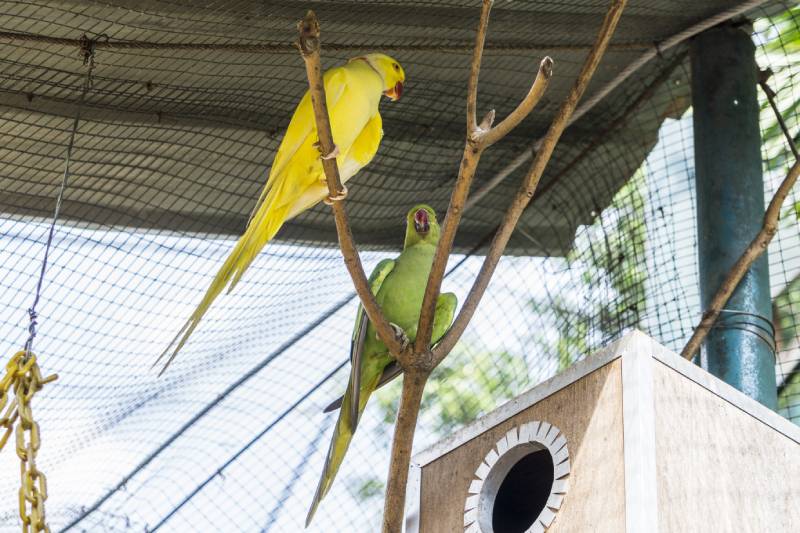
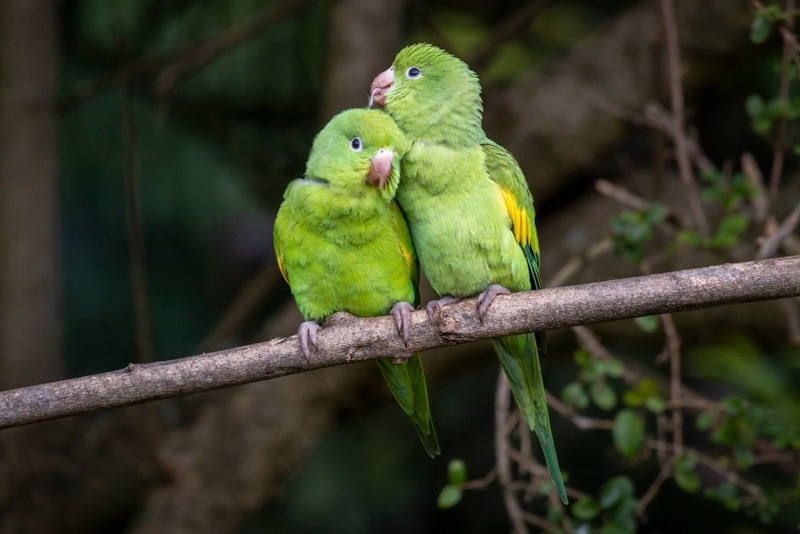
pair of Indian ringed-neck parakeet at the Kuala Lumpur Bird Park
Image Credit by: Aznan, Shutterstock

Parakeets can be finicky critters and don’t always get along when they first meet, particularly if they’re introduced suddenly, live in cramped quarters, or live with other birds in the cage. For the best results, you should take things slow when trying to get your birds to bond when they’re not yet bonded.

Tips for Encouraging Parakeets to Bond:

  • Buy two cages: Before moving them in together, put each bird in their own cage and move the two side by side so they can meet from a safe, comfortable distance.
  • Don’t neglect your first bird: Your first parakeet may initially be jealous when you bring home a new bird. Keep giving them the regular amount of attention and love you always have to prevent jealousy-induced aggression toward the other parakeet.
  • Let your original parakeet investigate: Bring your original parakeet out of their cage (assuming they are tame), and let them investigate the newcomer.
  • Supervised together time: After a week or two of separated cages, put your birds in a third neutral meeting cage with ample food and water and carefully observe them. If they become aggressive in any way, remove them and try again another day.
  • Day visits, then sleepovers: If their first meeting goes well, you can let your parakeets hang out together in the same cage for a whole day, and then, later and once you trust them, see how they do with an overnight sleepover in the same cage.

Please take note that, like many other parrots, ring-necked parakeets form long-lasting bonds and are considered mostly monogamous. An individual that has formed a bond with another parakeet will not pair-bond with another parakeet in most circumstances. Therefore, you shouldn’t adopt a parakeet that has already pair-bonded with another bird, as they may be in a constant state of separation stress and will likely not bond with your bird. In such circumstances, the best thing to do is to adopt both of them (assuming you have enough resources to care for both birds).

Conclusion

Parakeets are gorgeous, delicate companion birds that love to kiss as part of a courtship display. Generally speaking, aggression is accompanied with other signs, although in most cases, these birds quickly learn to coexist and have a very strong desire to stay in a flock. Nonetheless, to help your birds get along, don’t rush their introduction, and always keep a second cage handy in case their squabbles start to get overly physical.

Sources

Featured Image Credit: Wut-Mopppie, Shutterstock

Get Hepper In Your Inbox

Pet care tips from our vets and experts, straight to your inbox.

List

Select all that apply.

You may opt-out at any time. View our Privacy Policy for more information.

Codee Chessher
Authored by

Codee Chessher

Join the conversation

Ask a question, share your story, or send private feedback.
Rate this post
Required to post. Only our editors see your rating.
Who should see this?

A human reviews every comment before it appears. Your email is never published.

Picked to go with this article

Why Are My Parakeets Fighting? 10 Common Causes

Why Are My Parakeets Fighting? 10 Common Causes

Parakeets are regularly housed together—sometimes even in great big flocks. Often, this goes off without a hitch. Other times, though, it can lead to fighting.…

Kristin Hitchcock
By Kristin Hitchcock ·
Can Parakeets Be Gay? Vet-Approved Facts & FAQ

Can Parakeets Be Gay? Vet-Approved Facts & FAQ

Parakeets are popular pet birds known for their vibrant colors and friendly personalities. While many people adore these little avian companions, it’s importan…

Ed Malaker
By Ed Malaker ·
How to Introduce Parakeets to Each Other: 7 Vet-Approved Steps

How to Introduce Parakeets to Each Other: 7 Vet-Approved Steps

How you introduce your parakeets to each other plays a huge role in how they will interact for the rest of their lives. You cannot simply throw two of these bi…

Kristin Hitchcock
By Kristin Hitchcock ·
Do Parakeets Mate for Life? Vet-Reviewed Mating Facts

Do Parakeets Mate for Life? Vet-Reviewed Mating Facts

Parakeets are small species of parrots that are extremely popular pet birds. It’s often recommended for parakeets to live in pairs because they’re known to be…

Jessica Kim
By Jessica Kim ·

Keep reading

More stories you might like

Do Parakeets Need a Friend? Should They Be Kept in Pairs? Vet Approved Advice

Parakeets are a subgroup of parrots, and there are over a 100 different species of these small to medium sized birds. Budgerigars or budgies (Melopsittacus und…

Rachael Gerkensmeyer
By Rachael Gerkensmeyer ·
Do Parakeets Need a Friend? Should They Be Kept in Pairs? Vet Approved Advice

Do Parakeets Like to Be Held? Vet-Approved Facts & Explanation

Part of owning a pet that brings us so much joy is petting and cuddling them. It’s been scientifically proven that cuddling a dog (or perhaps, any pet) reduces…

Kathryn Copeland
By Kathryn Copeland ·
Do Parakeets Like to Be Held? Vet-Approved Facts & Explanation

Why Do Parakeets Bob Their Heads? 8 Vet-Reviewed Reasons

This article has been fact checked and reviewed by a qualified veterinarian using information available at the time of review. However, the purpose of this art…

Sarah Psaradelis
By Sarah Psaradelis ·
Why Do Parakeets Bob Their Heads? 8 Vet-Reviewed Reasons

17 Vet-Approved Parakeet Facts

Parakeets are a group of birds in the parrot family. Budgerigars (Melopsittacus undulatus), commonly called parakeets, are a popular pet bird, and this article…

Misty Layne
By Misty Layne ·
17 Vet-Approved Parakeet Facts

How to Take Care of a Parakeet: 11 Vet Approved Tips

Parakeets are friendly, sweet little birds. They are often described as ideal beginner birds because they are lower maintenance than larger parrot breeds. The…

Nicole Cosgrove
By Nicole Cosgrove ·
How to Take Care of a Parakeet: 11 Vet Approved Tips

Do Parrots Love Their Owners? Vet-Approved Bird Affection Facts & Info

Parrots have been kept as pets for thousands of years and enjoy the benefits of life in captivity. In return for food, shelter, and security, they bring joy, e…

Nicole Cosgrove
By Nicole Cosgrove ·
Do Parrots Love Their Owners? Vet-Approved Bird Affection Facts & Info

9 Parakeet Sounds & Their Meanings (With Audio)

With their knack for mimicking human speech, parakeets know how to get their message across. When they’re not repeating words, these chatty birds are vocalizin…

Nicole Cosgrove
By Nicole Cosgrove ·
9 Parakeet Sounds & Their Meanings (With Audio)

How to Breed Parakeets: Vet Approved Step-By-Step Guide

Parakeet is a term restricted to small parrots with long graduated tails. There are about 110 species of parakeet within the psittacidae sub-family, and they a…

Chantelle Fowler
By Chantelle Fowler ·
How to Breed Parakeets: Vet Approved Step-By-Step Guide