Hepper is reader-supported. When you buy via links on our site, we may earn an affiliate commission at no cost to you. Learn more.
How to Tell if a Parakeet Is Male or Female: 4 Vet-Approved Ways


In this article
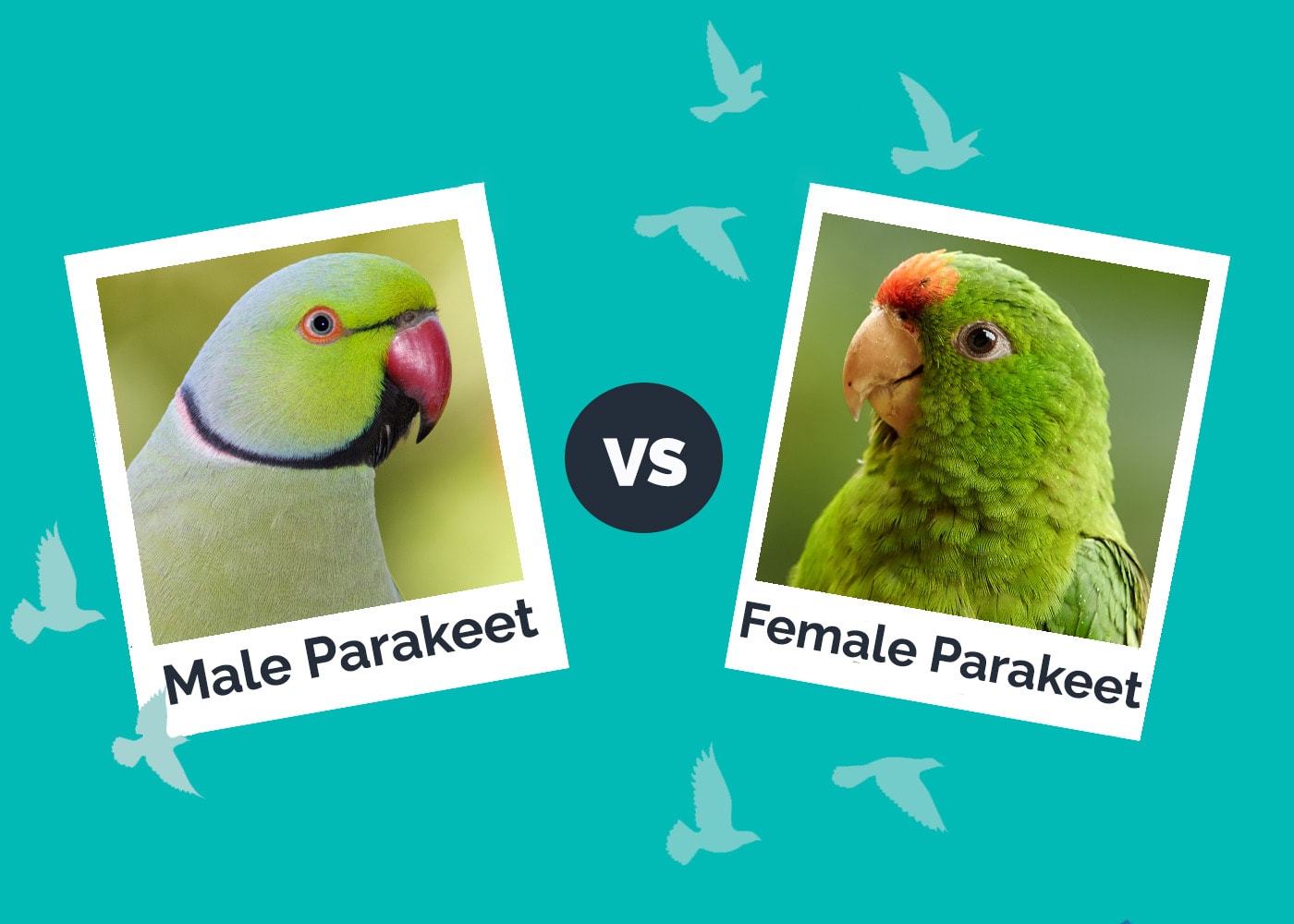
Parakeets, also known as budgies, are one of the most popular pet bird species. As with most pets, many people have a preference for a male or female bird, but it can be tricky to tell the difference between the two. There isn’t truly a foolproof way you can determine the sex of your bird by looking at them, but there are a couple of methods that might help you figure it out.

The 4 Ways to Tell if a Parakeet Is Male or Female
1. The Cere - Easiest
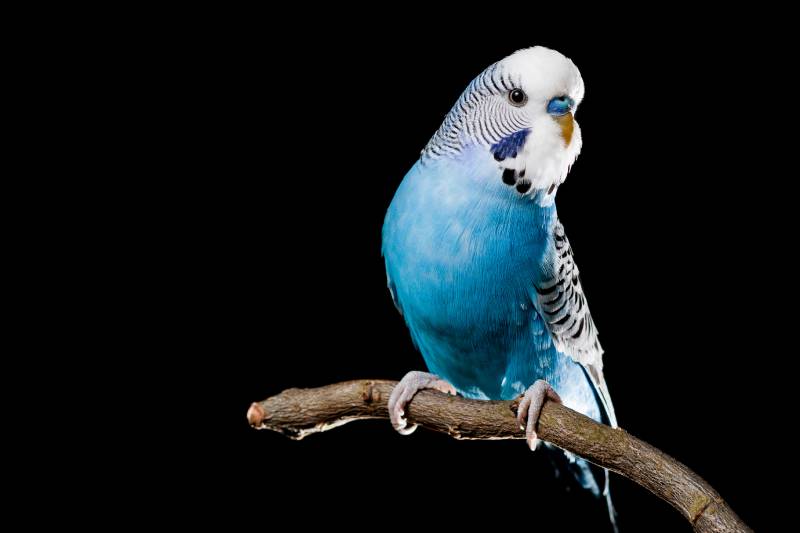
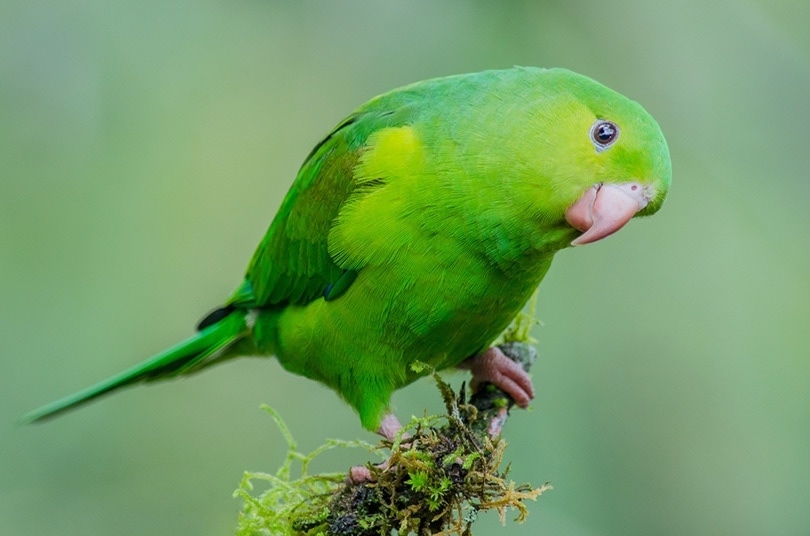
The cere is the raised band of tissue at the top of the beak that contains the nostrils. Colloquially, some people simply refer to this as the “nose” of the bird. The color of the cere can help you determine the sex of your bird as it is influenced by hormones.
While the color of the cere can become more obvious with age, males generally have a purple or blue cere, while females may have a white, tan, or brown cere. Non-breeding adult females usually have a white or tan cere, while broody females have a brown, flaky cere. Interestingly, male budgerigars are prone to a testicular tumor which can cause the color of the cere to change, due to hormonal influences.
2. A Vet Visit - Most Accurate
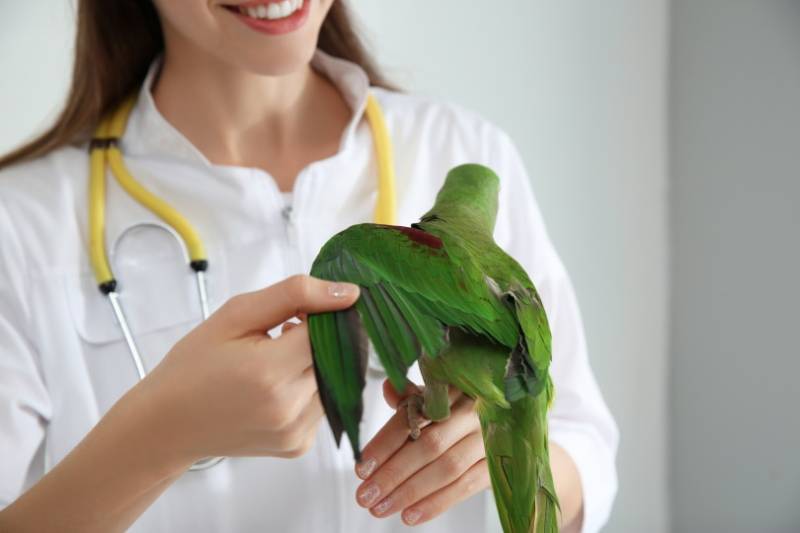
Although the cere color is an easy and quick way to get an idea of your bird’s sex at home, the only way to 100% know if your parakeet is male or female is to have DNA testing performed. The samples for this type of testing are usually acquired by an avian vet during an office visit. The samples are then sent for specialty testing to determine the sex of the bird. Depending on the lab processing the test, you can expect to have your results back in around a week.
3. Vocalizations - Unreliable
Vocalizations aren’t a reliable way to guarantee the sex of your bird, but they can help you determine if your parakeet is male or female. Males are commonly reported as more vocal than females, which is related to breeding behaviors. While vocalizations are used for communication, males also use vocalizations to help woo females for breeding purposes.
With males, you can usually expect complex vocalizations and a better ability to learn to mimic speech. With females, vocalizations are usually restricted to squawks and flock calls. Females may not learn mimicry of human speech as well as males.
4. Egg Laying - Most Obvious
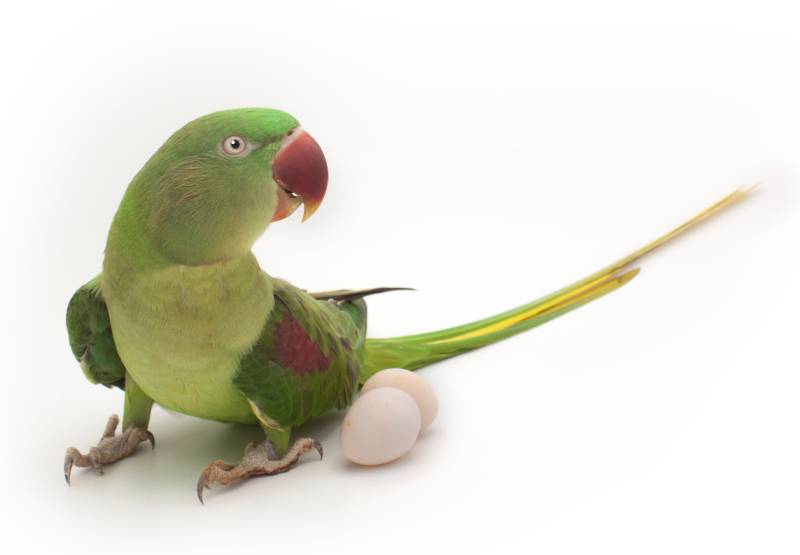
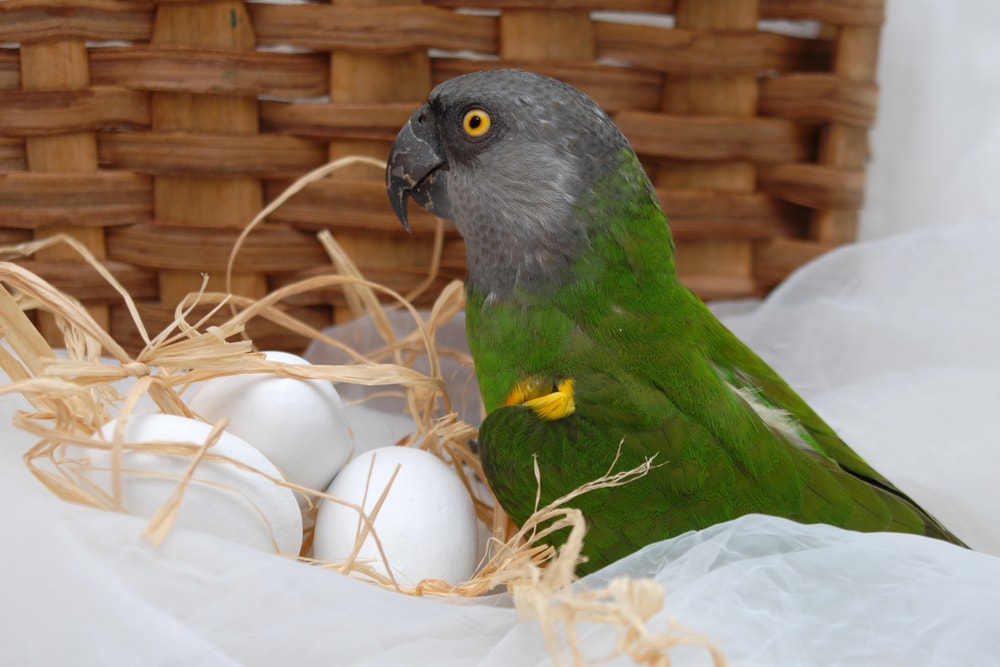
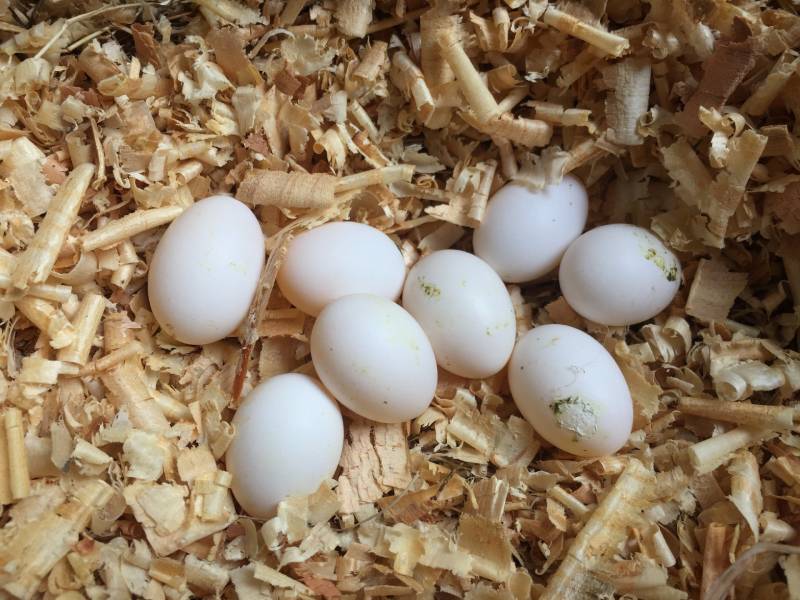
If your parakeet lays any eggs, then you can know with certainty that they’re female. However, they may not lay eggs, even if they are female. Female parakeets can lay eggs without a male present, but the eggs are infertile, so they won’t hatch. Unfortunately, laying lots of eggs can be harmful to your parakeet.
Things to Know About Egg Laying in Parakeets
Producing and laying eggs requires a lot of energy and nutrients, so it’s not uncommon for dangerous deficiencies to occur, especially with repeated egg laying. Yolk peritonitis and egg binding are also extremely dangerous conditions that can occur with egg production and laying.
It’s important to discourage egg-laying in your female parakeet if you are not attempting to breed her with a male. Physical concerns aside, laying infertile eggs can be stressful for your bird. Since the infertile eggs will never hatch, your bird may be triggered to continue to lay eggs, leading to a dangerous and stressful cycle.
To discourage egg laying, you need to correct any issues in your bird’s environment that may encourage nesting.
Diet
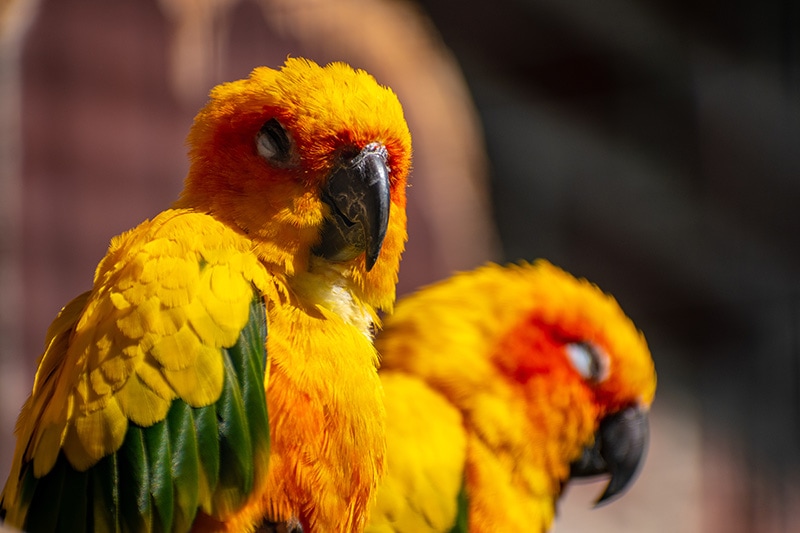
Foods that are high in nutrients and calories, can encourage egg laying in female birds. Caloric and nutritious foods indicate to the body that nutrition is plentiful, which can result in a natural hormonal response to produce eggs during times when extra nutrition is available for young.
Feeding
While caloric and nutritious foods may encourage egg laying, an overabundance of food can cause the same thing to occur. If your parakeet always has easy access to more food than necessary, you may unintentionally be encouraging her to produce eggs. Encourage foraging and allow your bird to “run out” of food sometimes. You should always ensure your parakeet is receiving an appropriate diet and an appropriate amount of food daily, but it’s okay if her food runs empty between meals sometimes.
Petting
If you’re used to petting mammals, then petting your pet along their back or belly is likely normal for you. In birds, though, you should not pet your bird below their neck. Birds touch each other on their abdomens and backs as part of the breeding process, so petting your bird in these areas can confuse them, causing a hormonal spike that can lead to breeding behaviors. Toys and mirrors can also sometimes cause sexual arousal, so remove anything your bird is behaving inappropriately with.
Lighting
Increasing the amount of daylight hours, through artificial lighting, can mimic summertime, which is the breeding season for wild parakeets. 12-14 hours of darkness per day, year-round should help keep the egg laying to a minimum and increase the dark period to 16 hours if egg laying is excessive.
Nesting sites
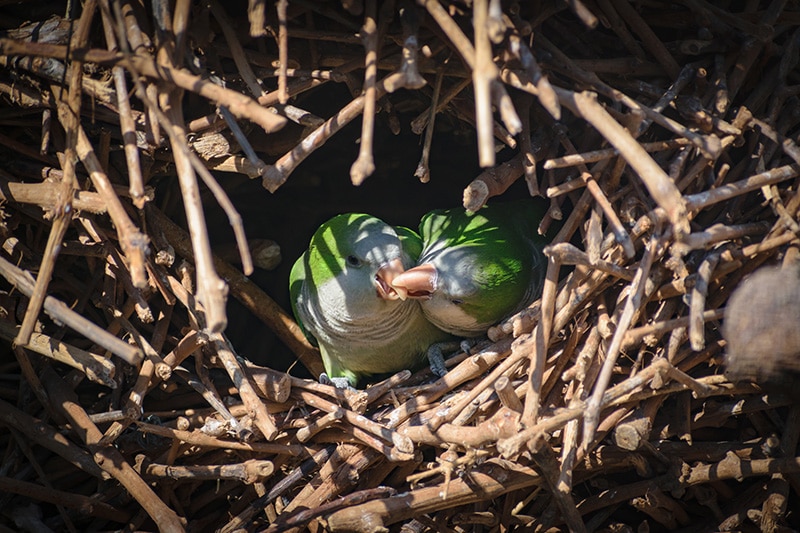
Small, cozy, hiding places are seen by female parakeets as the perfect spot to make a nest and lay eggs. Removing access to these sorts of places, which could be a kitchen cupboard or slipper as well as a nesting box attached to their cage will discourage egg laying. If your bird is still trying to nest, remove any nesting substrates.
The Eggs
Immediately removing eggs from your parakeet’s nest may cause her to lay more eggs. She may try to replace lost eggs. In many cases, you should let the eggs stay with your bird for a couple of weeks or until she loses interest and abandons them. Do not provide her with a nest for her eggs, though. Keep the eggs in an open box that is lined with soft materials to prevent them from breaking. A closed, cozy nesting space will encourage nesting and egg laying, while an open box won’t feel as safe as a true nest. When the time comes, remove the entire box from the enclosure.

Conclusion
Determining the sex of your parakeet on your own can be tricky. The color of the cere is the most accurate way to determine the sex on your own, but this is not a guaranteed way to determine the sex. DNA testing is the best option for a guaranteed accurate sexing of your bird. When it comes to egg laying, only female parakeets will lay eggs, but there are many concerns around excessive egg laying, and changes need to happen if this occurs.
Related Read: Can Parakeets Be Gay? Vet-Approved Facts & FAQ
Sources
Featured Image Credit: Fernando Calmon, Shutterstock
Get Hepper In Your Inbox


Pet care tips from our vets and experts, straight to your inbox.
You may opt-out at any time. View our Privacy Policy for more information.
After nine years as a veterinary assistant, Brooke Billingsley transitioned to a career as a nurse in 2013. She lives in Arkansas with her boyfriend, sharing their home with three dogs, two cats, five fish, and two snails. A dedicated animal lover, Brooke has a special place in her heart for special needs pets, including a three-legged senior dog and a famous cat with acromegaly and cerebellar hypoplasia. Fish keeping is one of her hobbies, and she is constantly improving her knowledge to care for her aquarium pets. Brooke is an active yoga enthusiast, having obtained her 200-hour yoga teacher certification in 2020. She believes in the importance of continuous learning and dedicates time each day to developing new skills and expanding her knowledge.
Join the conversation
Ask a question, share your story, or send private feedback.