Hepper is reader-supported. When you buy via links on our site, we may earn an affiliate commission at no cost to you. Learn more.
How Far Can Cats Sense Females in Heat? Vet-Verified Facts & FAQ


In this article
When it comes to cats, their sense of smell is incredibly sensitive. They can detect pheromones from a female in heat from around a mile away and tell when a female is ready to reproduce. This incredible ability has allowed cats to be successful hunters and breeders for centuries. But just how far can cats detect the scent of a female in heat?

How Far Can a Cat Detect Pheromones from a Female in Heat?
Cats have an extraordinary sense of smell that allows them to pick up on chemical signals sent by other cats. In the wild, male cats have been known to travel distances as long as a couple of miles in order to find a mate that is ready to reproduce. With this in mind, it is safe to say that cats can detect pheromones from a female in heat from very far away.
In all honesty, there is no available research on the exact or determined distance a male cat is able to detect a female in heat, but we do know they can travel a long distance in order to find their way home, sometimes as long as 1.5 to 4 miles (2.4 to 6.4 kilometers).1
Based on this, we can conclude how important their sense of smell is when locating a suitable partner for mating, and the distance at which they can detect a female in heat will also depend on environmental conditions, such as wind direction.
What Factors Affect How Far a Cat Can Sense a Female in Heat?
Various factors can affect how far a male cat can detect pheromones from a female in heat. For example, the wind direction and local terrain can play a role in amplifying or dampening the scent of the female.
Anecdotally, cats may be more likely to pick up on the scent if they have previously been exposed to it, as their memory of the scent may be stronger, but we cannot find research to confirm this when it comes to heat behavior.
What Causes a Cat to Be Attracted to a Female in Heat?
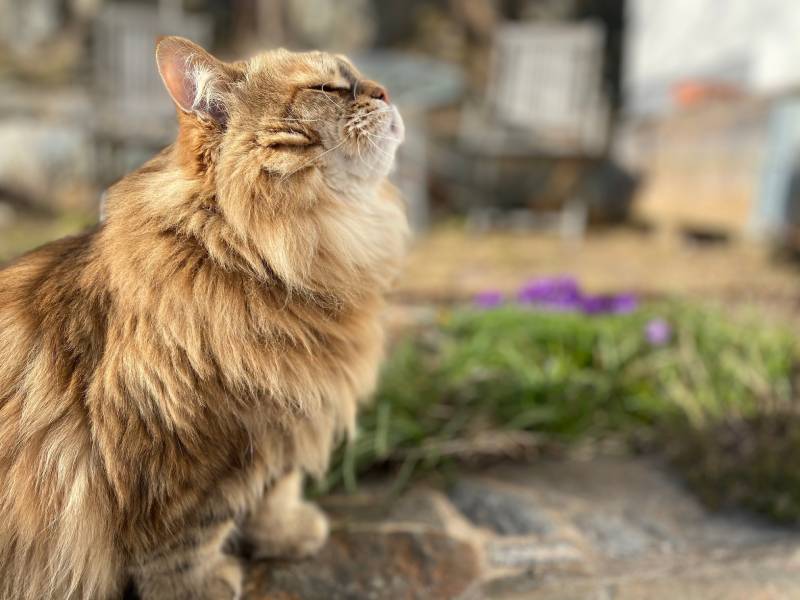
Cats, like many other animal species, have an organ called the vomeronasal or Jacobson organ located at the base of their nasal cavity and opening at the roof of the mouth behind incisor teeth that helps them detect pheromones. This way, they can detect otherwise undetectable scents and chemicals.
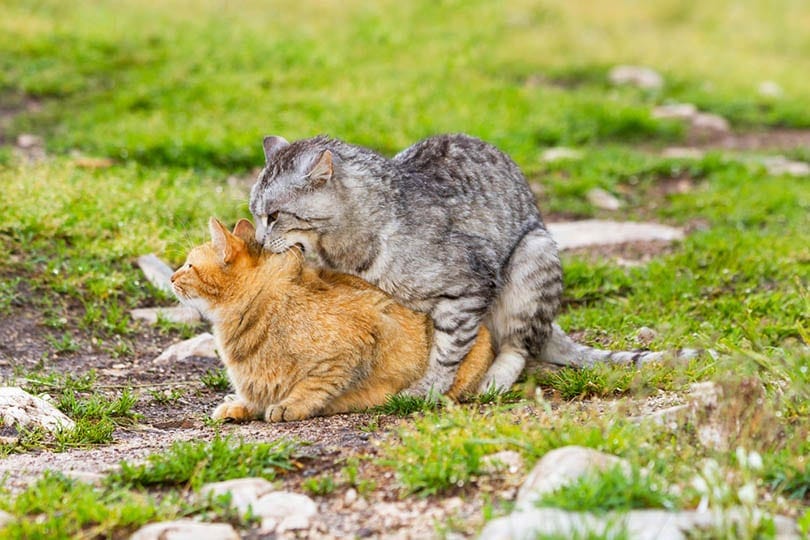
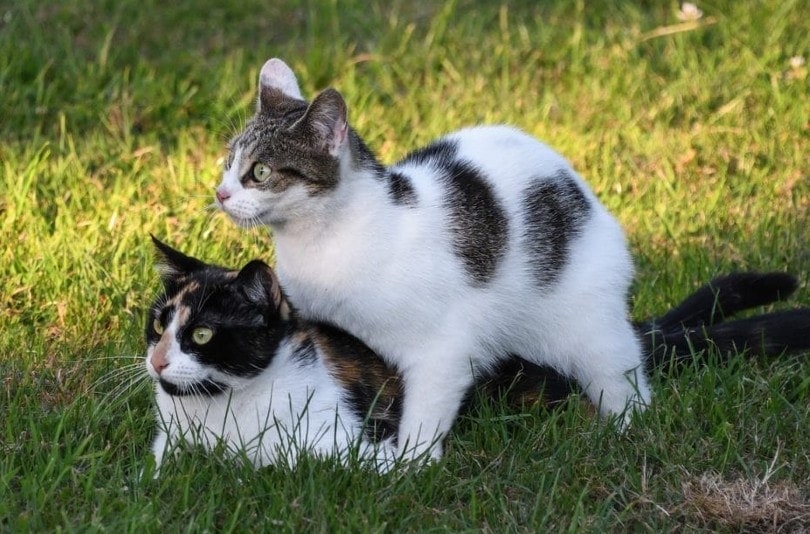
The pheromones that are released by a female cat when she enters into her reproductive cycle send out strong signals to nearby male cats. The males are then drawn to the female due to this irresistible scent and they will attempt to mate with her. This is an instinctual behavior that has been seen throughout many species of animals and not just cats.
How Often Do Female Cats Go into Heat and for How Long Does It Last?
Cats typically have multiple heats during their breeding season, which usually runs between January and October in the Northern Hemisphere. It can be as often as every 2 to 3 weeks or as little as 7 days during those months depending on the breed and other factors. For most cats, heat will last around 7 to 10 days before they cycle out of heat and back into their normal behavior, but it can be anywhere from 1 to 21 days. Cats in warmer climates may cycle throughout the whole year.
The 10 Signs a Cat Is in Heat
When a female cat is in heat, she will often display certain behaviors that can indicate her reproductive cycle. These include:
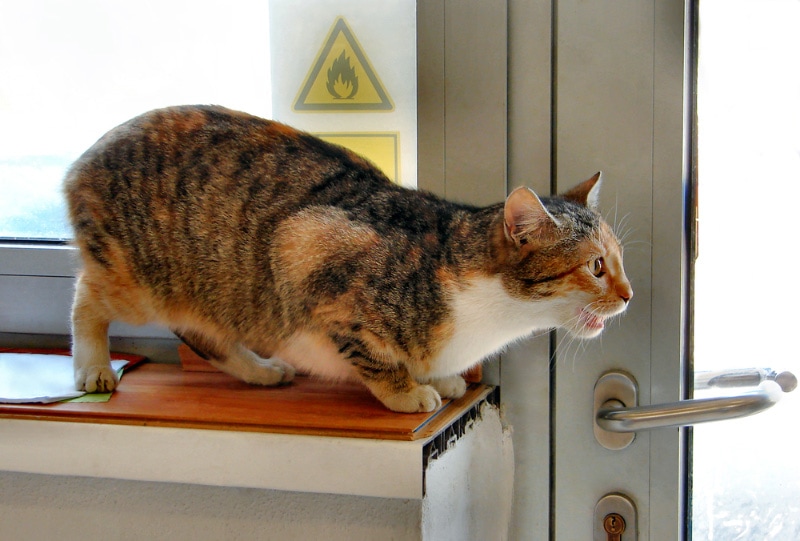
1. Increased Vocalization
You may notice your cat meowing or yowling more often than usual. However, make sure you do not mistake increased vocalization due to illness for heat behavior. If your cat is not well, is eating less or not at all, hiding, limping, or having any other negative signs, get them checked by your vet promptly.
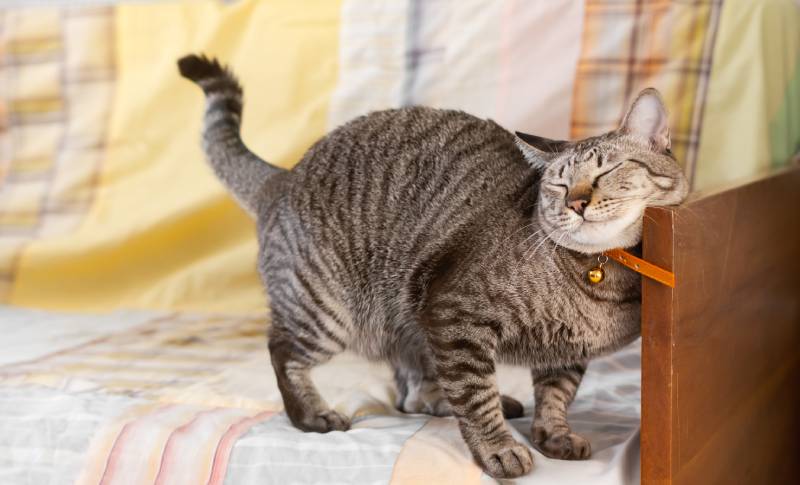
2. Increased Rubbing Behavior
Your cat may rub against furniture or people and ask for extra attention.
3. Rolling on the Floor
Your cat may roll around on the floor more often than they usually would.
4. Flicking Tail
Cats in heat often flick their tails from side to side.
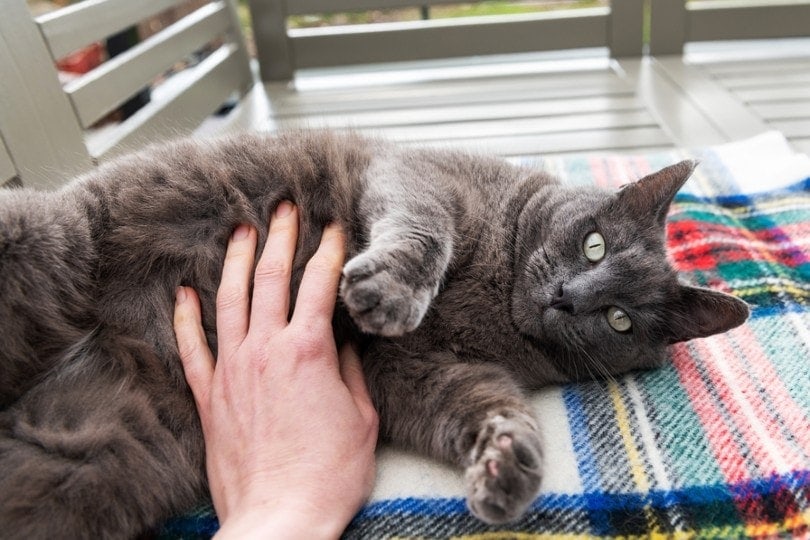
5. Rolling on Back
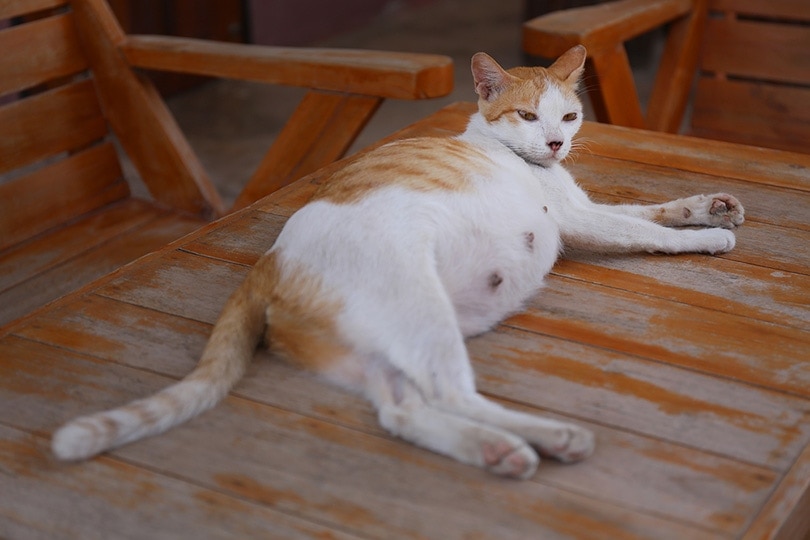
Your cat may roll onto her back and expose her belly.
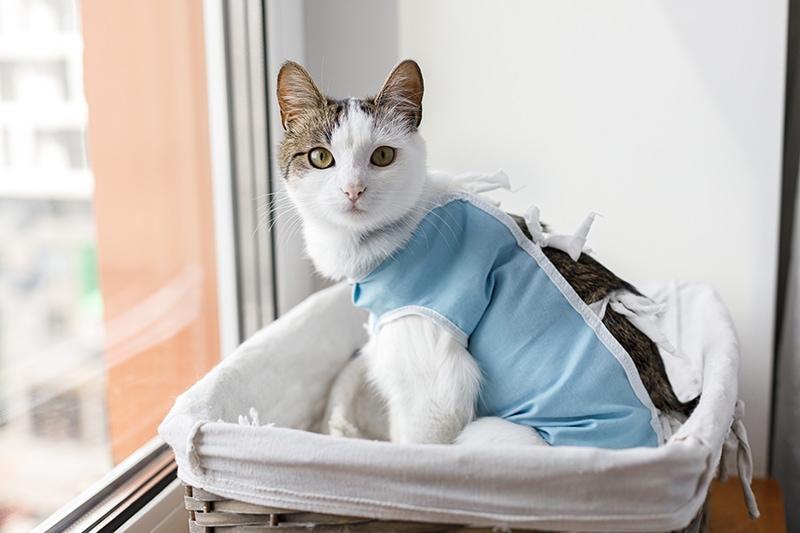
6. Increased Affection
Cats in heat will often become more affectionate and seek out attention more than usual.
7. More Frequent Urination
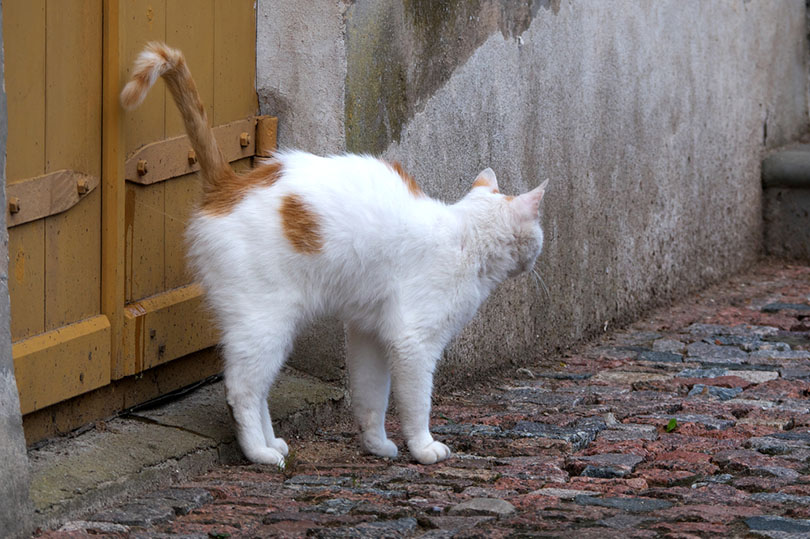
The female cat may urinate more frequently and mark her territory by leaving scent trails. Some female cats may also spray, which is different from urination, as it involves leaving small amounts of pheromone rich urine on vertical surfaces. This way they are sending a message to potential mates that they are in heat.
8. Changes in Appetite
Your cat may display a decrease in appetite or excessive grooming behaviors. If they are not eating at all, they should be checked by your vet within 24 hours.
9. Flirting Behavior
Cats in heat will often exhibit flirty behaviors such as pawing or rubbing against objects, people, or other cats.
10. Raised Hind End
Your cat may raise her hind end in the air and move it from side to side while treading with the back legs when you stroke her along the back or spine.
When Is Mating Season for Cats?
Mating season for cats typically occurs between January and September/October in the Northern Hemisphere. During this time, males will be more likely to travel in search of a female who is ready to mate. That doesn't mean that mating can't occur in other months, however.
Mating can occur all year round, depending on the climate and the cat’s lifestyle. In tropical and hot climates or in cats that live mainly indoors, breeding season can be all year round. It's essential to speak to your vet about having your cat spayed or neutered in order to stop the heat behavior and reduce the number of unwanted kittens and cats ending up in shelters or abandoned on the street. It's the safest and most ethical option for most cats, particularly as heat behavior encourages roaming, meaning cats are more at risk of getting hurt by encountering traffic, fighting with other cats, and contracting various chronic and life-threatening viral illnesses.
The 2 Tips on Keeping Your Cat Away From Females in Heat
If you have an unneutered male cat in your home, it is important that you take steps to keep him away from females in heat. This can be done by keeping him indoors or in a secure and enclosed area where he cannot come into contact with any female cats. However, this is not a long term solution and will cause growing frustration to your male cat and will lead to many unwanted behaviors, such as constantly trying to escape and to spray urine in the house. Additionally, neutering your cat can also help significantly reduce his spraying and roaming behavior, improving their health and welfare, and eliminate their desire to mate.
1. The Benefits of Spaying and Neutering Your Cat
Spaying or neutering your cat can provide numerous benefits. Not only will it reduce the risk of certain diseases and injuries, but it also eliminates the risk of unwanted pregnancies and helps to reduce wandering behaviors in males. This can be especially helpful if you live in a neighborhood where stray cats are present and where there is a high risk of road traffic encounters and accidents.
2. How Quickly One Pair of Intact Cats Can Multiply
If both cats remain intact and reproduce, their offspring can be bred in 6 months. In a year’s time, a single pair of cats can produce up to 16 kittens, as a female on average has three to five kittens in a litter and may have around four litters in a year. In 5 years’ time, that's 70 or more cats, most of which will die in the wild or end up in shelters. Imagine having a handful of cats in one community.
Keep in mind that cats can travel a couple of miles to mate and you can see how a problem can and has quickly gotten out of hand. Spaying and neutering just one cat means those accidental kittens aren't taking up homes that could go to the millions of strays in shelters. Each year, around 3.2 million cats are surrendered to shelters across the U.S., out of which 17% end up being euthanized as they cannot be adopted.
Conclusion
Cats have an incredible sense of smell that allows them to detect pheromones from females in heat from a mile away. This instinctual behavior has been seen throughout many species of animals and is dependent on the vomeronasal organ detecting otherwise undetectable scents. If you own an unneutered male cat, it is important to keep him away from females in heat and consider neutering him as soon as possible. Doing so will not only reduce his desire to mate, but it can also provide numerous other health benefits.
See Also:
Featured Image Credit: Faroe, Shutterstock
Get Hepper In Your Inbox


Pet care tips from our vets and experts, straight to your inbox.
You may opt-out at any time. View our Privacy Policy for more information.
Nicole is a lover of animals of all sizes but is especially fascinated with the feline variety. She’s the proud mom of Baby, a Burmese, and works every day so he can relax in the sunshine or by the fire. She’s always had a cat in her home and has spent countless days with others, observing behaviors and softening up even the grouchiest of the lot. Nicole wants to share her kitty expertise with you so you and your cat can live happy, healthy, and care-free.
Join the conversation
Ask a question, share your story, or send private feedback.