Hepper is reader-supported. When you buy via links on our site, we may earn an affiliate commission at no cost to you. Learn more.
How Long After Eating Does a Dog Poop? Canine Digestive Facts (Vet-Reviewed)


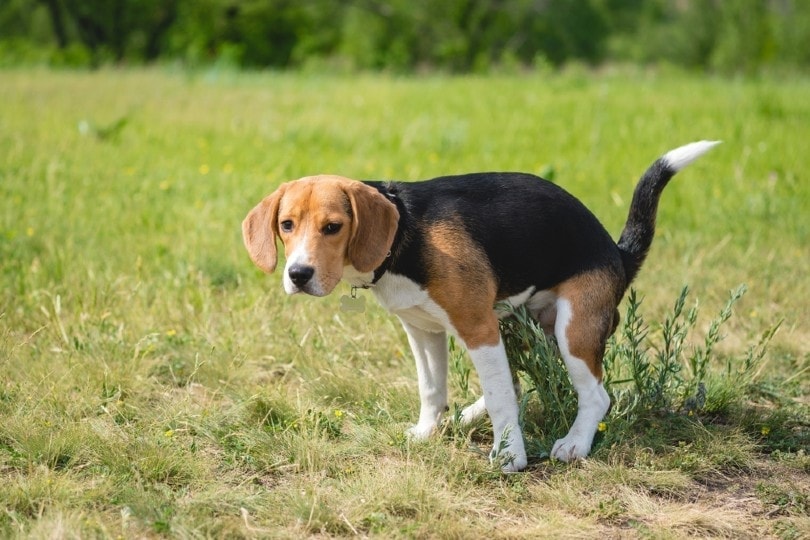
One of the less pleasant parts about owning a pet is cleaning up after them. It doesn’t matter if it’s scooping a litterbox for your cat or taking care of the backyard. Knowing your dog’s habits is a helpful thing, even if it’s not the most enjoyable aspect of pet ownership. Changes in the routine can alert you to possible health conditions affecting your pup’s digestive system.
Fortunately, creating routines is a central part of having a dog. You have to have a set feeding schedule to keep energy reserves at a suitable level. Your pup needs regular walks or playtime to stay fit and trim. Cleaning up after your pooch is just part of it, too. Dogs make it easy to understand what’s going on with them.

How Dog Digestion Works
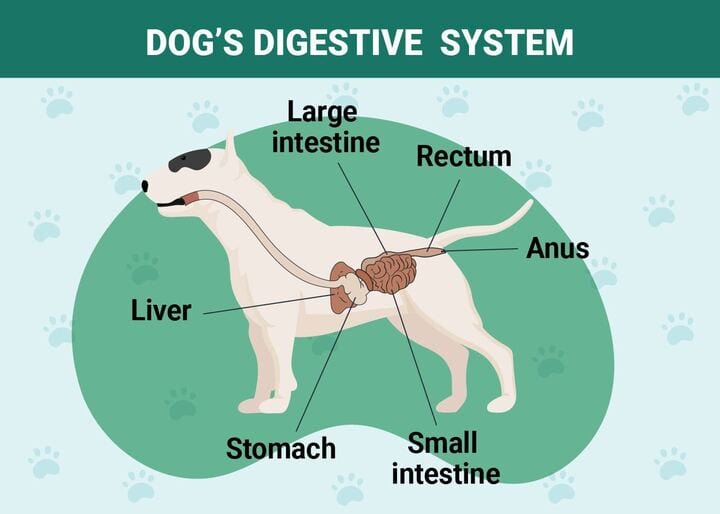
The primary sites for digestion are the mouth and stomach. The action begins with the mechanical breakdown of food items by the teeth and the chemical activity of enzymes released by the salivary glands to start breaking down food.
Once in the stomach, the strong muscular walls—with the help of gastric juice acidity and digestive enzymes—will turn the food into a liquid substance known as chyme. Chyme crosses the pyloric sphincter and moves toward the small intestine.
Once in the small intestine, bile and pancreatic enzymes will further break down the food and enable nutrients to be absorbed into the bloodstream. Excess water and electrolytes are reabsorbed in the large intestines. The smooth muscle of the intestines is responsible for the movement of the contents through the different segments. Undigested food passes from the colon to the rectum to be excreted as feces throughout the anal sphincter.
A dog’s gastrointestinal transit time digestion usually takes 6–8 hours, but it could take up to 12 hours depending on the food’s quality and the dog’s size and physiology. Small breeds seem to have longer gastric and small intestinal transit times than large and giant breeds.
Factors Affecting Dog Digestion
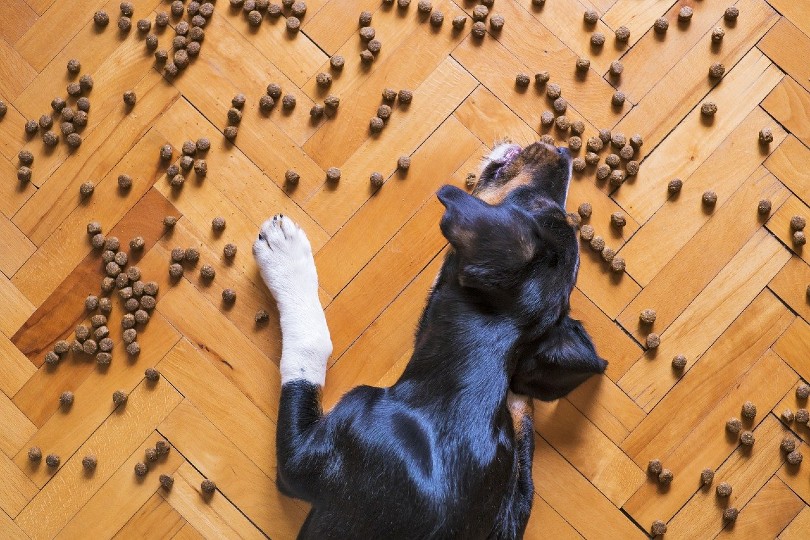
One of the main things affecting the time of digestion is the type of foodstuffs that your pet eats. That, in turn, depends on its chemical composition. The more complex the compounds, the longer it takes. Canned food is primarily water. The food is also pre-mixed, making it easily digestible. Your dog can digest it in just a few hours. Conversely, kibble takes longer to break down and digest.
You also have to consider the nutrient content. Simple carbohydrates require the least amount of energy to digest. More complex molecules, such as fat and protein, take longer to break the chemical bonds. The species should always be considered when choosing the type of food that you feed your pet.
Dogs are carnivores, and their diets should mainly be based on proteins and fats. High-protein diets take longer for your pet to digest, but your dog’s system is designed to digest these nutrients, so you can feed smaller amounts of them and find that your pet produces less waste. So-called boutique dog foods with large amounts of fruits and vegetables offer little nutritional value for your pup. They also lead to more waste.
Several other factors can influence metabolism. Activity level can speed up digestion to keep your pet supplied with energy. It will signal the release of hormones that can stimulate your pup’s appetite and start the process again. Weather also plays a role. A dog kept in a cold outdoor kennel will burn through calories quicker than a pet kept inside the house to stay warm.
Dogs are Carnivores
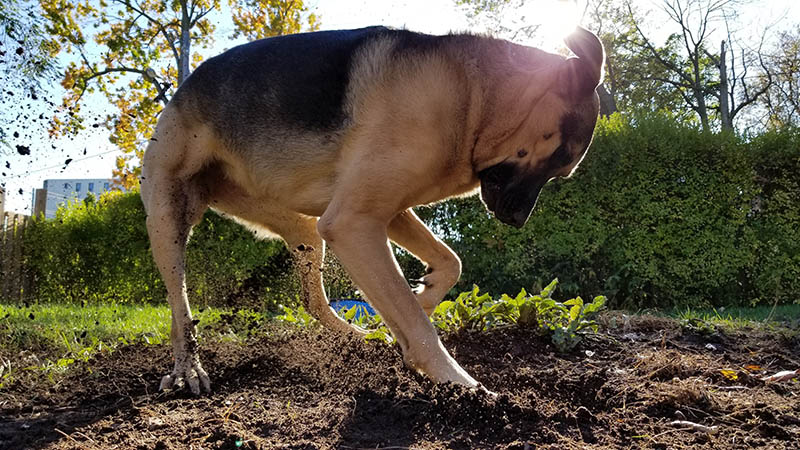
It’s also essential to understand canine biology and its role in digestion. Dogs evolved from a common ancestor that they shared with wolves. That makes a strong case for them being carnivores, too. Canines exhibit a lot of behavior you’d expect to see in a wild animal. They instinctively chase prey species that run away from them. They dig to get to them.
It also is evident in your dog’s biology. Like their wolf counterparts, they can go long stretches without eating, reflecting the feast-or-famine reality of hunting behavior. The fact is that early dogs and wolves weren’t always successful hunters.
Therefore, it makes sense that their bodies would try to extract as much nutrition as possible to make their effort worth it in the end. Top predators could afford to spend downtime digesting, whereas prey species always have to stay alert for danger. When it comes to the question of how long a dog goes between eating and defecating, the answer is between 6 and 12 hours.

Conclusion
Having a dog is a rewarding experience. There’s a good reason why over 63 million American households have invited a canine into their lives. Understanding your pup’s biology and digestion is an essential part of its care. It’s your obligation as a pet owner and an excellent way to monitor your pooch’s health. Perhaps if you think of it that way, it’ll seem less unpleasant and more of a caring gesture.
Featured Image Credit: AndrewFall, Shutterstock
Get Hepper In Your Inbox


Pet care tips from our vets and experts, straight to your inbox.
You may opt-out at any time. View our Privacy Policy for more information.
Nicole is a lover of animals of all sizes but is especially fascinated with the feline variety. She’s the proud mom of Baby, a Burmese, and works every day so he can relax in the sunshine or by the fire. She’s always had a cat in her home and has spent countless days with others, observing behaviors and softening up even the grouchiest of the lot. Nicole wants to share her kitty expertise with you so you and your cat can live happy, healthy, and care-free.
Join the conversation
Ask a question, share your story, or send private feedback.