Hepper is reader-supported. When you buy via links on our site, we may earn an affiliate commission at no cost to you. Learn more.
Progressive Retinal Atrophy in Dogs: Signs, Causes & Treatment


In this article
If you’re like most dog fanatics, the day you adopt a puppy or adult dog is one of your happiest, most exciting, and most emotional days. The last thing on your mind is that your furry new friend might someday become ill. Unfortunately, dogs have health issues, and some breeds are predisposed to certain issues more than others.
One of the most common blinding illnesses dogs suffer from is progressive retinal atrophy (PRA), which affects their eyes. If you’re worried about your new pup or your dog showing signs of an eye issue, the information below will help you understand what’s happening and what can be done to help your dog if they have PRA.

What Is Progressive Retinal Atrophy?
Progressive retinal atrophy is a slow-developing, non-painful, non-deadly inherited disease that affects a dog’s eyes and, eventually, causes them to go blind. PRA affects the photoreceptors (rods and cones) in a dog’s eye.
The photoreceptors are sensory cells that detect light. Rods and cones have adapted to allow vision in different ways. Rods are used to see at night and are activated by only a small amount of light (aka photons). Conversely, cones are used to see during the day and require much more light to activate. The former also helps dogs see motion, while the latter helps to see colors.
Dogs that inherit PRA are born with normal sight, but after becoming adults, the disease causes their photoreceptors to start degenerating. Veterinarians and scientists haven’t determined why or when the degeneration starts, but they understand that it can start at different times depending on the dog and breed.
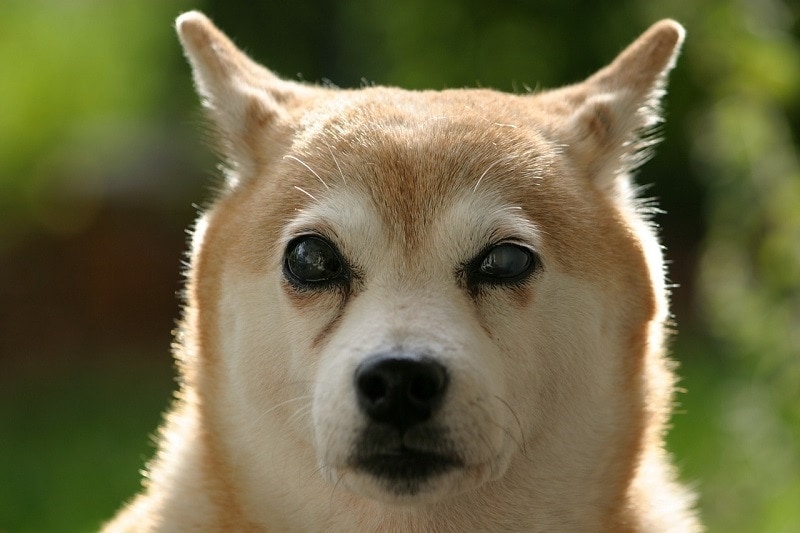
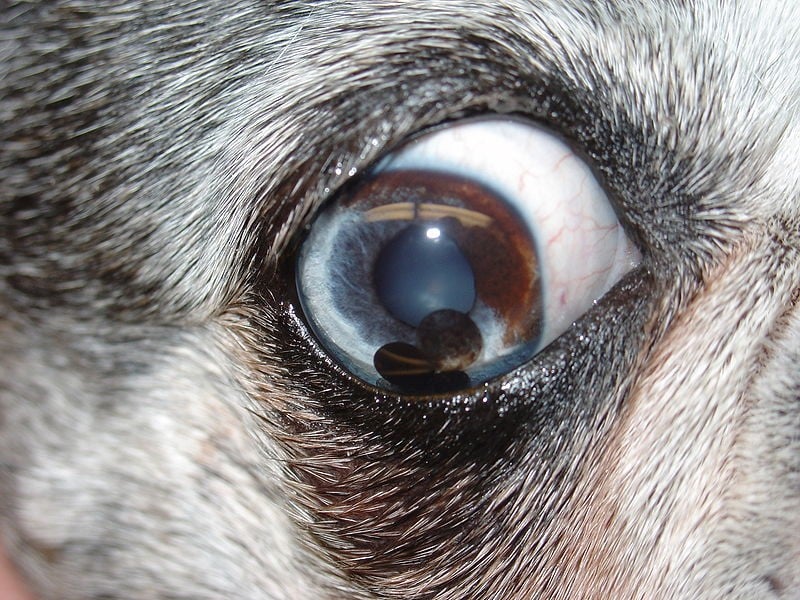
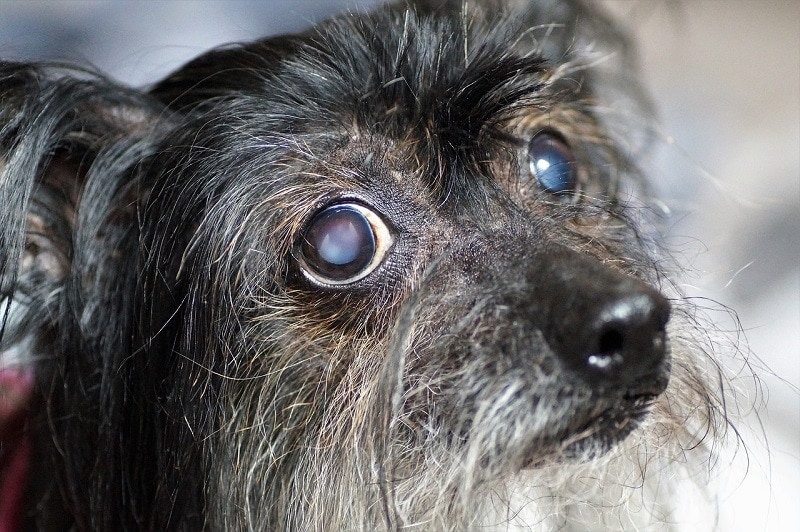
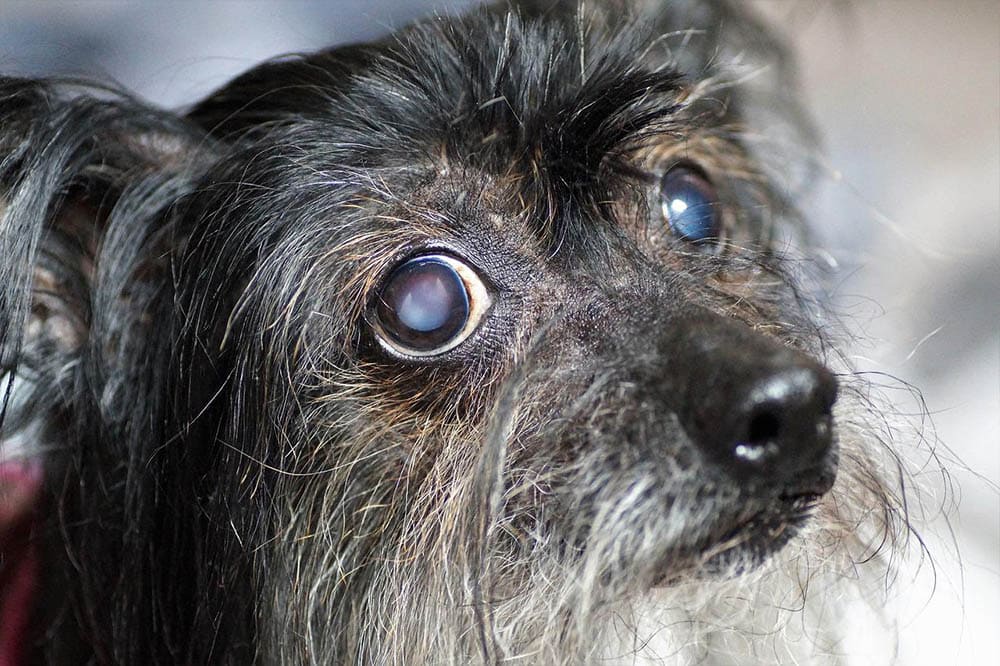
In the most common type of PRA, the rods will start to degenerate before the cones, which will first affect a dog’s ability to see at night. As the disease progresses, the dog will also develop day blindness. PRA affects both of your dog’s eyes equally rather than causing vision loss in one or the other. Also, as PRA progresses, it is common for some dogs to develop cataracts, typically when the disease reaches its end stage. Unfortunately, all forms of PRA will lead to blindness at some point in a dog’s life, but how quickly this will happen cannot be predicted

Signs of Progressive Retinal Atrophy
It’s challenging to detect PRA when it begins because most dogs will get used to their vision loss and won’t show any outward signs of the condition. However, you might notice that, at night, your furry friend starts to have trouble getting around.
The typical signs of PRA include the following:
Causes of Progressive Retinal Atrophy
In most cases, PRA occurs due to an autosomal recessive pattern. This means that to develop the disease, a dog must receive the defective gene from its dam (mother) and sire (father).
Because it’s autosomal recessive, a dog can have one copy of the defective gene that causes PRA but not be affected by it. If a dog has the faulty gene but not the condition, they’re known as carrier dogs and can pass the gene to their pups. If mated with another carrier, that dog can then have puppies that have PRA or don’t have it but are also carriers. Interestingly, some dogs won’t be affected at all.

How To Care for a Dog With Progressive Retinal Atrophy
One of the worst things about PRA is that, at this time, there's no proven way to prevent the disease or stop it from causing a dog to lose its vision. However, dogs adapt well to vision loss because it develops slowly. What that means is that, in most cases, all you can do to help your dog is make changes to the environment and training techniques. Those changes include the following:


Frequently Asked Questions
Is There a Cure for PRA at This Moment?
No, there is no cure for PRA at this time.
Are There Tests to Determine if a Dog Carries the Defective PRA Gene?
Yes, DNA testing can be used to detect the defective gene in most dog breeds.
How Is PRA Diagnosed by a Veterinarian?
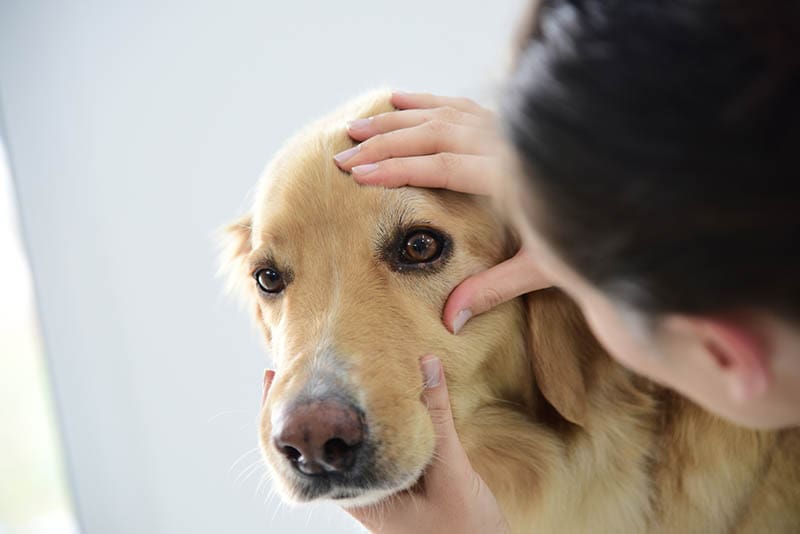
A vet ophthalmologist will perform a full eye exam and assess vision. They will use an ophthalmoscope to look at a dog’s retinas and detect signs of retinal degeneration. If in doubt or if your dog has cataracts and the back of the eye cannot be seen, the diagnosis is achieved by electroretinography (ERG), a non-painful way to assess the function of the retina.

Should a Dog With PRA Be Bred?
Veterinarians advise against breeding a dog with PRA as it can pass the defective gene to its puppies.
Which Breeds Are Affected Most by PRA?
Poodles, Cocker Spaniels, and Labrador & Golden Retrievers are the breeds most affected by the disease.
Final Thoughts
Progressive retinal atrophy is an inherited disease in dogs caused by a defective gene. To develop the disease, a dog must receive the defective gene from both parents. PRA is a progressive disease that typically affects the rods of a dog’s eyes first, causing night blindness.
Currently, PRA has no cure, which eventually leads to total blindness. However, you can do several things to help a dog with PRA. Also, most dogs can deal with the condition without severe problems as it progresses relatively slowly and doesn't cause them any pain. It is important to visit your vet for an examination if you believe your dog is losing sight or their eyes look different. By doing so, you can get a diagnosis and start making the necessary changes to compensate for your dog’s gradual loss of vision and make your dog’s life as easy as possible.
Sources
Featured Image Credit: ivabalk, Pixabay
Get Hepper In Your Inbox


Pet care tips from our vets and experts, straight to your inbox.
You may opt-out at any time. View our Privacy Policy for more information.
Greg Iacono is a self-taught writer and former chiropractor who, ironically, retired early due to back problems. He spends his time writing scintillating content on a wide variety of subjects. Greg is also an accomplished video script writer known for his ability to take a complex subject and make it accessible for the layperson.
Join the conversation
Ask a question, share your story, or send private feedback.