Hepper is reader-supported. When you buy via links on our site, we may earn an affiliate commission at no cost to you. Learn more.
How Many Eggs Do Cockatiels Lay? Vet-Verified Facts


In this article
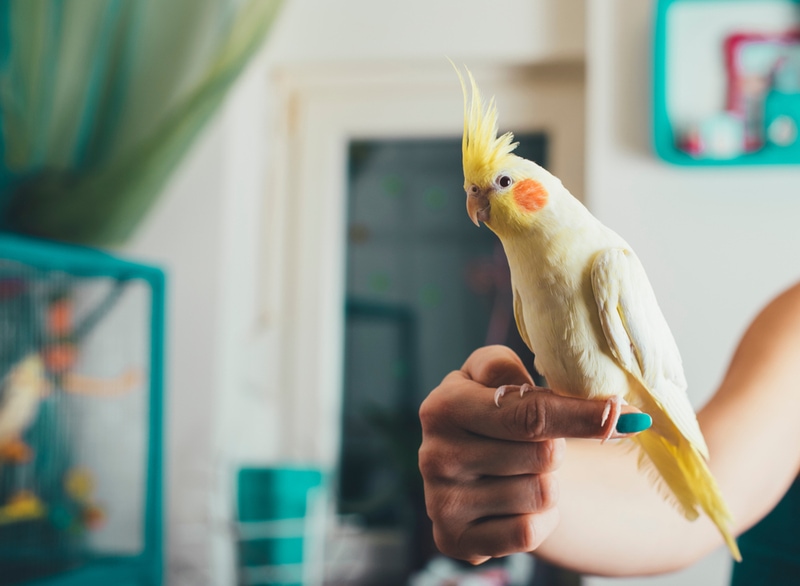
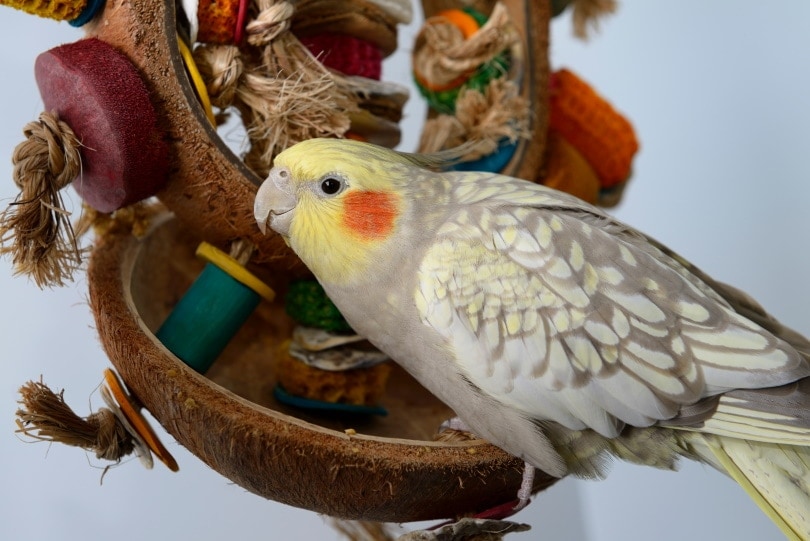
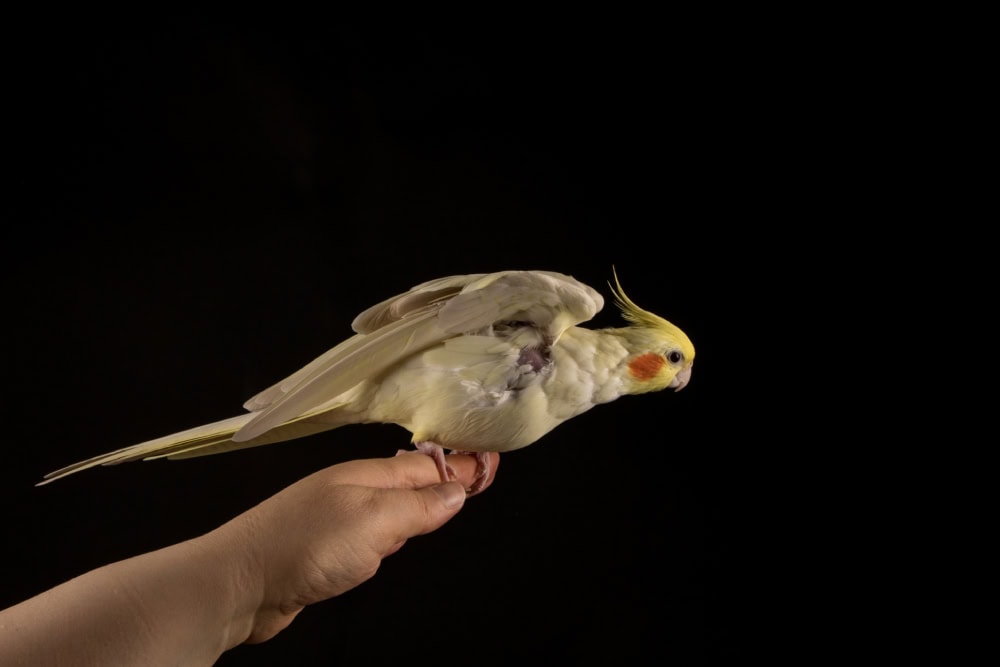
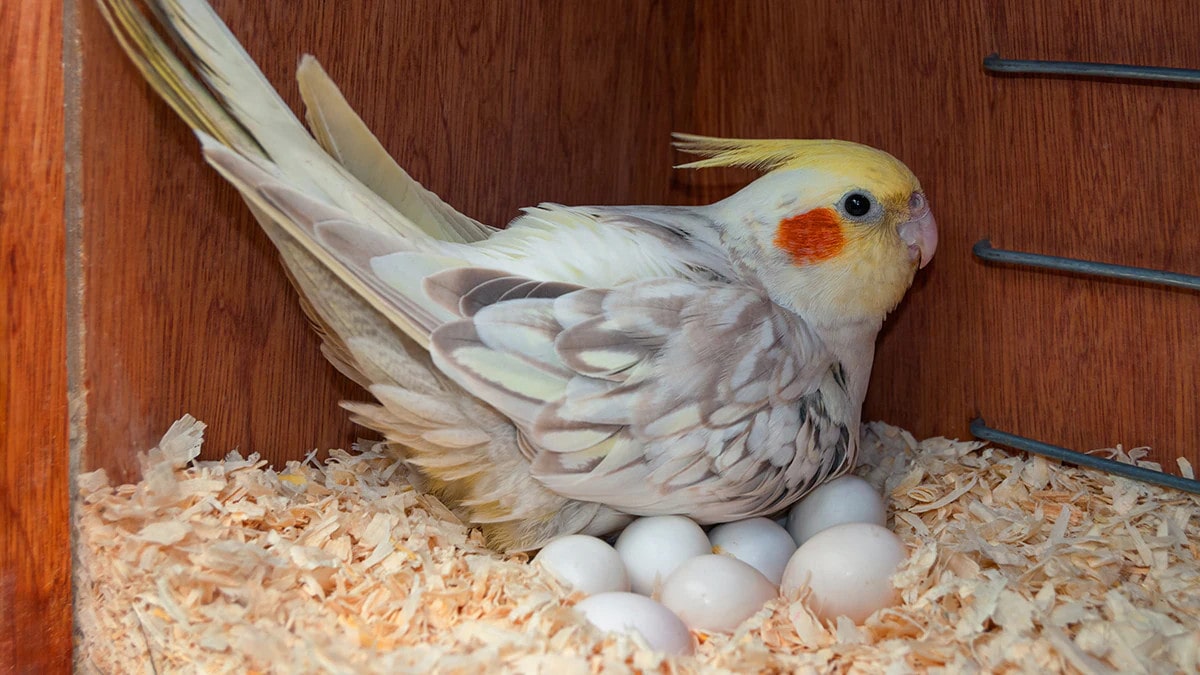
Cockatiels are beautiful birds that make very popular pets. Some people are curious about breeding their cockatiels, but their breeding habits can be mysterious to those who are unaware of their physiology and behavior. Cockatiels lay 5 eggs on average per clutch and usually lay a single clutch of eggs per year. Here is everything you need to know about the egg-laying habits of captive cockatiels.

Cockatiel Clutches
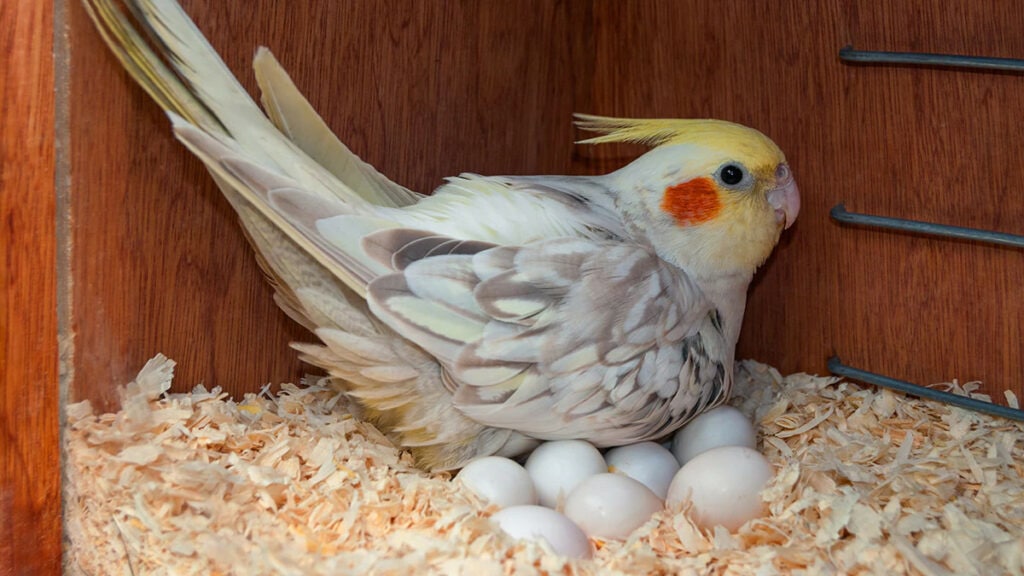
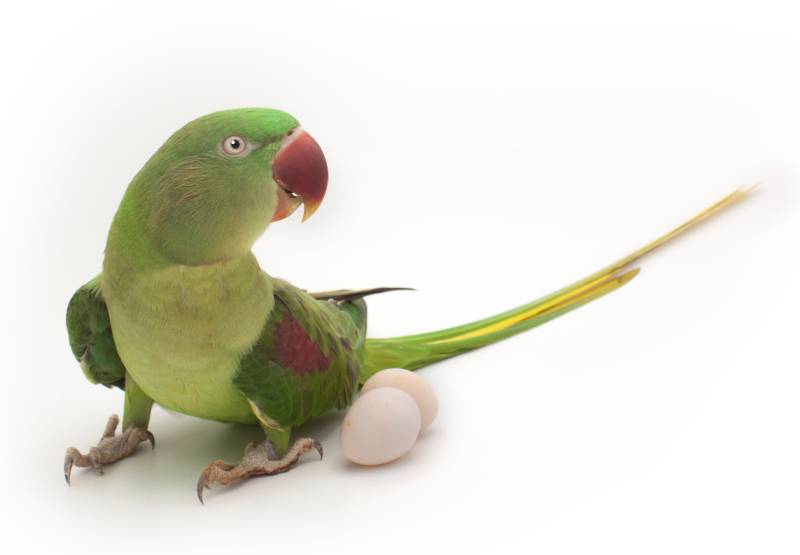
Cockatiels lay eggs in batches known as clutches. A cockatiel will lay between four and six eggs per clutch. A cockatiel will begin mating after they find a suitable mate. It takes roughly 4 days after mating for a female cockatiel to begin laying her first clutch. The cockatiel will lay one egg every other day until the clutch is finished. If your cockatiel lays a full clutch of six eggs, it will take roughly 2 weeks to complete.
Like all animals, there can be some subtle variations in clutch size. Some cockatiels will only lay four eggs in a clutch. Rarely, some cockatiels lay more than six eggs. Some birds might lay an egg every third day instead of every other day, which can extend the clutch time to close to 3 weeks.
Cockatiel Breeding Overview
| Clutches per year: | 1 |
| Time per clutch: | 10-14 days |
| Eggs per clutch: | 4-7 |
| The time between clutches: | 1 year |
| Typical eggs per year: | Average 5 |
Cockatiel Breeding Cycle
After a cockatiel finishes laying a clutch of eggs, they need to take time to recuperate before mating again. Cockatiels mate for life, so if you pair your cockatiel with a suitable mate, they will continue to mate together for the foreseeable future.
Cockatiel eggs take between 18 and 21 days to incubate, and during that time, the mother hen will attend to the eggs.
Captive Nest Requirements
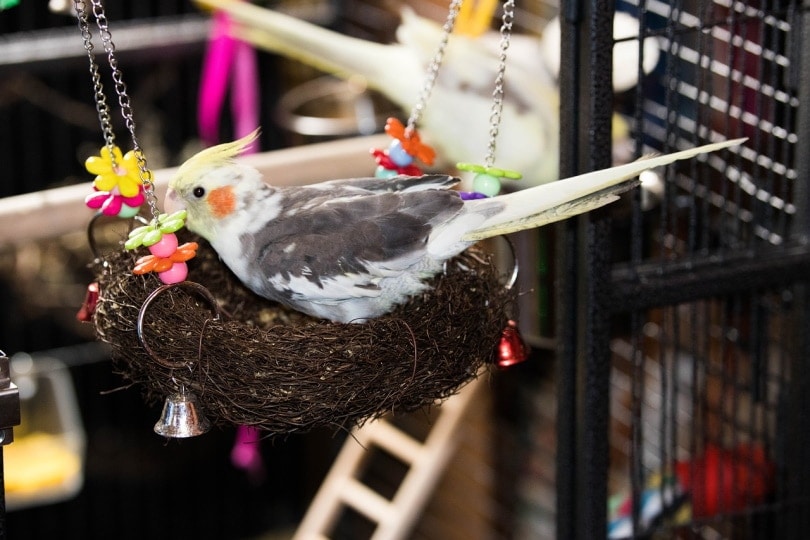
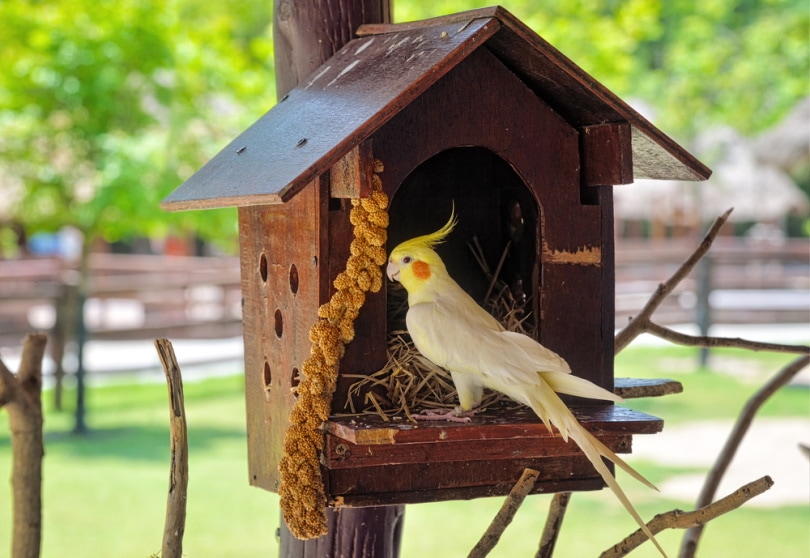
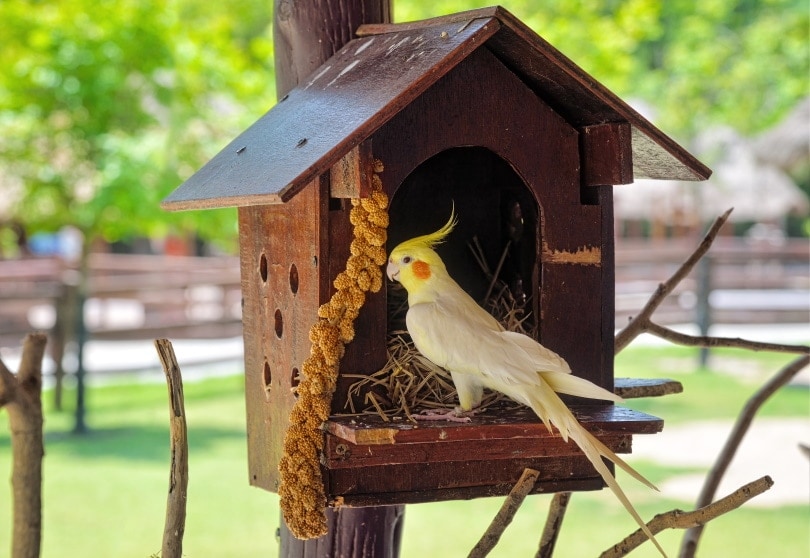
If you are looking to breed a captive cockatiel, you will need a few things for your attempts to be successful. First, you will need a cage that is large enough to hold at least two adult cockatiels (one male and one female). It is suggested to get a cage that is at least 20x20x50 inches, but a 24x24x60 inch cage might be better. You also need to provide your cockatiels with a full and balanced diet as well as a nesting box. The nesting box should be at least 12x12 inches and be filled with suitable nesting material. Cockatiels like shredded paper, molted feathers, and paper towels as bedding material. You can place some of this material in the box and in the bottom of the cage so the bird can collect some material themselves.
Don’t Overbreed Your Cockatiel
Cockatiels in captivity can, on occasion, breed more than once per year, especially if daylight hours are particularly long (10–12 hours of light per day) all year round. However, this is strongly discouraged by vets and constitutes unethical breeding, as the birds often don't get sufficient time to recover if they breed twice per year. In their native Australia, cockatiels only breed once per year, between the months of August and December.
The best way to avoid having your cockatiels breed twice per year is to limit their exposure to light. Cockatiels breed when exposed to 10–12 hours of light per day, so dimming their light to reasonable durations under these requirements curbs breeding in most pairs successfully.
If you notice your birds clutching while still raising nestlings, please contact your veterinarian for assistance on the matter.
Conclusion
Healthy cockatiels with a lifelong mate will produce between four and seven eggs per year. Cockatiels will typically lay a single clutch a year. If your bird is laying more clutches than normal or more eggs per clutch, you should seek professional help to ensure the welfare of your breeding pair.
Sources
Featured Image Credit: Anne Kitzman, Shutterstock
Get Hepper In Your Inbox


Pet care tips from our vets and experts, straight to your inbox.
You may opt-out at any time. View our Privacy Policy for more information.
Grant is a freelance writer with years of experience writing about a diverse range of topics. His days are spent writing and caring for eight animals (two horses, two donkeys, two goats, and two dogs). In his free time he enjoys slowly carving out a quaint hobby farm from the Southern scrub. He currently lives in his native Florida with his wife and son.
Join the conversation
Ask a question, share your story, or send private feedback.