Hepper is reader-supported. When you buy via links on our site, we may earn an affiliate commission at no cost to you. Learn more.
How To Brush Cat Teeth: 10 Vet Approved Tips


In this article
Being the proud owner of a cat means taking care of your feline friend the best you can. One of the most critical facets of your cat’s health involves their teeth and gums, which should be brushed and cleaned regularly. Of course, that’s easier said than done if you’ve never brushed a cat’s teeth before. To help, below are 10 expert tips to help you brush your cat’s teeth like a professional. Read on to discover them all and keep your cat’s teeth clean, attractive, and healthy for life!

The 10 Expert Tips for Brushing Your Cat’s Teeth
1. Gather Everything You Need
There are a few items you are going to need, including a toothbrush, to brush your kitty’s teeth successfully. It’s better to grab all of the supplies before you involve your cat, lest they get bored and run away. They include the following:
- A soft-bristled cat toothbrush
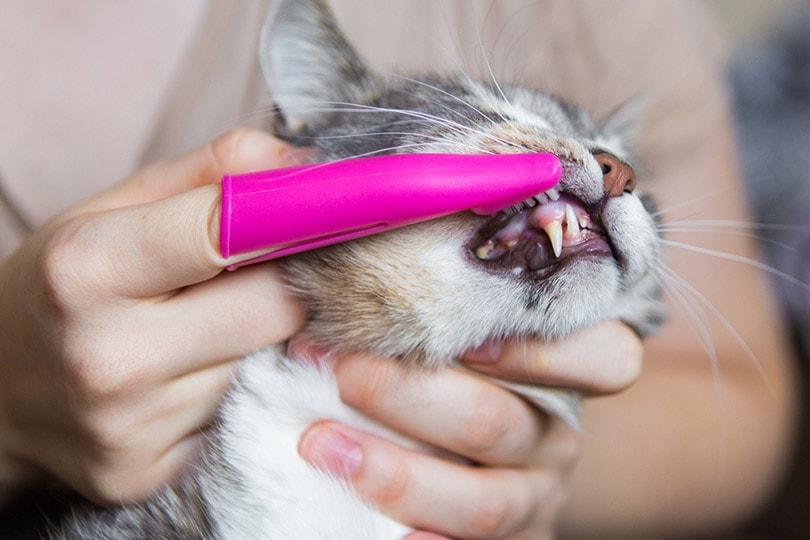
- A finger brush with very soft bristles
- Toothpaste approved for use with cats
- A soft cloth
- Your cat’s favorite treats
2. Don't Start Using Toothpaste Right Away
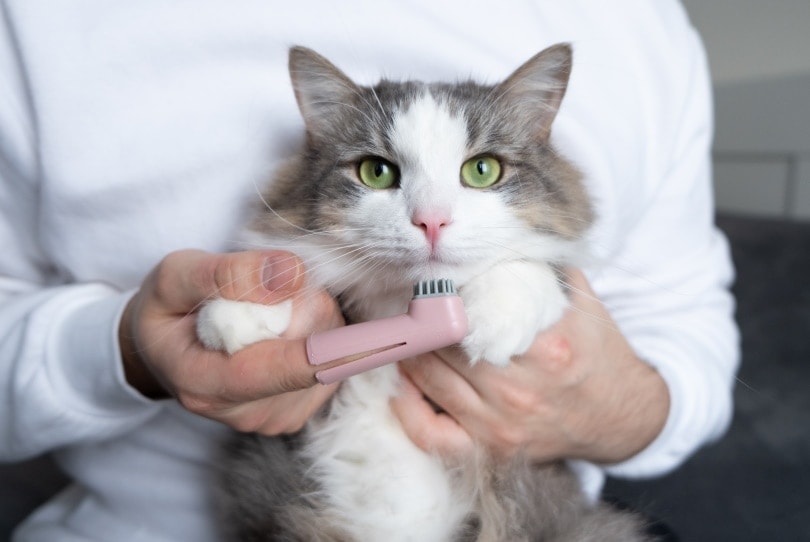
Once your pet has gotten used to you putting your fingers on their mouth, teeth, and gums and moving them back and forth, it’s time to add toothpaste. Before that, however, they may fuss and fight because of the taste and texture of the paste. For the first few days or weeks, use nothing but your finger, a finger brush, and some water. Once they get used to that, toothpaste will be easier for them to accept.
3. Remember to Purchase a Veterinarian-Approved Toothpaste
Most toothpaste products made for humans contain ingredients toxic to cats. The formula must be safe for the cats to swallow, and most brands include chicken flavoring to make it more palatable.
4. Only Use a Pea-Sized Amount of Toothpaste to Brush Your Cat’s Teeth
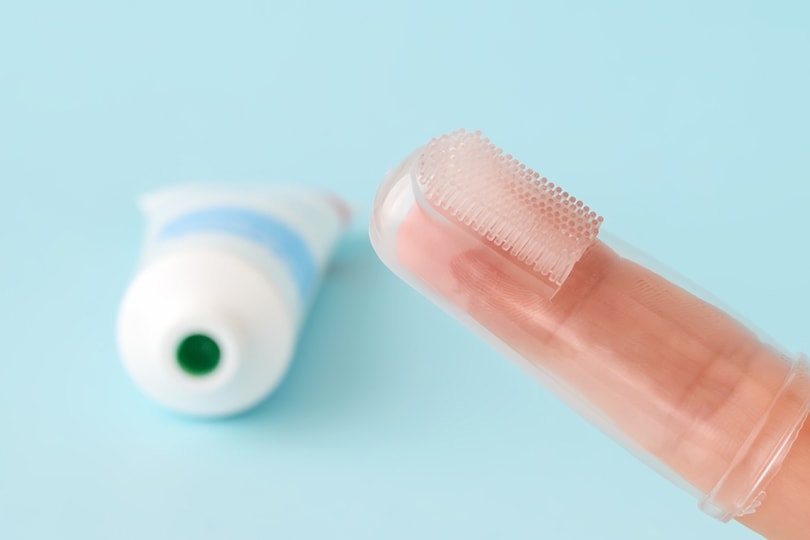
Only a tiny amount of toothpaste is needed to clean your cat’s teeth. A pea-sized portion should be more than enough to brush all the teeth in your cat’s mouth thoroughly. Remember to praise your cat as they learn to let you brush their teeth, and give them treats when they do a great job.
5. Only Start Using a Toothbrush When Your Cat is Ready
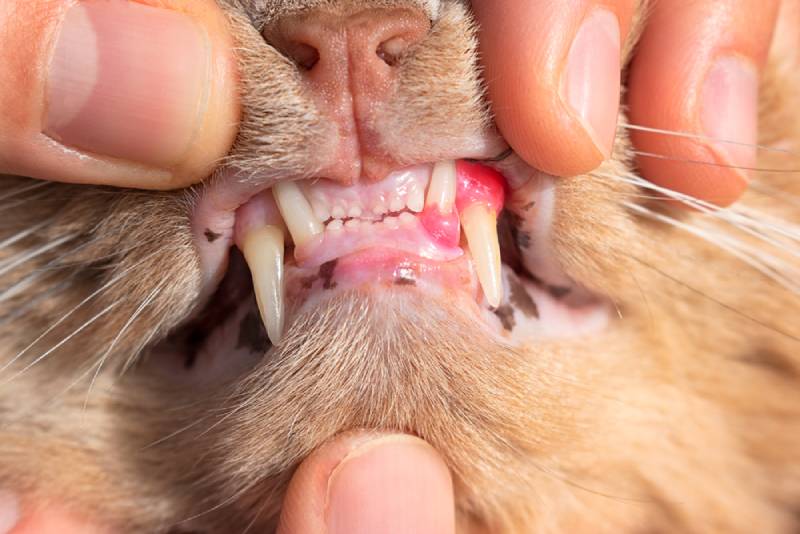
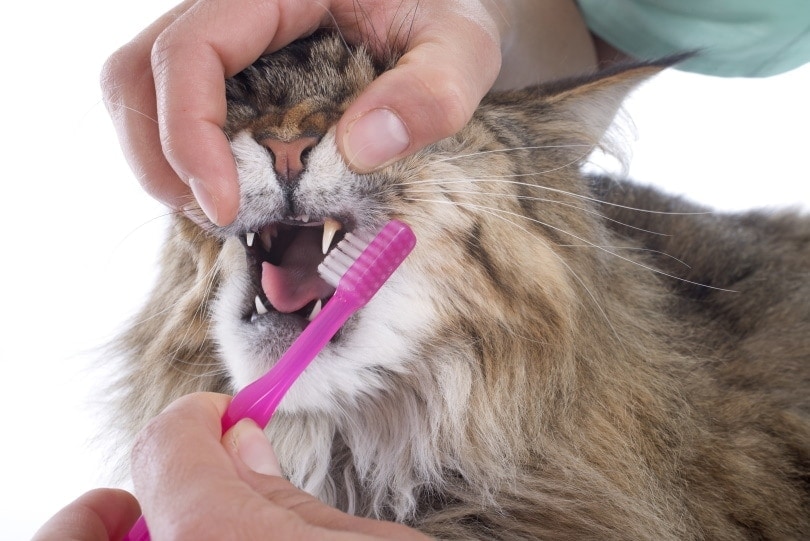
Once your cat lets you brush their teeth with a finger brush and vet-approved toothpaste, you should consider introducing a toothbrush. It should be made for cats and have soft bristles. When you use a toothbrush, stay near your cat’s gums and gum line, which is where many dental problems start.
6. Vets Recommend Brushing Your Cat’s Teeth Every Day
Most veterinarians agree that, for the best results, you should be brushing your cat’s teeth every day. For some cat parents, however, that might be a little too much to fit into their busy schedules. If that’s you, vets recommend a minimum of three brushings a week. However, considering that many cat owners never brush their cat’s teeth, any amount of brushing is better than nothing.
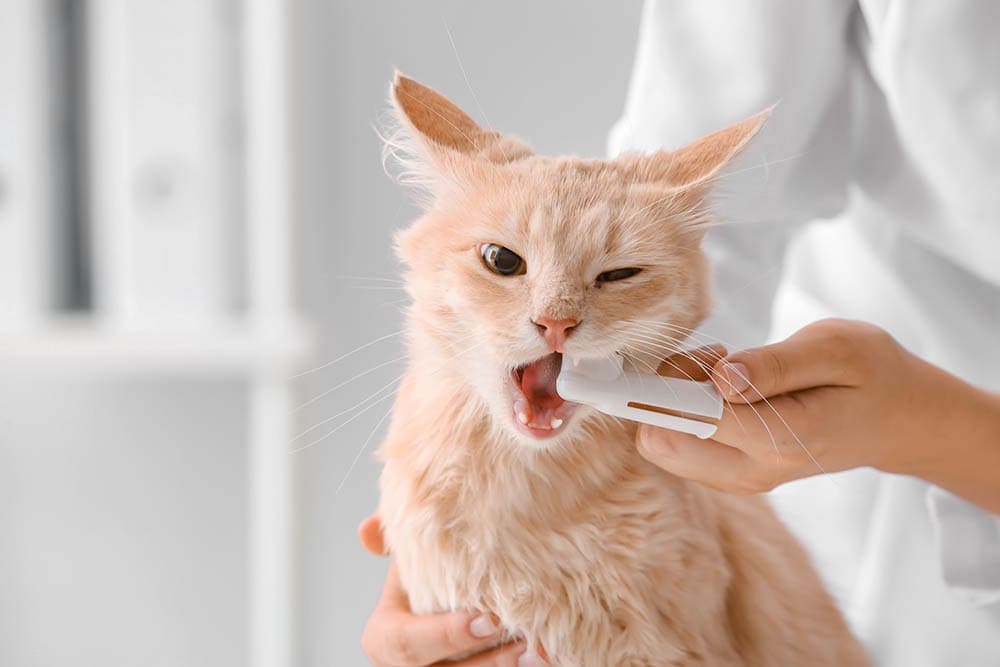
7. Start Brushing your Cat’s Teeth when It’s a Kitten
Experts recommend brushing your cat’s teeth as soon as possible so that they get used to the sensation. The more accepting of the toothbrush it is as a kitten, the less of a fuss your cat will make as an adult when you brush its teeth.
8. It’s Never Too Late to Start Brushing your Cat’s Teeth
Even if you’ve had your cat for several years and never brushed their teeth, brushing them now is still helpful. Veterinarians agree that any time you decide to start brushing is a good time and can be beneficial to your cat’s health, no matter their age.
9. Dental Treats Are Good In Between Brushings
If you don’t have the time or energy to brush your cat’s teeth every day, giving them dental treats in between brushings is a good idea. They should be approved for cats.
10. Don’t Try to Use Baking Soda to Brush Your Cat’s Teeth
Some people use and swear by baking soda for brushing their teeth. However, baking soda isn’t a great choice for brushing a cat’s teeth as it has a high alkaline level. That alkaline can upset the balance of “good” and “bad” bacteria in your cat’s GI tract and gut, which could give them an upset tummy. Plus, baking soda tastes awful and is sure to make your cat upset that you use it in their mouth. The same can be said for hydrogen peroxide, which is too harsh for your cat’s gums and can also cause tummy upsets.

How to Brush Your Cat’s Teeth Like a Professional
First, it should be noted that brushing your cat’s teeth is one of the best things you can do for them (even if they don’t actually enjoy it). By brushing, you ensure your cat will have healthy teeth as it ages. Below, we’ve included the condensed steps you need to follow to brush your pet’s teeth like a professional.
How to brush a cat's teeth like a pro
In Conclusion
We hope that you now have a better grasp on what it takes to brush your cat’s teeth and keep them sparkling clean and healthy. Veterinarians recommend brushing your cat’s teeth every day. They also agree that, at a minimum, you should be bruising your cat’s chapters at least three times a week. Doing so will empower your cat to have healthy teeth and, in the long run, a healthier, longer life. Plus, at the end of the day, it’s another way to bond with your precious feline.
Featured Image Credit: Presslab, Shutterstock
Get Hepper In Your Inbox


Pet care tips from our vets and experts, straight to your inbox.
You may opt-out at any time. View our Privacy Policy for more information.
Greg Iacono is a self-taught writer and former chiropractor who, ironically, retired early due to back problems. He spends his time writing scintillating content on a wide variety of subjects. Greg is also an accomplished video script writer known for his ability to take a complex subject and make it accessible for the layperson.
Join the conversation
Ask a question, share your story, or send private feedback.