Hepper is reader-supported. When you buy via links on our site, we may earn an affiliate commission at no cost to you. Learn more.
How to Calm a Cat During a Storm: 10 Vet-Approved Tips


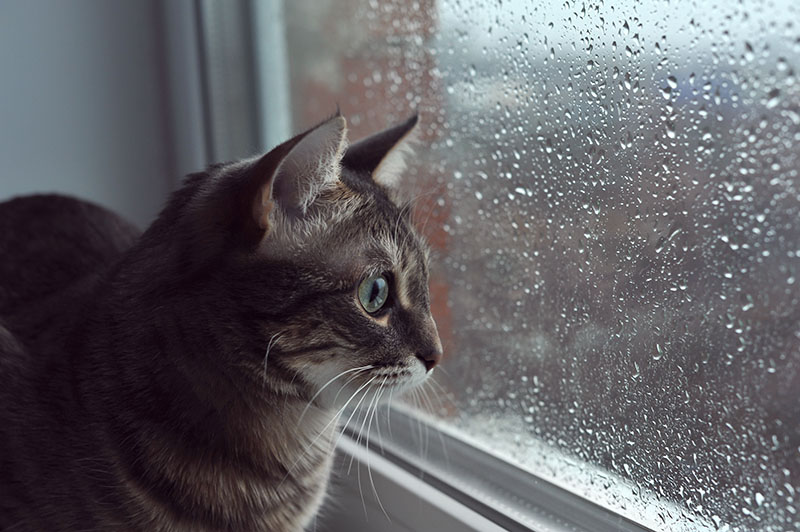
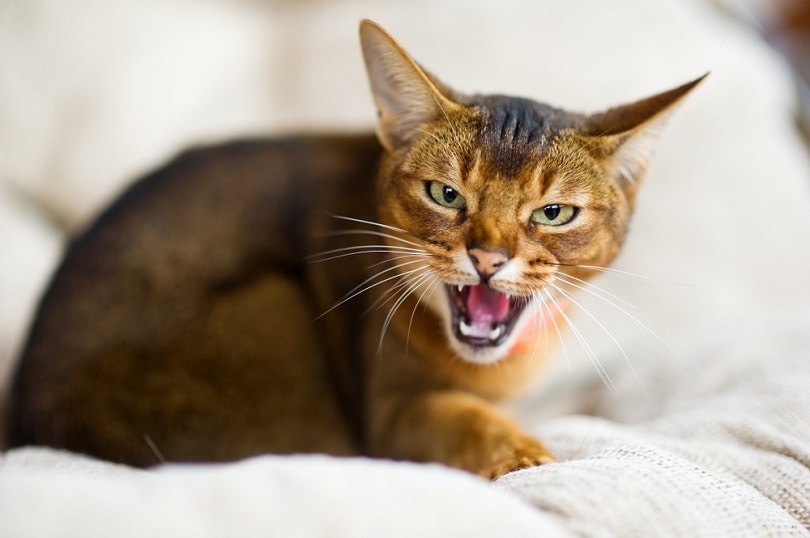
Storms can be a tough thing for some pets to handle, and it can be important for us to have a few techniques up our sleeves to help calm our cats during storms. This is especially important if you live in an area where storms regularly occur since repeated storms can be very taxing on your anxious cat.
Storm anxiety in cats isn’t as common as it is in dogs, but it can be a major problem when it occurs. Your cat may unintentionally harm you or themselves during a storm, and it’s not uncommon for pets to go missing when they slip out through a door or window during a storm.

How to Calm a Cat During a Storm
1. Keep Your Cat Inside
While many people feel very strongly about letting their cats have outdoor time, during a storm is not the right time. If your cat is indoor/outdoor, then they need to be brought and kept indoors throughout the storm. If your anxious cat is left outdoors during a storm, it is very possible that they will become hurt during their fear and panic or they will get lost.
Even if your cat lives outdoors, you can provide them with a space that is semi-indoors, like a shed or garage that is secure enough to keep them contained. Once your cat is inside, have everyone in the household work together to keep the cat indoors. Don’t open windows, even if they have screens on them, and try to minimize holding doors open.
2. Provide a Calm Environment
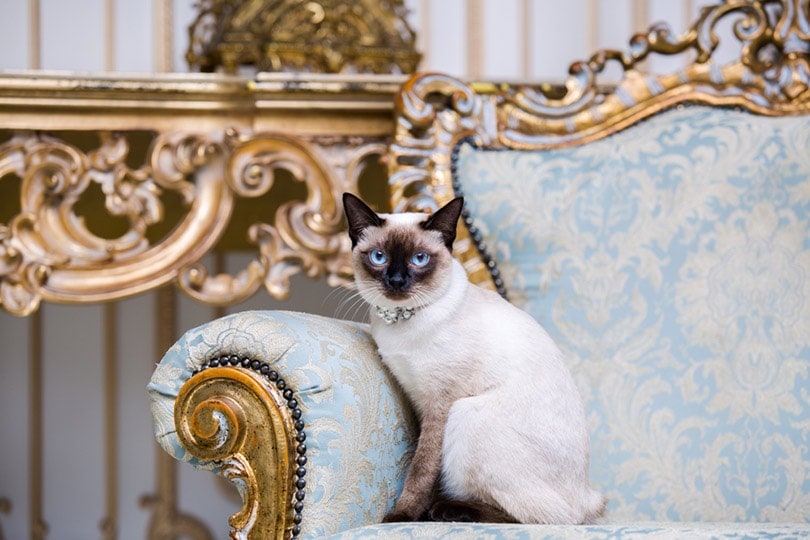
Cats are sensitive to chaotic environments, and if your cat already has storm anxiety, then being in a chaotic indoor environment will only increase their anxiety. Create a soothing environment within the home for your cat to be in. This can mean limiting your cat’s exposure to rowdy children and loud TVs or keeping the home dark and without large amounts of noise.
A soothing environment for your cat may not look the same as it does for you. Your cat won’t be soothed by candles and aromatherapy, and some of these things can be dangerous for cats. Your goal should be an environment that is calming for a cat, which typically consists of limited noise and little to no exposure to things that may feel like threats, including children and other pets. Offering multiple cozy beds and places for them to choose to hide and providing all essential resources such as food, water and litter tray nearby so that they don’t have to go far to get what they need.
3. Create a Specific Safe Spot
During a storm, your kitty will likely appreciate having their own special spot that feels safe and calming. Some cats might want a comfy bed or a pile of your clothes to lay in, while other cats may want a tight space with limited stuff in it.
If you already know that your cat is going to make a beeline for a specific closet or underneath a bed once the storm kicks up, then try to make that space comfortable and safe for them in advance. Keep that space specifically for your cat and don’t let other pets or people take over that space.
To really help manage their anxiety, your cat should have access to this safe space all the time and not just during storms. Otherwise, it may begin to take on a negative connotation and become stressful for your cat.
4. Keep Your Cat Busy
Distraction is one of the finest ways to keep your anxious cat from panicking throughout a storm. If you can provide games or puzzles that your cat enjoys, then these might be more effective than trying to teach your cat to play with something new.
Being distracted and focused on something other than the weather during the storm can help your cat reduce anxiety. You can also provide lots of playtime ahead of a storm to help your cat release pent up energy and increase bonding.
5. Try to Minimize Noise
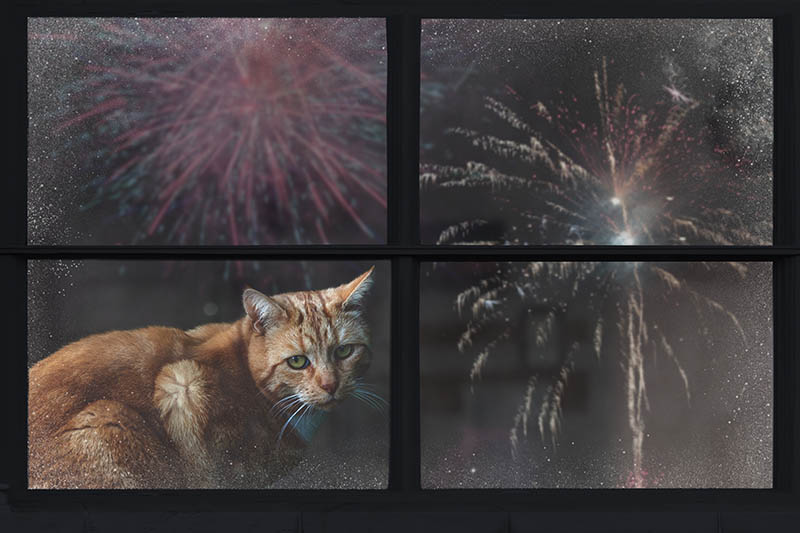
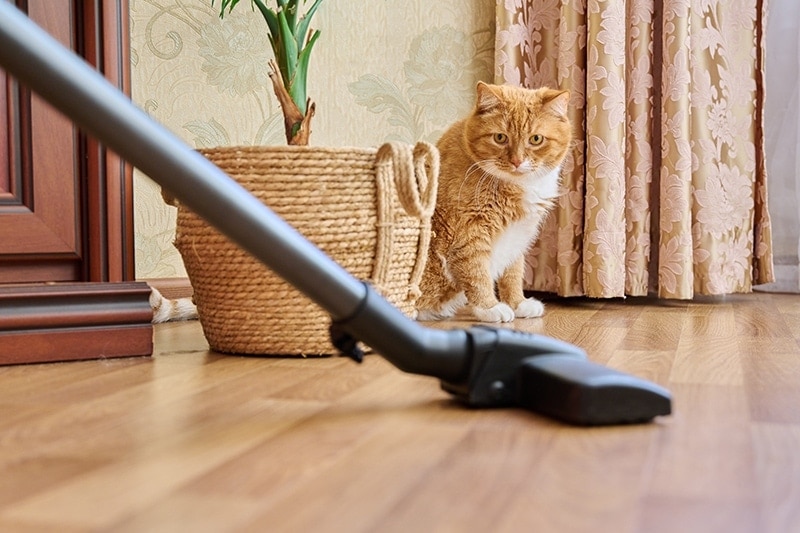
Noise can be unbelievably stressful for cats with their sensitive hearing. If your home feels noisy and there’s a noisy storm raging outside, then your cat is more likely to feel anxious and frightened.
Some cats may prefer a quiet environment without any excess sounds, while some will be appreciative of a TV or radio being on at a low volume to help block out storm sounds. Make sure to close windows, blinds, curtains, and doors to help block external storm noise. If possible, try to keep your cat in an interior area of your home so there are multiple layers of walls, furniture, décor, and other things blocking out sounds. There are many playlists available of soothing cat music or pre-loaded speakers that are designed for this purpose.
6. Offer Treats and Comfort
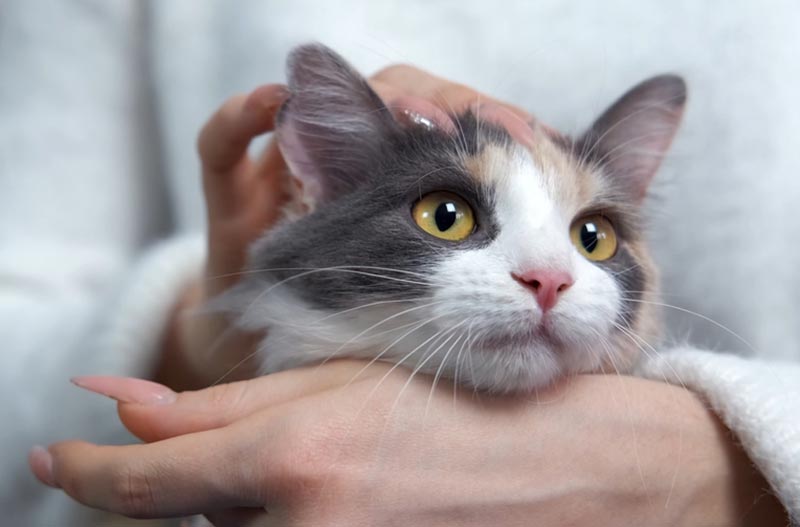
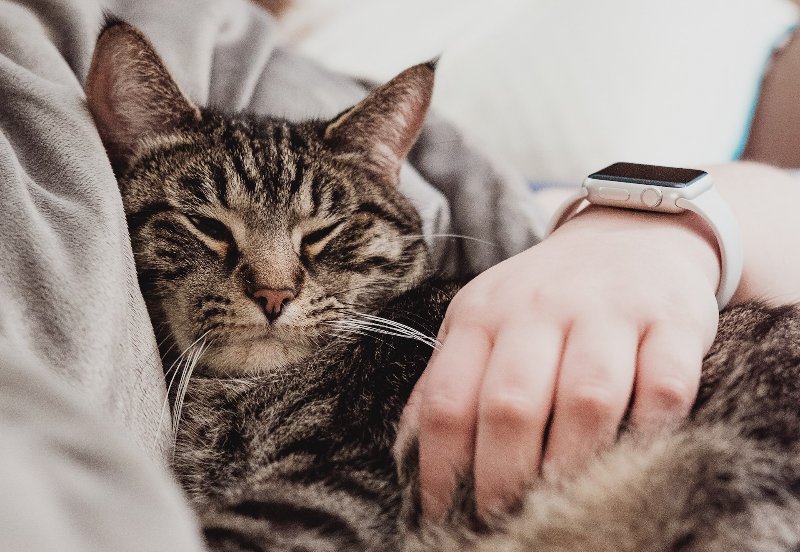
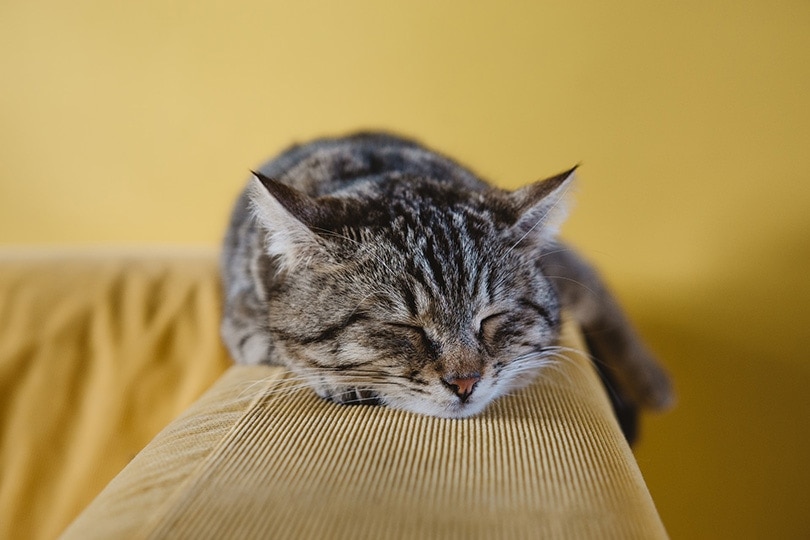
There may be nothing more soothing to your cat during a storm than simply having the comfort of you nearby. Your cat may want to sit close to you, or even in your lap. You may offer up cuddles and soothing talk to help your cat feel safe.
Treats are also a great way to help your cat feel comforted. Treats, by their very nature, have a positive connotation. By providing treats to your kitty during the storm, you may help create a positive connotation between tasty treats and the storm. Aim for high-value treats, and maybe even try treats that your cat only gets on occasion. Make sure not to overfeed treats, though. Combine treats with other options to keep your cat calm. A licki mat can be a useful tool to employ as the act of licking is calming.
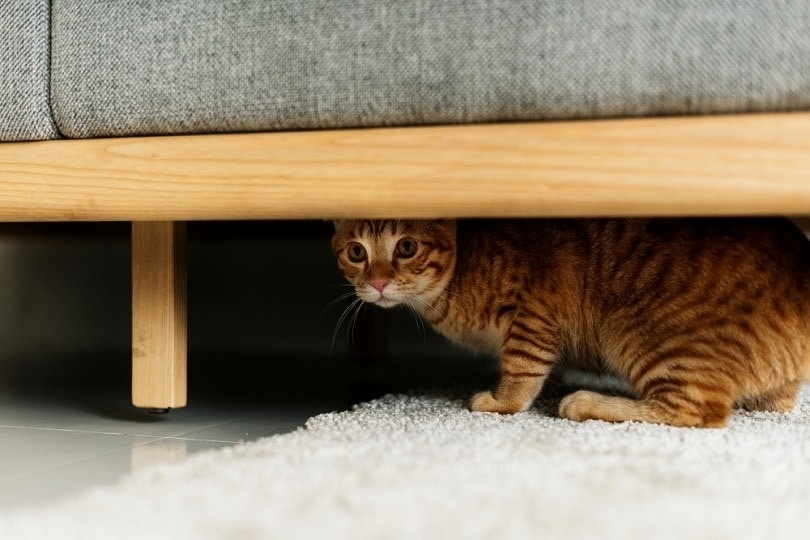
7. Let Your Cat Hide
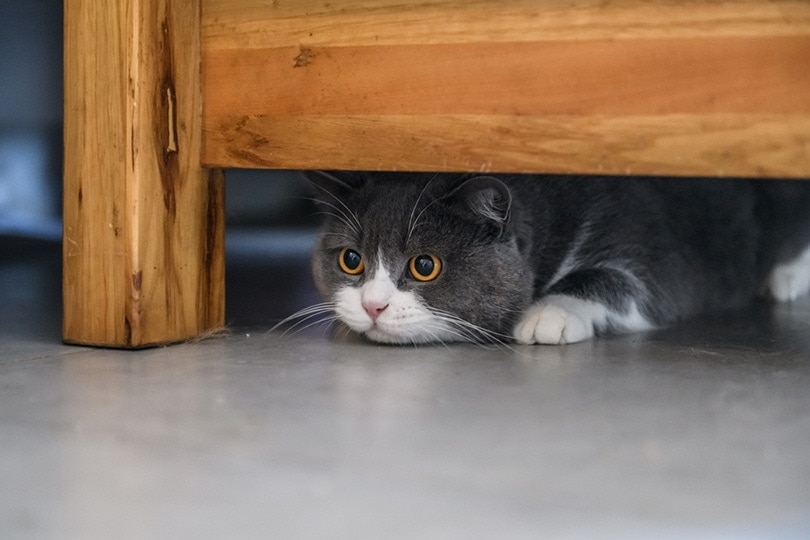
As much as we love for our cats to want to be with us, some cats simply prefer to hide when they are scared. You can set up the environment to be as calming as possible for them, but some cats will be happiest if they are left alone in a calm environment.
This may look like sitting quietly in a room while your cat hides in their safe place, or it may mean leaving your cat entirely by themselves. Domestic cats aren’t always social creatures, and much like a human introvert, they may be soothed by having time to themselves, especially during times of high anxiety. Some cats prefer to hide up high on top of a wardrobe for example and others down low under a bed. Make provision for several inviting cozy places for your cat to choose between.
8. Try Behavior Modification Training
Behavior modification training in cats can be a daunting thing to do successfully, especially when it comes to fears and anxieties. This type of training needs to begin when your cat is not in a stressful situation. Enlist the help of your veterinarian and a registered behaviorist to work through a behavior modification program. It will require dedication and consistency to help your cat.
9. Soothing Supplements
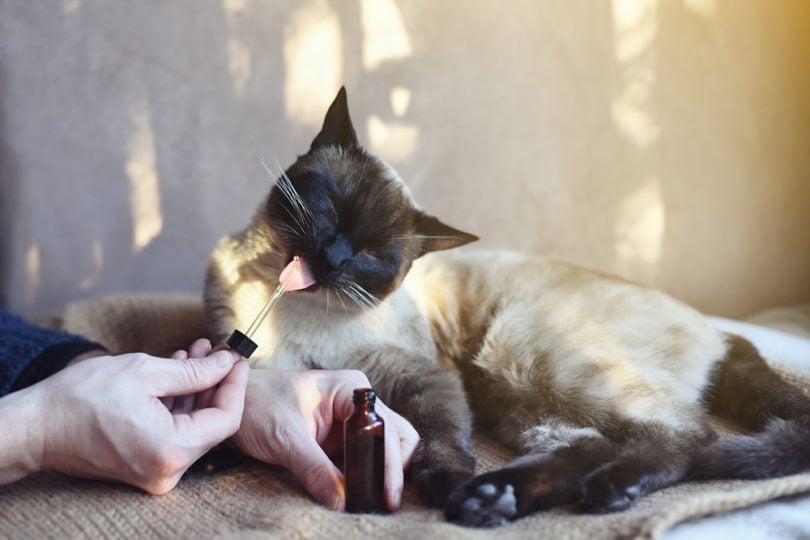
There are many foods, diffusers, collars, sprays and treatments available to help provide additional support to stressed cats. Most of these take time to reach a peak effect, and should be used before storm season starts and continued until the season stops. Look to your veterinarian for advice on supplements that have calming effects.
10. Talk to Your Vet About Prescription Medications
While many people are resistant to giving their cat medications for behavioral issues, medications can be a great tool to help manage your cat’s anxiety. Some medications may need to be given every day, while others may only be given prior to storms and other anxiety-inducing times.
Your cat’s vet will be able to determine which medications might work best for your cat, and then the two of you will work together to fine-tune the medication and dose. If your cat is an overall anxious cat with multiple triggers, then a daily antianxiety medication may really improve their quality of life. If your cat is only anxious during noisy events, then an as-needed medication can be a successful way of enabling your cat to better tolerate stressful events.

In Conclusion
Storm anxiety can be a very difficult thing to manage, and you will likely have to try multiple combinations of techniques to find the one that works best for your cat. Working on behavior modification training when it isn’t storming can help better prepare your cat for finding ways to feel calmer during these unpredictable events.
If you feel like you are struggling to get a handle on your cat’s storm anxiety, then don’t hesitate to talk to your vet about it.
Featured Image Credit: Natali9701, Shutterstock
Get Hepper In Your Inbox


Pet care tips from our vets and experts, straight to your inbox.
You may opt-out at any time. View our Privacy Policy for more information.
After nine years as a veterinary assistant, Brooke Billingsley transitioned to a career as a nurse in 2013. She lives in Arkansas with her boyfriend, sharing their home with three dogs, two cats, five fish, and two snails. A dedicated animal lover, Brooke has a special place in her heart for special needs pets, including a three-legged senior dog and a famous cat with acromegaly and cerebellar hypoplasia. Fish keeping is one of her hobbies, and she is constantly improving her knowledge to care for her aquarium pets. Brooke is an active yoga enthusiast, having obtained her 200-hour yoga teacher certification in 2020. She believes in the importance of continuous learning and dedicates time each day to developing new skills and expanding her knowledge.
Join the conversation
Ask a question, share your story, or send private feedback.