Hepper is reader-supported. When you buy via links on our site, we may earn an affiliate commission at no cost to you. Learn more.
How to Train a Cat: 6 Vet-Reviewed Tricks & Tips


In this article
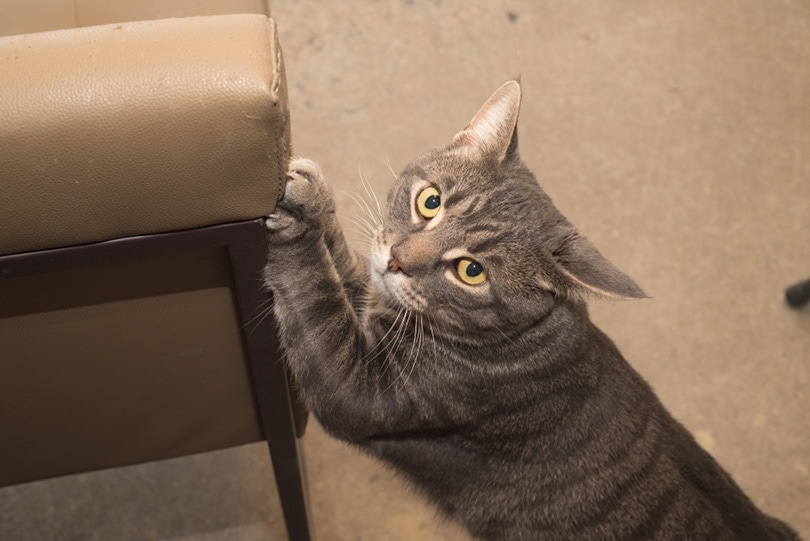
Some first-time cat owners wouldn’t think a cat would need to be trained to behave, but those with damaged furniture and broken vases may disagree. Unfortunately, some pet parents surrender their cats to the shelter because they cannot handle their behavior.
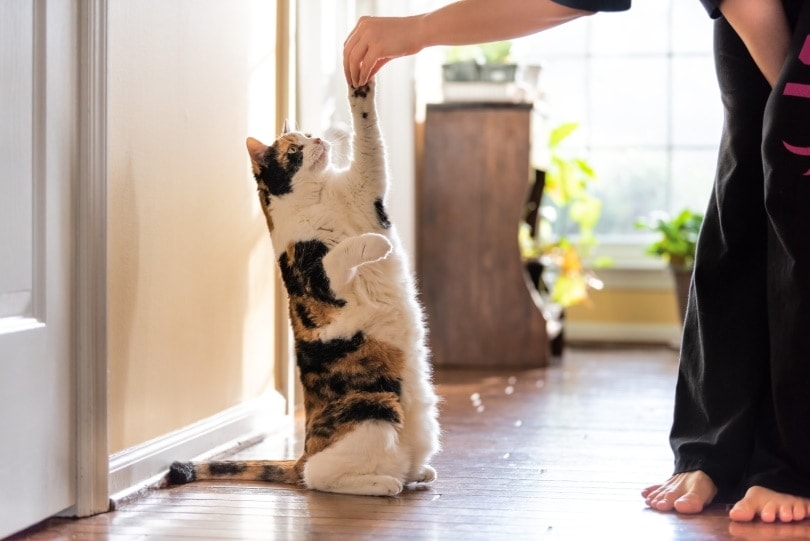
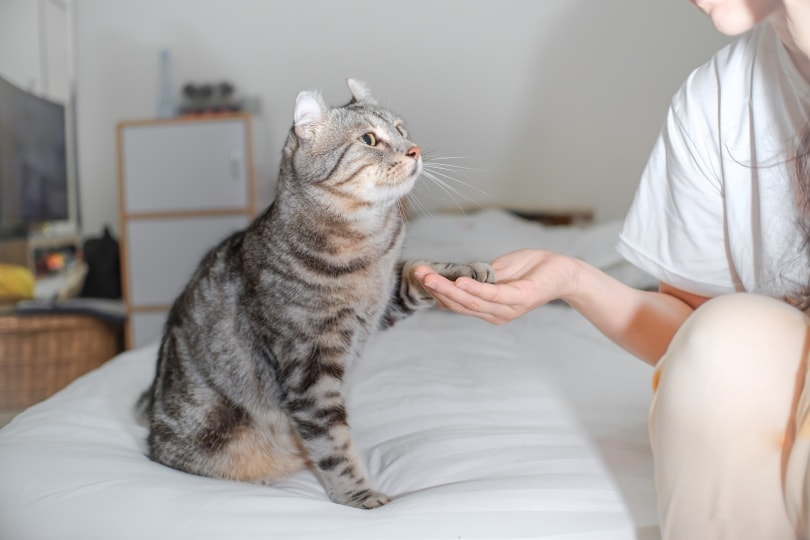
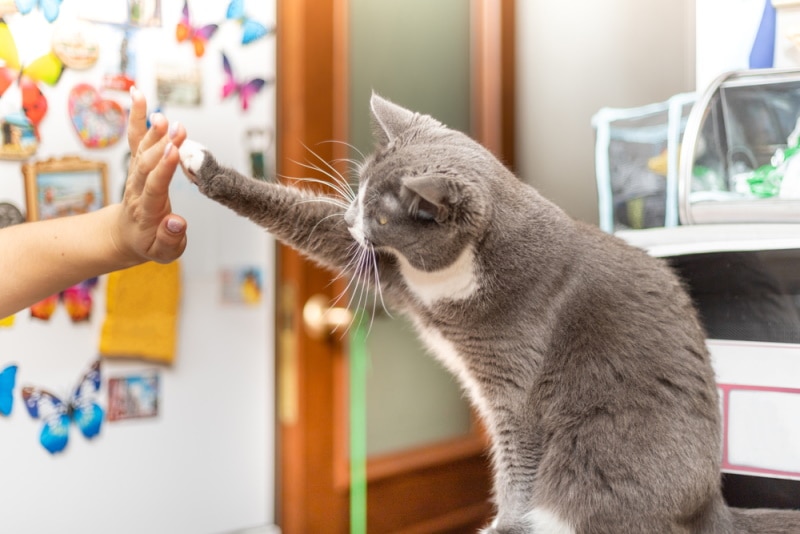
There is hope, so don’t give up your furry friend just yet. At its core, training your cat is about getting them to behave by associating an action with a reward. Positive reinforcement works for dogs and people, so why wouldn’t it also work for felines? If you’re at your wit’s end with your cat because they just won’t listen, keep reading for a beginner’s guide to good cat behavior.

The 6 Tips for Training Your Feline
Training your cat doesn’t have to be difficult, but you will need love and patience to get the job done. Here are a few of the tips that work the best.
1. Gather Your Tools
The first thing you need to do is gather the necessary tools to train your cat. These should include your cat’s favorite treats, a clicker, and a specific idea of what you want to teach your cat to do. There are many behavioral issues that you can work on, but you need to start by teaching your cat the basics and then move your way up to the more advanced concepts.

2. Choose the Right Reward
As a pet parent, you already know that cats are finicky. The treat they like today may easily be the treat they turn their noses up at tomorrow. No magical treat will automatically train your cat, and every cat is different.
You must find the reward that motivates your cat to follow your commands. Some cats prefer dry treats, while others like chewy, wet treats. For your purposes, it’s best to have a few varieties of treats on hand until you know what works best for your feline.
That said, cats tend to easily become overweight, so choose low-calorie, healthy treats, and ensure that they are accounted for in your cat's daily calorie allowance. Treats should not represent more than 10% of your cat’s diet.
A trick that might work is to offer something that they don’t eat every day. For example, if you give dry treats to your cat daily but rarely give them wet morsels, save the wet food for training sessions. You may have to experiment to see what works best for you and your feline.
Many cats’ favorite treat is plain boiled and shredded chicken, and it can be divided into tiny pieces. It's also a healthy, high-protein choice. Some owners can even successfully use kibble as a treat, but that will depend on how motivated the cat is. This usually works better for cats fed on a schedule, not ones used to free feeding. The takeaway here is that you need to invest time to find out what works best for your cat.
3. Use a Clicker or No Clicker
Before you start your training sessions, you need to decide if you will use a clicker or not. The clicker makes a distinctive noise that helps most cats understand that they have done what you expected, offering less room for confusion. The unique sound will eventually become a reinforcer for the cat because it historically comes before a treat.

4. Choose an Area With No Distractions
Choosing a quiet area to train your cat is essential so that the cat doesn’t get distracted and wander off. Other family members, pets, and even the TV can distract your cat and stop your training session before it begins.
If you have other pets, close the door to the training room. That way, it can just be you and your cat during your sessions. If you have more than one cat you’re trying to train, it’s best to teach them one at a time for the best results.
5. Know That Short Sessions are the Best
Cats are independent and curious and often wander away while you play with them. That’s why it’s best to keep your training sessions short. Shorter training sessions mean that it’s less likely your cat will lose interest or become frustrated. A frustrated cat will not take well to the rest of the training sessions you’re planning.
Try for 1- to 2-minute sessions with your cat initially, and slowly work your way up to 5-minute sessions. It’s better to have these training sessions two to three times a day than to do them all at once. Patience is vital to success when training a cat.
6. Reward Consistently and Quickly
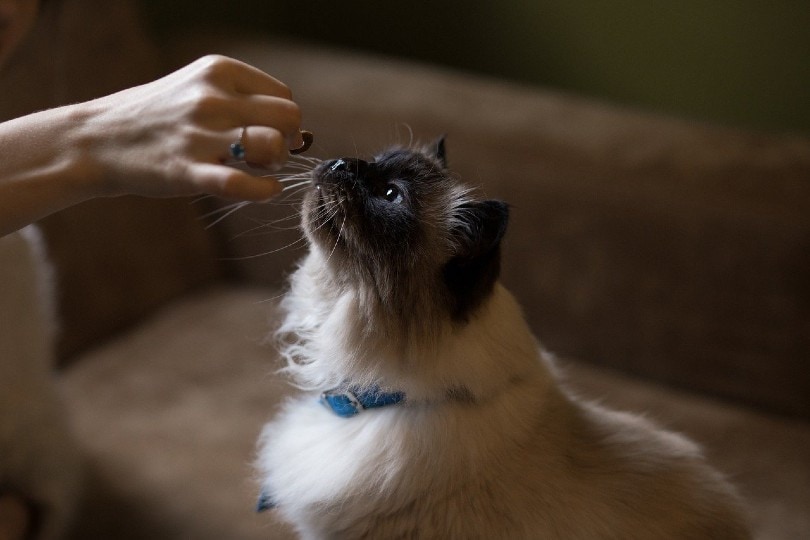
Your cat will soon associate the good behavior you’re asking for with the click of the clicker and the reward that comes after. You should be consistent with your rewards and give them to your feline as quickly as possible after the click. The important part here is that the click should be marking the exact time that your cat is doing what they are supposed to. You’re essentially marking good behavior, so be careful about the moment that it sounds. Your cat will be more likely to do the behavior that brought them a positive outcome. Over time, good behavior becomes second nature to them.
The 4 Behavioral Issues & How to Eliminate Them
Whether it’s staying off the counters or being aggressive and yowling for food, cats have behavior problems that must be dealt with. We’ll discuss a few of those situations and how to deal with them below.
1. Eating Houseplants
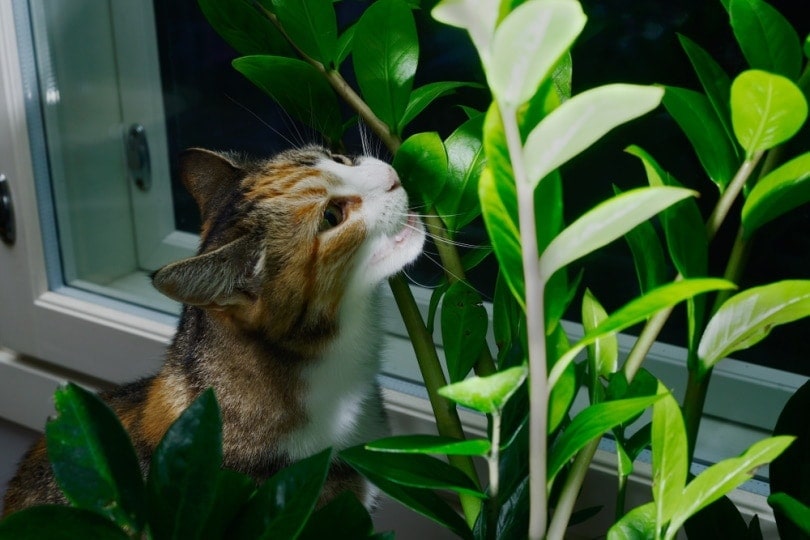
As a pet parent, you probably already know that some plants are toxic to your feline pal. The best thing to do is to keep those plants out of your home and away from your furry friend. Conversely, cat-safe plants are not necessarily safe from your cat. If you wish to preserve your houseplants' beauty and discourage the cat from eating the leaves, you can line the rims of the containers and the surfaces beneath them with aluminum foil, since most cats don’t like the texture. Make sure to also offer your cat an alternative, like cat grass; that way, they can munch on healthy greens without harming your favorite plants.
2. Climbing on the Countertops
Cats love to jump and climb on countertops. Not only do they get fur all over your countertops, but they can also cause damage if they knock something over. A trick to prevent cats from jumping over the counters is to place aluminum foil or double-sided stick tape on them. Your cat will not appreciate that and will stop jumping. Also, if the cat sits and doesn’t jump on the counter again, give them a treat as a reward. Soon, they will associate getting a treat with not jumping on the counter. You can then remove the aluminum foil or sticky tape from the countertop.
3. Being Aggressive
Some cats love nothing more than to bite and kick their owners. This is usually a sign of behavioral issues and often stems from the cat needing their space. Giving your cat the space it needs can go a long way toward stopping this behavior.
Remove yourself from any situation that could end in harm, and ignore the cat; only give them attention when they are calm and positive. Aggression is challenging and can quickly escalate. If the situation has gotten out of control, we strongly suggest that you consult with an animal behaviorist, as they can address the specifics of your cat’s environment scenario and teach you how to recognize the precursors and avoid the trigger cues. You are more likely to be successful in understanding why and when the aggression happens. In extreme cases, cats might need medical treatments.

4. Yowling for Food
Cats yowl for food, but when you’re in the middle of a big project for work or cooking dinner, it can begin to grind on your last nerve. The best way to deal with a cat yowling for food is to ignore them, as hard as that might be. If you give in every time your cat screams to be fed, the cat will realize you’re giving them what they want, and the behavior will continue.
Wrap Up
When it comes to behavioral issues in cats, you can do quite a few things to resolve them. Many behaviors are normal for cats, such as getting on the counters and yowling to be fed. However, if your cat continually becomes more aggressive and attacks and bites people, it might be time to call a veterinary behaviorist to get to the root of the issue.
Cats do what comes naturally to them, and training them to do otherwise will take time. Use positive reinforcement and reward your pet when they behave properly, and soon your feline won’t raise your blood pressure with their antics.
See also: 8 Jobs That Cats Can Do (With Pictures)
Sources
Featured Image Credit; rossiaa33, Shutterstock
Get Hepper In Your Inbox


Pet care tips from our vets and experts, straight to your inbox.
You may opt-out at any time. View our Privacy Policy for more information.
Patricia is a pet and coffee writer and a published author under the pen name Skylar McKinzie. When she isn’t writing, Patricia enjoys spending time with her two cats and dog. Since she was a young child, she has been a pet lover and enjoys nothing more than cuddling with her pets, Mystery, and her two cats, Binx and Link. Mystery has been with her family since the day she was born, as has Link. Binx was found under the house as a kitten, taken inside, and has been a part of the family ever since. Patricia loves sharing her knowledge of animals and finds joy in helping out at the local rescue shelter whenever she can.
Join the conversation
Ask a question, share your story, or send private feedback.