Hepper is reader-supported. When you buy via links on our site, we may earn an affiliate commission at no cost to you. Learn more.
How to Get a Cat Used to a Harness: 6 Vet-Approved Tips


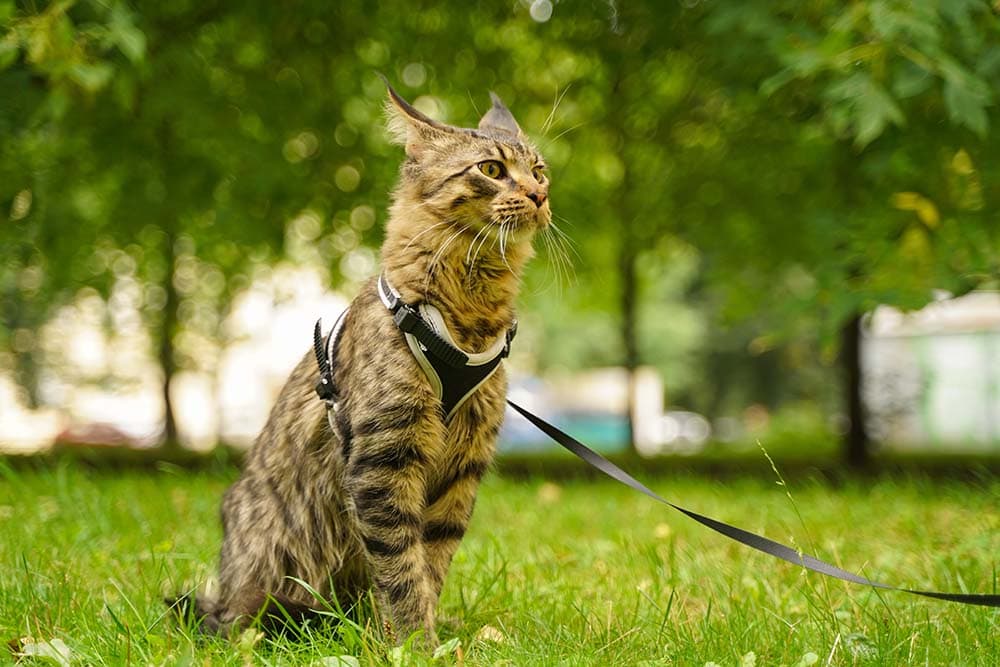
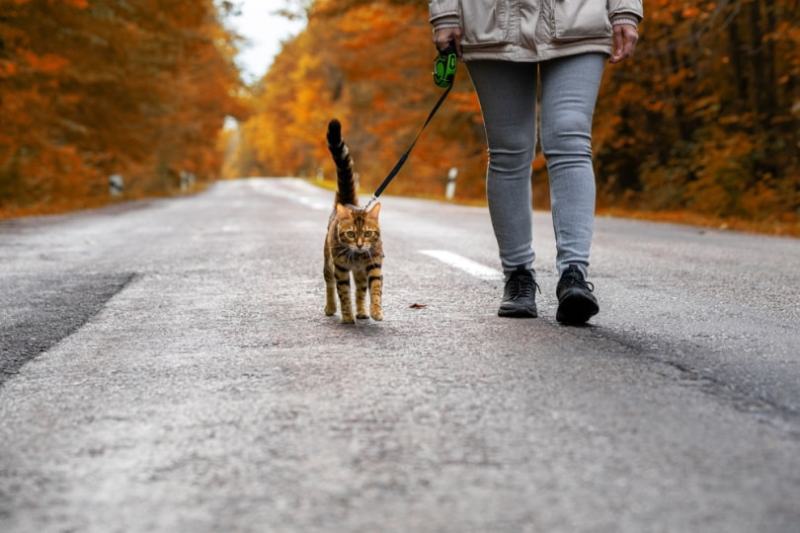
We all know that one of the major differences between a cat and a dog is that you can take a dog for a walk without issue in most cases. Cats usually don’t go for walks with their pet parents. However, it is becoming more common to see a person out with their cat on a harness and leash. In fact, taking your cat for a walk on a leash is safer and more environmentally friendly than letting them roam.
Cats don’t get used to being on a leash as easily as dogs do. It will take a little extra time, love, and attention, but you can train your cat to walk on a leash. Here we give you a few tips for getting your feline pal used to a harness and more.

The 6 Vet-Approved Tips to Get a Cat Used to a Harness
1. Start Slow and Steady
We’ve all heard the phrase, “slow and steady wins the race,” and that’s never truer than when you are trying to get a cat to wear a harness. You’ll need to start by introducing your cat to the harness slowly.
You can do this by showing the cat the harness and letting them sniff it. Don’t get in a hurry and try to put the harness on the cat at this point. Leave the harness beside your cat’s food bowl or their favorite toys, so they come to realize the harness isn’t a threat. You want the cat to get used to having the harness around before you try putting it on.
2. Build Your Cat’s Confidence by Using Treats and Rewards
Most cats love treats, and there’s nothing wrong with using them as a reward. After the harness sits beside the toys and food bowls for a while, reward your cat when they investigates the harness without running away.
The treats will help the cat associate the harness with the treats, hopefully making it easier for you to train your cat to be on the harness and leash. Once the cat has become accustomed to being around the harness, try draping it across the cat’s back. Again, reward your cat with treats every time they don’t move away from the harness.
Never force the cat to keep the harness on their back. If they become skittish, remove the harness and try again another day.

3. Try Passing the Head Through First
Once your cat has no problem with the harness, you can put the harness around their body. You might want to try this training first, though, which will help build confidence before you attempt to tighten the harness.
Start by putting the front loop of the harness around the cat’s neck, then gradually work their entire head through. The best way to do this is by gently placing the front loop close to the cat’s head and then holding a treat just outside the harness's reach. The cat should put their head through to get the treat. Do this several times to get your cat used to the harness.
Don’t secure the harness at this point. Instead, try loose training by letting the cat keep the harness on for a few seconds; don't make it tight. If your kitty starts to get skittish, immediately remove the harness, and try again another time. Ideally, you should remove the harness yourself while the cat is still distracted with the treats or simply relaxed. The idea is to gradually increase the time that they’re wearing the harness but to also teach the cat that the harness will come off and that they are not trapped forever in it.
4. Start Indoors
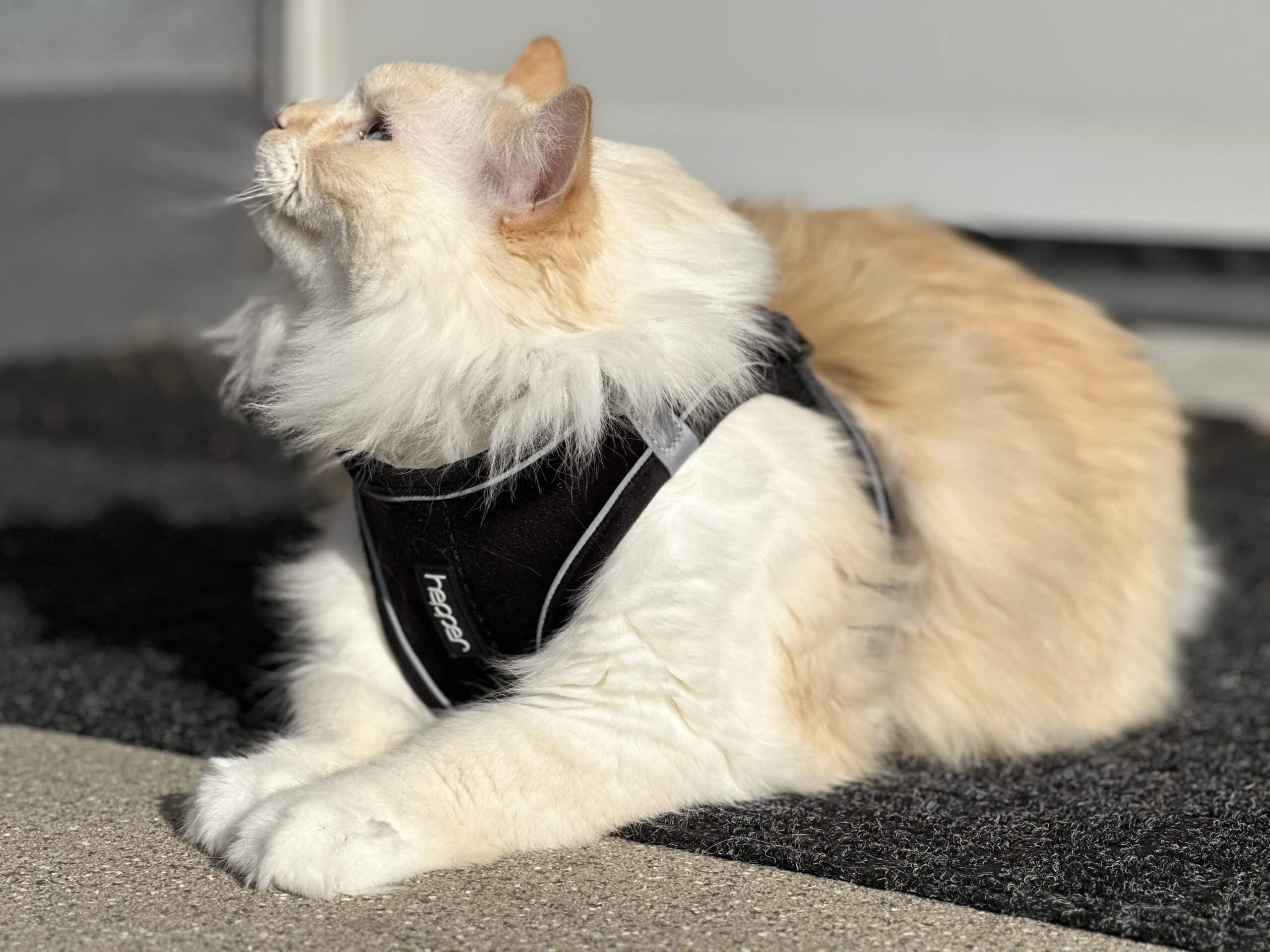
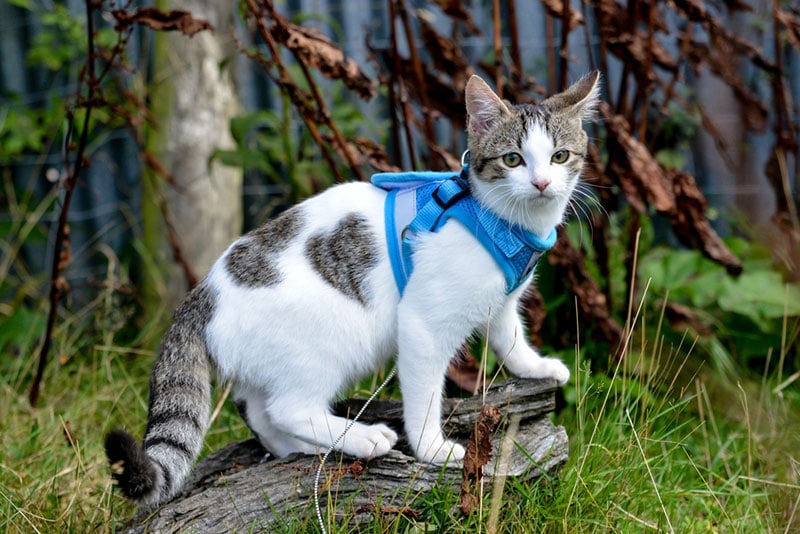
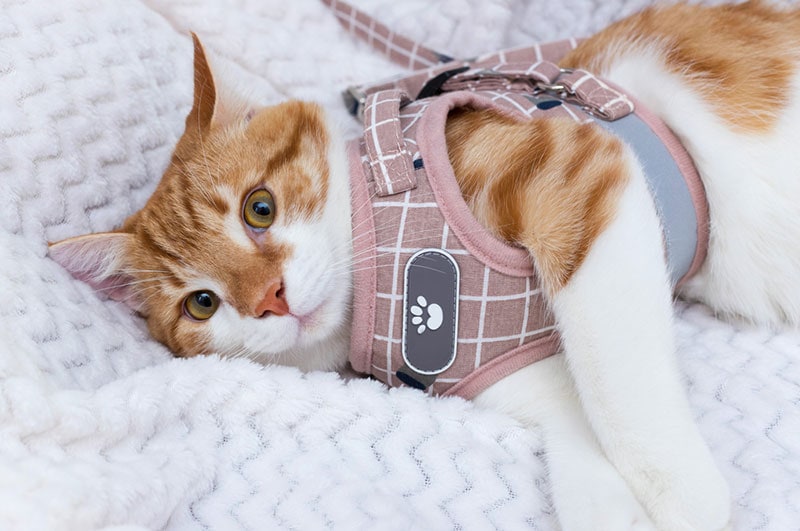
Once your cat is comfortable loosely wearing the harness, gently tighten it to adjust it to the right fix. Remember, it should be comfortable, and you should be able to fit a finger between the harness and your cat’s body. At this point, you can let your kitty start wearing it indoors. When you clip the harness in place, reward your cat for calm behavior and not trying to take it off.
If the cat becomes skittish, remove the harness and try again later. Be aware, though, that your job is to avoid this. Do not let the cat “fail.” It is best that you remove the harness while the cat is calm; otherwise, they can learn that you will take it off if they change their attitude, and that is not the goal.
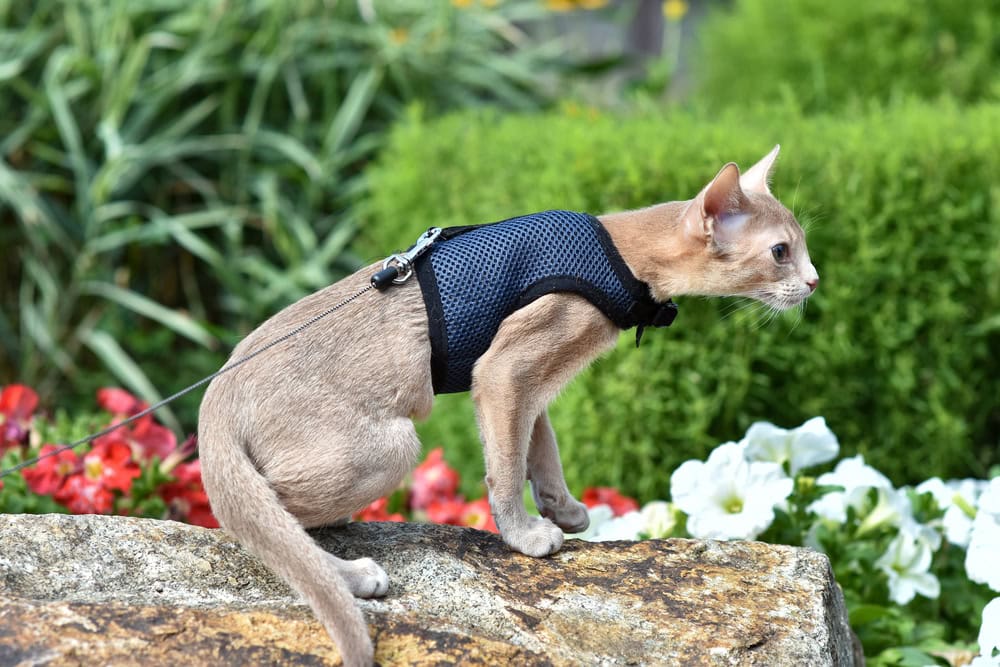
So, only keep the harness on for a few minutes for the best results. The idea is that by pairing it with positive consequences if they remain calm, your cat will learn to love it. Repeat this until the cat is comfortable wearing the harness in the house. At this point, you should be able to attach a leash to the harness so your cat can also become accustomed to that. Practice walking around the home so your cat gets a feel for its weight.
5. Move Outdoors
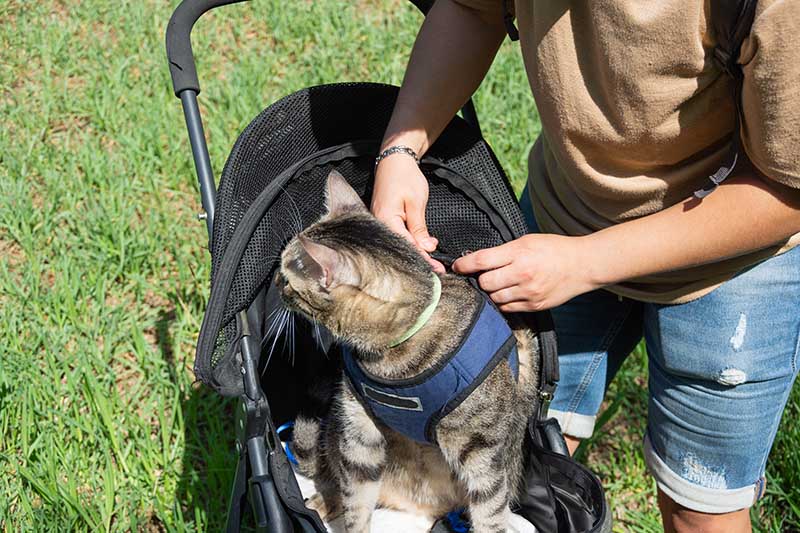
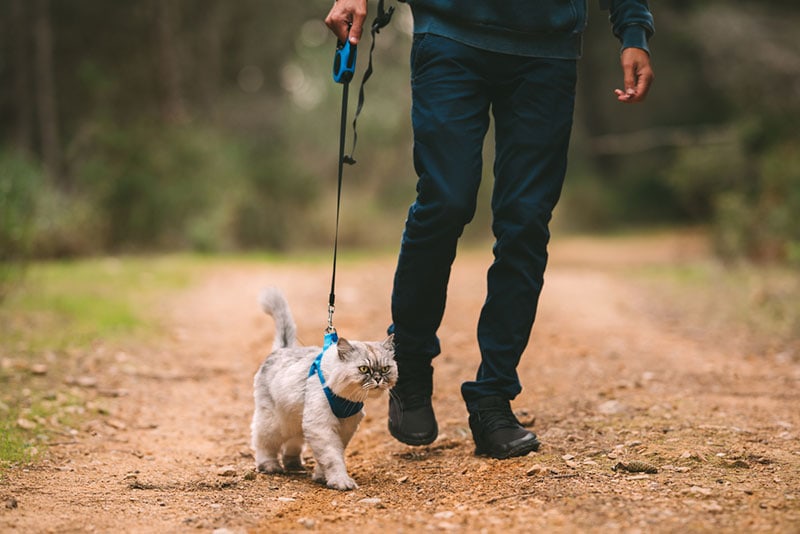
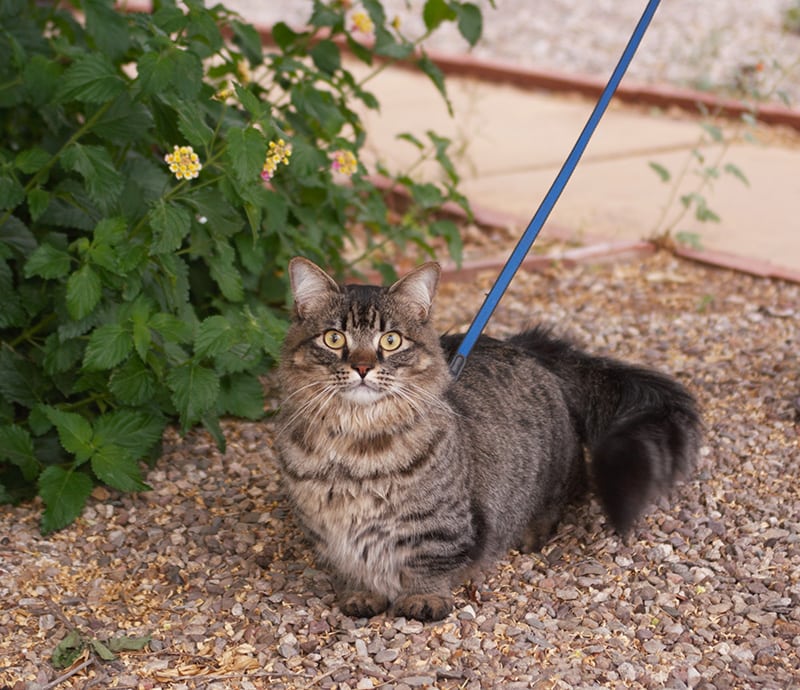
Once your cat is used to wearing the harness indoors, you can gradually transition to taking them outdoors with the harness and leash attached. Ensure the harness is secure, and take your cat to a familiar place, like the backyard.
It is best to stay calm; if you become stressed, your cat will too. It is more challenging to keep a cat focused on a walk than a dog. However, if you give them treats, you’ll have more success. If your pet becomes highly agitated, it is better to return inside and try again in a few days. Exploring the outside should only be done gradually, especially for indoor cats.
6. Use Patience, Love, and Perseverance
Depending on your cat, leash training can be challenging, but don't let it become frustrating. You will need a lot of time, patience, love, and the ability to not give up. It’ll be worth it in the end, so remember, praise and treats will get you to the finish line every time.
Pros and Cons of Cat Harnesses
There is much debate over whether harnesses are suitable for cats. We will give you a few of the pros and cons of cat harnesses in this section so you can form your own opinion and choose the best option for your feline pal.
If you’re searching for the perfect harness for your cat, we recommend our Cat Harness & Leash Set. The lightweight velvet and mesh harness features multiple adjustment points, quick-release buckles, and reflective stripes to keep your cat safe. Plus, it comes in five sizes to fit any cat and even includes a premium rope leash!
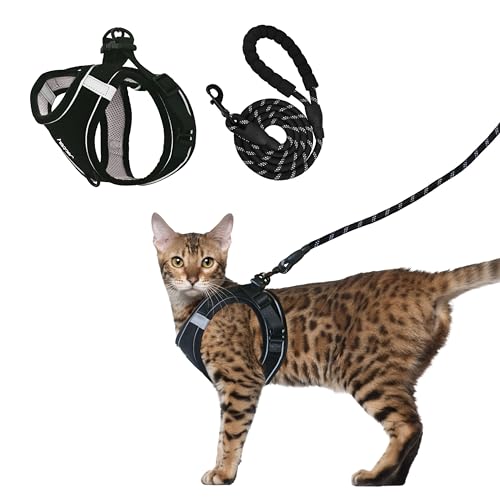
- Escape Proof - Cat leashes and harnesses for walking aren't all equally secure. Our double aluminium D-rings ensure strength when outside, as does the reinforced stitching on this step in vest.
- Superior Comfort - Our cat harnesses are lightweight, made with premium velvet fabric, breathable mesh, with soft edging and resilient cushioning. Also, it is machine washable. Looks and feels great!
- Free Extra Strength Leash - You don't need to worry about your cat escaping this harness. This cat leash is made of thick nylon climbing rope with rotating clamp to keep the strongest kitties at bay.
Pros
- Gives your cat a sense of freedom in the outdoors
- Prevents boredom
- Provides mental stimulation
- Provides exercise
- Establishes a bond with your feline
- Keeps your cat safe when outside
- Allows indoor cats a chance to see the world
Cons
- Restricts the cat's movement
- Makes them unable to escape danger (dogs, etc.)
- Enables your cat to flee if they get out of the harness
- Could cause the cat to feel stressed and vulnerable outside
Conclusion
Cats are independent creatures that might not take well to being put in a harness and walking like a dog. If you decide to use a harness and leash to walk your cat, introduce the items slowly, and don’t force your pet to walk until they feel comfortable with the equipment. Some cats may take several months to transition to walking with a harness, but with patient training, it is possible.
Using a harness is the best way to walk a cat safely, and it is also great bonding time for you and your furry pal, so remember that and celebrate the small wins; don't let the training process become overwhelming.
Featured Image Credit: Goldeneden, Shutterstock
Get Hepper In Your Inbox


Pet care tips from our vets and experts, straight to your inbox.
You may opt-out at any time. View our Privacy Policy for more information.
Patricia is a pet and coffee writer and a published author under the pen name Skylar McKinzie. When she isn’t writing, Patricia enjoys spending time with her two cats and dog. Since she was a young child, she has been a pet lover and enjoys nothing more than cuddling with her pets, Mystery, and her two cats, Binx and Link. Mystery has been with her family since the day she was born, as has Link. Binx was found under the house as a kitten, taken inside, and has been a part of the family ever since. Patricia loves sharing her knowledge of animals and finds joy in helping out at the local rescue shelter whenever she can.
Join the conversation
Ask a question, share your story, or send private feedback.