Hepper is reader-supported. When you buy via links on our site, we may earn an affiliate commission at no cost to you. Learn more.
How to Measure Your Cat for a Harness: Vet-Approved Tips & Tricks


In this article
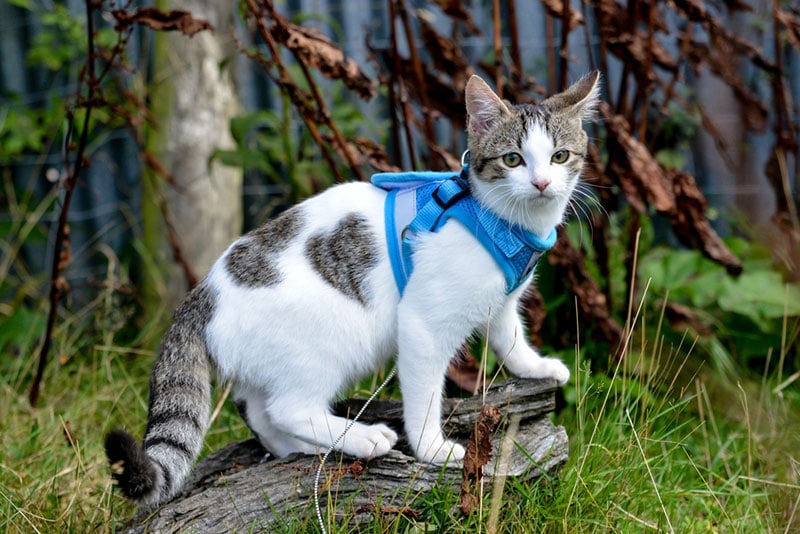
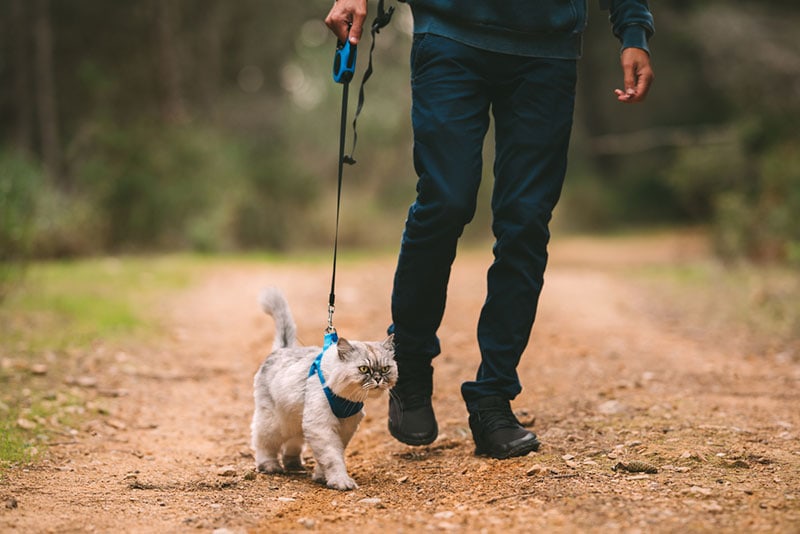
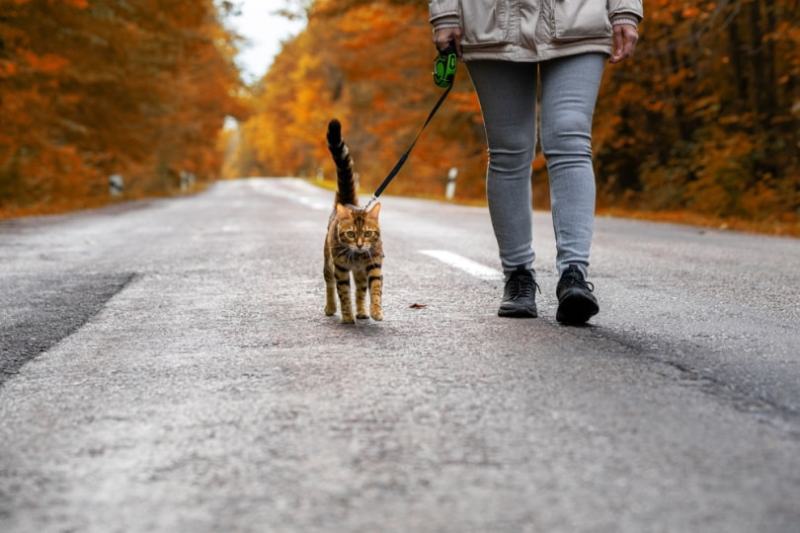
Considering their independent and wilful nature, one wouldn’t automatically consider the cat to be a natural “lead-rein” pet. It’s true that some cats will never consent to be harnessed, but for surprisingly many, this can be and is the norm.
Some breeds and individual felines have more curious and gregarious natures. Being able to go on walks with these kitties opens up a whole new and exciting world for them to explore.
Because of their more delicate and lithe frames, sourcing and fitting a harness for felines may not be as straightforward as it is for our canine buddies. In this article, we look at the types of harnesses available and then talk you through the process of measuring your precious feline so you can find that perfect harness.

Before You Start
Before you go ahead and grab your kitty, there are a couple of things to first consider.
What Measurements Do You Need?
There is a huge variety when it comes to cat harnesses in terms of designs and brands. Different manufacturers have different designs, requiring you to take specific measurements to select the correct size for your cat. You may already know exactly what kind and brand of harness you want. If this is the case, you will need to view the product manufacturer’s sizing guide and see what measurements they require. Once you know which measurements are needed, you can skip ahead to our step-by-step process for taking these measurements.
Conversely, you may have no idea where to start with even selecting a harness. That’s no problem, as we look at many of the different types available, and that should point you in the right direction! Then it’s just a matter of measuring your kitty by following these steps.
The Right Tool for the Job
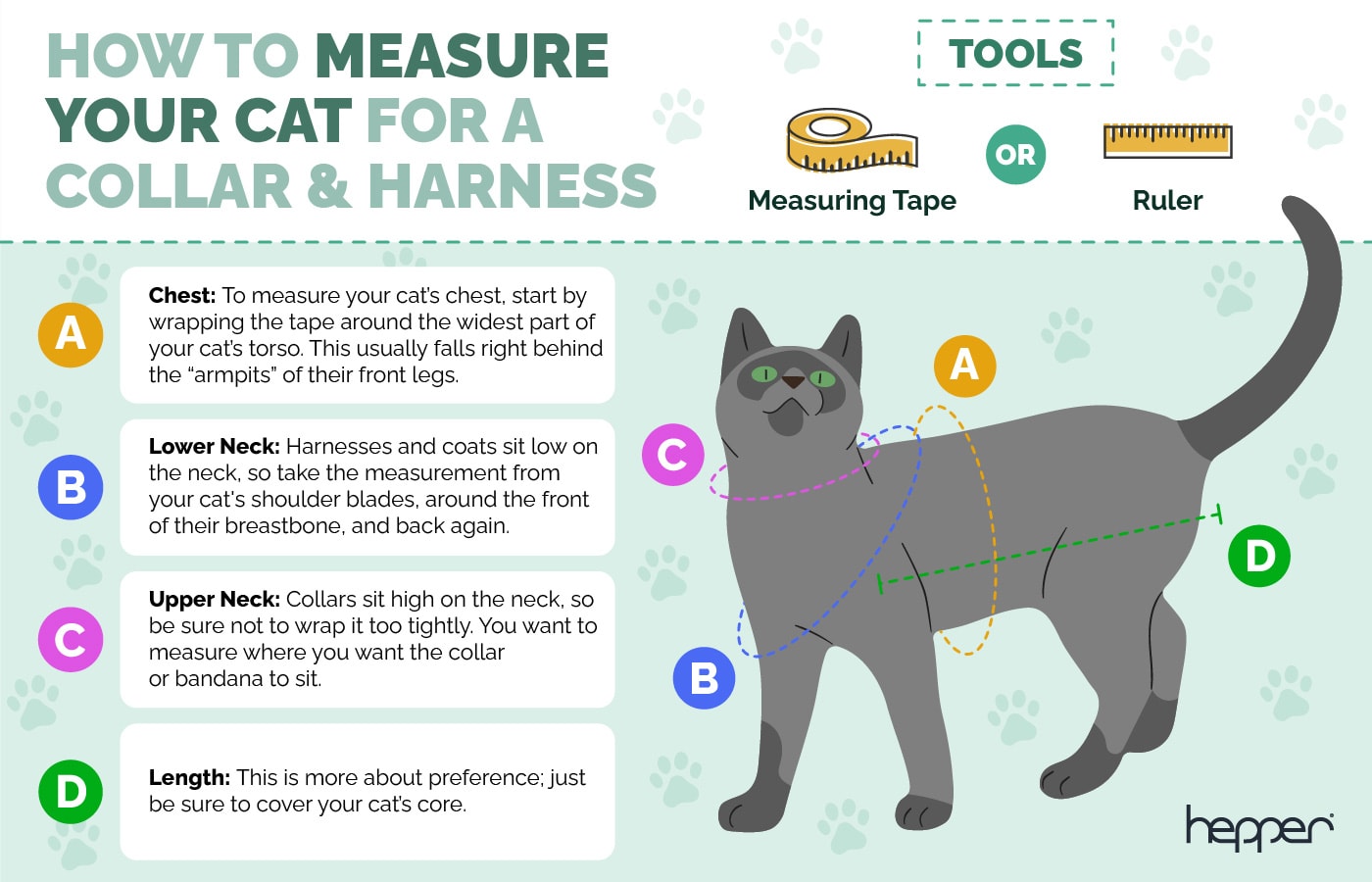
You will need something with which to take your kitty’s measurements. The best tool for the job is a soft dressmaker’s measuring tape. If you don’t have one of these in the house, you can use a piece of string or a similar soft cord. The string or cord should be marked where the measurement ends and then laid against a ruler or metal tape measure to obtain the reading.
Get Some Help
It can be difficult to try to hold your wiggling cat and take accurate measurements at the same time. This is a job that will be more efficiently accomplished with two sets of hands. Enlist the help of your most patient and gentle friend or family member to get the job done with the least amount of fuss. Decide beforehand who will do the holding and who will do the measuring.
Treats!
You can exercise your powers of coercion over an unobliging feline much more convincingly if you come bearing treats. Use your kitty’s favorite treats either as a reward for good behavior or as a distraction while you use the measuring tape.
Your pampered cat is unlikely to find this a particularly traumatic process, but some might find the whole ordeal a bit beneath them. Remember to only give your cat a treat if they remain calm; otherwise, they are more likely to make a fuss the next time that you present them with a new challenge. Some cats won’t even notice the tape if they are presented with a lickable treat first.

How Do I Choose the Right Harness?
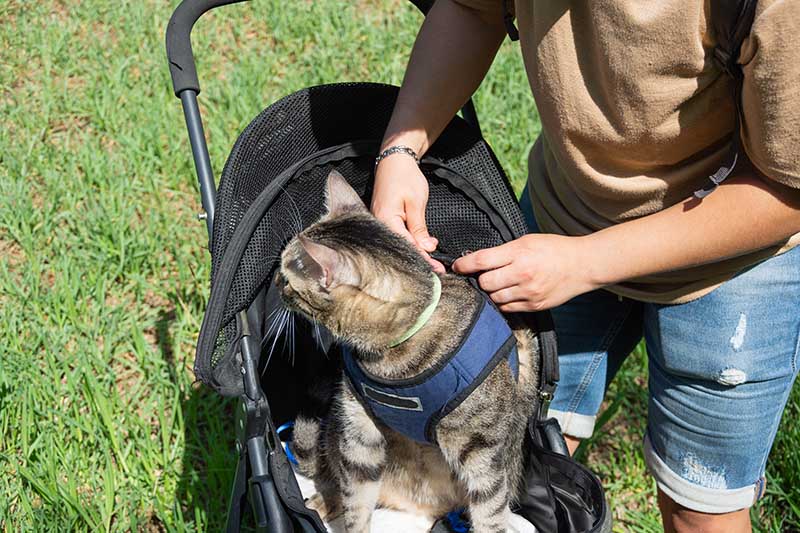
If you’ve had a preliminary browse around, maybe in-store or online, you would have seen right away that there’s quite a variety of harnesses available. Most harnesses conform to either the H-type, figure-eight, vest, or jacket-type designs.
H-Type and Figure-Eight Harnesses
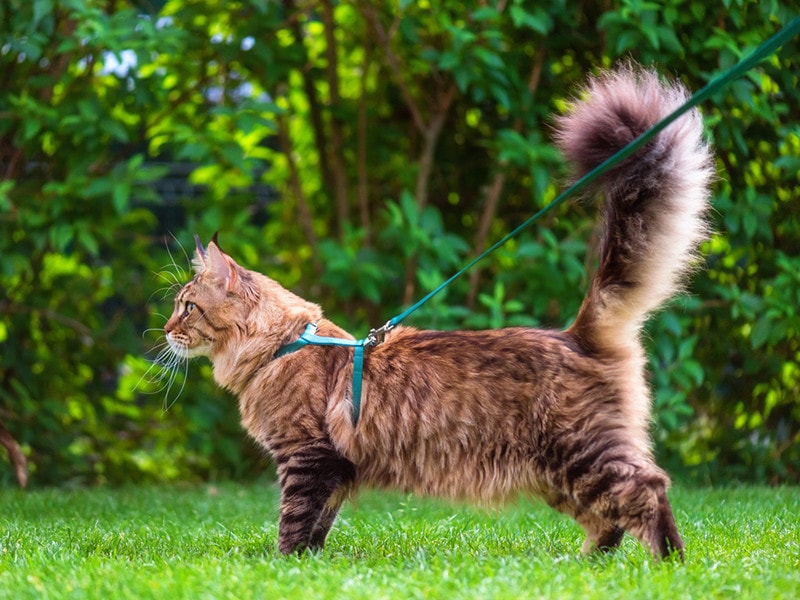
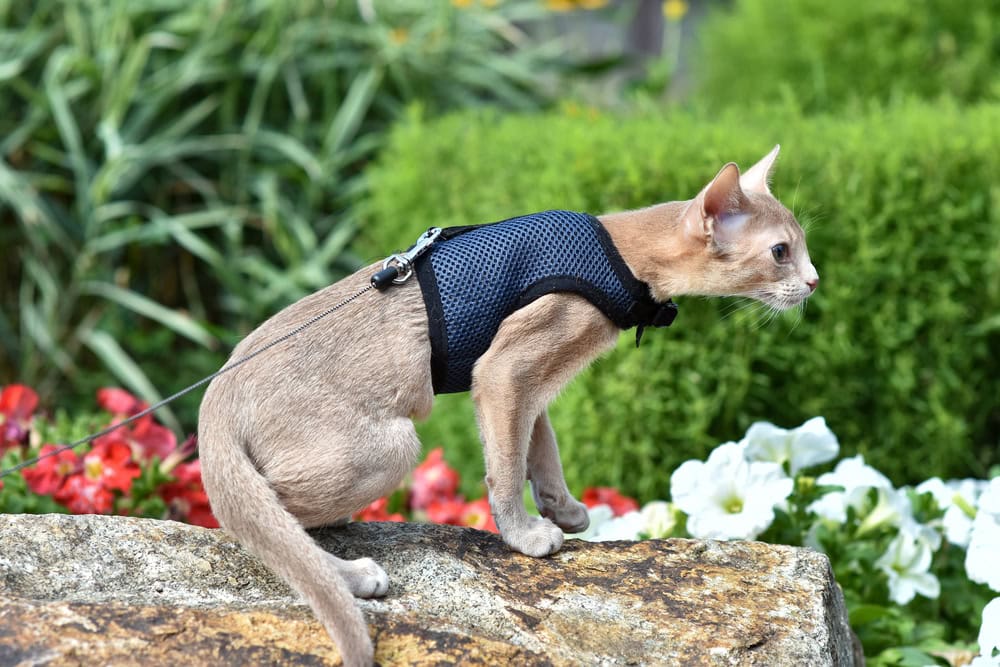
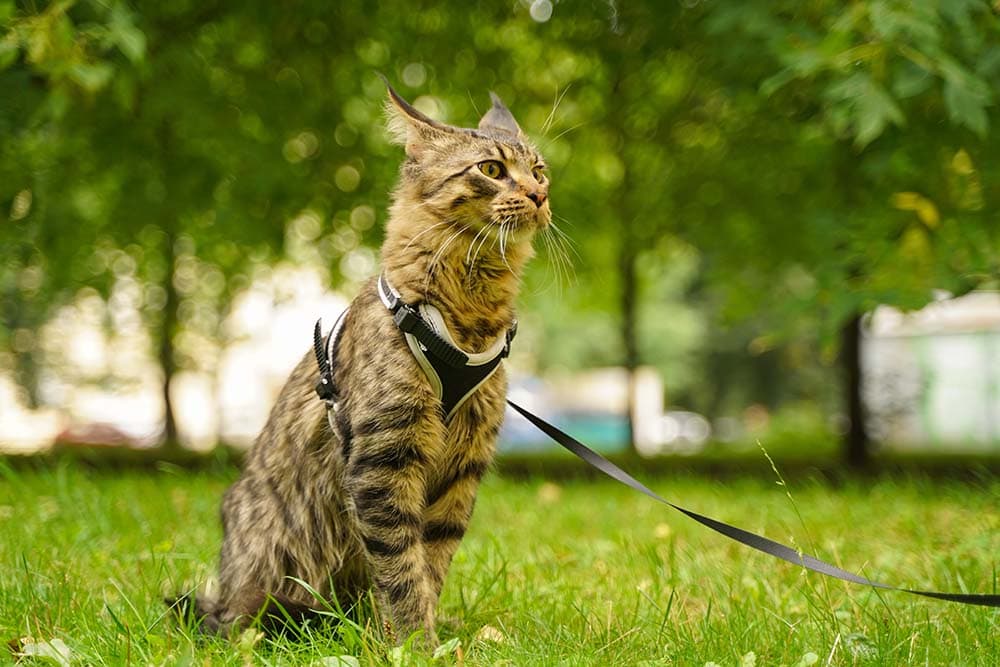
These two designs are more minimalist—that is, they cover less of the cat’s body. The figure-eight harness is great for still-growing kittens, as it has a lot of adjustment. The H-type harness is slightly adjustable, so there is a little wiggle room.
These types of harnesses are mostly best suited for shorter excursions. They are also great for kitties that would feel claustrophobic in a harness with more coverage.
The downside of these types of harnesses is that if your cat is a harness escape artist, they're going to find it easier to slip out of one of these than a vest or jacket harness. Potentially, they are also not as comfortable as the latter.
Vest and Jacket-Type Harnesses
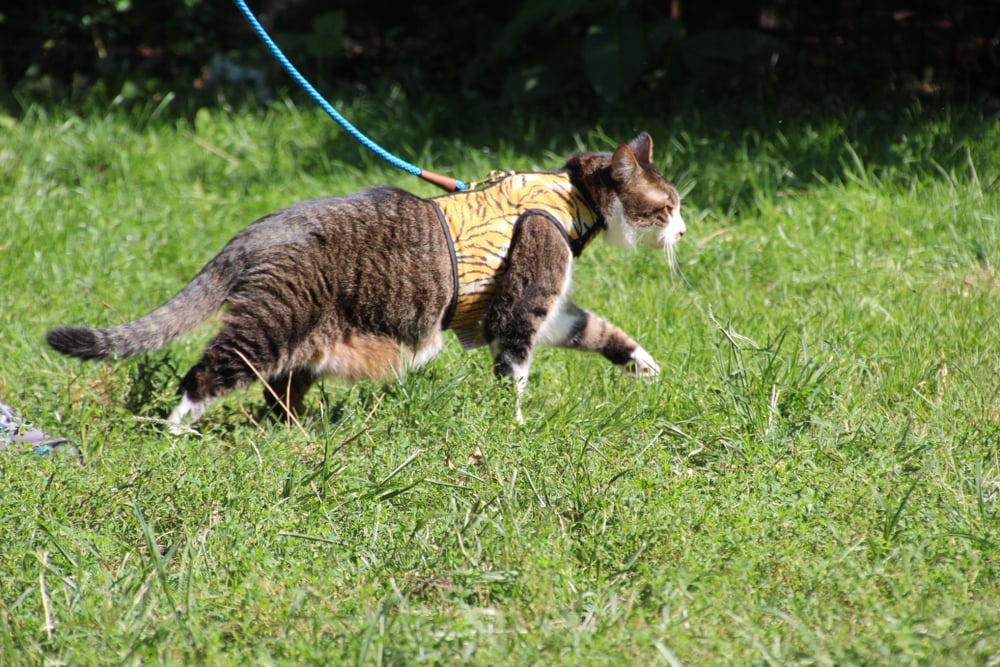
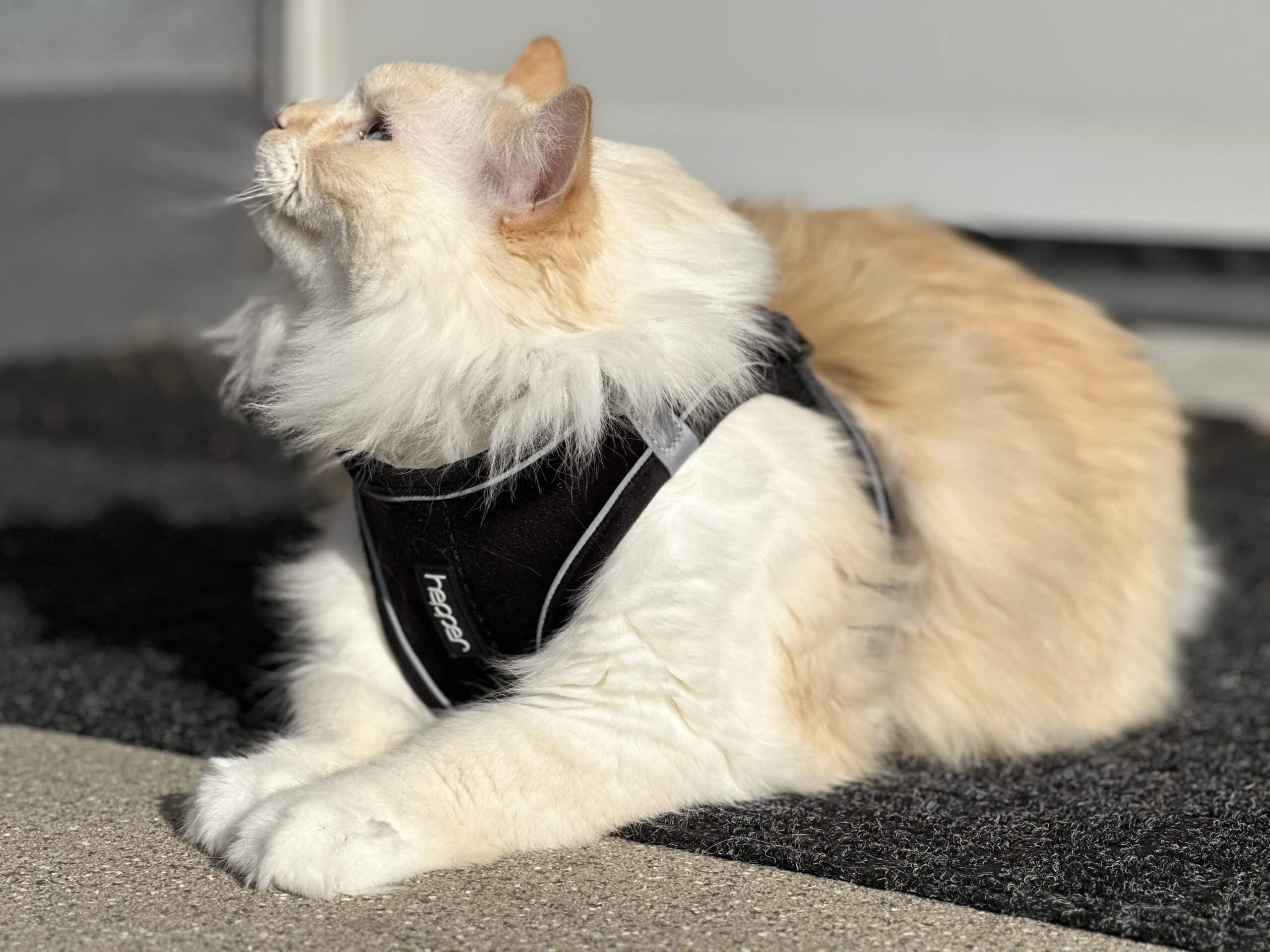
These two designs offer greater coverage, with the jacket type covering almost the entire body of the cat. The fit is more precise and snug, provided the correct size is used. They are usually made of soft, breathable material and can therefore often be more comfortable. Because of their more feline-specific ergonomic designs, your kitty is less likely to be able to escape, making them the safer options.
There are possible disadvantages to these types of harnesses. Some cats will not like to have their body covered almost completely by a garment if they are claustrophobic. Additionally, if you and your cat hail from a warm climate, then these types of harnesses could make your kitty uncomfortably warm on particularly hot days.
Let’s have a look at how to fit your chosen harness.

Step-by-Step Guide for Measuring Your Cat for a Harness
Thankfully, apart from the sometimes naturally uncooperative nature of cats, the actual process of taking your kitty’s measurements is not difficult at all. The trickiest part of this process will be getting the kitty to hold still and/or not treat the measuring tape as their new favorite toy!
Not all of these steps may be applicable, depending on the brand or type of harness you have your eye on.
1. Have Your Measuring Tape Ready, Then Get Your Cat
You’re going to use either a soft measuring tape or a cord of some kind. Whatever you’re using, have it on hand before you grab your kitty. The last thing you want is to have your kitty in hand and then commence a 20-minute search for the measuring tape! As you can imagine, in most cases, your cat will rapidly become impatient and make a run for it.
Once you have your cat in hand, move slowly and deliberately with the measuring tape, talking your precious cat through the process. The kitty may be inclined to escape in bewilderment if you suddenly pounce on them and begin wrapping tapes and cords around them without warning!
2. Measure Your Cat’s Girth
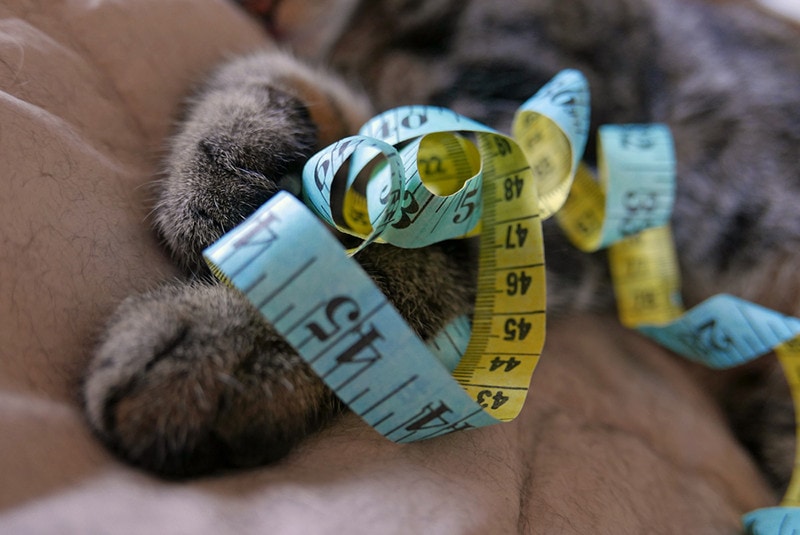
For most brands and types of harnesses, the girth measurement is the most commonly used size descriptor. In many cases, it is the only measurement required to select the correct size.
The girth measurement is taken around the widest part of your cat’s chest. Starting and ending at the same point, the tape or cord should go all the way around your cat’s tummy, just behind their front legs and the point of their shoulder blades. It should fit snugly over the kitty’s fur, but not so tight that you can’t fit a couple of fingers underneath it.
3. Measure Your Cat’s Neck
Some harnesses, particularly the vest and jacket-type ones, additionally require a neck measurement to enable you to correctly select the right size. As you may have guessed, the neck measurement is taken around your cat’s neck in the same place that a collar would fit.
Once again, the measuring tape should be snug but still allow you to fit two fingers underneath it.
4. Compare Your Cat’s Measurements to the Manufacturer’s Guidelines
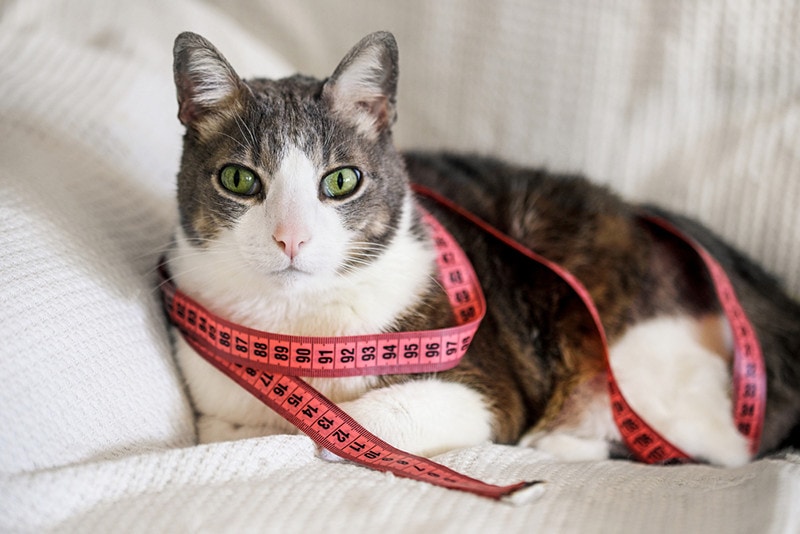
Once you have collected the measurement(s) that are required, you can compare these to the manufacturer’s sizing chart. Most sizing charts specify a range within which a cat’s measurements will fall. Your kitty’s measurements should preferably fall into the middle of one of these size ranges. If they are on the borderline of two sizes, size up if they are still growing or filling out, and size down if they are fully grown.
Final Thoughts
Now that you have an idea of what type of harness and the correct size to get, it’s time for you and your special feline to go out and explore!
Just remember, if your cat has never worn a harness before, start slowly. It is highly unlikely that you’ll be able to slip the harness on and hit the trails straightaway. Cats meet all new things with suspicion, and their new harness will be no exception. You’ll first need to expose them to the harness and then get them used to wearing it. Only then can you try some walking on the leash and finally get out and about.
This whole process could take weeks, but it’s important to do it properly if you want to be successful.
In no time at all you and your beloved cat will be enjoying new adventures together!
Sources
Featured Image Credit: Amerigo_images, Shutterstock
Get Hepper In Your Inbox


Pet care tips from our vets and experts, straight to your inbox.
You may opt-out at any time. View our Privacy Policy for more information.
Nicole is a lover of animals of all sizes but is especially fascinated with the feline variety. She’s the proud mom of Baby, a Burmese, and works every day so he can relax in the sunshine or by the fire. She’s always had a cat in her home and has spent countless days with others, observing behaviors and softening up even the grouchiest of the lot. Nicole wants to share her kitty expertise with you so you and your cat can live happy, healthy, and care-free.
Join the conversation
Ask a question, share your story, or send private feedback.