Hepper blog

Search our database of over 9,984 posts with up-to-date information from our experts and veterinarians.

Hepper is reader-supported. When you buy via links on our site, we may earn an affiliate commission at no cost to you. Learn more.

How Do I Get My Dog Interested in Puzzle Toys? 5 Vet Approved Tips & Tricks

By Brooke Billingsley · Reviewed & fact-checked by Dr. Paola CuevasVet Approved
Dr. Paola Cuevas
Reviewed & Fact-Checked byDr. Paola CuevasMVZ (Veterinarian)
Paola Cuevas is a veterinarian and animal behaviorist, with over 18 years of experience working with a variety of species. Her passion is animal welfare and focuses on the importance of preventive medicine. Paola has skills in the fields of nutrition, microscopy, clinical pathology, diagnostic imaging, and endoscopy as well as extensive experience in animal training through positive reinforcement. As our in-house veterinarian, Paola is very happy to share her knowledge and experience with our readers and hopes to be helpful with any issue presented by your non-human family members.View authorThe information is current and up-to-date in accordance with the latest veterinarian research. Read about our vets
Share
Ask us a question in the comments
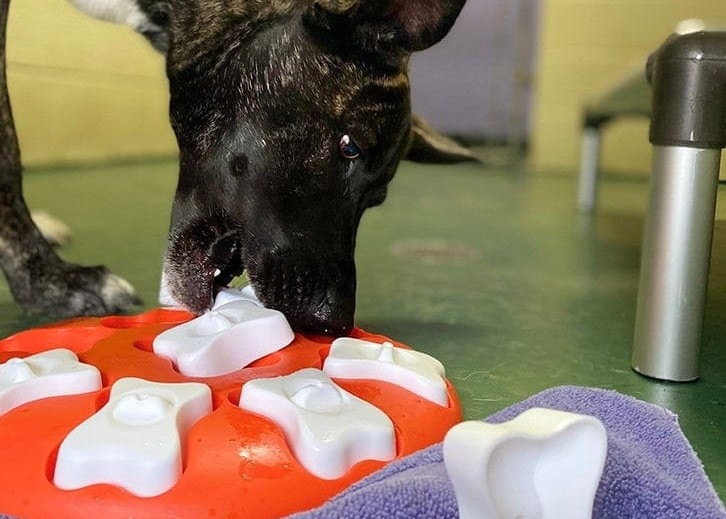
Brindle Dutch Shepherd playing with puzzle toy

Puzzle toys can be a beneficial tool for training your dog, exercising their brain, and burning excess energy. There are a ton of puzzle toys on the market, seemingly with new ones coming out every day. It can be difficult to get your dog interested in puzzle toys, though. This is especially true if your dog gets frustrated and gives up on new things quickly. Here are some of the best ways to help your dog get interested in puzzle toys.

Top 5 Tips to Get A Dog Interested in Puzzle Toys

1. Start Slow

The key to getting your dog interested is to prevent your dog from becoming frustrated. The simplest way to do this is to start slowly with puzzles. Slowly introduce puzzle toys to your dog, don’t suddenly replace half of their toys and activities with puzzles every day. It’s a good idea to start with one or two simple puzzles and only use them a handful of times per week to keep your dog interested.


2. Start Easy

No matter how smart you feel like your dog is, it’s ideal to start with a simple puzzle and work up to more difficult puzzles. Simple puzzles are less likely to frustrate your dog and more likely to help your dog learn that there is a reward associated with puzzles. Don’t forget that your dog may need your guidance to learn how to solve new puzzles.

Remember that your dog’s perception of the difficulty of a puzzle is completely different from your perception of puzzle difficulty. Most commercial dog puzzles have difficulty levels marked right on them, so use this as a guide.
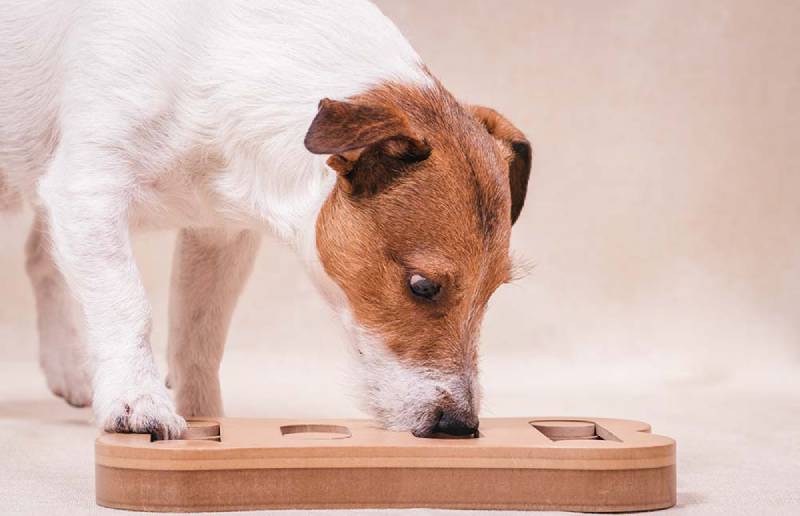
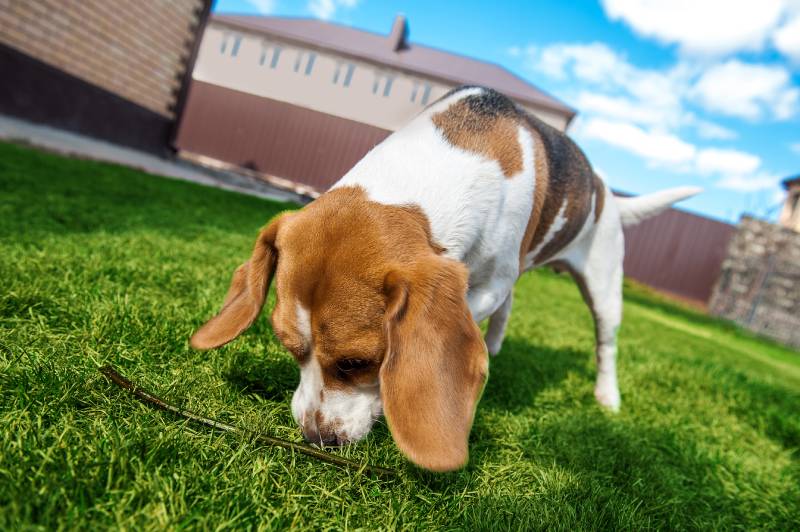
Dog playing sniffing puzzle game for intellectual and nosework training
Image By: Alexei_tm, Shutterstock

3. Provide Value

Puzzle toys are a great way to help your dog earn access to high-value rewards. These rewards can vary between dogs, so use what your dog loves the most. The more high-value the reward, the more interested your dog will be in participating in solving the puzzle. Don’t forget to support your dog through solving the puzzle to avoid frustration. If your dog can smell their favorite high-value reward, but they can’t figure out how to access it, frustration is inevitable.


4. Lots of Praise

Praise your dog! Every time they solve a portion of the puzzle, give praise. Every time they access a treat, give praise. Every time your dog shows an interest in the puzzle, provide praise. The more positive reinforcement you give throughout puzzle training and play, the more likely your dog will be to happily participate in puzzle solving every time it’s offered.
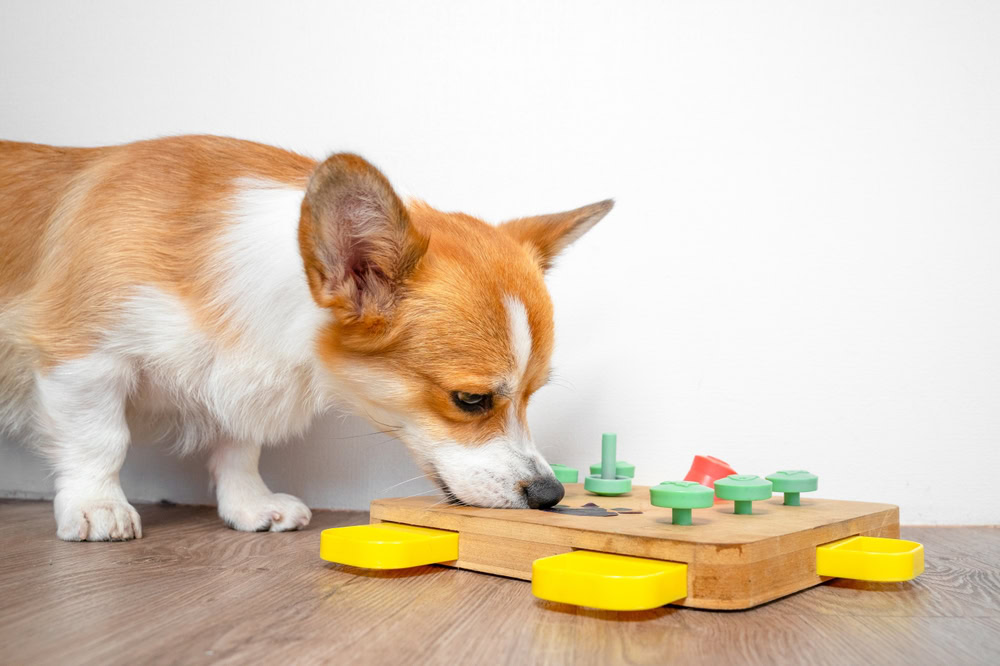
Corgi playing with wooden puzzle feeder
Image credit: Masarik, Shutterstock

5. Mix Things Up

Over time, your dog may get bored if you only provide one puzzle over and over. Offering a selection of puzzles, especially once your dog is getting comfortable with solving puzzles, can help keep your dog interested. Once your dog figures out how to solve a puzzle, they may get bored if you don’t provide new challenges.

Conclusion

Puzzles are a great way to entertain your dog and help build their confidence. They can also help enhance your dog’s intelligence and provide a way to burn excess energy between walks or on days when the weather may not allow for much exercise. Start small and easy when it comes to puzzles, and don’t just throw a puzzle at your dog and expect them to solve it. It’s necessary for you to help your dog learn how to solve puzzles and to support them while they work through puzzles, whether they’re a new or experienced puzzle solver.

Sources

Featured Image Credit: Ryan Brix, Shutterstock

Get Hepper In Your Inbox

Pet care tips from our vets and experts, straight to your inbox.

List

Select all that apply.

You may opt-out at any time. View our Privacy Policy for more information.

Brooke Billingsley
Authored by

Brooke Billingsley

Join the conversation

Ask a question, share your story, or send private feedback.
Rate this post
Required to post. Only our editors see your rating.
Who should see this?

A human reviews every comment before it appears. Your email is never published.

Picked to go with this article

7 Mental Exercises to Stimulate Your Dog (Vet Approved)

7 Mental Exercises to Stimulate Your Dog (Vet Approved)

All dogs need both physical exercise and mental exercise. Without the proper mental stimulation, your canine will likely become bored and may attempt to make t…

Kristin Hitchcock
By Kristin Hitchcock ·
How to Keep a Dog Busy While at Work: 5 Great Methods

How to Keep a Dog Busy While at Work: 5 Great Methods

While we’re home, our dogs are often plenty entertained. Whether it is cuddling with us on the couch or following us around the house, most dogs are content wh…

Kristin Hitchcock
By Kristin Hitchcock ·
Mental Stimulation For Dogs: 11 Vet-Approved Tips For Fun & Challenge

Mental Stimulation For Dogs: 11 Vet-Approved Tips For Fun & Challenge

Being a dog owner means caring for almost every facet of your dog’s life and providing them everything they need to thrive. That includes nutritious dog food,…

Gregory Iacono
By Gregory Iacono ·
10 DIY Dog Puzzles You Can Make Today (With Pictures)

10 DIY Dog Puzzles You Can Make Today (With Pictures)

If you have a dog, you know they can get into all kinds of mischief if you are not constantly entertaining them – especially if you have to spend time away fro…

Nicole Cosgrove
By Nicole Cosgrove ·

Keep reading

More stories you might like

How to Train a Dog That Is Not Food Motivated: 10 Vet-Approved Ideas

It is hard to believe that this can be an actual problem, given how much dogs seem to love treats. But it does happen! If your dog doesn’t seem to respond to t…

Nicole Cosgrove
By Nicole Cosgrove ·
How to Train a Dog That Is Not Food Motivated: 10 Vet-Approved Ideas

Why Mental Stimulation Is Crucial for Dogs: 10 Vet-Reviewed Reasons

Most dog owners understand the importance of providing physical exercise for their pets, but it can be easy to forget that mental exercise is equally important…

Jordyn Alger
By Jordyn Alger ·
Why Mental Stimulation Is Crucial for Dogs: 10 Vet-Reviewed Reasons

Why Do Dogs Play With Their Food? Vet-Verified Facts

Dogs are known as man's best friends for a reason. They are always happy to see us, love spending time with us, and are always eager to please. One of the thin…

Nicole Cosgrove
By Nicole Cosgrove ·
Why Do Dogs Play With Their Food? Vet-Verified Facts

Scent Training for Dogs 101: Vet-Verified Facts & Advice

A dog's sense of smell is key to their survival, as dogs use sight and smell to communicate with one another and assess their surroundings. Since their noses a…

Chantelle Fowler
By Chantelle Fowler ·
Scent Training for Dogs 101: Vet-Verified Facts & Advice

Why Does My Dog Eat So Fast? 4 Vet-Reviewed Reasons & Ways to Slow Them

As pet owners, it can be quite frustrating to watch your dog devour their food in minutes. In the blink of an eye and you wonder if they even took the time to…

Nicole Cosgrove
By Nicole Cosgrove ·
Why Does My Dog Eat So Fast? 4 Vet-Reviewed Reasons & Ways to Slow Them

9 Confidence Building Games & Exercises for Dogs

Building your dog’s confidence can be as important as training them to sit or stay. A confident dog is a happy dog, as they're less likely to develop issues su…

Nicole Cosgrove
By Nicole Cosgrove ·
9 Confidence Building Games & Exercises for Dogs

Why Are Dog Toys and Play Important for Dogs? 8 Vet-Verified Reasons

Most dogs will jump at the chance to play with toys, especially squeaky toys or toys they can tug on or safely chew for entertainment. But did you know that do…

Rachel Giordano
By Rachel Giordano ·
Why Are Dog Toys and Play Important for Dogs? 8 Vet-Verified Reasons

6 Vet-Approved Nose Work Games for Dogs You Can Play Today

You know your favorite pup needs walks, runs, and doggie play time to stay healthy and happy. But that isn’t all your dog needs; canines must also stay mentall…

Misty Layne
By Misty Layne ·
6 Vet-Approved Nose Work Games for Dogs You Can Play Today