Hepper is reader-supported. When you buy via links on our site, we may earn an affiliate commission at no cost to you. Learn more.
How to Groom a Long Haired Cat – 11 Expert Tips
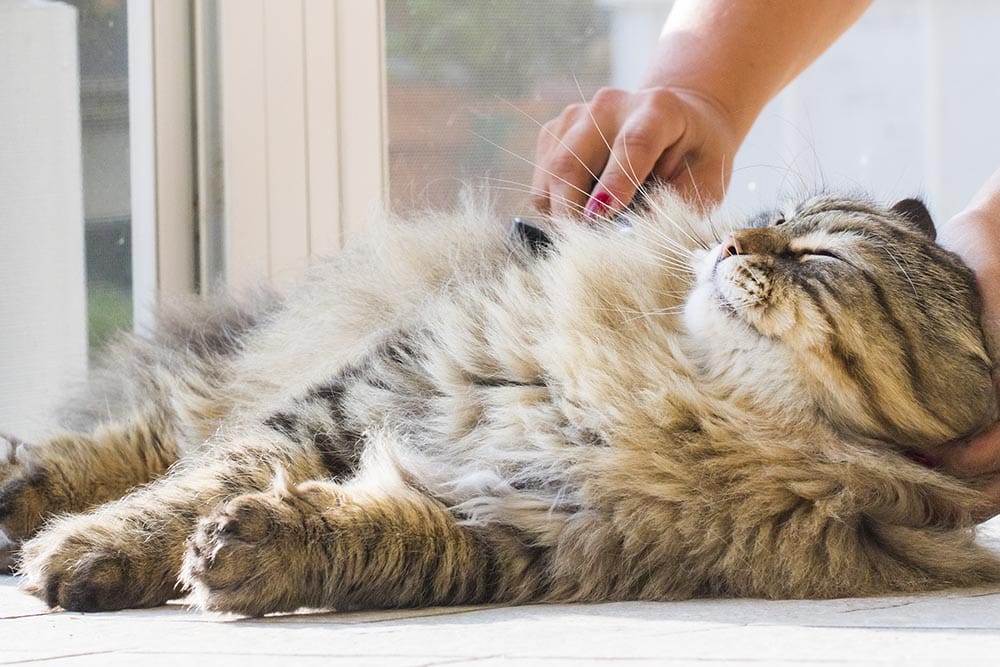
Long-haired cats are highly sought after for their elegance and beautiful look but caring for their coat is a group effort. While your kitty can take care of its basic grooming tasks, it will need your help to keep its coat looking its best. However, you don't need to be a professional to tackle most of your long-haired cats' grooming needs. Keep reading to find our 11 tips on keeping your pet's coat gorgeous, shiny, and mat-free.

The 11 Tips to Groom a Long-Haired Cat
1. Brush It Once a Day
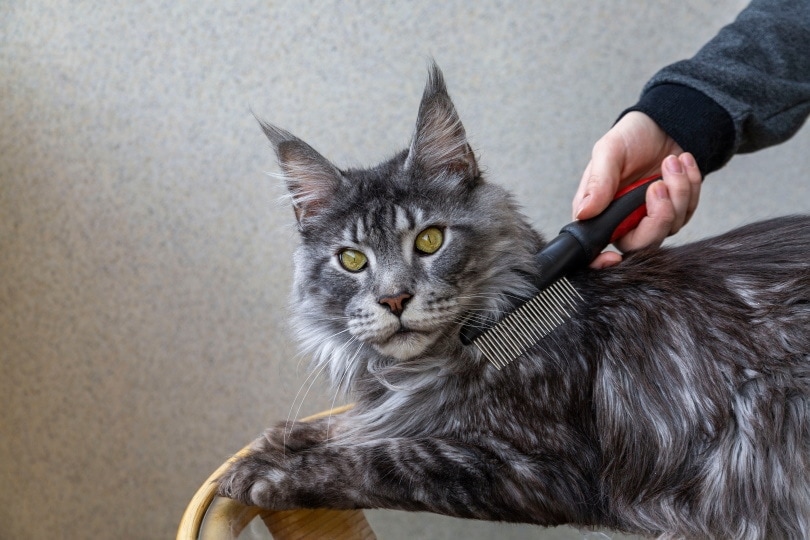
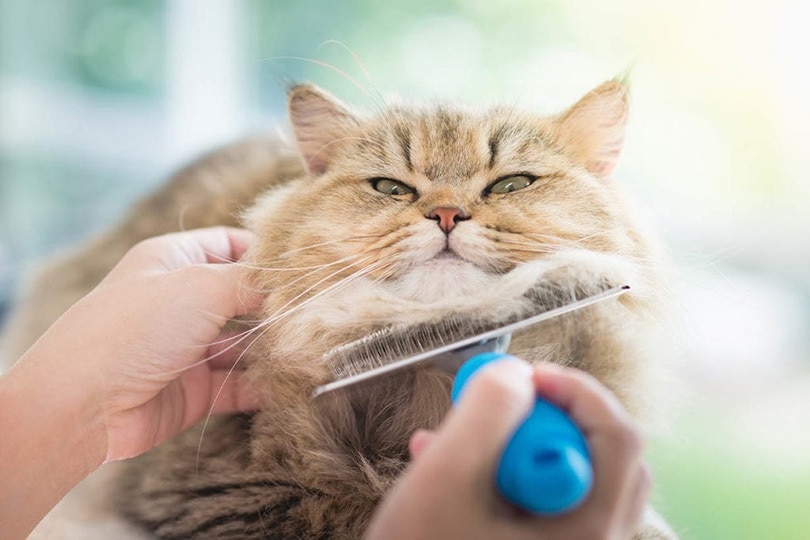
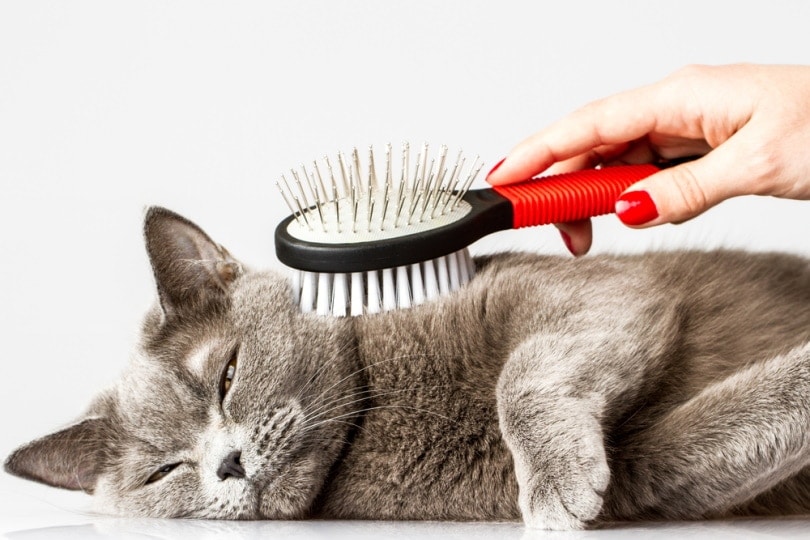
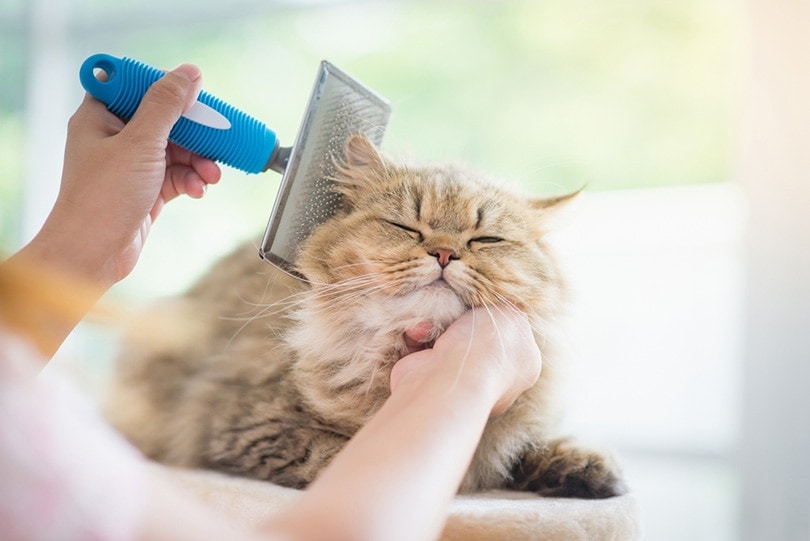
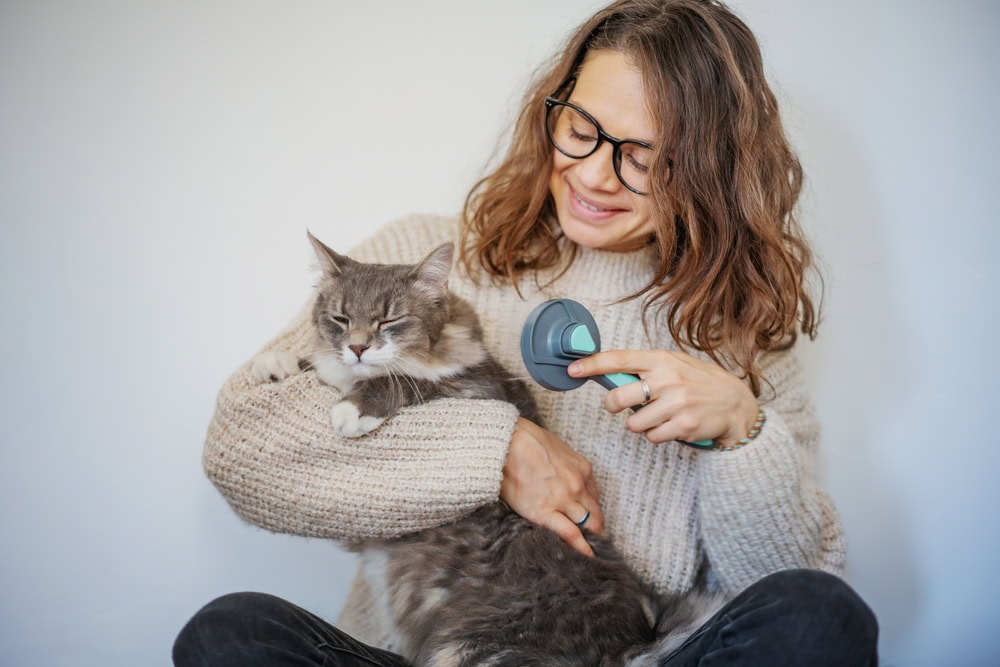
Brushing your cat's coat daily is the key to keeping tangles and mats at bay. You can break up these daily brushings into one or two sessions if necessary to keep the peace, as not all cats will be on board with getting brushed. If your cat's fur isn't a texture that's prone to matting, you can probably get away with three or four brushing sessions a week instead.
2. Pick the Right Time to Groom
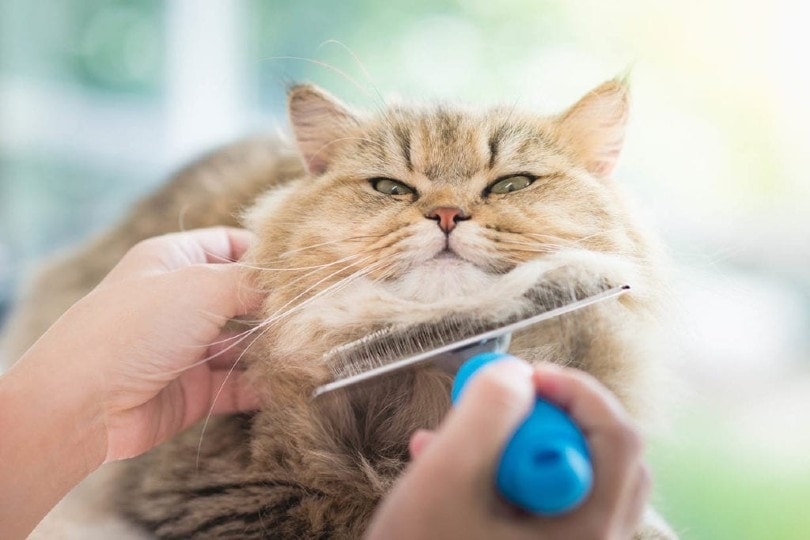
Not all cats enjoy being groomed, so increase your chances of success by choosing a time when your cat is most relaxed to begin your at-home grooming session. Don't pick up your pet immediately after it has just finished fighting with the other resident cat; expect it to be okay with getting brushed. Give it lots of pets and speak to it calmly to ensure contentment before you start grooming. You might also pick a time when it's most calm and relaxed, such as after a nap or meal.
3. Start Slow With Newbies
If your cat hasn't been brushed before, you'll have to ease it into brushing. It can take some time for it to become acclimated to the process, so the younger you start brushing your kitten, the better. Keep the first few sessions short, and don't continue the groom if your kitty is noticeably uncomfortable. Instead, let it guide the length of your session.
4. Use the Right Tools
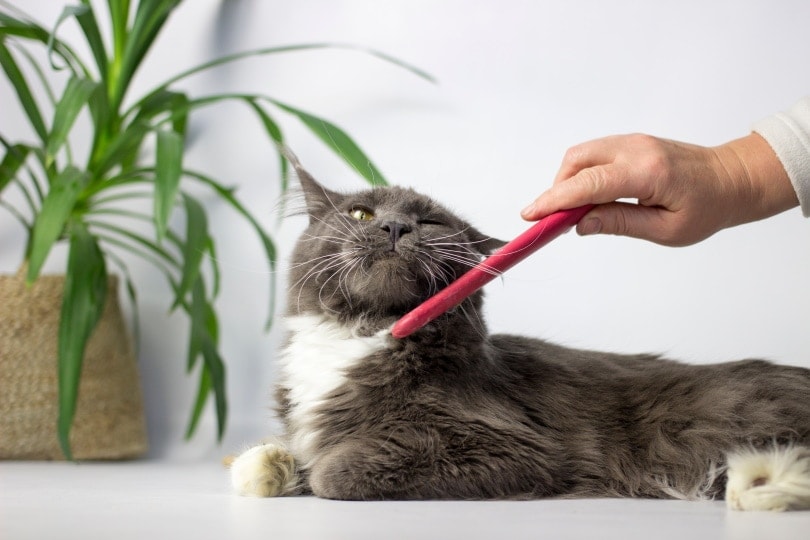
Grooming a long-haired cat requires the right tools, like a wire brush, undercoat comb, and flea comb. Flea combs are typically used for cats undergoing flea treatment but are also extremely useful for removing mats from long-haired cats.
A mat splitter is another great investment. Think of this tool as a letter opener, as it looks and operates much the same. Splitters will cut the mat up, making it easier to comb it out without hurting your pet.
You may need to use different tools depending on the season. For example, if your kitty is going through a heavy seasonal shedding, you'll want a brush that can remove clumps from its loose undercoat.
Our Deshedding Cat Brush is a great tool to have in your arsenal, as it's tough enough to remove stubborn knots but soft enough for use on sensitive skin.
5. Work Your Way Through Your Tools
Keep all your tools nearby, as you'll work through most of them.
If your cat's fur is particularly knotty, you should start with a brush or wide-toothed comb to address the tangles. Once they've been worked through, switch to an undercut comb and then a flea comb. Exercise extreme caution when using finer-toothed combs to avoid tugging at your cat's fur. Instead, try to get under the mats softly to get it to start loosening up.
If your cat doesn't have many knots, you can probably start with a less fine undercoat comb. This will help remove loose hairs and spread your pet's natural oils over its coat.
6. Use the Right Tools for Mats
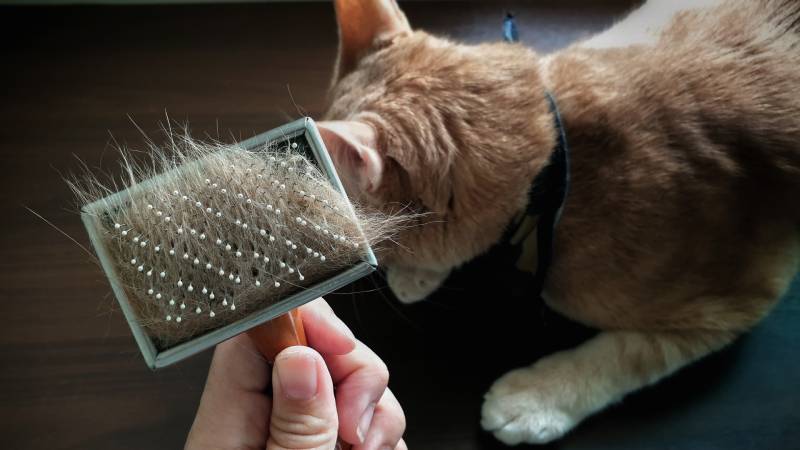
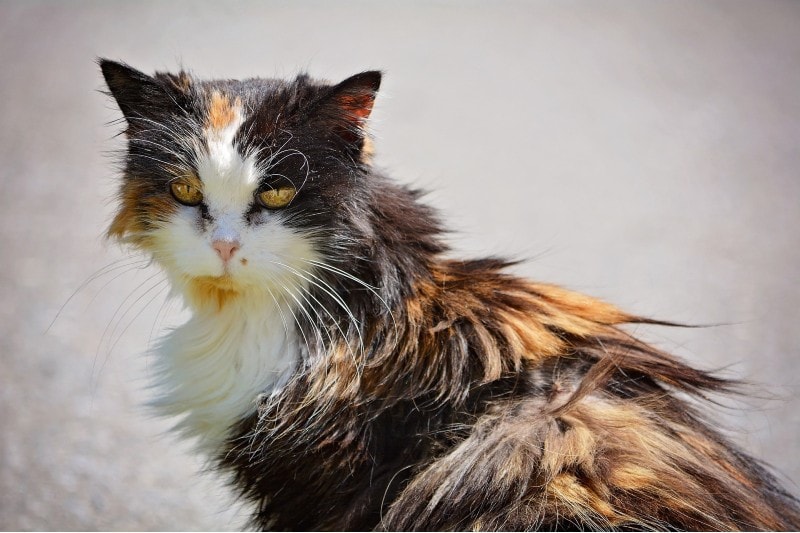
Mats are a pain—literally and figuratively.
If your cats are stubborn, sprinkle some cornstarch or talcum powder in the area. Then, work it around with your fingers and gently try to pull the knot apart. Do not yank. Once you've teased it apart, you can try using a comb on it again.
7. Decide If Bathing Is Necessary
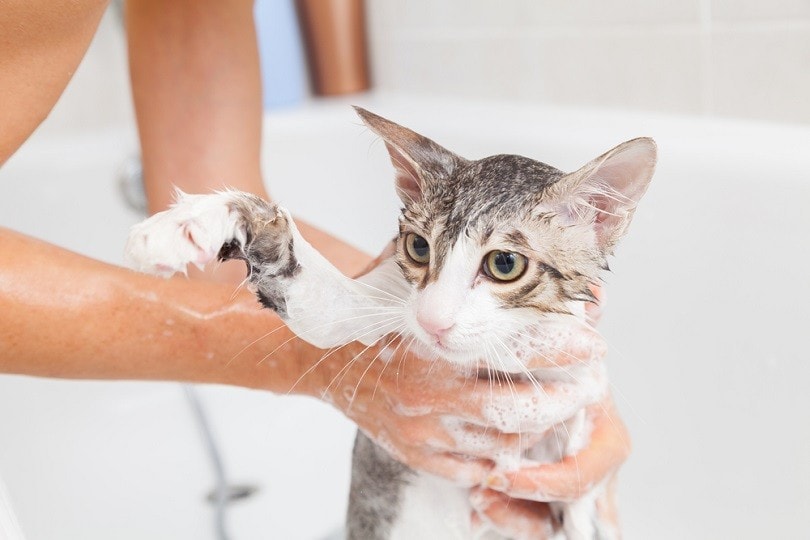
Cats are fastidious self-groomers and rarely ever need human intervention when bathing themselves. However, cats with certain health conditions or restrictions may require extra assistance. For example, those who are overweight or arthritic and cannot groom themselves properly may need your help. Vets will also sometimes recommend frequent baths if your cat has allergies, but this is only necessary if your vet suggests it.
Brush your cat before bathing it to make sure any loose fur is removed ahead of time. Also, make sure you have a rubber mat in the bath to ensure your cat doesn't become a slippery snake when wet.
If you're finding that your cat needs frequent baths, talk to your vet to see if they have recommendations for dry shampoos to prevent skin issues that may arise with repeated baths.
8. Use Shampoos Designed for Cats
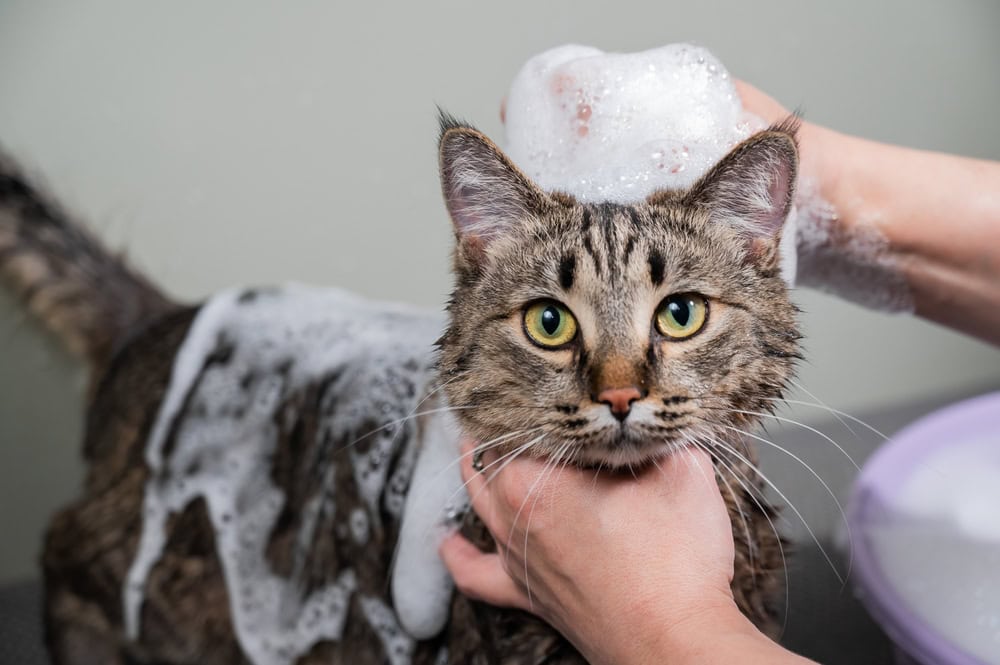
As easy as it would be to use your own shampoo and conditioner on your cat, it is not recommended. Human shampoos can dry your cat's skin, worsening coat and skin issues. Instead, find a product designed specifically for cats.
Rinse your cat throughout after applying shampoo. Use a cup or spray hose on a gentle setting to get all the suds out and ensure your kitty won't get itchy from the remaining soap. Use a wet washcloth to clean your cat's face.
It is important to comb your pet's damp fur once rinsed off to prevent further matting.
9. Only Bring Out the Shaver or Scissors When Necessary
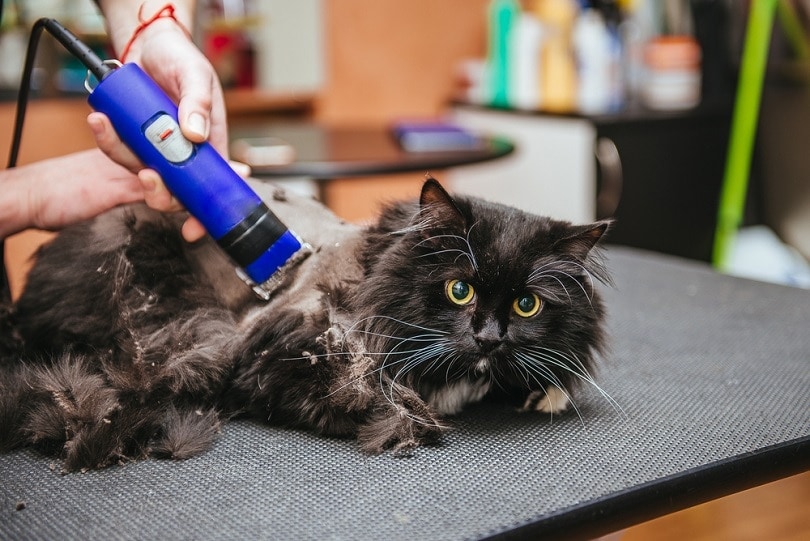
Only use a shaver or scissors on your cat's coat if it is unavoidable and you have no other options. This is typically only necessary if your cat's mats are so stubborn that they won't come loose with a flea comb. Cats with extra dense fur may face this more often than others.
When shaving away mats, take extra care to ensure you're not nicking your cat's skin.
10. Trim the Back End
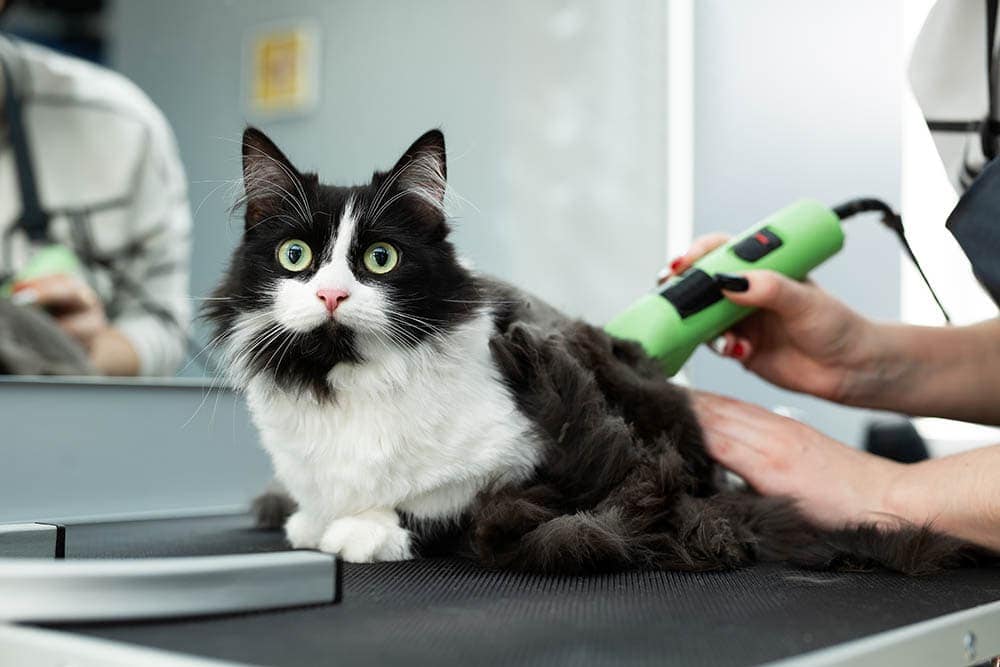
If your cat has extra thick fur around its back end, you may need to clip the area to prevent feces from coming in contact with the fur. Fecal mats are extremely unsanitary and can lead to complications if they start blocking the anus opening.
11. Trim the Nails
A grooming session isn't complete until you've addressed every square inch of your cat's body. The nails are an area that's often overlooked, but it's part of the process and something you should become comfortable doing. We highly recommend clipping nails once every few weeks before you start your at-home grooming. This will ensure you stay as scratch-free as possible.
We recommend using nail clippers designed for cats, though human ones can work in a pinch.
Hold your kitty under your arm, lifting one paw at a time. Gently press on the paw pad to extend the claws. Clip off the end of the nails, ensuring you don't clip the quick (the pink vein running through the nail). If your kitty is putting up a good fight, get the front claws done and comb back for the back ones later if necessary.

Final Thoughts
Long-haired cats are beautiful, but their stunning coats require extra care and attention. Skimping out on grooming will not only make your cat's coat unpleasant to look at, but it could also put your pet in great pain. Mats are no joke!
If you don't have the time to groom your kitty, we highly recommend hiring an experienced feline groomer to do the work for you.
Featured Image Credit: Massimo Cattaneo, Shutterstock
Get Hepper In Your Inbox


Pet care tips from our vets and experts, straight to your inbox.
You may opt-out at any time. View our Privacy Policy for more information.

Chantelle's life revolves around two passions: writing and animals. Raised on the prairies of Canada amidst a menagerie of pets, she now lives with five cats, two guinea pigs, and a bearded dragon. Together with her husband and child, Chantelle delights in being an exemplary animal parent, going as far as installing wall-mounted cat shelves to give their cats an indoor playground. When she's not cozying up with her cats or snapping their amusing antics, she enjoys venturing into the Rocky Mountains, binge-watching her favorite Netflix shows, and indulging in spontaneous reading adventures.
Join the conversation
Ask a question, share your story, or send private feedback.