Hepper is reader-supported. When you buy via links on our site, we may earn an affiliate commission at no cost to you. Learn more.
How to Introduce Your Kitten to Your Multi-Cat Home (Step-by-Step Guide)


In this article
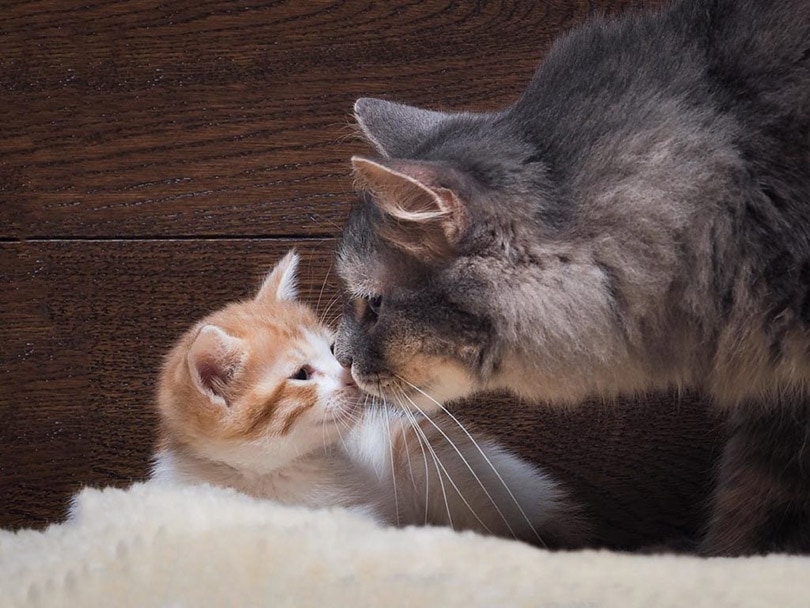
Welcoming a new kitten into your home is a joyful and exciting event. However, if you have other cats that have reigned supreme in your home for several years, a new furry mini companion may be upsetting for them. So, how do you make sure the adaptation is done smoothly? In this article, you will find all the do’s and don'ts for making it as easy as possible for your adult cat(s) to adjust to your cute and fluffy new kitten.

Before the New Kitten Arrives
If you want to have two or more cats in your household, your best bet is to adopt them at the same time or adopt the second one as soon as possible. Acceptance will be better if there is not a big difference in age between the two cats. Indeed, an old cat will have a hard time putting up with the playfulness of a kitten. Playing and miming fight scenes are part of a kitten's normal behavior, and they will seek out a companion. So, the younger your first cat, the easier they will adapt to the novelty. It is estimated that before the age of 4, a cat more readily accepts the arrival of a new kitten.
Rivalry Between Males
In general, cats of opposite sexes accept each other better, and cohabitation between females is generally quite good. Also, sterilization tends to decrease conflicts. That said, the rivalry between two males is always important to consider. Male cats, even castrated ones, can be territorial. One essential thing to consider is the personality of your two felines. The character of the new cat should match as much as possible to that of the elder.


The 5 Steps to Introduce a New Kitten to Your Multi-Cat Home
Most cats are not ready to accept a new family member; they need time to get used to the idea. Therefore, it is essential to have patience and to not rush things. So, take note of these tips for introducing a new kitten to your multi-cat home!
1. Planning the Arrival of the New Kitten
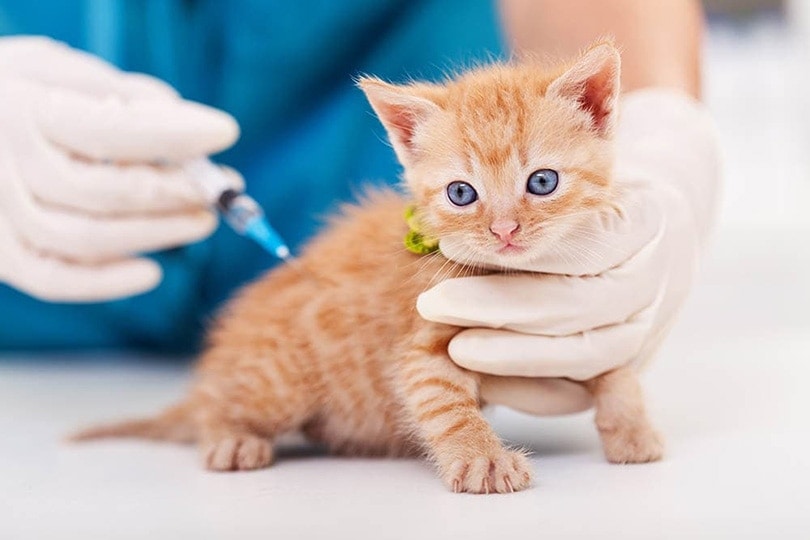
The introduction of the new kitten should be carefully planned. You must consider that adopting a new kitten could put your existing pets’ health at risk if not done properly. Before bringing the kitten to your home, you should make sure they are not suffering from any infectious diseases that could be transmitted to your other pets. Get the kitten checked by a vet, and check that your other cats’ vaccination schedules are up to date.
The kitten should be quarantined, rechecked, and cleared by a vet before you introduce them to your cats. Make sure that feline leukemia virus and feline immunodeficiency virus tests have been performed and that vaccinations and pest control treatments are up to date. This will reduce any potential health risks.
2. Isolate the Newcomer
Upon arrival, the new kitten should be isolated in a room, such as a bedroom, so there is no possible eye contact with your other cats. Open their transport crate, and let them explore their room in peace. Take this crate and leave it in the living room, within reach of the other cats in the house, so they can explore and smell it. Watch their behavior: They may growl and hiss around the kitten's carrier or simply approach it curiously and sniff it enthusiastically.
Leave the crate with your other cats until they no longer show interest. About an hour after you have locked the kitten in the room, you can go back in there. Cats need to explore their surroundings before they can interact socially. Sit calmly and let them approach you without forcing contact. Come see them three or four times a day in their room.
3. Reassure Your Other Cats
The cats in the house may start to growl when you come back to them because you smell like the newcomer. They will probably stand in front of the room where the kitten is and start sniffing the door. Do not proceed to the next step until the hostile reactions to the scent of the new kitten, door, and carrier cease.
It is important to behave with your other cats in the usual way, giving them time and reassuring them. When you feel that your cats have become used to the newcomer's existence, it's time to move on to the next step, which is getting them to see each other but without physical contact.
Related Read: Best Litter Boxes for Multiple Cats
4. Prepare the First Face-to-Face
Proceed to the fourth step when the cats seem relatively calm in the presence of the others, and the hissing and growling are minimal. Then, you can open the bedroom door, staying out of the way. If your cats start to fight, clap or yell in a way that scares them, but don't physically intervene. The whole integration process can take days to weeks or even longer. Do not be discouraged but be patient.
5. Identify Signs of Anxiety
You will need to watch for signs of stress in your cats. For example, excessive grooming, vomiting after eating, or having a loss of appetite are signs of anxiety. It is important to provide all your cats with separate bedding and eating areas to limit stress. Over time, they may declare a truce and even come closer (groom each other or even share rest areas).


Signs That Your Cats Are Becoming Friends
You may find that your cats are friends if you observe the following behaviors:
- Your cats purr close to each other.
- They sit and lie side by side.
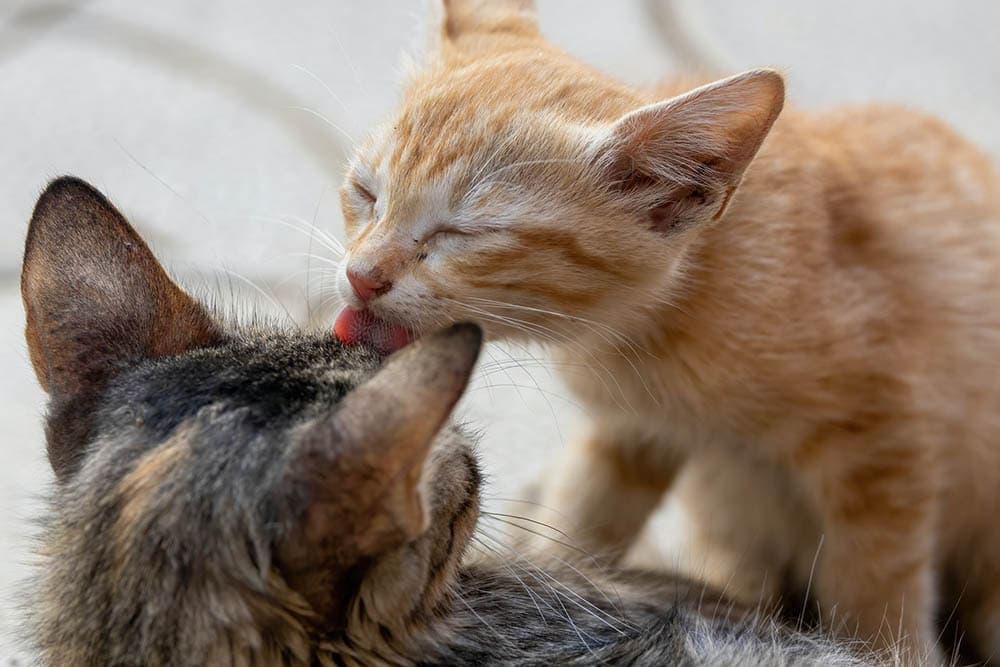
- Your cats groom and rub each other.
- They have fun together without it escalating into conflict.
- When the cats meet, their tails are held high, a sign of joy.
Signs That Your Cats Are Still Enemies
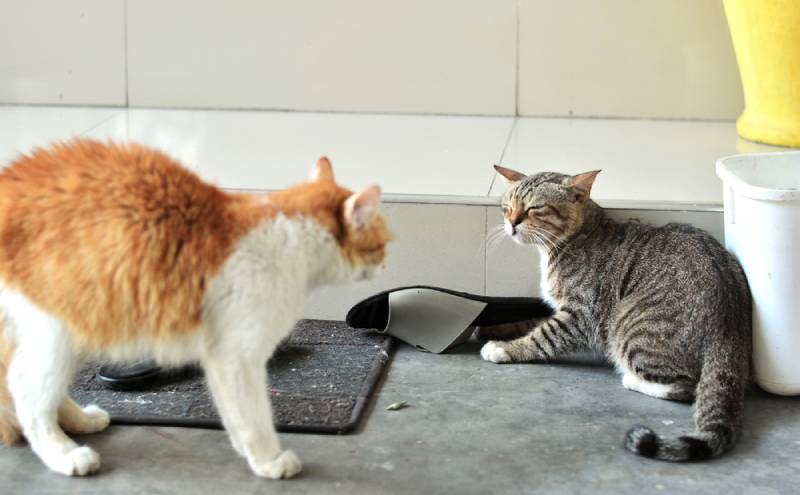
Your cats are enemies if you observe the following signs:
It is also quite possible for cats to form clans in your house. Some can get along and support each other but cannot tolerate another group. Your home then becomes a vast territory divided into several small clans.
You might also be interested in: Best Cat Trees for Multiple Cats
What You Must Not Do
Punish Your Cats
If your cats are arguing, don’t intervene by punishing them. Instead, you should take a few steps back and calmly separate them for a short period. Then, reintroduce them, and take the opportunity to reinforce calm behavior by giving them treats while they are together. Make sure you feed each cat directly in the mouth or in a way that does not cause competition between them.
Contrary to popular belief, punishing cats for arguing might actually encourage them to continue the conflict. Instead, use the magic of reinforcement to change their emotions and help them perceive each other as something more positive. Do not leave the cats together unsupervised for extended periods until you are sure they can get along peacefully. This can be achieved by gradually and patiently increasing the time they spend together while continuing to offer a treat for calm behavior.
Intervene Too Frequently
It is essential to let your cats go at their own pace. The sooner the negotiations are completed, the sooner calm will return. Excessive interference from you could delay the process. Make sure you keep an eye on their behavior to prevent heavy fights and injuries or to intervene if one of the cats shows persistent signs of anxiety. If this happens, isolate your cats, and contact your veterinarian or feline behaviorist for help.
Conclusion
In short, you need to remember these basics when introducing a new kitten to your multi-cat home. Cats are territorial animals, and the rivalry between two males can be great. Isolating the new arrival is the first thing to do, and the process of peaceful cohabitation can take a while.
Above all, you will need to be patient, attentive, and respectful of the needs of each of your felines! This is the key to good cohabitation.
See Also:
Featured Image Credit: Irina Kozorog, Shutterstock
Get Hepper In Your Inbox


Pet care tips from our vets and experts, straight to your inbox.
You may opt-out at any time. View our Privacy Policy for more information.
Genevieve, a biologist and science writer, who harbors a profound affection for capuchin monkeys, pumas, and kangaroos. This passion has led her to travel extensively, volunteering and working at wildlife rehabilitation centers in Bolivia, Guatemala, Canada, and Australia. Now residing in Argentina as a Canadian expat, Genevieve enjoys the view of horses and cows greeting her from the vast plains outside her home office window. She proudly cares for three rescued dogs—Lemmy, Nala, and Pochi—and a playful kitten named Furiosa. Sharing her extensive knowledge and love for animals brings her immense joy and fulfillment.
Join the conversation
Ask a question, share your story, or send private feedback.