Hepper is reader-supported. When you buy via links on our site, we may earn an affiliate commission at no cost to you. Learn more.
How to Socialize Kittens: 5 Vet-Approved Tips


In this article
Kittens are sweet, playful, and adorable. And while some kittens grow up to be friendly and confident mysterious felines, there are equally many who don’t. The latter can include a range of problematic behaviors ranging from a cat who is fearful and timid to one with severe aggression.
A main cause for unconfident or fearful adult cats is how they were socialized as kittens. There's plenty of information and guidance in the world about bringing a new puppy home and how to socialize them so they grow into well-rounded canines, but less so for kittens. There's a general belief cats are aloof, independent, and do their own thing, which can be true because if a kitten that’s not socialized and integrated around people and their environment will tend to become fearful of unfamiliar people, environments, and situations. So, what is the best way to socialize a kitten?

When to Socialize Your Kitten
Like puppies, kittens have a key window of time where they are learning skills, behaviors, and so-called truths about their new world. This period between 2–7 weeks is a vital time to mold their brains with positive experiences, meanings, interactions, and situations. It is during this time they learn what or who is threatening or non-threatening, and they carry these beliefs and information often into adulthood.
During these early weeks, socializing kittens in as many ways as possible is as important as the type of food they eat, yet socializing kittens can sometimes be skated over or deemed not as necessary. As an owner, you will likely be collecting your kitten after they are 8 weeks old. When choosing a breeder, one of your questions should be: how do they socialize their kittens?
Maybe you are adopting a young cat from a rescue with an unknown background, but there is hope! Many rescue centers have a socialization plan in place that they follow as new residents arrive. This is helpful from a new owner's perspective and charts can be used by those raising kittens in those precious few weeks to ensure they receive a well-rounded approach.
Past the 8-week point, not all is lost. The chance to influence your kitty positively is still available if you actively increase their socialization.
The 5 Tips on Socializing Kittens
1. Human Socialization
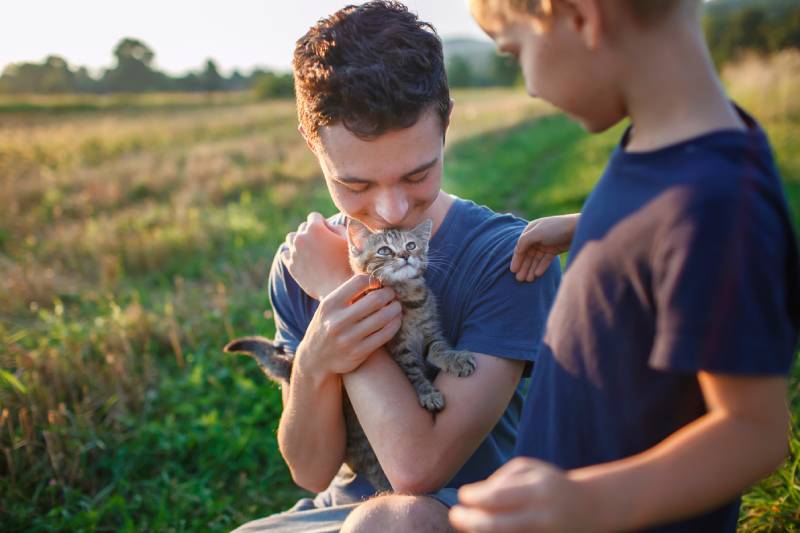
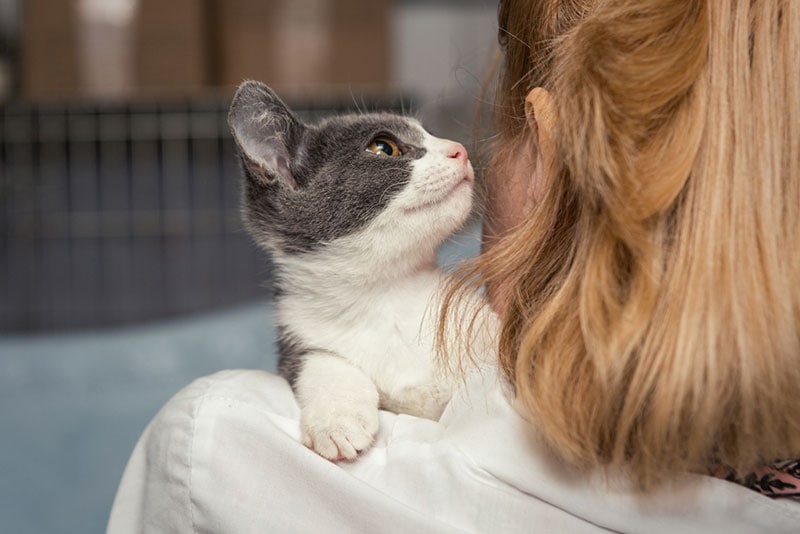
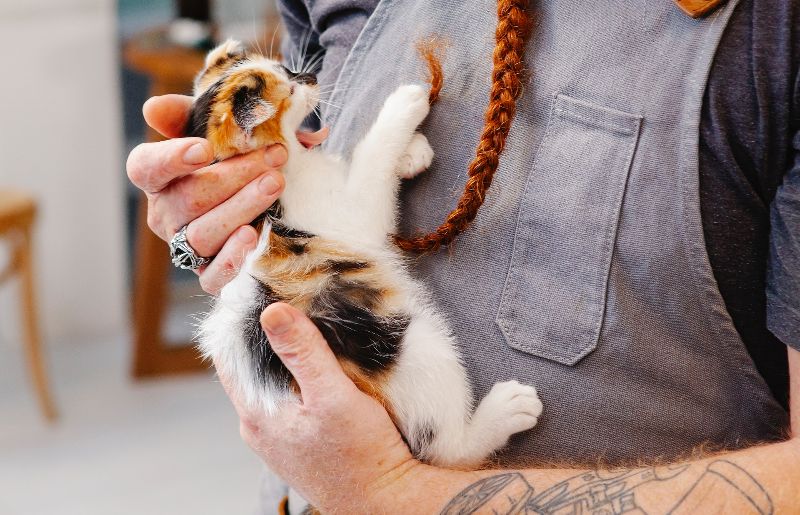
If your kitty is to become confident and pleasant around humans as they grow up, interaction with humans is vital. It is recommended to slowly introduce them to a minimum of four people (if possible, a male, a female, and a child).
This process doesn’t and shouldn’t be a full-on one but rather a gradual one. For example, start by only holding them for short periods and then gradually work your way up. The same approach can then be taken using different people and friends.
Reward your kitten using treats, petting, cuddles, toys, or play; whichever is their favorite!
2. Environmental Socialization
It can be daunting getting used to a new space, cats are also naturally inquisitive and will want to poke around and investigate. This is encouraged so long as nothing dangerous is around or toxic for them to eat or touch. Always provide a bed and a safe space for your cat to retreat to. Leaving a TV or radio on quietly in the background can help them feel safe and secure too.
Try to include all the different aspects of the environment and lifestyle you want and expect them to be around, such as:
- Your home
- The car
- Public transport
- A visit to the vet
- Outside on a harness if you wish to walk them
- Common items, such as the vacuum cleaner, music, washing machine, and cell phones ringing
Remember to use positive reinforcements to reward your kitten and encourage them!

3. Play
Kittens often love to play and be mischievous. Interactive play with suitable toys and different toys on a regular basis encourages the correct and wanted type of playfulness and reduces fear. However, many owners and children like to play the types of games that involve the kitten chasing or pouncing on wiggling fingers and feet. This type of play may appear fun but will lead to more of it when they are older, bigger, and have sharper claws and teeth. At this point, their once cute and playful tactics turn into scratch and claw marks on your limbs. Trying to reverse this behavior when they are an adult cat is harder to do. Use suitable toys instead, which your veterinarian can advise on.
4. Sounds
Encouraging your cat to become used to a range of sounds, especially common ones around your home and neighborhood is particularly useful. This prevents your cat from becoming stressed by noises like vacuum cleaners, thunder, and traffic noise.

5. Other Animals and Pets
If you are bringing a new kitten into a house with a pre-existing pet, the introduction needs to be done slowly. At first, keep the new kitten in a separate room before incrementally introducing them to the rest of the household. Ensure each pet has its own sleeping, feeding, and toileting area. Many times, adding a new kitten to your family will cause minimal drama, but should it escalate into difficulty, contact your vet or a cat behaviorist for extra help.
If you don’t already have pets but want your kitten to be comfortable with them visiting (for example dogs), ask friends or neighbors to pop by with their pet. They need to have positive experiences with other species to understand that they are non threatening.
Remember, kittens need to be fully vaccinated before they can be around other cats and environments outside the household. Check with your veterinarian if you are unsure when the safe period is for your new kitten, regardless of their age.
Final Thoughts
Begin socializing your kitten as soon as possible. The first 2 months or so are a critical period, and it will be well worth the time and effort you spend doing this when, as they become older, you see your results and have a happy and confident feline.
Always choose reputable breeders and rescue or adoption centers, as these places are known to introduce socialization tactics and techniques while the kitten(s) are in their care.
If you are experiencing any problems, wish to correct certain behaviors, or are unsure what you're currently doing is right, have a chat with your vet. They will happily help or give you names and places of good cat behaviorists and experts.
Sources
https://www.catcare4life.org/app/uploads/2021/07/Kitten-booklet.pdf
https://www.vetstreet.com/our-pet-experts/your-guide-to-socializing-a-kitten
https://www.petmd.com/cat/training/kitten-care-101-how-socialize-kittens
https://www.cats.org.uk/help-and-advice/pregnancy-and-kitten-care/kitten-socialisation
Featured Image Credit: Okssi, Shutterstock
Get Hepper In Your Inbox


Pet care tips from our vets and experts, straight to your inbox.
You may opt-out at any time. View our Privacy Policy for more information.
Annaliese began her career as a veterinary nurse in Edinburgh, later advancing her qualifications with a diploma in advanced veterinary nursing in surgery from London. Her work in small and mixed veterinary practices led her to become a head nurse, where she trained other veterinary nurses, managed the nursing department, conducted nurse clinics, and developed new patient care protocols.
Throughout her career, Annaliese has cared for thousands of patients and their owners, setting higher standards in nursing regimes with a focus on surgery and anesthesia. She co-authored multiple veterinary nursing textbooks and contributed to various mainstream publications in the UK and USA. After more than twenty years in the veterinary and pet care professions, she retired from clinical practice to pursue full-time writing. Having cared for thousands of patients and owners, Annaliese specialized in surgery and anesthesia. She was asked to co-author several veterinary nursing textbooks and contributed to a number of other publications in the UK and USA. After more than two decades in the veterinary and pet care industries, she retired her scrub suit and now works as a full-time writer.
Annaliese Morgan has been a dedicated veterinary nurse for over two decades, having completed a diploma in advanced veterinary nursing in surgery from London and qualifying from Edinburgh. Her professional experience includes managing a nursing department, training other veterinary nurses, providing patient care, and running nurse clinics in both small and mixed veterinary practices.
As an expert in surgery and anesthesia, Annaliese has treated thousands of patients and owners. In addition to being asked to co-author multiple veterinary nursing textbooks, she has written for a variety of publications in the UK and USA. After a long and successful career in the veterinary and pet care professions, Annaliese now dedicates her time to writing full-time. You can find out more about her work at www.annaliesemorgan.com.
Join the conversation
Ask a question, share your story, or send private feedback.