Hepper is reader-supported. When you buy via links on our site, we may earn an affiliate commission at no cost to you. Learn more.
How to Prevent Seizures in Dogs: 6 Tips (Vet Answer)


In this article
Seizures are unpleasant experiences that can leave you helpless in the face of your dog's distress, as you may not know what to do or how to help them in that difficult moment. Seizures represent any abnormal and involuntary movement of a dog's body caused by abnormal brain activity, which can have multiple origins. Preventing seizures largely depends on what causes them, and may not be entirely possible. Instead, seizure frequency, duration and severity can be managed with appropriate veterinary treatment, based on the underlying cause.
For example, if your dog suffers from epilepsy, it is crucial to give them the treatment prescribed by the veterinarian. Otherwise, the seizures will reoccur and may lead to life threatening complications. Even with medication, sometimes seizures cannot be completely controlled in certain cases.
If the seizures occurred after your dog consumed a toxic plant or toxin, make sure your pet receives the required veterinary treatment and no longer comes into contact with that substance.
Seizures that last several minutes (3–5 minutes), occurrence of more than one seizure within a 5-minute period without the dog returning to normal, or a cluster of 2 or more seizures in 24 hours, can all have quite severe and negative effects on your dog's body, putting their life in danger. If any of these scenarios have occurred or your dog has had a seizure, it’s important to consult with your vet immediately, so they can conduct appropriate diagnostics and start treatment as soon as possible.

Understanding Seizures in Dogs
In order to try to reduce and manage your dog's future seizures, the help of your veterinarian is crucial. They will investigate what caused the seizure, the primary condition that leads to their occurrence. Seizures in dogs can be due to health conditions or defects that originate in the skull affecting the brain (intracranial) or outside of it (extracranial).
Idiopathic epilepsy is the most common cause of seizures in dogs,1 but other causes should be considered and ruled out by your vet, such as:
- Metabolic disorders (hypocalcemia, hypoglycemia, liver and kidney disease)
- Drugs and medications
- Toxin exposure (xylitol, anti-freeze, chocolate, rat poison)
- Abnormalities in the brain (tumors, inflammatory, infectious disease)
- Head trauma or injury
- Heatstroke
It should be noted that convulsions do not necessarily mean epilepsy! In dogs, most seizures that occur are generalized and affect their whole body. Grand mal seizure occurs due to abnormal electrical activity in both sides of the brain and is referred to as a tonic-clonic seizure.2 The dog may suddenly fall over with violent spasms of all four legs, paddling, frothing at the mouth, passing urine and/or feces, with a loss of consciousness.
On the other hand, focal seizure happens when there is excessive electrical activity in one spot in the brain. It can manifest as fly biting, repeated twitching of an eyelid, lip or ear, and may sometimes progress to a generalized seizure.
Depending on the cause of the seizures, your vet may be able to prevent or at least reduce any future episodes. Here are six important tips that can help you and your vet prevent seizures in your dog.

The 6 Tips to Prevent Seizures in Dogs
1. Reduce Stress and Limit Environmental Changes
In dogs suffering from epilepsy, seizures can be triggered when your dog is very excited or stressed.3 Many situations can make your dog feel stressed.
The most common include:
In short, loud noises, bright lights, busy places, and foreign smells can all stress your dog. To prevent seizures in this case, you must acknowledge what the triggering factors are and try to remove or fix them.
2. Feed Them a Healthy Diet
Dietary management of seizures in dogs remains a topic that requires further scientific research, and we strongly recommend you consult with a veterinarian or a veterinary neurologist before starting your dog on a particular diet. The diet itself is also unlikely to control the seizures and your dog will still require medical treatment and regular monitoring.
There are many dietary factors that may affect how the antiepileptic drugs get absorbed and which level they achieve in the dog’s serum, meaning the medication may be either less effective, may constantly fluctuate rather than being at a stable level, or it may lead to overdosing.
Although this field is showing some promising ideas, there is a need for further critical research and large scale studies, before valid conclusions can be drawn. Some of the suggested diets and clinical trials have focused on ketogenic diet, omega-3 fatty acid supplementation, and hypoallergenic diet, but there is currently insufficient evidence to support their use. A diet change in dogs suffering with epilepsy should not be done without speaking to a veterinarian.

3. Monitor Their Blood Sugar if Required
In some dogs, seizures may occur due to very low blood sugar values. This is particularly true if your dog has been in contact with specific toxins, such as xylitol, which leads to a low blood sugar level, if they are diabetic and had a higher dose of insulin than needed or failed to eat at the time of their injection. Low blood sugar may also occur in cases of certain tumors, such as insulinoma.
It’s important to consult with your veterinarian if your dog’s seizures are a new or sudden occurrence, are becoming more frequent despite treatment, or they are related to their blood sugar value. Your vet will be able to diagnose the underlying cause that led to blood glucose abnormalities, and will recommend ongoing treatment and management. In case of diabetic patients, your vet may train you on checking your dog’s glucose on a daily basis, using various methods or automated devices.
4. Keep Away Toxins or Chemicals
Always keep any harmful and toxic substances away from your dog, particularly if they are curious and would put anything in their mouth. Some of these may involve toxic plants, cleaning products, insecticides, pesticides, or products that contain various toxins, such as theobromine (found in chocolate), xylitol (artificial sweetener), and others.
Keep away any product or plant that you think could cause your dog problems. In case of poisoning, besides seizures, you could notice the following clinical signs: excessive drooling, nausea, vomiting, diarrhea, or tremors. If you believe that your dog consumed a dangerous substance or toxic plant, take them to the vet immediately.

5. Avoid Taking Your Dog Out on Hot Days
On hot summer days, the body can dehydrate quickly and easily, particularly if combined with exercise. For this reason, doctors recommend staying inside or in the shade and consuming plenty of liquids to hydrate. These tips are also valid for pets. For example, by accidentally leaving a dog in the car, with the windows closed and without AC, for even just a few minutes, they will be at high risk of developing heatstroke, which can be fatal if the dog is not removed from the car immediately and treated urgently. The same thing can happen if you take them for a walk in the middle of the day when the temperatures are around 90℉.
Dogs love to play and may still try to do it despite the heat, so you need to be the one to control their exercise and avoid it in the hot weather. There are plenty of interactive games and puzzles your dog can do inside. When it comes to risk of heatstroke, particular attention should be given to brachycephalic dogs that will overheat more easily and quickly.
To prevent this, keep your dog in the shade or a cool place, and make sure fresh water is always available. If your dog shows signs of heatstroke (panting, difficulty breathing, excessive drooling, seizures, collapse, or vomiting), remove them from the hot area and start cooling them down while taking them to the vet immediately.
6. Go to the Vet
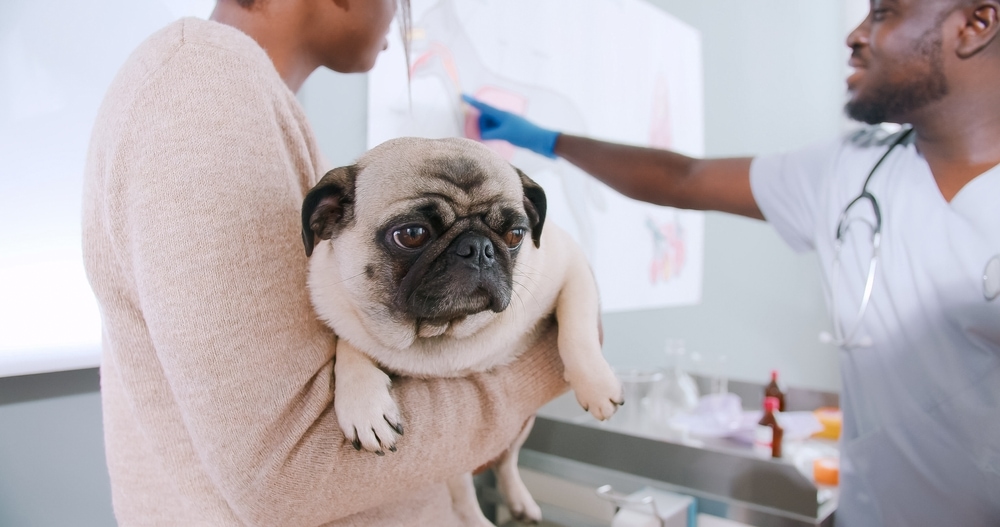
When your dog shows subtle changes in their behavior or habits, they may be suffering from a medical condition. Certain medical conditions can lead to seizures, particularly if left untreated. To prevent them from occurring, your vet will diagnose the condition in time and administer the appropriate treatment. Therefore, take your dog to the vet whenever you feel that they have changed their behavior, appetite or drinking, toileting habits, or are showing any signs of illness.
Conclusion
Seizures in dogs can be caused by various conditions, and any dog that has had a seizure requires veterinary investigation to determine the cause. To prevent seizures in dogs, you’ll need to know what causes them. If it is epilepsy, the seizures can be kept under control in most cases with appropriate treatment and regular monitoring. If your dog has ingested a toxic plant/toxin/chemical that led to seizures, your vet will administer appropriate treatment in order to stop or reduce seizures. Seizures that last several minutes can have irreversible side effects on your dog's body. For this reason, take your dog to the vet after their first seizure for a diagnosis, or particularly if they are having more than 2 seizures in a 5-minute period without recovering in between, their seizure is longer than 3-5 minutes, or they are having more than 2 seizures in a 24-hour period.
Sources
Dietary intervention for canine epilepsy: Two case reports - PMC
Seizure‐precipitating factors in dogs with idiopathic epilepsy - PMC
Seizures and Epilepsy: Diagnostic Approach and Differential Diagnosis - WSAVA2009 - VIN
Epileptic Emergencies: Status Epilepticus in Canine Patients | Today's Veterinary Practice
Managing seizures | Cornell University College of Veterinary Medicine
Featured Image Credit: Leka Sergeeva, Shutterstock
Get Hepper In Your Inbox


Pet care tips from our vets and experts, straight to your inbox.
You may opt-out at any time. View our Privacy Policy for more information.
Iulia Mihai is a veterinarian with more than 13 years of experience in pet pathology, laboratory, and cancer. She studied at the University of Agronomical Sciences and Veterinary Medicine of Bucharest, Romania Iulia earned a master’s degree in equine and pet pathology and studied epithelial cancer for her Ph.D. Dr. Mihai's passions for internal medicine and parasitology inspired her to volunteer at the faculty’s clinic in her third year of college. She has worked in a couple of veterinary clinics over the years as an internal medicine specialist, and loves to write and educate pet parents about pet nutrition, behavior, and diseases.
Iulia is a passionate veterinarian with a strong affinity for veterinary parasitology, internal medicine, and laboratory. She is excited to share her experience and knowledge with pet owners around the world through her writing and hopes to educate people on pet nutrition, diseases, and behavior.
Education
Iulia graduated from the University of Agronomical Sciences and Veterinary Medicine, Bucharest, Romania, in 2012 and has a Master’s degree in Small Animals and Equines Pathology and is certified in HAACP food safety system implementation. Iulia started her Ph.D. in epithelial cancer in dogs and cats in 2013. Her research is published in national and international veterinary journals.
Experience
Dr. Iulia has been a veterinarian for more than 14 years. She is experienced in animal pathology and laboratory and has experience with exotic animals, such as pet rats and ferrets. She also has skills in the field of clinical pathology, laboratory, microscopy, cancer, and imaging.
Join the conversation
Ask a question, share your story, or send private feedback.