Hepper is reader-supported. When you buy via links on our site, we may earn an affiliate commission at no cost to you. Learn more.
How to Stop a Cat From Getting Pregnant Naturally: Vet-Approved Methods



In this article
Every year, approximately 3.2 million cats end up in animal shelters in the United States, and just over half a million are euthanized; there just isn’t enough shelter space or adoptive homes for them all.
Responsible cat owners do everything possible to prevent excess breeding and unwanted kittens. If you’re wondering about your options for preventing your female cat from falling pregnant, you’ve come to the right place. We’re going to look at the natural, chemical, and surgical ways you can prevent your cat from getting pregnant.
Read on to learn more about your options for avoiding litters of unwanted kittens.

Preventing Feline Pregnancies Naturally
The only way to stop your cat from becoming pregnant naturally is to keep her inside and away from male cats. Cats come on heat every 28 days or so (some more frequently), so allowing them outside between cycles still poses a risk. Additionally, they are more likely to stray to find a mate, and there are always going to be tom cats around looking for a female, and some will even break in to get to one.
Cats have no qualms about mating with relatives, so you would not be able to keep entire brothers/sisters/mothers/sons together.
Females can become very distressed, anxious, and even destructive when in estrus (on heat), so that’s something to remember if you use this natural method as birth control. Your usually chill and relaxed kitty may suddenly begin spraying urine around your home or destroying things. She’ll be much more vocal than usual, demanding much of your attention, and will likely try anything to escape.
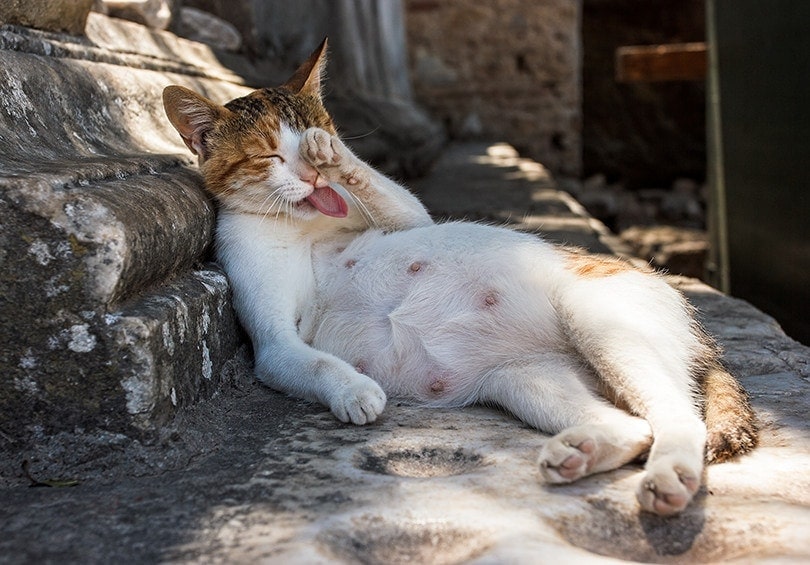
What Are The Problems With Using This Method?
- It usually fails - when a cat is in heat, she will do anything to get out, and there will be plenty of males outside waiting
- Cats can get pregnant shortly after giving birth, so while you’re distracted by one litter of kittens, she’ll be out trying to end up with another.
- Unspayed cats have a much higher risk of malignant mammary cancer.
- Unspayed cats can get pyometra, a potentially life-threatening infection of the uterus.
- Unspayed cats have a higher incidence of injury and death, particularly by being hit by a car, when out looking for a mate.
- Unspayed cats are often less affectionate as pets, as their hormones fluctuate and tell them they need to be having kittens.
How To Stop A Cat From Getting Pregnant
Spaying is the most common and effective way to stop your cat from becoming pregnant, so we will take a closer look at what’s involved, as well as some chemical alternatives.
1. Spaying
The most effective and reliable method of preventing pregnancy in your female cat is to have her spayed. Spaying, the most common form of feline birth control, is a permanent and surgical method of preventing the oestrus cycle and pregnancy. Also known as ovariohysterectomy, spaying involves the removal of your cat’s ovaries and uterus.
If you are struggling with the cost of having your cat spayed, we recommend looking for a local spay and neuter clinic, as they often offer the procedure at a reduced rate. Some clinics even provide no-cost spays, so do some research to see what the options are in your area.
The best thing about getting your cat spayed is that the procedure offers more benefits than just preventing pregnancy. Spaying can reduce your cat’s risk of developing mammary cancer, especially if the procedure is performed when she is younger than six months (91% risk reduction). If spayed between seven and 12 months, the risk is reduced by 86%. If she is between one and two years, there is only an 11% reduction. Spaying will also eliminate your cat’s risk of developing pyometra, a life-threatening uterine infection. Finally, spayed cats live 39% longer than their unspayed counterparts.
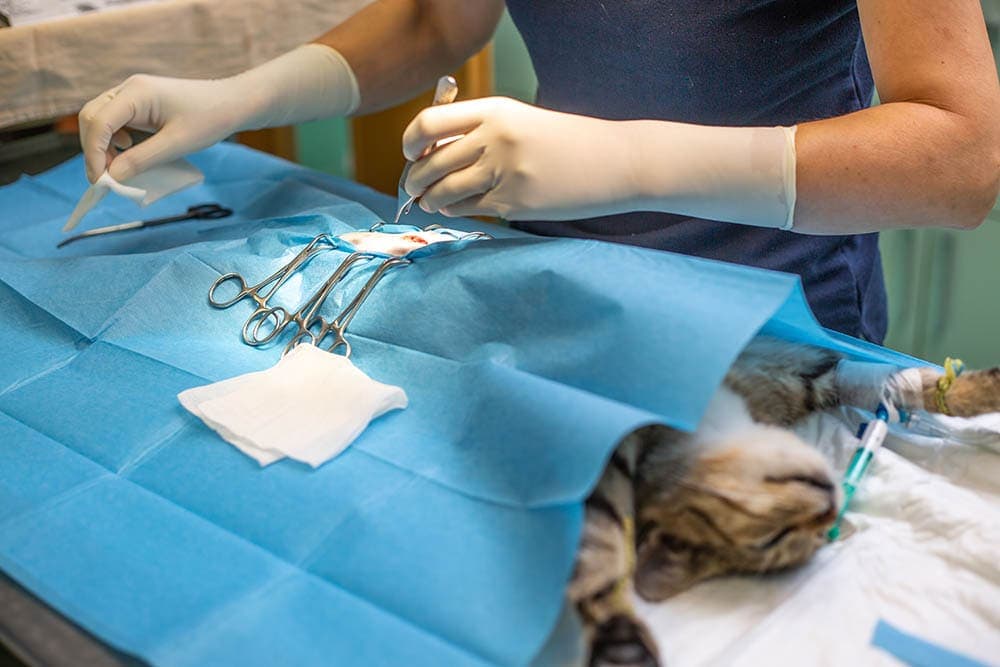
Is Spaying Painful for My Cat?
When a cat is spayed, they undergo general anesthesia, and are given pain relief during and after the operation. In cats, the uterus and ovaries are quite mobile, and there is little risk of complications. Of course, there is always some risk involved with any surgical procedure or anesthetic, but those risks are far lower than those involved with not spaying her.
There is usually only a very small incision needed to spay your cat, and they are often back to their playful selves within 24-48 hours. In fact, most owners report that the most difficult part of the whole procedure is trying to keep them quiet during the recovery period!
2. Chemical Intervention After Mating
If your female cat has mated unintentionally or escaped while on heat, contact your vet immediately. They can discuss your options for preventing or terminating a possible pregnancy. Often, spaying your cat very soon after mating, before there is any fetal development, is the safest option.
There is a misalliance injection for dogs, using the hormone Aglepristone, which can terminate pregnancy from day 1 to 45 after mating. Although it has been used successfully in cats, the drug is not licensed for use in felines and carries a high risk of side effects, so should only be considered as a last resort, and not as a method of birth control.
3. Chemical Control of Estrus
You may have encountered mentions of megestrol acetate (MA) in your search for natural ways to prevent feline pregnancies. Theoretically, MA prevents cats from going into heat, thus preventing pregnancy. However, there is little scientific evidence for the efficacy and safety of MA. Side effects could be problematic and can include e things like pyometra, mammary cancer, and mammary enlargement.
The use of MA for fertility control is “off-label” in the United States, meaning the FDA hasn’t approved it for preventing pregnancy. Most vets only use MA to “buy time” if needing to delay spay surgery for medical reasons, so you won’t be able to use it as feline birth control.
4. Non-Surgical Feline Birth Control Could Be on the Horizon
A new gene therapy injection could provide long-term, non-surgical birth control for female cats, using a hormone that can prevent pregnancy. One dose of a viral vector containing the naturally occurring anti-Müllerian hormone (AMH) appears to prevent ovulation and conception in cats for at least two years. The medication did not affect the treated cat’s other hormones, and no adverse effects were noted in any cats treated with the gene therapy.
While the infrastructure necessary to produce enough doses to sterilize cats with gene therapy doesn’t exist yet, this is a promising discovery that may change how pregnancy is avoided in the future, particularly in the feral population.
Should I Let My Cat Have A Litter?
There is a common idea that you need to let your cat have a litter before spaying her, to help her “settle”. This is based on a couple of misconceptions:
- That the pregnancy is what settles her down, when in fact, it is just that she is not in heat, so it seems that having a litter has calmed her down.
- That cats “want” to have babies. Of course, we cannot know if they do or do not wish to have a litter, but feline breeding is very different from human child-rearing. Once their offspring is of weaning age, the mother generally expects them to move on so she can have another litter. They breed because they are biologically driven to, not because they want to be surrounded by family.
The Truth About Breeding
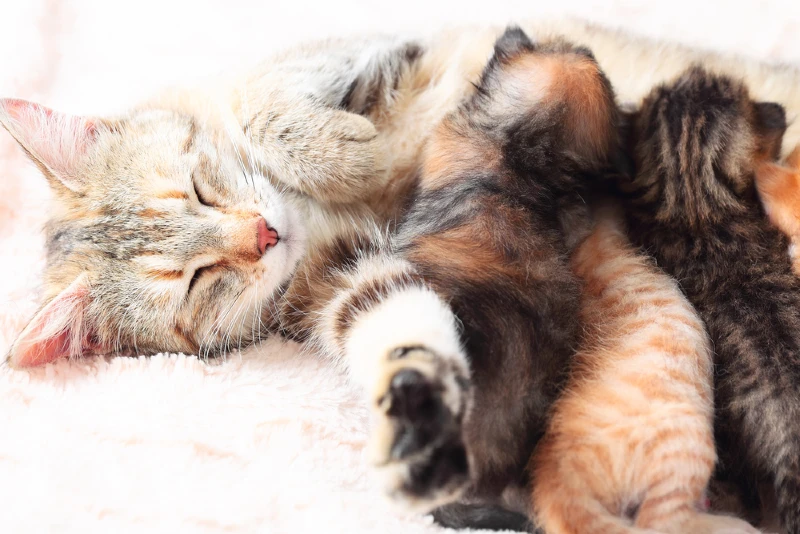
- The population of stray and unwanted cats is in the millions; responsible cat owners will want to avoid contributing to this.
- Entire cats statistically have shorter lives and a higher incidence of injury and Feline Immunodeficiency Virus (FIV), among other infectious diseases.
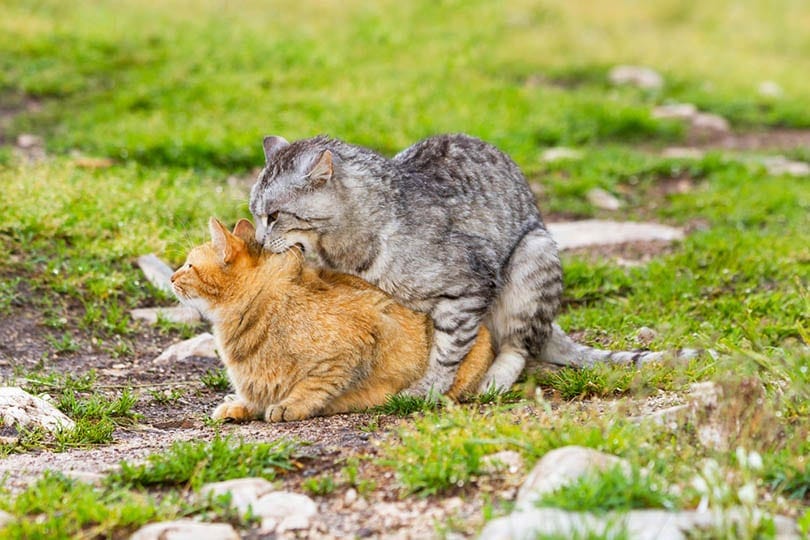
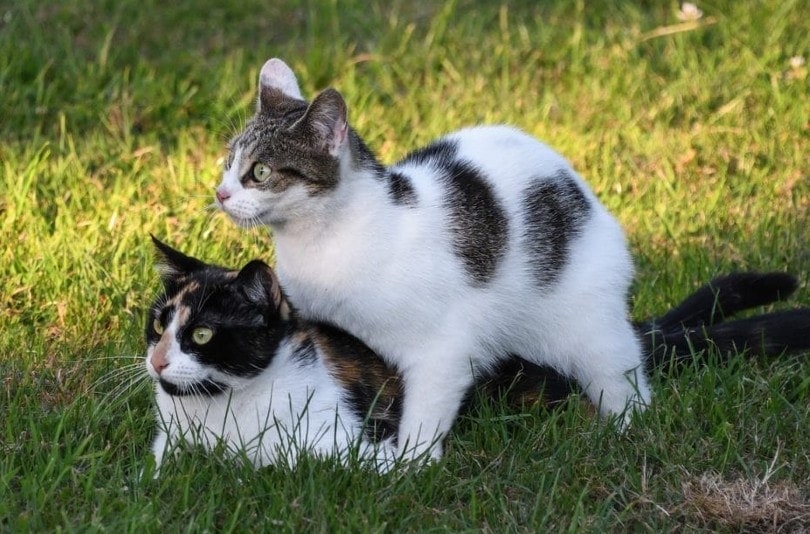
- It’s pretty violent! A far cry from tender love-making, the tom cat latches onto the female’s neck with his teeth, and did you know that cats have a barbed penis? The backward-facing spikes help stimulate ovulation and make it difficult for the female to get away until the male has finished. Yikes!
Final Thoughts
The only natural way to stop your cat from becoming pregnant is to keep her locked away from males, but this doesn’t always work.
We recommend having your female spayed, not only to prevent pregnancy, but to ensure she has a longer and healthier life. Remember, spayed cats are less likely to develop conditions like uterine infections and mammary cancer, so pregnancy prevention isn’t the only benefit of the procedure.
While non-surgical birth control may be coming in the future, we do not recommend holding your breath. It could be many years before the infrastructure to control the cat population with gene therapy injections will exist.
Sources
Featured Image Credit: Boy67, Shutterstock
Get Hepper In Your Inbox


Pet care tips from our vets and experts, straight to your inbox.
You may opt-out at any time. View our Privacy Policy for more information.
Chantelle's life revolves around two passions: writing and animals. Raised on the prairies of Canada amidst a menagerie of pets, she now lives with five cats, two guinea pigs, and a bearded dragon. Together with her husband and child, Chantelle delights in being an exemplary animal parent, going as far as installing wall-mounted cat shelves to give their cats an indoor playground. When she's not cozying up with her cats or snapping their amusing antics, she enjoys venturing into the Rocky Mountains, binge-watching her favorite Netflix shows, and indulging in spontaneous reading adventures.
Join the conversation
Ask a question, share your story, or send private feedback.