Hepper is reader-supported. When you buy via links on our site, we may earn an affiliate commission at no cost to you. Learn more.
What Is My Cat Trying to Tell Me? 6 Common Things They Communicate


While cats have a reputation for being elusive and independent, they’re actually excellent communicators. As the bond between you and your cat strengthens, your cat will eventually become comfortable communicating with you. While cats may not be able to use words to tell us what they’re feeling or thinking, they communicate actively and frequently with their voice and body language. Here are some things your cat may be trying to tell you.

The 6 Things Your Cat May Be Trying to Tell You
1. Excitement or Content
Cats express excitement vocally and with some body language cues. They may meow loudly, and it may sound more high-pitched than usual. They can act more playful, especially if they’re younger, and they may entice you to engage in play.
Cats that are content often show friendliness as well. If you walk into a room, they may greet you by approaching you with their tails high and vertical. This can be followed by weaving or rubbing against your legs or giving you a headbutt when you bend down to pet them.
2. Anger or Fear
Cats will also give signs of anger and fear. Cats that feel fearful may try to hide and make themselves inconspicuous. They may try to make themselves appear smaller by pulling their ears back against their heads and tucking their tails closer to their bodies.
Cats that feel anger or aggression may hiss or yowl. Their pupils are usually constricted, and their tails will start to thrash back and forth. Their bodies are often arched with their hairs raised.

3. Pain
While cats often try to hide when they’re feeling pain, they can still communicate to you that they’re not feeling well through more subtle signs. Some cats may start to act more reclusive, while others may show uncharacteristic aggression, especially if your hand accidentally grazes against a painful spot.
A cat can start to pace or act restlessly, and more social cats may try to seek comfort from their owners. If you suspect that your cat’s feeling pain, you can also check its gait and walking and look for imbalance or limping.
4. Hunger
Cats are completely reliant on their owners for food, and they often make it very obvious when they’re feeling hungry. Some cats will become extremely vocal or paw at you when they want to eat. Your cat might start to follow you around the house and also try to lead you to where its food is stored. You may also notice that your cat will engage in behavior that usually gets your attention. It might knock items over, rub against you, or leap onto you.

5. Wanting Attention
Kittens are usually much more blatant about wanting attention, but some adult cats can also be more demanding than others. Their behavior can look similar to when they’re hungry. As observant and intelligent animals, cats will quickly learn what sorts of actions consistently draw your attention. So, they might knock things off the table, sit on your laptop while you’re using it, or meow loudly.
Some cats may bring toys or other presents, especially if they want you to play with them. They may also snuggle against you if they want to receive some pets or scratches.
6. Affection
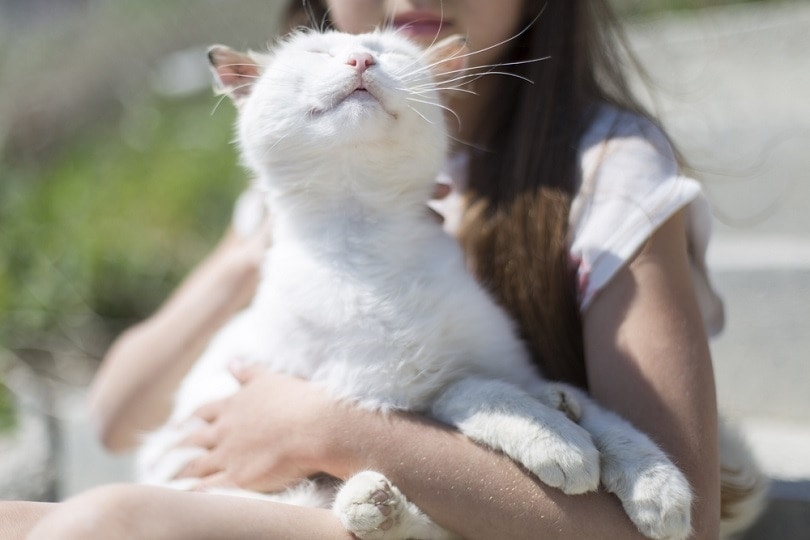
There are many different ways cats will show affection to their favorite people. They may “knead biscuits” on you, which is when a cat pushes their paws on you to express their affection towards you. It may feel uncomfortable, but cats that like you may also stare at you and slowly blink.
Content cats may also purr, especially if they’re being petted. Cats that are more vocal may also try to have “conversations” with you by meowing at you and responding vocally when you speak to them.
How to Learn What Your Cat’s Trying to Tell You
One of the best ways to start understanding what your cat’s trying to communicate is to be observant. Take some time to get to know your cat’s natural behaviors and personality. Start making a note of what your cat typically does. Cats are creatures of habit, so you can usually track your cat’s daily routine pretty quickly.
As you spend more time with your cat, your bond will strengthen, and your cat will also become more expressive toward you. The more observant and familiar you become with your cat’s temperament, the easier it is to notice if something is off or if your cat’s expressing discomfort. It’s also easier to be more receptive when your cat’s showing signs of affection, and you can reciprocate by showing affection in a way your cat understands clearly.
It's also helpful to familiarize yourself with general cat behavior and body language. Cats can use the same body language cues to express different emotions. So, it’s important to understand the context as well. For example, when a cat has its ears flattened against its head, it can either signify that it’s feeling afraid or angry. Cats often purr when they’re feeling happy, but they can also purr if they're feeling scared.
Conclusion
Cats may not use words, but they’re excellent communicators, nonetheless. They’ll give you signs about how they’re feeling, and it’s helpful to be aware of general ways that cats communicate so that you can respond accordingly. Their body language and vocal cues can say a lot about how they’re feeling and doing. So, make sure to keep an eye on what your cat’s doing. Understanding and responding to what your cat’s trying to tell you can help them trust you more and will only strengthen the bond that’s shared between you two.
Sources
Featured Image Credit: Jaromir Chalabala, Shutterstock
Get Hepper In Your Inbox


Pet care tips from our vets and experts, straight to your inbox.
You may opt-out at any time. View our Privacy Policy for more information.
Jessica is a freelance writer who spends most of her day reading and writing while her fluffy Cavapoo, Nora, naps beside her. She loves and appreciates pets and animals because there’s so much to learn from them, and they do so much for people. As a dog mom, she understands the special relationship that pet parents have with their pets. So, she loves sharing helpful information that people can use to better understand their pets. When she’s not writing, you can find her walking dogs, tending to her plant babies, or drinking her nth cup of coffee.
Join the conversation
Ask a question, share your story, or send private feedback.