Hepper is reader-supported. When you buy via links on our site, we may earn an affiliate commission at no cost to you. Learn more.
How to Train a Maltese: 12 Expert Tips

In this article
All dogs have different needs when it comes to training. For your adorable Maltese, it can be tempting not to bother simply because you think that they are too cute to get into much trouble. But this can quickly lead to disaster, and you and your Maltese will be much happier if you can trust them and vice versa. Obedience, housebreaking, and socialization are all important lessons for your new puppy to learn.
Training should be fun and rewarding for both you and your dog, while helping to build a strong bond between you. Make sure your new Maltese puppy knows how to behave by following the tips in this guide. They’re split into categories: all-around training, housebreaking, and socialization.

The 6 Tips for All-Around Training Your Maltese
1. Start on Day One
No matter how old your dog is when you bring them home for the first time, training should start on the first day. The earlier you begin, the faster your Maltese will learn what you expect from them.
You might worry that training your 12-week-old Maltese is too soon,1 but they’ll benefit from a consistent training schedule that starts as early as possible. Beginning at day one also prevents your Maltese from figuring things out on their own and developing bad habits that you’ll need to correct later.
The same goes for adult dogs that you adopt. They might have obedience training already or have a few bad habits that need correcting. The sooner you start correcting their behavior, the faster they’ll settle in.
If you need help with training your dog, we suggest speaking to an online vet for tips and tricks.
2. Slow Down

A new Maltese puppy is super exciting, and you likely have all sorts of plans for your future adventures, such as agility courses and obedience competitions. But the crucial thing about training any dog is to take it slow. Your Maltese won’t be an agility champion tomorrow or even the day after. It takes time, and you both should enjoy every minute of your training sessions.
Don’t be afraid to take a break or go back a step. Maltese dogs are highly intelligent and pick up tricks quickly, but they’re also stubborn. They can get bored doing the same thing over and over again and will start ignoring you.
If either of you gets frustrated with your lack of progress, take a break and try again tomorrow. This way, you’ll keep your training sessions fun and interesting, without the risk of pushing your Maltese too fast.
3. Use Positive Reinforcement
Imagine that you’ve started to learn something that you’ve been interested in for a while. You start excited and eager. Then your teacher pushes you too hard and too fast and scolds you for every mistake. You probably wouldn’t go back for a second lesson.
Now imagine the opposite situation. Your teacher takes the time to work with you at your level and pushes you enough to keep you interested but not so much that you feel daunted. They help you learn from your mistakes and laugh about them rather than turn them into something that should never be mentioned.
Training your Maltese is similar. They’ll make mistakes but scolding them isn’t the answer. Find something that they love, like their favorite treat or a toy, and reward them with it whenever they get a command right. They’ll be more likely to respond positively if you show them that good behavior is worth it.
4. Be Consistent

There’s nothing worse than trying to learn something new but being given conflicting information. When you start to train your Maltese, make sure that you have a clear plan of action and that your family members also agree on what behavior is acceptable and what is not.
If one person doesn’t want your Maltese to jump all over the furniture, but the rest of the family doesn’t mind, your puppy will get confused. You can’t let your weariness or frustration with your puppy’s mistakes stop you from correcting behavior that you’re trying to fix either, which is why taking a break is so important for both of you. Consistency and fun training sessions are essential for success.
5. Start Obedience Training
They might be small, but an untrained Maltese is a magnet for trouble. Even if you don’t have plans to take part in obedience or agility competitions, your Maltese will benefit from obedience training.
Basic commands like “sit,” “leave,” “stay,” and a good recall are all good starting blocks for more complicated tricks later or for maintaining control of your dog at all times. A good grasp of obedience ensures that your Maltese knows to look to you for directions if they’re unsure about something. It helps build a bond between you and teaches you both to trust and rely on each other.
6. Don’t Let the Cuteness Win

As a toy breed, Maltese dogs weigh under 7 pounds and only reach 7–9 inches tall. They are perfect dogs for apartments and are a gentle, playful, and friendly breed. Their cuteness, however, sometimes works against them.
Bad behavior in small dogs is notorious for being more humorous than the same behavior in a larger breed. After all, a tiny Maltese isn’t nearly as intimidating as a massive Great Dane. Unfortunately for many small dogs, their owners find their snapping or growling so adorable that bad behavior is reinforced instead of corrected.
Your Maltese can still cause damage if they bite someone. No matter how cute they look when they’re snarling at you, don’t let them get away with bad behavior. Your puppy will be even more adorable when they know how to behave and can present themselves as a Good Canine Citizen.

The 3 Tips for Housebreaking Your Maltese
7. Supervise Your Puppy
Housebreaking your Maltese puppy is a great deal of work, and for the best results, you want to keep your puppy close. Puppies don’t develop bladder and bowel control until they’re older. They simply don’t have the same control that adult dogs do, nor do they understand that they can’t just relieve themselves wherever they want.
Keeping them under your supervision allows you to intervene before your puppy makes a mess. Along with giving your Maltese frequent trips outside or to their designated potty spot—particularly after mealtimes—you should watch out for behavior like excessive sniffing or squatting.
Catching your puppy trying to relieve themselves, redirecting them to their potty spot, and praising them when they get it right is much more effective than yelling when you find a mess.
8. Choose a Bathroom Spot

If you have a yard, taking your puppy outside is an easy solution for their bathroom needs. Not everyone has easy access to the outside, though, and Maltese dogs are common apartment dogs due to their size. While you should still make time for regular walks and potty breaks outside if you live in an apartment, you should also find a quiet area to turn into your puppy’s bathroom.
Once you’ve put down the potty pads and introduced your puppy to the spot, don’t be tempted to change it. Moving your Maltese’s potty area to a different part of the house while they’re still learning where they’re meant to go will only confuse them.
Remember to praise your Maltese every time they successfully use their bathroom spot, whether it’s a puppy pad in the corner or the grass outside.
9. Prepare for Accidents
House training isn’t as simple as you might think, and sometimes, your puppy will make mistakes even when you think that they’re finally getting it. Remember that mistakes are okay and that you will inevitably be cleaning up a few pee puddles or poop that your puppy left while your back was turned.
If you don’t catch your puppy in the act and can’t distract them in time to redirect them to their bathroom spot, don’t worry about it. House training, like everything else, needs to be a positive experience.
Don’t be tempted to rub your Maltese puppy’s nose in their poop and scold them. This will only scare them and they won’t understand. Instead, help them get it right next time and praise them when they do.
The 3 Tips for Socializing Your Maltese
10. Start Young
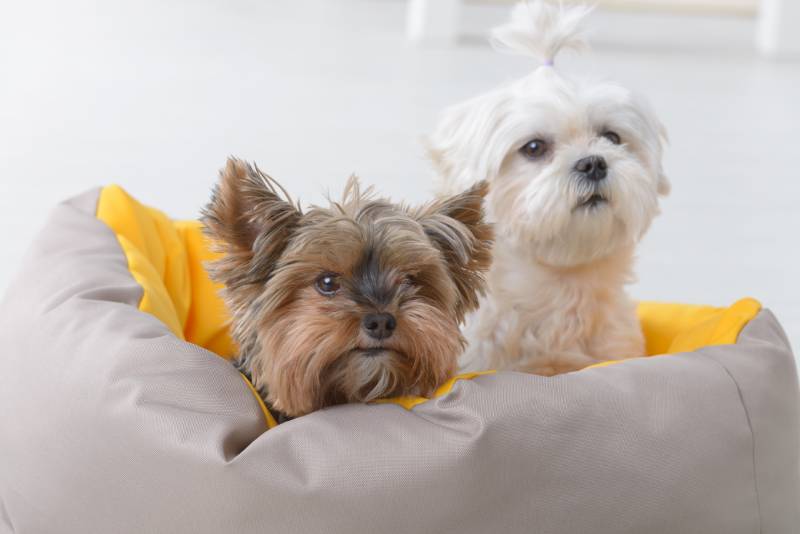
Once your Maltese puppy has settled into your home, it’s time to introduce them to the world outside. Socialization is a crucial aspect of training your puppy, as it helps build the foundation for your dog’s behavior for the rest of their life.
Proper socialization shouldn’t be avoided or put off until your puppy is older. The younger your Maltese is, the more adaptable they’ll be and the more they’ll benefit from experiencing all sorts of new things. Without socialization, your dog will be fearful around new people and won’t be as adaptable to different situations.
Take each step slowly, and ensure that your puppy enjoys their outdoor adventures and meeting new people. Having a bad experience or forcing them to progress too fast will only teach them to fear the situation rather than enjoy it.
11. Meet New People and Animals
Introduce friends and family members of all ages to your Maltese by inviting them to your home or visiting theirs. You can also host doggy play dates once your puppy has had their first vet visit and vaccinations.
Don’t limit your Maltese to meeting people and dogs that you know, though. Take regular walks, and visit your local dog park to meet even more people. If your neighbors have dog-friendly cats, ask if you can introduce your Maltese puppy to give them feline friends too.
12. Visit Pet-Friendly Stores.

Be sure to introduce your Maltese puppy to new places too. Once they understand a few basic obedience commands, try visiting somewhere new or a dog-friendly store. Not only will you meet all sorts of new strangers, but you’ll also be introducing your Maltese to new smells, sights, and sounds.
If you’re not sure whether your puppy is allowed in a store, make sure to ask first, and respect the staff and your fellow customers by making sure your Maltese is well-behaved.
Are Maltese Dogs Difficult to Train?
Maltese dogs were bred to be companion animals in Malta around the 4th and 5th centuries. As with many companion dogs, they were beloved by the aristocracy and were loyal, friendly, and devoted. Their loving nature continues to this day. Maltese dogs adore their owners and are happy whenever you are.
Since they’re so eager to please and are also intelligent, training a Maltese is relatively easy if you put in the time and effort. The breed picks up commands quickly and takes pride in making you happy. However, you do need to take into account their stubbornness. If they get bored or frustrated learning the same tricks, they will likely ignore you.
All your training sessions need to be kept short and sweet. Use positive reinforcement, and always make sure to end on a good note.
Conclusion
Training is one of the most difficult tasks when it comes to pet ownership. Fortunately, the Maltese is an easy-going toy breed with a loving, eager-to-please nature. They’re fiercely intelligent, and with a dedicated training schedule, they are well-suited for obedience and agility competitions.
We hope that these tips will help you develop a training schedule that is positive, effective, and rewarding for both you and your Maltese.
Featured Image Credit: Kimrawicz, Shutterstock
Get Hepper In Your Inbox


Pet care tips from our vets and experts, straight to your inbox.
You may opt-out at any time. View our Privacy Policy for more information.

Nicole is a lover of animals of all sizes but is especially fascinated with the feline variety. She’s the proud mom of Baby, a Burmese, and works every day so he can relax in the sunshine or by the fire. She’s always had a cat in her home and has spent countless days with others, observing behaviors and softening up even the grouchiest of the lot. Nicole wants to share her kitty expertise with you so you and your cat can live happy, healthy, and care-free.
Join the conversation
Ask a question, share your story, or send private feedback.