Hepper is reader-supported. When you buy via links on our site, we may earn an affiliate commission at no cost to you. Learn more.
How to Weigh Your Dog at Home: 8 Easy Tips & Tricks


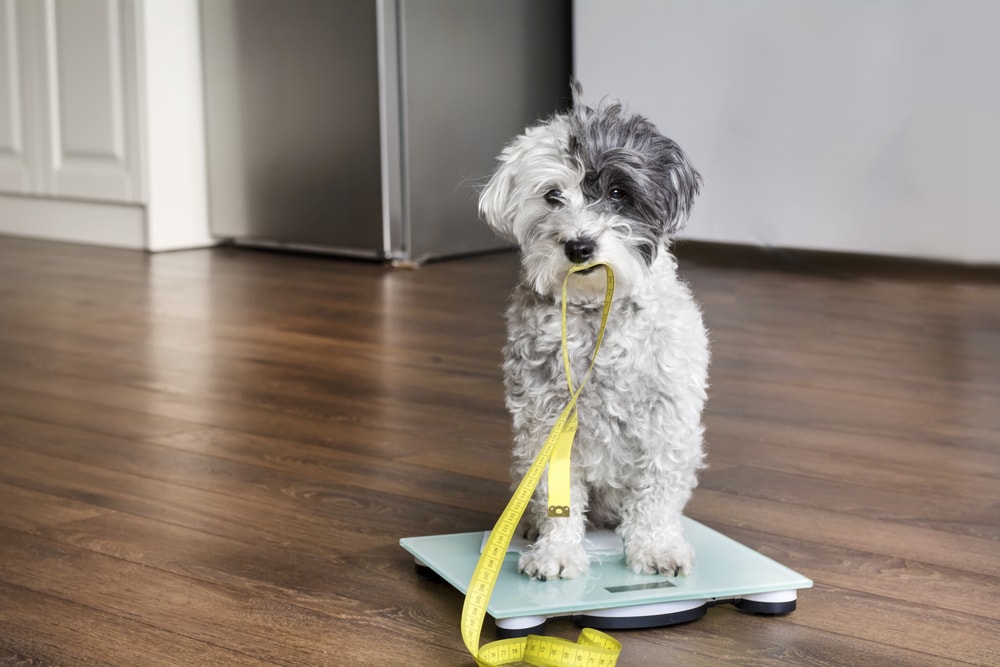
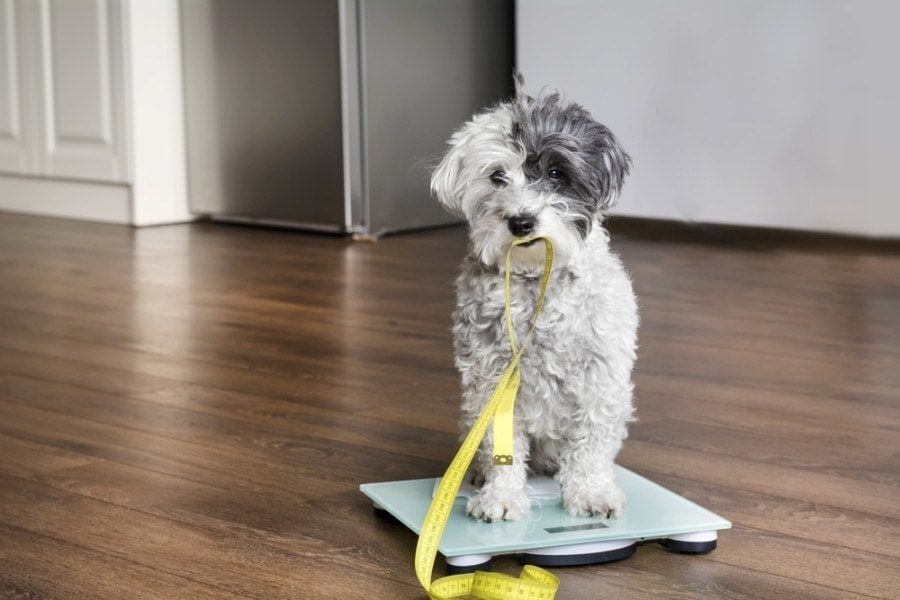
Though it’s best to have your dog be weighed at the vet, as they have more accurate scales, there may be times you want to weigh your dog at home. For example, when your puppy is growing or if you’re implementing a weight loss plan, weighing your pet at home can help ensure your dog is on the right track to reaching a healthy weight. Weighing your dog at home can sometimes prove difficult, you just need to know how to do it so you’re getting an accurate weight.
How do you weigh your dog at home? There are a couple of ways to go about it, depending on the size of your pet, and a few tips and tricks that will help. Keep reading to find out just how to weigh your dog whenever you’d like!

Ways to Weigh Your Dog
There are two ways to weigh your dog, depending on what size they are.
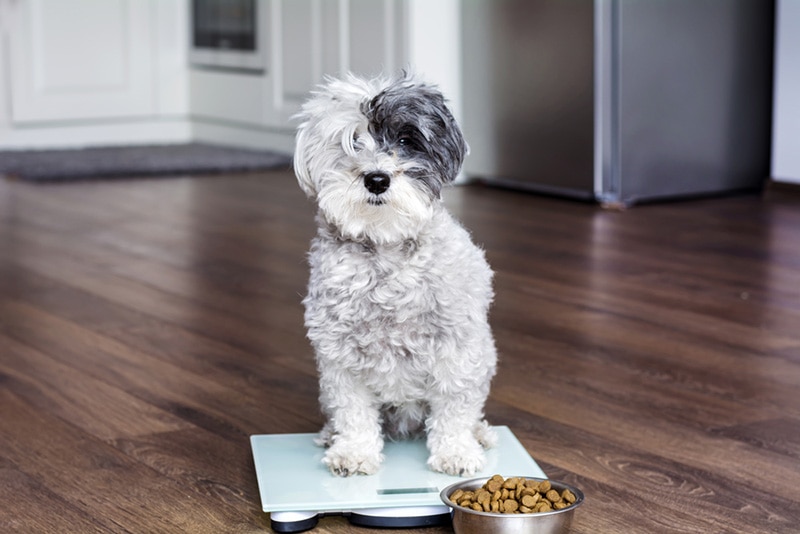
The first is for small dogs. To get an accurate weight for your pup this way, you need to weigh yourself alone first to find out your weight. Next, pick up your dog and step on the scale with them. Subtract your weight from the second number, and you’ll have your dog’s weight.
Large dogs will need to go directly on the scale since you can’t pick them up. This can be tricky depending on the type of scale you’re using, but we have some tips below that will help ease the process. (Smaller dogs can go on the scale this way, too, but it’s probably more accurate to weigh them by picking them up.)
The 8 Tips for Weighing Your Dog at Home
1. Train your dog to use a scale
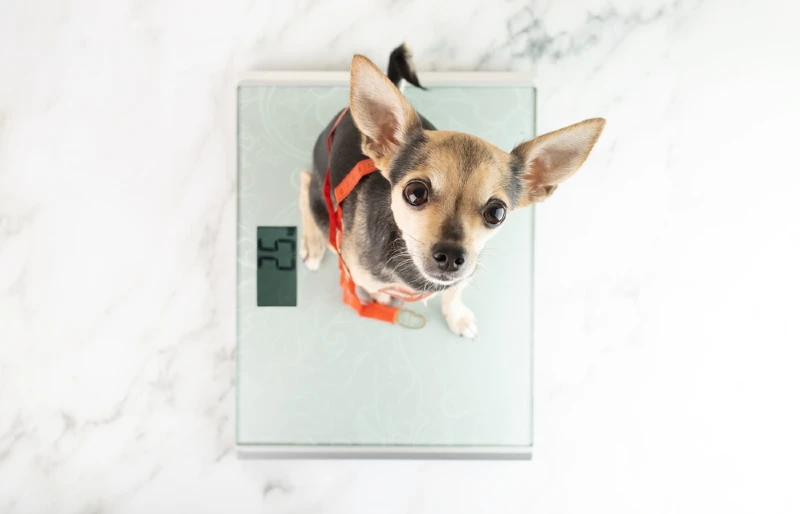
If you want to put your dog directly on the scale, training will be beneficial. Clicker training, in particular, is useful in training your dog to learn how to use a scale. To do this, you’ll need a clicker and some treats. Introduce your dog to the scale and let them sniff around before doing anything else. Click and give your pet a treat for sniffing, then repeat when they finally put a paw to the scale and again when they’re fully standing still on the scale. Repeat the process as needed.
2. Start weighing your dog when they’re a puppy
You don’t want your pup to develop a fear of scales, so you may want to begin weighing them as a puppy. Introduce your dog to your home scale and begin training them to step on it and stay still as soon as possible, so they learn it’s safe.
3. Weigh your dog routinely
Routine weighing will look different for every dog, but weighing your pup every six months or less is ideal. Some dogs may need to be weighed more often, especially dogs who need to gain or lose weight or puppies that are growing. The point is to stick to a routine when it comes to weighing. So, if you need to weigh your dog every day, do it at the same time, or if they must be weighed every week, then do it on the same day and at the same time each week.
4. Always use the same scale when weighing your pup
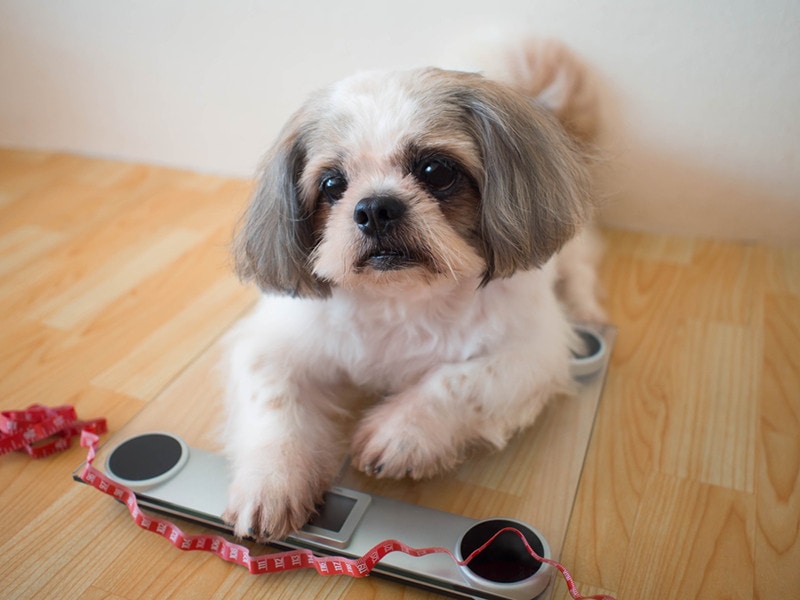
Scales can vary minutely in how they weigh items, so to ensure you’re getting the most accurate reading for your dog’s weight, use the same scale each time you weigh them. This way you don’t have to worry that any minor fluctuations (or major ones) in your dog’s weight are due to the scale being off or different from the last one you used. Plus, using the same scale means your pup will be used to it and avoids them having to deal with something new.
5. Weigh your pet before they eat
Having your dog eat right before putting them on the scale could mean the result is off. Though a meal won’t add much weight to your pet, it can add some. So, if you need to weigh your canine companion, weigh them before a meal and not after! Right before breakfast is a great time to have your doggo step on the scale.
6. Keep scales on the floor
It may be tempting to place a bathroom scale on the counter to weigh your pet (especially if you have a smaller dog), but keeping the scale on a flat, solid floor is best. Keep in mind that scales used on carpets are often incorrect, so stick to hard floors. This avoids the risk of any injury to your pet if they end up falling off the scale (or trying to jump off). And if you have a larger dog, you absolutely want to keep them closer to the ground to prevent falls that could injure joints.
7. Buy a dog scale
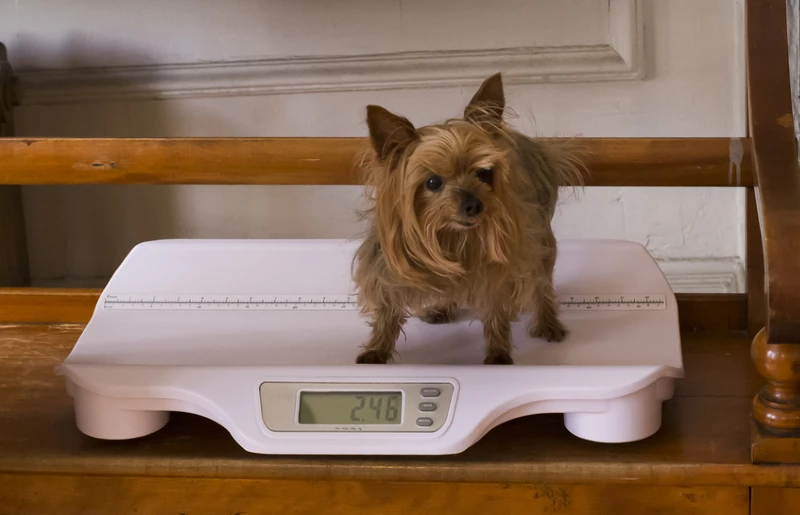
Let’s face it; a German Shepherd or Great Dane probably isn’t going to fit on your bathroom scale (at least not unless you modify it). So, if you have a large dog, purchasing a dog scale for your home may be your best bet at getting the correct weight for your pet. These scales are similar to the ones used at the vet, so they can be on the pricier side. If you aren’t able to fit one into your budget, move on to our next tip.
8. Modify your bathroom scale
If you have a large breed dog, you may still be able to use your bathroom scale by modifying it a bit. How can you do that? By putting a platform on it that will hold your pup. You can use plywood or plastic for the platform; place it on the scale so the scale supports the entire thing. You’ll need to cut out a hole, though, so you can see the numbers on the scale. Check the weight of your platform before you put your dog on it. Then, carefully place your pet on the platform and get that number. Subtract the weight of the platform from the weight of your dog plus the platform to find your dog’s weight.
Final Thoughts
Weighing your dog at home can be a bit challenging (especially if you have a larger dog), but with these tips and tricks, you should be able to easily get your pet’s weight. Training your dog from a young age to get on the scale will be most helpful in being able to accurately weigh your pup, as will sticking to routines when it comes to weighing. For larger canines, you might need to buy a dog scale or put together a platform so your dog can get on a bathroom scale, but these should work to get you an accurate weight. Happy weighing!
Sources
Featured Image Credit: Boryana Manzurova, Shutterstock
Get Hepper In Your Inbox


Pet care tips from our vets and experts, straight to your inbox.
You may opt-out at any time. View our Privacy Policy for more information.
Nicole is a lover of animals of all sizes but is especially fascinated with the feline variety. She’s the proud mom of Baby, a Burmese, and works every day so he can relax in the sunshine or by the fire. She’s always had a cat in her home and has spent countless days with others, observing behaviors and softening up even the grouchiest of the lot. Nicole wants to share her kitty expertise with you so you and your cat can live happy, healthy, and care-free.
Join the conversation
Ask a question, share your story, or send private feedback.