Hepper is reader-supported. When you buy via links on our site, we may earn an affiliate commission at no cost to you. Learn more.
How to Weigh a Cat at Home: 5 Vet Approved Tips & Tricks


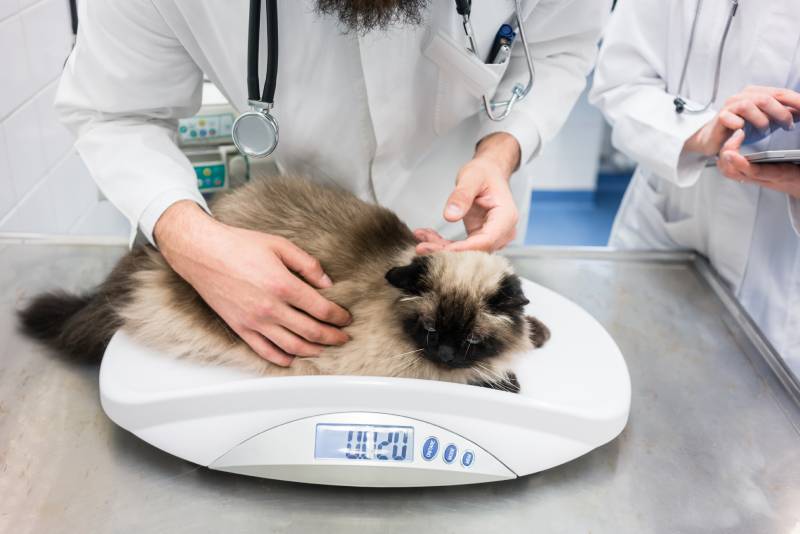
If you’re concerned your cat is looking a little too round or a bit too thin, the quickest way to find out is to weigh them. However, you probably don’t want to pack up your kitty and take them to the vet just to get on a scale. The good news is you can weigh your cat at home, and this article will tell you how.
Keeping an eye on your cat’s weight and shape is important in helping them stay healthy. We’ll discuss more about why knowing your cat’s weight is essential later in this article. But first, here are five tips and tricks for how to weigh a cat at home.

Before You Begin
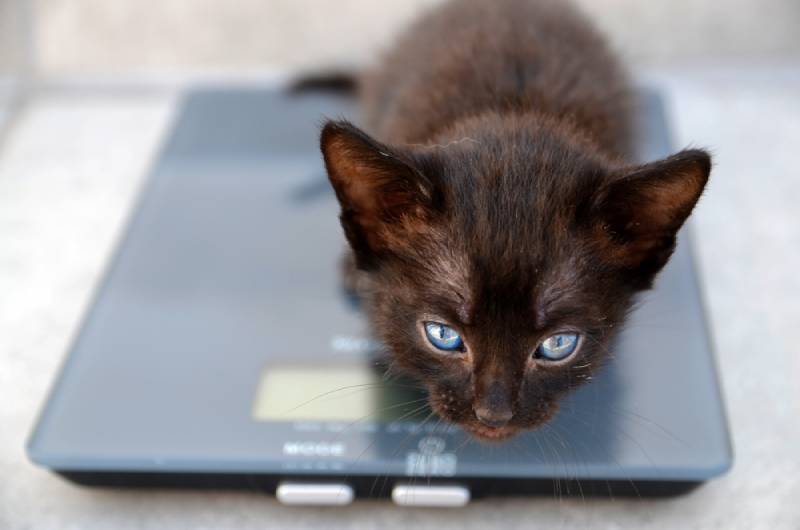
You’ll need access to a scale to weigh your cat at home. A digital bathroom scale is generally the most accurate for adults or large cats. To monitor a kitten’s weight, use a kitchen scale instead.
Besides the scale, you’ll only need something to contain your cat and place on the scale. Your cat’s carrier, box, or reusable grocery bags are all potential options. You might use a bowl, pot, or Tupperware container for a kitten. Optional but helpful supplies are a calculator, something to write with, and treats for your cat.
How to Weigh a Cat at Home
1. Choose Something to Weigh Your Cat In
The first step in weighing your cat at home is to choose something to weigh your cat in. The item must be large enough to contain your cat and small enough to fit on the scale you’re using. For most adult cats, their carrier is the simplest choice.
However, if your cat responds negatively to the carrier, you may need an alternative. Consider a cardboard box, an empty litter box, or a reusable shopping bag. Basically, you need something your cat is comfortable sitting in for a few seconds for the scale to register a weight.
If you’re using a kitchen scale to weigh a kitten, some possible containers include a large bowl or pot. Make sure whatever you choose isn’t so heavy that it won’t register on your kitchen scale.
2. Tare the Scale
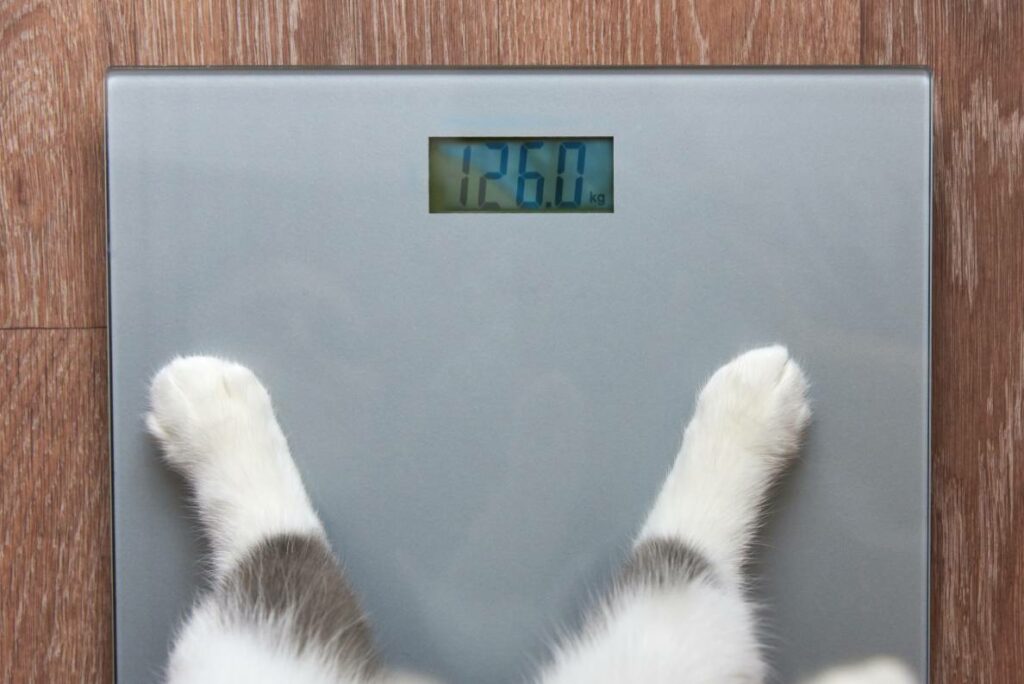
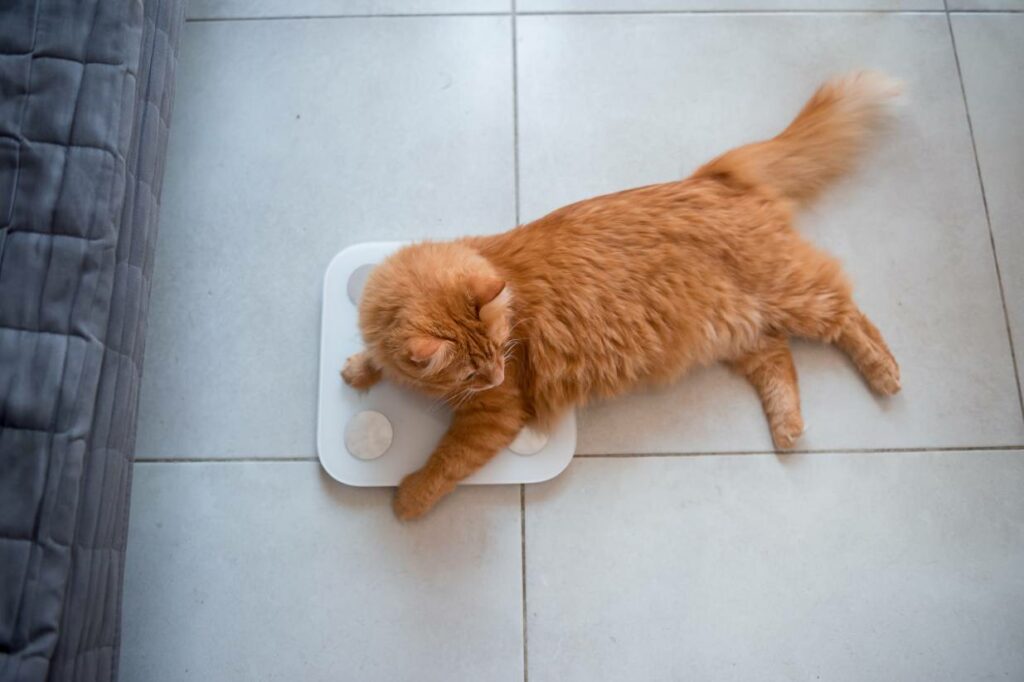
Once you know what you’re weighing your cat in, place the container on the scale and tare (zero out) the reading. This step automatically eliminates the weight of the carrier or bowl from the final total when you weigh your cat. Make sure the scale is registering the weight in pounds.
If your scale doesn’t offer the option to tare automatically, you’ll need to weigh the container separately, write it down, and subtract this number from the total weight calculated in the next step.
3. Weigh Your Cat
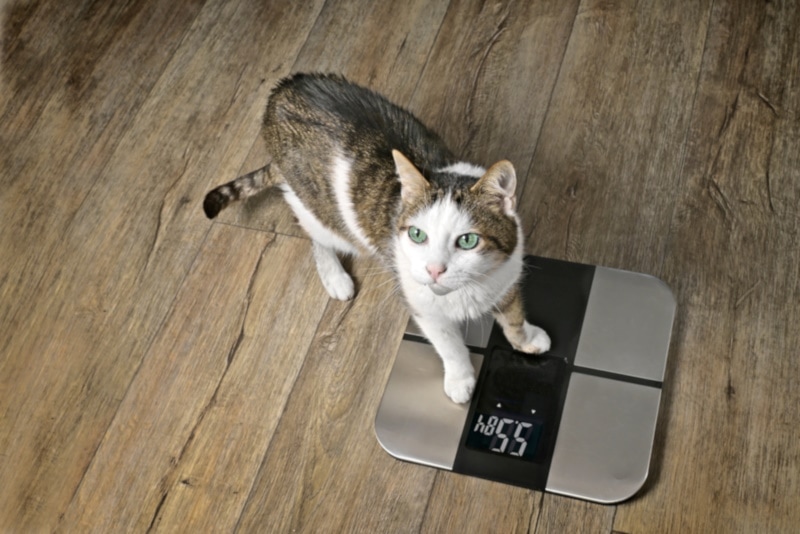
Place your cat inside without removing the box, bowl, or carrier from the scale once it’s zeroed out. The number displayed on the scale is how much your cat weighs. If you were unable to tare the scale, place your cat into the container and write down the resulting weight.
Subtract the weight of the carrier or other container from the total weight of both it and your cat. The final number is your cat’s total weight. If the weight seems much lower (about half) of what your cat usually weighs, double-check that you haven’t accidentally weighed them in kilograms instead of pounds.
4. Bribe Your Cat as Needed
If your cat is energetic, you may have trouble getting them to stay still even for the few seconds it takes to register an accurate weight. Try distracting your cat by feeding treats or letting them lick canned food off a spoon to keep them in the container long enough to record weight.
You could also try smearing canned food or a lickable treat on the bottom of the carrier or box. In the time it takes your cat to lick up the food, you should be able to get an accurate weight.
5. Weigh Yourself and Your Cat
If your cat absolutely won’t hold still in a container or is traumatized by their carrier, there’s another option to get a weight, but it’s usually not quite as accurate. Weigh yourself on the scale, and then weigh yourself holding your cat.
Subtract the first number from the second to get your cat’s estimated weight. Human scales can vary slightly between weights, which isn’t usually significant for a human, but even small weight changes can indicate a problem for cats. This option isn't the best if you need to accurately monitor your cat’s weight over time.

Why Is Knowing Your Cat’s Weight Important?
Knowing your cat’s weight is vital for several reasons, which are all essential for helping them stay healthy.
Obesity is Dangerous
Obesity in cats is one of the most common and preventable feline health conditions. Cats carrying too much weight experience a shorter overall lifespan and are at higher risk of developing serious medical problems. Cats that weigh more than 20% over their ideal body weight are considered obese.
Overweight and obese cats are at higher risk of cancer, diabetes, arthritis, heart disease, and bladder stones. Because you live with your cat every day, it can be hard to notice the physical body changes that indicate they’ve gained weight. Regularly weighing your cat at home will help you catch any weight gain faster.
If your cat is diagnosed with obesity, your vet may suggest you monitor their weight regularly during any weight loss program.
Is Your Cat Eating?
If your cat is a picky eater or lives in a multi-cat household, it can be hard to know whether they’re eating enough. Your cat could lose several pounds before you notice physical signs on their body. Checking your cat’s weight regularly can ensure they maintain a proper weight and get enough to eat.
Weighing nursing kittens regularly helps you learn if they’re getting enough to eat or need supplemental bottle feedings. Weight loss in a cat with a strong appetite can be a sign of several health issues. If your cat is steadily losing weight despite continuing to eat, contact your veterinarian.
Monitoring Certain Medical Conditions
If your cat has a chronic health condition like kidney disease, your vet may request you monitor their weight at home. Weight gain or loss could indicate your cat’s condition is progressing or responding to treatment.
Either scenario could result in a change to their treatment plan. Most medications are dosed by weight, so if your cat’s weight changes, your vet may need to adjust their prescriptions.
In Conclusion
No matter why you need to keep track of your cat’s weight, these five tips and tricks can make the process of weighing them at home easier. Record the number each time you weigh your cat to monitor the overall trends. Sudden or steady weight changes in either direction could indicate a health problem. Have your cat checked by your veterinarian, and bring your kitty’s weight information when you do.
Sources
Featured Image Credit: svf74, Shutterstock
Get Hepper In Your Inbox


Pet care tips from our vets and experts, straight to your inbox.
You may opt-out at any time. View our Privacy Policy for more information.
A lifelong lover of all creatures great and small, Elizabeth got her first cat at 5 years old and at 14, she started working for her local veterinarian. After spending more than 20 years working as a veterinary nurse, Elizabeth decided to step away to become a stay-at-home parent to her daughter. Now, she is excited to share her knowledge with our pet parents. Elizabeth lives in Iowa with her family, including her two fur kids, Linnard, a husky mix and Algernon, the worldʻs most patient cat. When not writing, she enjoys reading, watching soccer, and spending time outdoors with her family.
Join the conversation
Ask a question, share your story, or send private feedback.