Hepper is reader-supported. When you buy via links on our site, we may earn an affiliate commission at no cost to you. Learn more.
Imperial Goldfish: Care Guide, Varieties, Lifespan & Pictures
In this article
Goldfish are one of the most popular pet fish in the world. They have earned their popularity for centuries and can be found in various shapes, sizes, and colors. Some goldfish varieties have been around for years, while others are still new to the pet trade. Goldfish breeders and hobbyists are continuously working hard to produce new varieties of goldfish, whether they're fancy or single-tailed.
One of the newest goldfish varieties is the Imperial Goldfish, which is still being developed by breeders.
| Size: | Up to 12 inches long |
| Lifespan: | 15–20 years |
| Similar Breeds: | Shubunkin, Veiltail, Comet |
| Suitable for: | All goldfish keepers |
| Temperament: | Social and peaceful |
Imperial Goldfish aren't considered an actual variety of goldfish yet. The Imperial Goldfish is still being developed by the Goldfish Society of Great Britain (GSGB) 1 and is still in the experimental phase.
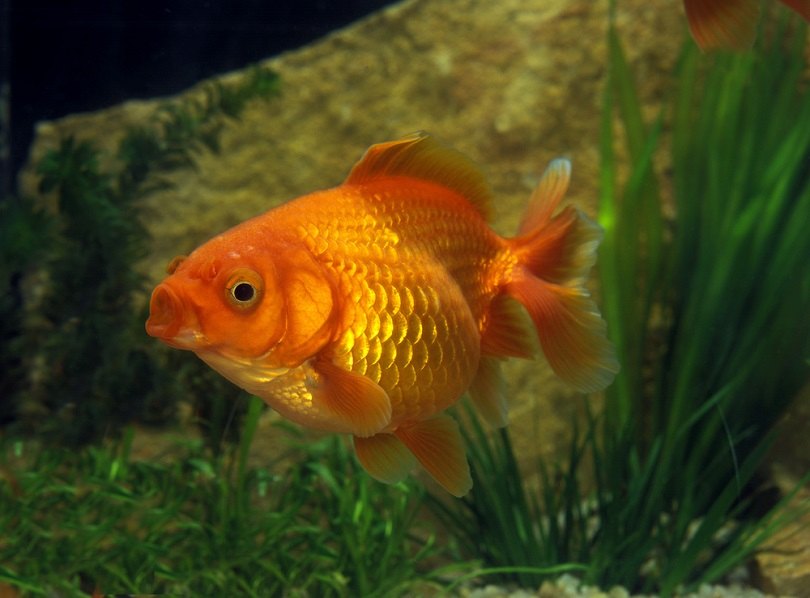
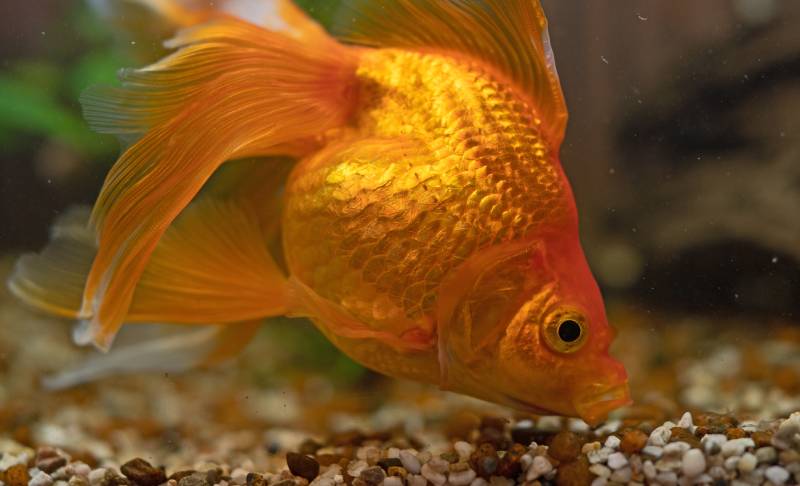
Goldfish breeders are crossing a red metallic Bristol Shubunkin Goldfish with a single-tailed red metallic Veiltail Goldfish to create the Imperial Goldfish. The resulting fancy goldfish is vibrantly colored with short or long fins and a round yet somewhat streamlined body shape.

Imperial Goldfish Characteristics
Imperial Goldfish Cost?
The Imperial Goldfish is considered to be an extremely rare goldfish because of its availability—or lack thereof. Imperial Goldfish are only kept by participating breeders in the London area. They are an experimental goldfish variety that is still being perfected by goldfish breeders.
You will not be able to find Imperial Goldfish in pet stores or from most goldfish breeders. Only a few photos have been shared by the Bristol Aquarists Society 2 of the Imperial Goldfish back in 2009. This makes them one of the most recent yet rarest goldfish varieties there is.
Some Imperial Goldfish culls could be available out there, but they are likely experimental strains. Since Imperial Goldfish aren’t available as pets yet, their average cost is unknown. However, you can probably expect to pay between $20 to $120 for a prized Imperial Goldfish once they are released to the market.

Sociability of the Imperial Goldfish
Do These Fish Make Good Pets?
Goldfish in general make good pets for those who can care for them properly. Both the parenting varieties of the Imperial Goldfish are popular pets. This makes it likely that the Imperial Goldfish will be too.
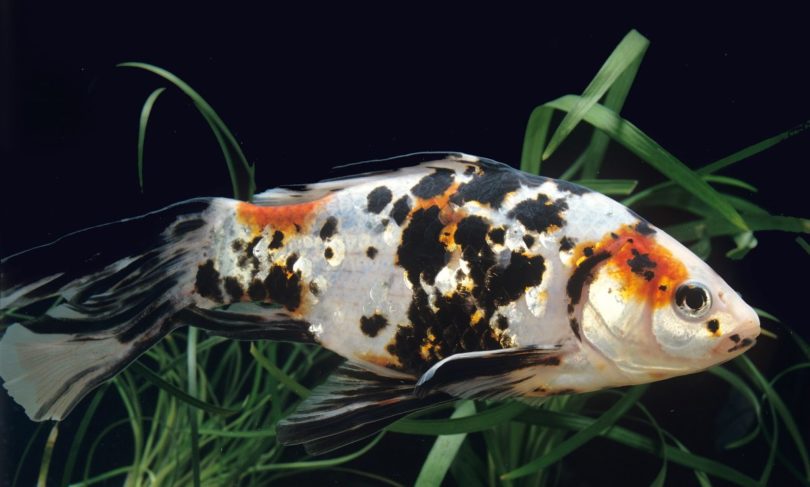
The Bristol Shubunkin is the Bristol Aquarists Societies' very own strain of fish that was developed around 70 years ago. Shubunkins are very peaceful, hardy, and social fish that are suitable for ponds or very large aquariums. This variety of goldfish can reach up to 15 inches in length. Despite the Shubunkin's large size and hardiness, they make good pets for both novice and experienced fish keepers.
The Veiltail Goldfish, also used to create the Imperial Goldfish, has been around since the 1800s. Veiltail Goldfish are prized for their long fins that look striking as they flow in aquariums. As a variety of fancy goldfish, the Veiltail is peaceful and social. Their long fins and rounded bellies make them slow swimmers, and they are popular additions to large goldfish tanks.
Therefore, the Imperial Goldfish is likely a fast-swimming, hardy, and adaptable goldfish variety that can be a good pet for ponds or very large tanks.
Does This Fish Make a Good Tank Mate?
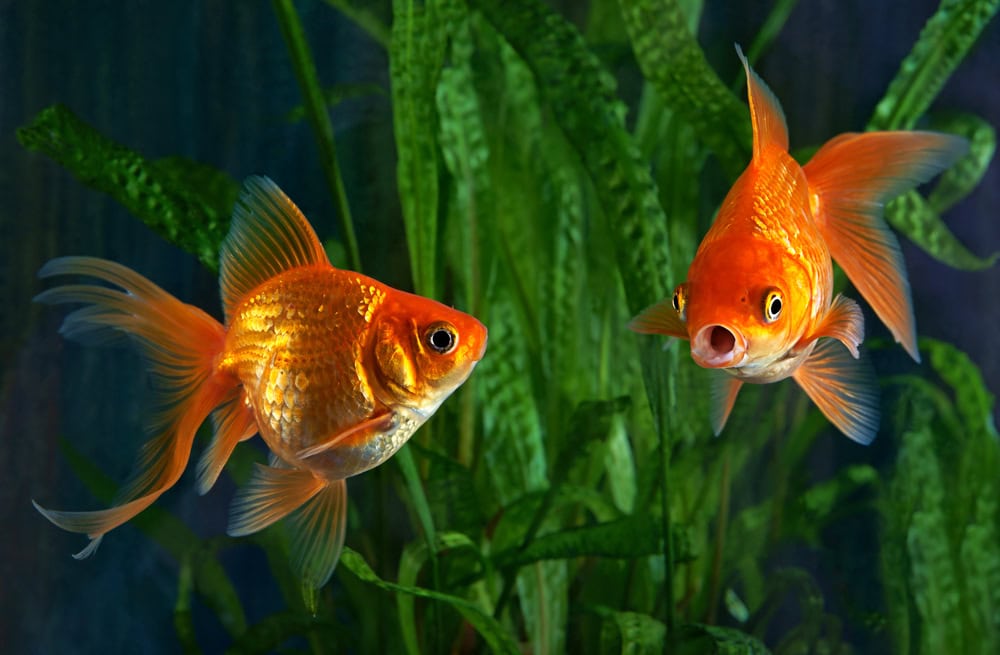
Like all goldfish varieties, the Imperial Goldfish is a highly social fish. The best tank mates for Imperial Goldfish are other goldfish. You want to avoid pairing goldfish with tropical, aggressive, and small species of fish. Goldfish are most compatible with their kind and don't do well in community aquariums. Since the Imperial Goldfish has a more streamlined body than fancy goldfish, they will pair well with single-tailed varieties like the Comet or common goldfish.
Care Guide & Tank Set Up
An Imperial Goldfish will have similar care requirements to other types of goldfish. They need to be kept in very spacious fish tanks or ponds. Imperial Goldfish can reach around 12 inches in length and produce a high bioload. You ideally want to keep adult Imperial Goldfish in no less than 75 gallons of water.
Water Quality, pH & Temperature
| Temperature: | 62°–78° Fahrenheit (16°–25° Celsius) |
| pH Range: | 6.0–8.0 |
| Water Hardness: | 80– 60 ppm (parts per million) |
| Ammonia: | 0 ppm |
| Nitrite: | 0 ppm |
| Nitrate: | Below 20 ppm |
Substrate
You can use any type of fine gravel, sand, or soil-like substrate with Imperial Goldfish. In some cases, you might prefer to keep your Imperial Goldfish in a bare-bottom tank with no substrate at all. However, a sandy substrate will be necessary if you grow any live plants in your Imperial Goldfish’s pond or tank.
You generally want to avoid dyed or pebble-like substrates for goldfish because they can be a choking hazard. The dyed substrate is often cheaply made, and the toxic dyes can start to leach into the water over time.
Plants
Plants are optional for Imperial Goldfish tanks and ponds. Imperial Goldfish can benefit from plants because they can help improve the water quality, release oxygen, and create a natural environment. Some Imperial Goldfish might uproot and eat certain live plants like Duckweed and Amazon swords. You want to grow hardy and cold-water plants in your Imperial Goldfish’s tank or pond, rather than tropical plants.
Best Plants for Imperial Goldfish:
Lighting
Very bright lighting isn’t necessary for Imperial Goldfish, and a low to moderate amount of light is preferred. If your Imperial Goldfish are raised in an outdoor pond, you probably don’t need to use an artificial light source. However, you do need to keep Imperial Goldfish tanks and indoor ponds lit for around 6 to 12 hours a day. Lighting is also essential for any live plants you grow in their tank.
Any lighting should be turned off at night. Goldfish require a period of darkness (ideally 6–12 hours) to rest with no need for night lights.
Filtration
Goldfish are well-known for being messy fish that produce a high bioload, and the Imperial Goldfish is no exception. Your Imperial Goldfish’s pond or tank needs to be equipped with a filtration system. There are endless filters to choose from that can be used in Imperial Goldfish aquariums, but the most popular options are the sponge, hang-on-back (HOB), and canister filters. The filter will prevent the water from becoming stagnant while offering different methods of filtration.
An Imperial Goldfish’s filter should ideally offer biological and mechanical filtration, and additional chemical filtration will be beneficial.
Things to Know When Owning an Imperial Goldfish
Food & Diet Requirements
Imperial Goldfish have the same dietary requirements as the Bristol Shubunkin and the Veiltail Goldfish. They are omnivores and need a varied diet of pellets or flakes, live foods, and blanched veggies. An Imperial Goldfish should get most of their nutrients from a pellet, flake, or granule food that is formulated for adult goldfish.
Live or freeze-dried foods like bloodworms and baby brine shrimp should be offered as a dietary supplement. Feeding small pieces of blanched veggies to your Imperial Goldfish is optional, and they shouldn’t eat them too often.
Size & Growth Rate
The Imperial Goldfish will likely be a similar size to the Bristol Shubunkin and Veiltail Goldfish. The Bristol Shubunkin can grow up to 15 inches in length when raised in pools or ponds. In fish tanks, the Bristol Shubunkin usually only reaches 12 inches in length. The Veiltail is much smaller at only 6 to 8 inches long as an adult. Veiltail Goldfish are wider than Bristol Shubunkin goldfish because of their rounded bellies.
With this in mind, we can expect the Imperial Goldfish to grow between 8 to 12 inches in length as an adult. If they are kept in large ponds or indoor pools, they could reach 15 inches in length.
All goldfish have a similar growth rate, but single-tailed goldfish varieties often have a higher growth weight than fancies. Imperial Goldfish will reach adult size at around 4 years of age like most goldfish. Most of their growth is done within the first year of their life and slows down.

Varieties
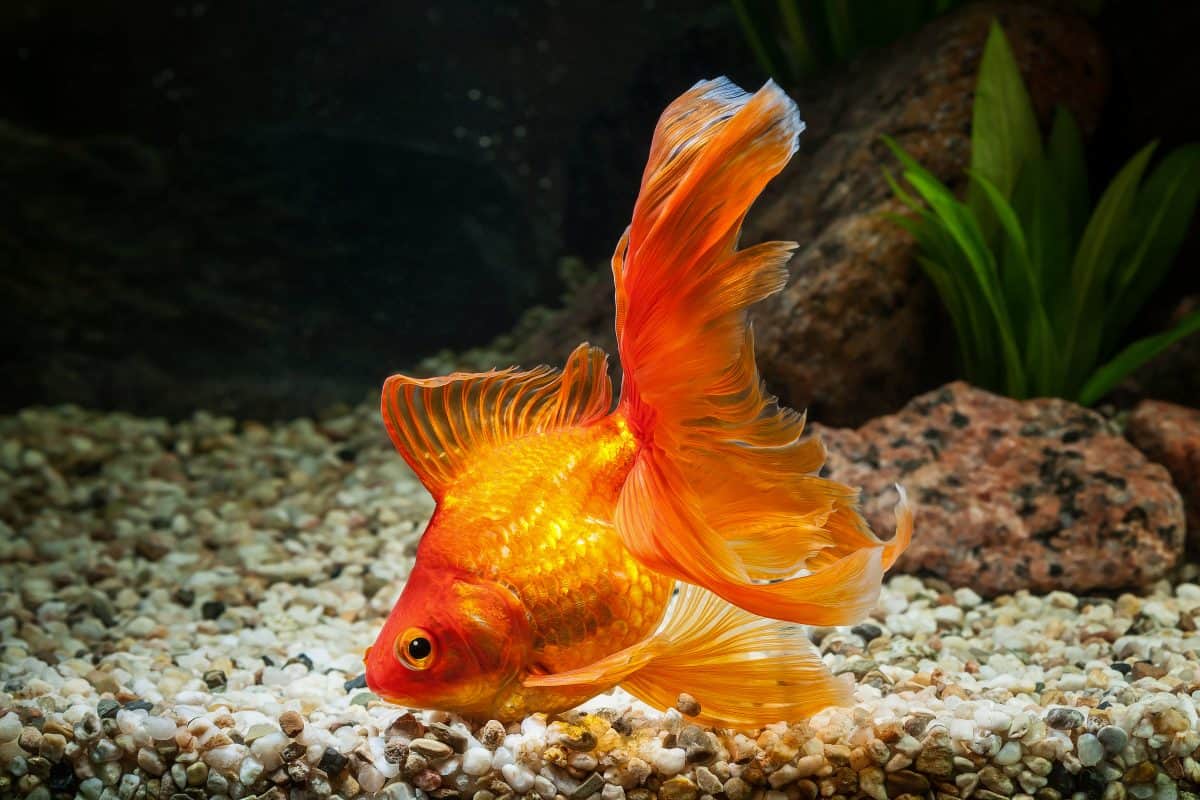
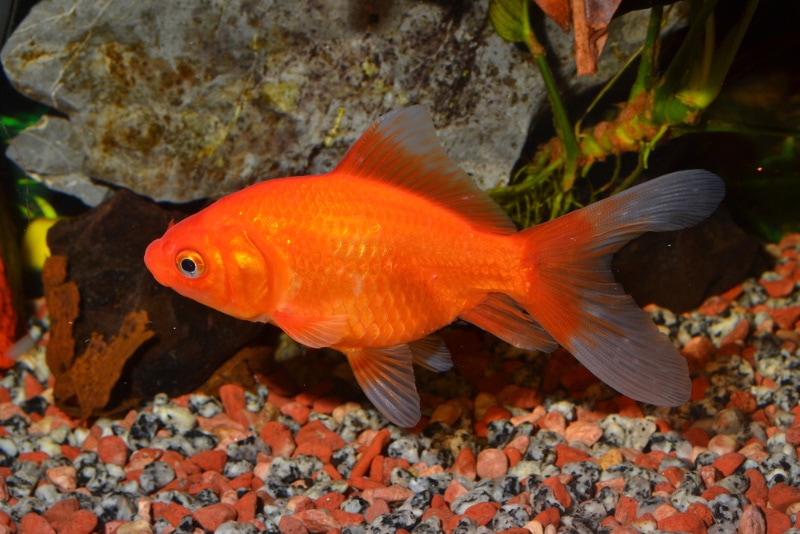
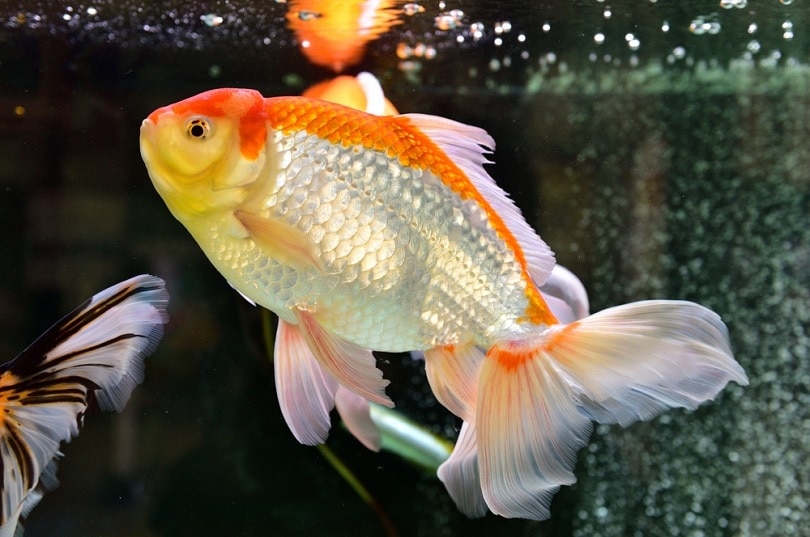
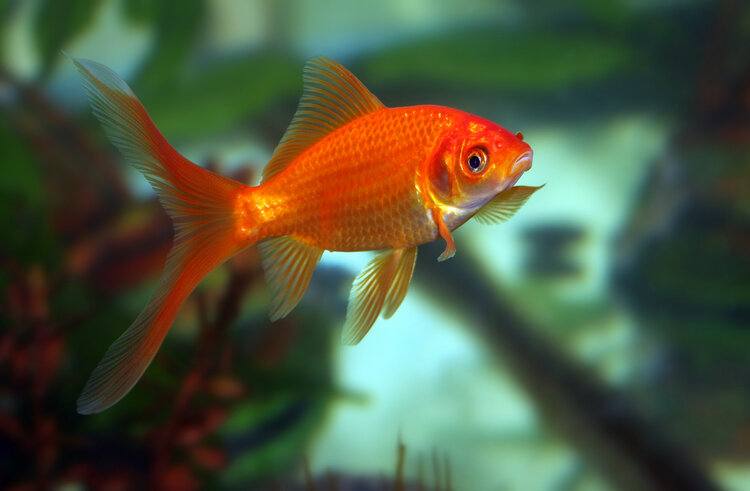
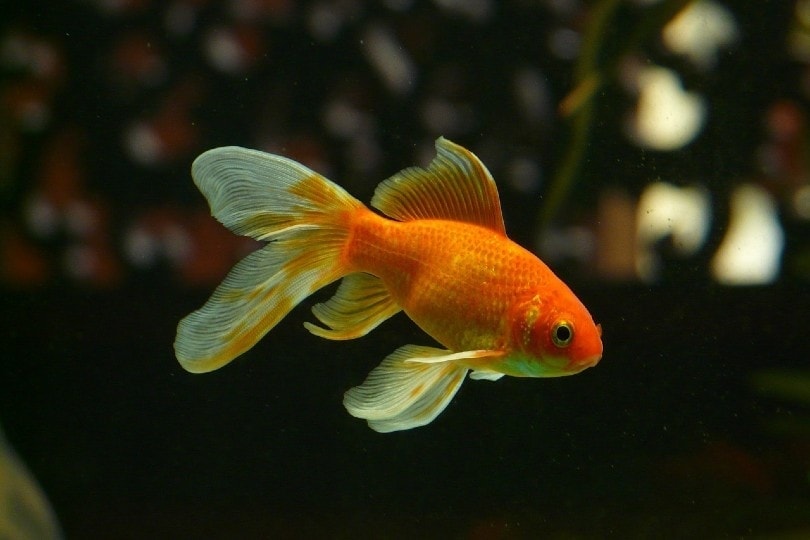
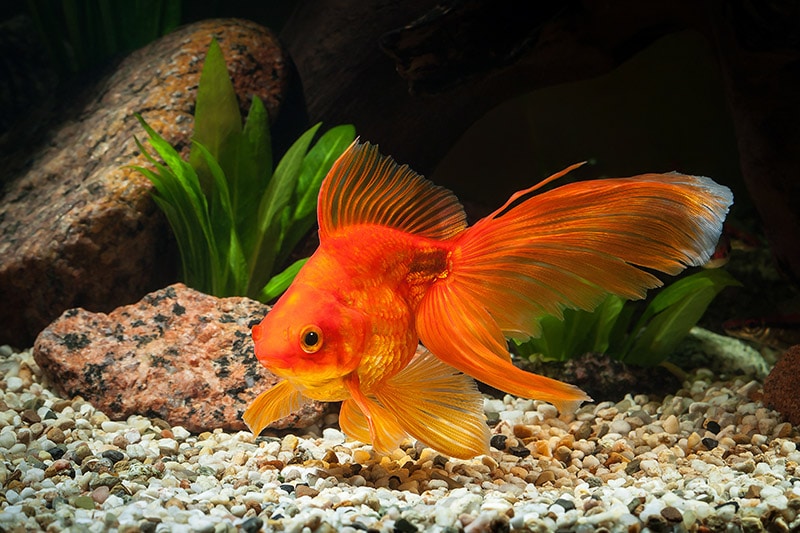
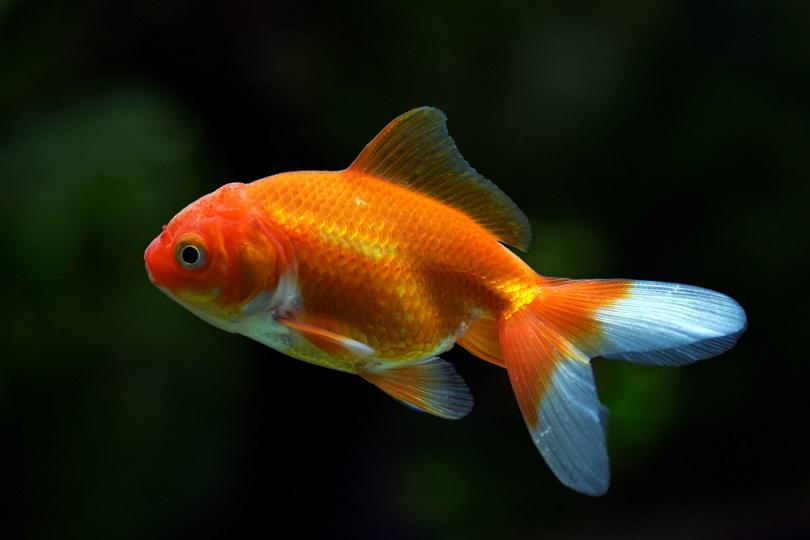
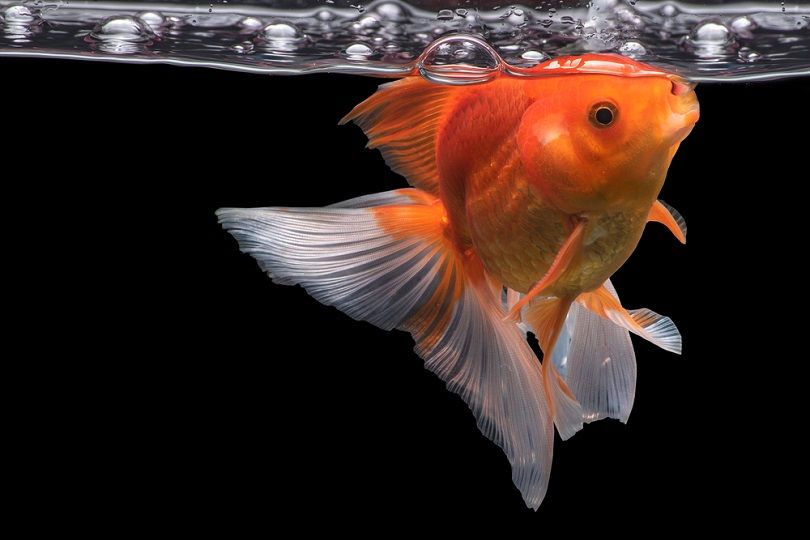
The Imperial Goldfish is a mix between a fancy and single-tailed goldfish—the Veiltail and Bristol Shubunkin. Their appearance is somewhere in between these two popular varieties and have been bred to have their appealing traits. Imperial Goldfish can either have short or long fins, and others can have a more streamlined or egg-shaped appearance. They have a single caudal fin, making them single-tailed goldfish.
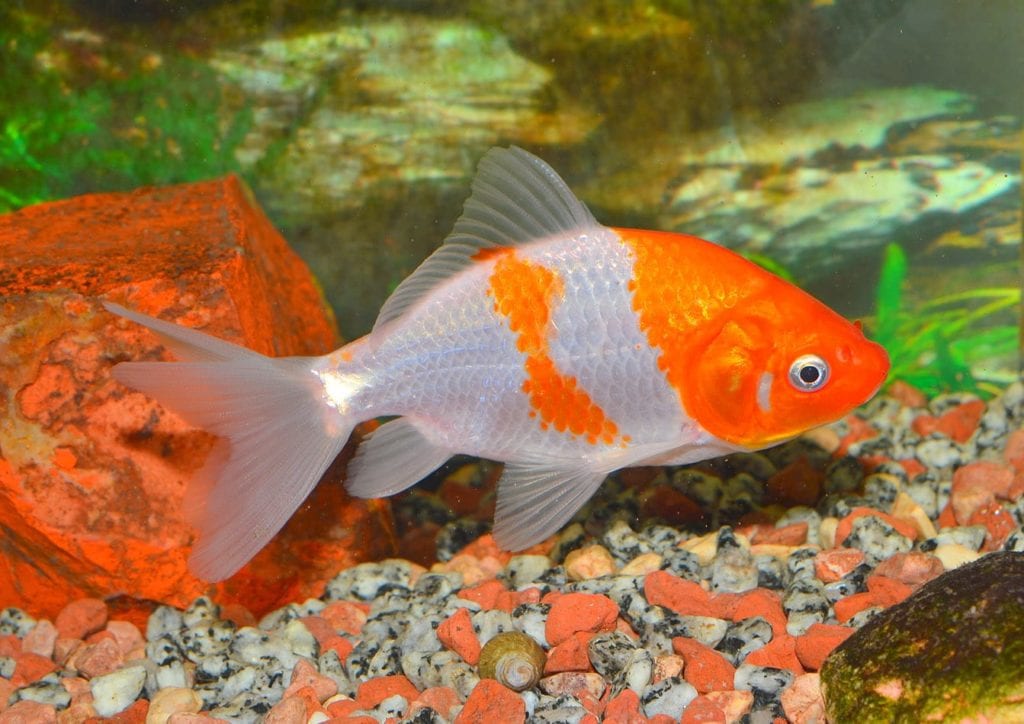
Imperial Goldfish have an unusual coloration that gives them an opalescent appearance. The edges of their scales are matt, while the center is reflective. This gives them a shiny, metallic appearance that makes them stand out in comparison to other goldfish varieties. Imperial Goldfish can be found in various self-colors like red, orange, bronze, brown, black, and blue. Some Imperial Goldfish have a shiny matt band that can develop across their body.
Juvenile Imperial Goldfish can start as a bronze or silverish coloration that changes to a self-colored red as the fish ages.
Lifespan and Health Conditions
The Imperial Goldfish will likely have the same average lifespan as other single-tailed goldfish which is around 15 to 20 years. This is only if they are cared for properly and are kept in large tanks, pools, or ponds that can support their adult size.
Male vs Female
The differences between a male and female Imperial Goldfish are subtle and don't affect the goldfish’s colors and behavior much. However, males can become more aggressive during the breeding season and chase female goldfish around the tank.
3 Little-Known Facts About Imperial Goldfish
1. The Imperial Goldfish cannot be found in pet stores yet. Only a few breeders in London own Imperial Goldfish.
2. Imperial Goldfish are an experimental goldfish variety; they are not widely available like most goldfish are.
3. Imperial Goldfish is one of the rarest goldfish varieties.
Final Thoughts
Although Imperial Goldfish are still in the experimental phase, they will make spectacular pets when they become available to the pet trade. This could take a few years and there is no clear indication as to when they will be available as pets. Only a handful of goldfish breeders currently own Imperial Goldfish, which is why there is such little information about this incredibly rare goldfish variety. However, the Imperial Goldfish still has similar care requirements to other single-tailed goldfish.
Featured Image Credit: slowmotiongli, Shutterstock
Get Hepper In Your Inbox


Pet care tips from our vets and experts, straight to your inbox.
You may opt-out at any time. View our Privacy Policy for more information.

Sarah is residing in South Africa with her partner and pets. She currently is interested in veterinary science and ichthyology, which she wants to study alongside her main passion: pet content writing. Sarah has over 60 fish including goldfish, tropicals, shrimp, and snails. She also keeps hamsters and a tarantula and wishes to provide quality content for readers and allow others to learn from her knowledge and experience. Sarah has much experience in all aspects of pet care, and providing the world with knowledge on ethical pet ownership is her lifelong dream.
Join the conversation
Ask a question, share your story, or send private feedback.