Hepper is reader-supported. When you buy via links on our site, we may earn an affiliate commission at no cost to you. Learn more.
How Big Do Irish Setters Get? With Growth & Weight Chart


In this article
Irish Setters are considered to be medium to large breed dogs, but how large do they get? Irish Setters have a very standard growth curve with very little variation. That means that most Irish Setters end up within a few pounds and a couple of inches of one another when fully grown. A fully-grown Irish Setter will weigh 70 pounds on average, be 26 inches in height, and 35 inches in length. This brief guide will go through the growth chart, give you tips on how to measure your dog, and let you know what to expect as your Setter goes from a small puppy to a large adult.

Irish Setter Breed Overview
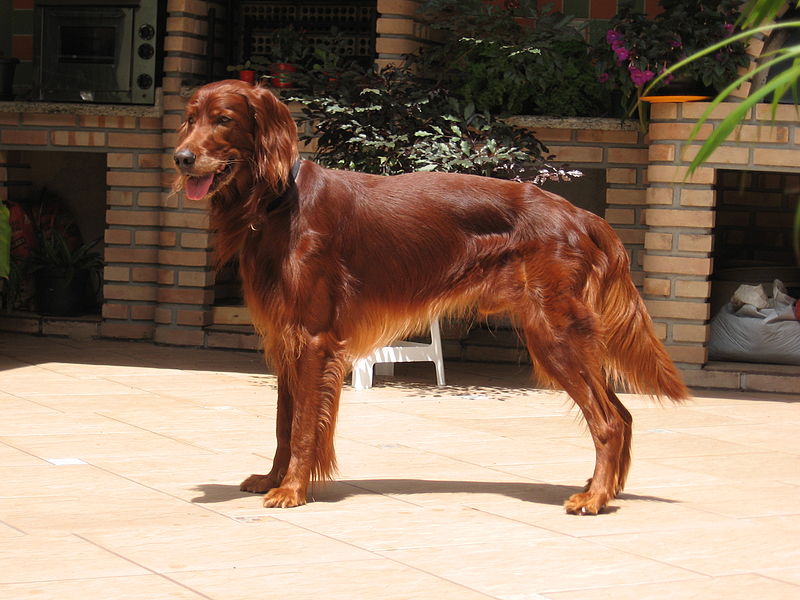
Irish Setters are a breed of gundog from Ireland. Irish Setters have been kept and bred as hunting dogs in the United Kingdom for hundreds of years. They have experienced periods of highs and lows in terms of popularity, but they have remained a staple in the British hunting scene for generations. Irish Setters are known for their sleek form and vibrant red coats.
Irish Setters are hunting dogs bred to track and retrieve birds. Irish Setters are extremely loyal, loving, and spirited. As gun dogs, they can be trained to hunt alongside people using long guns with very few issues. Irish Setters have been gun dogs for hundreds of years. These dogs hunt quail, pheasant, and grouse, along with other small birds.
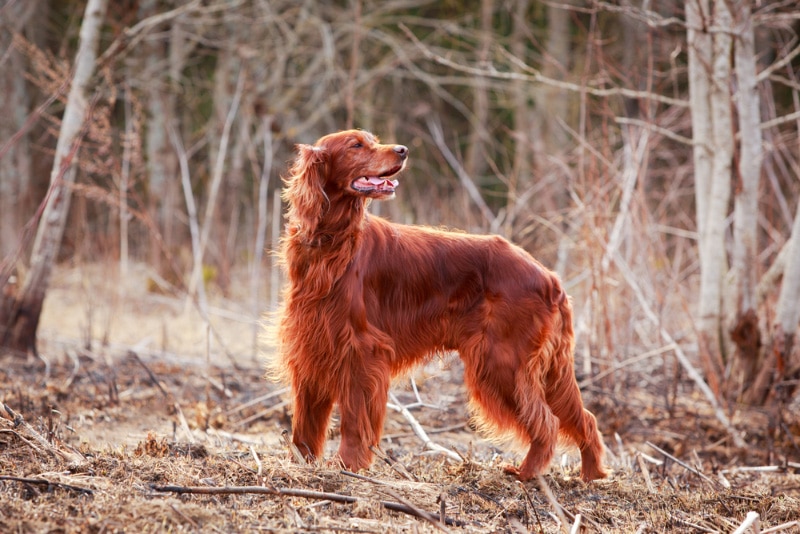
Irish Setter Size and Growth Chart
This chart covers the average growth of an Irish Setter from 1 month of age through 18 months, when they typically stop growing. This chart measures the average growth and tops out on the high end, which male Setters often occupy. There is only one type of Irish Setter, and there is a very standard growth curve for this breed with very few variations or surprises. This chart can be used for a large number of Irish Setters with confidence.
| Age | Weight Range | Length Range |
| 1 month | 5–7 pounds | 7–9 inches |
| 2 months | 13–15 pounds | 9–13 inches |
| 4 months | 28–32 pounds | 12–16 inches |
| 6 months | 39–42 pounds | 16–20 inches |
| 9 months | 52–56 pounds | 20–25 inches |
| 12 months | 60–63 pounds | 26–30 inches |
| 14 months | 63–66 pounds | 32–34 inches |
| 18 months | 70 pounds | 33–35 inches |
When Does an Irish Setter Stop Growing?
Irish Setters are considered to be medium to large breed dogs, and they stop growing between 12 and 18 months of age. Irish Setters will approach their final size around a year old. Between 12 and 18 months, your Irish Setter could grow another inch or two in length and put on a few extra pounds as they get more muscular and less lanky. By 18 months old, your Irish Setter should be fully grown, and you should start monitoring their weight to look for signs of obesity or overeating. Irish Setters should max out at around 70 pounds in weight, 26 inches in height, and 35 inches in length.
Factors Affecting the Size of an Irish Setter
There are three main factors that heavily influence the final size of your Irish Setter. The three factors are genetics, diet, and sex. Evaluating these three things can give you a good idea of what your dog’s final size will be while they are still puppies.
Genetics
One of the biggest determining factors in size is a dog’s genetics. Dogs with large parents have a better shot at being large than dogs with small parents. Dogs with large parents and a healthy diet have very little chance of being small or below average. Looking at a dog’s parents (if you have the opportunity) can help give you an idea of what kind of size you can expect out of your Irish Setter. Breeders will typically keep good records and notes about their breeding stock and can give you an overview of the parents, including the height and weight of each parent if you are curious.
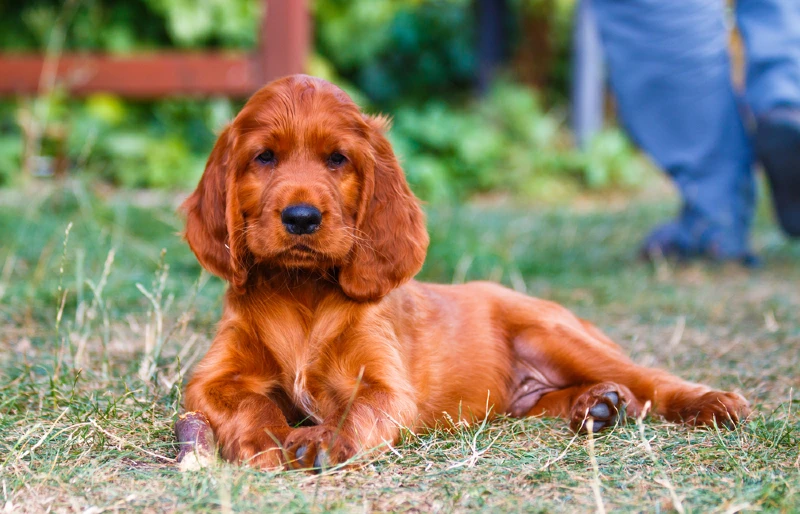
Diet
Diet is critically important to a dog’s overall size. Dogs that do not get enough nutrients while they are puppies have a chance of having their growth stunted. This is one of the reasons that runts grow more slowly than their siblings. Runts often remain smaller than their kin even if their nutrient balance evens out as they age. Runts usually end up as runts from a lack of nutrients due to a lack of food. Making sure that your dog gets plenty of calories, vitamins, and nutrients when they are young can ensure that they reach their full growth potential.
Sex
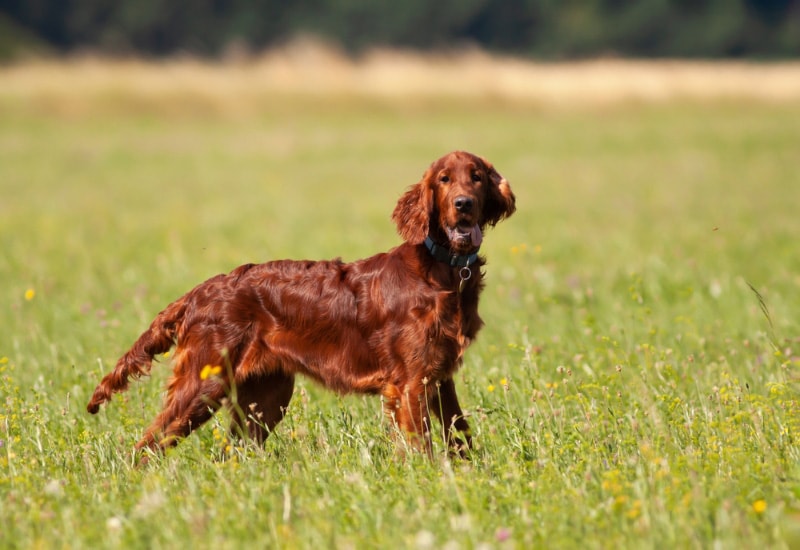
Lastly, sex plays a role in an Irish Setter’s final size. Female Irish Setters are noticeably smaller than males. This is true in most cases. A full-grown female Irish Setter will measure 10 pounds lighter and 2 inches shorter than their male counterpart. That means if you have a female, you can count on them being on the smaller end of the size spectrum. Similarly, if you have a male, you have the potential of getting the largest Irish Setters, which can weigh up to 75 pounds and stand nearly 28 inches tall.
Sometimes, you can find a small male Irish Setter, but you will rarely find a female that can reach the size that males can. If you want a large Irish Setter, you should focus on getting a male over a female.
Ideal Diet for Maintaining a Healthy Weight
The ideal diet for an Irish Setter is one made up of formulated dry dog food. Medium-sized Irish Setters (usually females) that weigh 50–60 pounds should eat 2 to 3 cups of food per day broken into two separate feedings. Large Irish Setters that weigh 60–70+ pounds should eat 3 to 4 cups of dog food per day, broken into two separate meals. You should refrain from feeding your Irish Setter human food or treats to avoid obesity.
You should also consider getting specialty food that matches your Setter’s stage of life. For example, you might want to get puppy food when the dog is young, dental food for when the dog is an adult, and hip and joint health food when the dog is older. Specialty foods cost more money than regular foods, but they can provide a myriad of benefits for your dog as they grow and change.
How to Measure Your Irish Setter
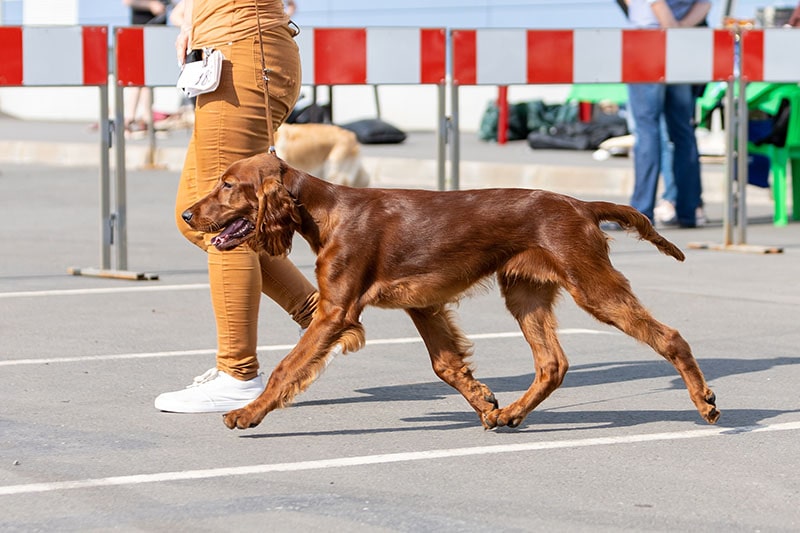
Properly measuring a dog requires three separate measurements. You must measure the length, the height, and the weight to get an overall picture of your dog’s size. These three measurements are the most important ones and the ones most often used by veterinarians, breeders, and show judges to get a bead on a dog’s size and constitution.
Length
The way to measure your dog’s length is to go from the tip of your dog’s nose to the base of their body, excluding the tail. Do not measure the length with the tail included. Most measurements exclude the tail and only account for the dog’s main body. Do not measure from the top of the head or the base of the neck. Measure from the nose to the spot where the tail meets the body.
Height
A dog’s height is measured from the floor to the dog’s withers. The withers is the highest point on a dog’s shoulder and usually is measured to the raised area between the shoulder blades. To get the height, pull a tape measure from the floor up to the withers and take the measurement. Height is not measured using the dog’s head, which is often higher than the withers.
Weight
The most accurate way to obtain your dog’s weight is to get them weighed at the veterinarian’s office. Vets have special scales designed for dogs that are larger and easier to use. If you want to weigh your dog at home, you have two options. First, you can try to get your dog to sit on the scale. For a large dog like an Irish Setter, this can be challenging. Second, you can weigh yourself, and then pick up your dog, and then weigh yourself again. Subtract your solo weight from the combined weight of you and your dog. This will work well when your dog is a puppy but can get challenging as the dog grows larger. This is why going to the vet is the easiest way to obtain your dog’s weight.

Conclusion
Irish Setters typically finish growing at 18 months of age and will weigh 60 to 70 pounds. Irish Setters grow very gradually and consistently. Some dogs will become larger than 70 pounds and stand 28 inches tall, but that is not as common as dogs weighing 60 pounds and standing 26 inches tall. On the low end, Irish Setters are medium dogs, while on the high end, they can be considered large. You can use this guide to track your dog’s progress to ensure that they're on track and getting what they need to thrive.
Sources
Featured Image Credit: TMArt, Shutterstock
Get Hepper In Your Inbox


Pet care tips from our vets and experts, straight to your inbox.
You may opt-out at any time. View our Privacy Policy for more information.
Grant is a freelance writer with years of experience writing about a diverse range of topics. His days are spent writing and caring for eight animals (two horses, two donkeys, two goats, and two dogs). In his free time he enjoys slowly carving out a quaint hobby farm from the Southern scrub. He currently lives in his native Florida with his wife and son.
Join the conversation
Ask a question, share your story, or send private feedback.