Hepper is reader-supported. When you buy via links on our site, we may earn an affiliate commission at no cost to you. Learn more.
Siberian Husky Growth & Weight Chart (Puppy to Adult)


In this article
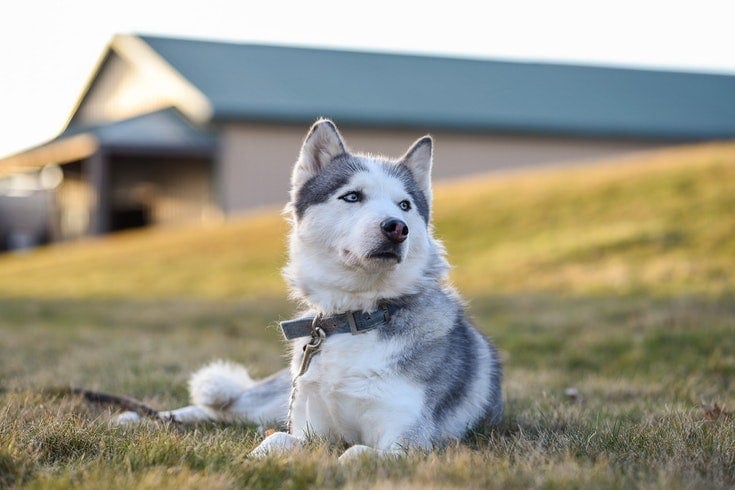
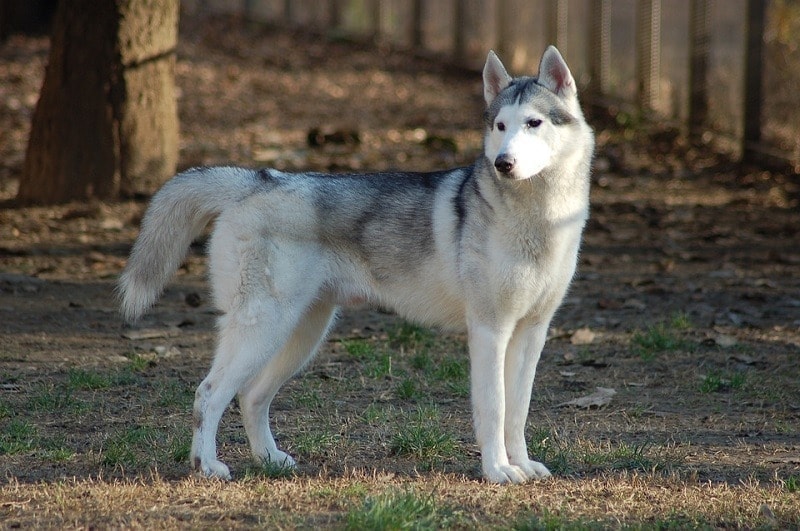
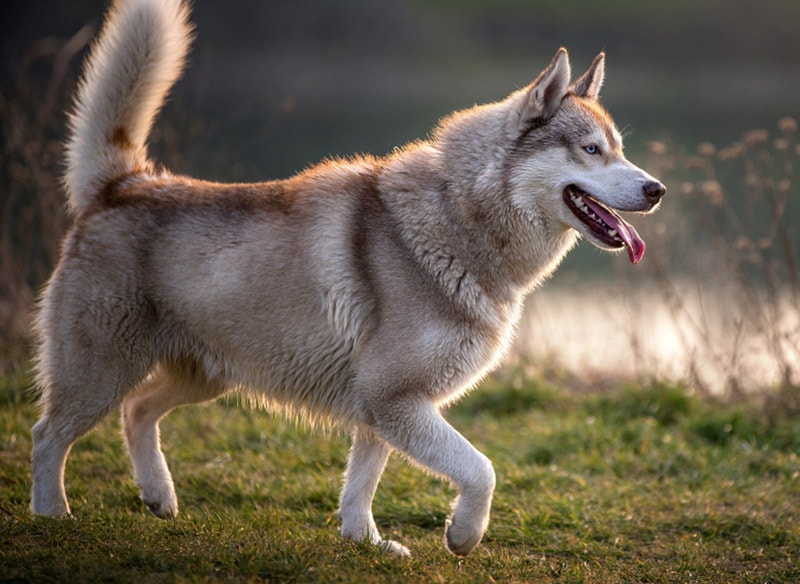
Huskies are medium-sized dogs that reach full height and weight at about 1.5 years old. It’s easy to worry during that time that your Husky isn’t the size they should be. After all, your dog’s growth can be an indication of many things, including their overall health.
Luckily, you can stop worrying now and get the facts. We’ve compiled all the information you need to determine if your dog is the right weight for their age, including a Husky growth chart. You’ll be able to pinpoint the precise range where a healthy Husky should fall for each important milestone of their first year, starting at just 8 weeks.
Keep in mind that these are estimates, and it may be perfectly normal for a Husky puppy to fall outside of these numbers. Talk to your vet if you’re at all concerned about how your puppy is growing.

Facts About the Siberian Husky
Siberian Huskies have a wolf-like appearance, though wolves are long gone from their bloodlines. They were originally bred as sled dogs, with incredible endurance and outstanding tolerance to cold buttressed by a work ethic that few canines can compete with. When they first debuted at the second All-Alaska Sweepstakes Race in 1909, they proved their superiority, dominating the scene for years to come.
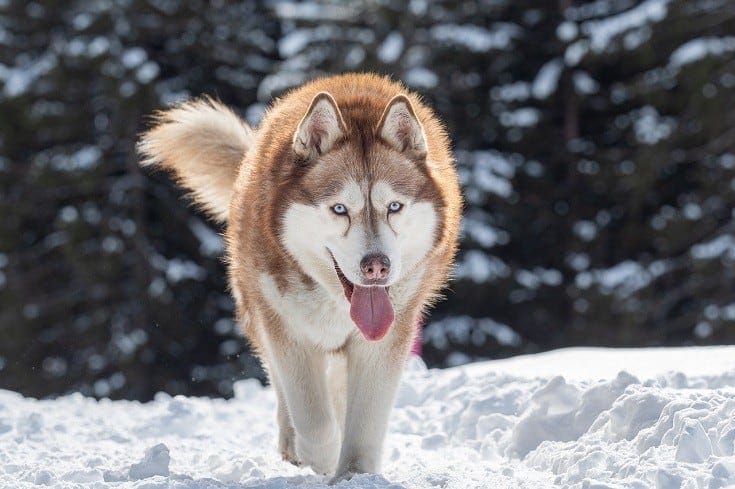
Fully grown, male Siberian Huskies stand 22-24 inches tall, while females are a bit smaller at 20-22 inches tall. The average weight of a male is 45-60 pounds, while the average weight of a female is 35-50 pounds as adults. They have thick double coats that keep them warm at low temperatures, though it can also contribute to overheating in warm climates.
Siberian Husky Puppy Growth Chart
If you’re wondering how big Huskies get, the Husky growth charts below will show you what you should expect month by month. For convenience and accuracy, we’ve separated the charts into males and females. Find your dog’s age on the chart and you’ll be able to tell how heavy they should be.
Male Husky Weight Chart (Growth Chart)
| Age | Weight Range |
| 2 months | 10-15 lbs |
| 3 months | 18-23 lbs |
| 4 months | 22-30 lbs |
| 5 months | 25-35 lbs |
| 6 months | 30-40 lbs |
| 7 months | 33-43 lbs |
| 8 months | 35-47 lbs |
| 9 months | 39-52 lbs |
| 10 months | 40-55 lbs |
| 11 months | 40-58 lbs |
| 1 year | 43-57 lbs |
| 2 years | 45-60 lbs |

Female Husky Weight Chart (Growth Chart)
| Age | Weight Range |
| Age | Weight Range |
| 8 weeks | 8-12 lbs |
| 3 months | 13-20 lbs |
| 4 months | 18-28 lbs |
| 5 months | 21-31 lbs |
| 6 months | 23-35 lbs |
| 7 months | 25-38 lbs |
| 8 months | 28-42 lbs |
| 9 months | 31-46 lbs |
| 10 months | 32-47 lbs |
| 11 months | 33-48 lbs |
| 1 year | 34-49 lbs |
| 2 years | 35-50 lbs |
You need to take good care of your pet while they are growing, so you can use our calculator tool to help you know how much to feed your pup and keep their well-being:
Dog Calorie Calculator
Recommended Daily Calories

The exact amount of calories an individual animal needs to maintain a healthy weight is variable and influenced by many factors including genetics, age, breed, and activity level. This tool is meant to be used only as a guideline for healthy individuals and does not substitute veterinary advice

Siberian Husky Growth Stages (With Pictures)
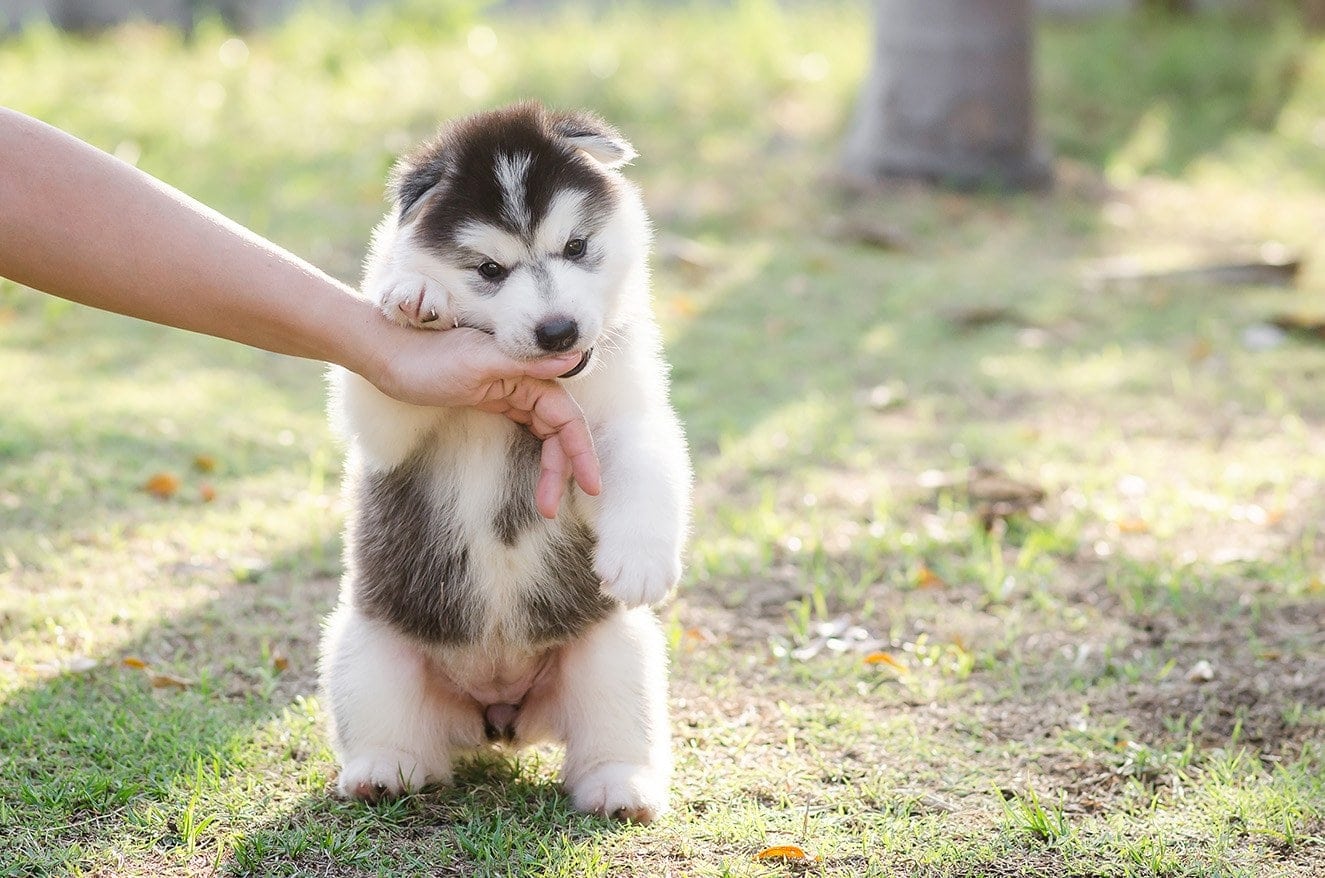
In this section, we’re going to break down the growth of a Siberian Husky puppy in smaller chunks so you know exactly what to expect. We will discuss their weight and habits at each age. We’ll even try to cover things like vaccinations and food intake at different points in your dog’s life.
8-Week-Old Husky / 2-Month-Old Husky
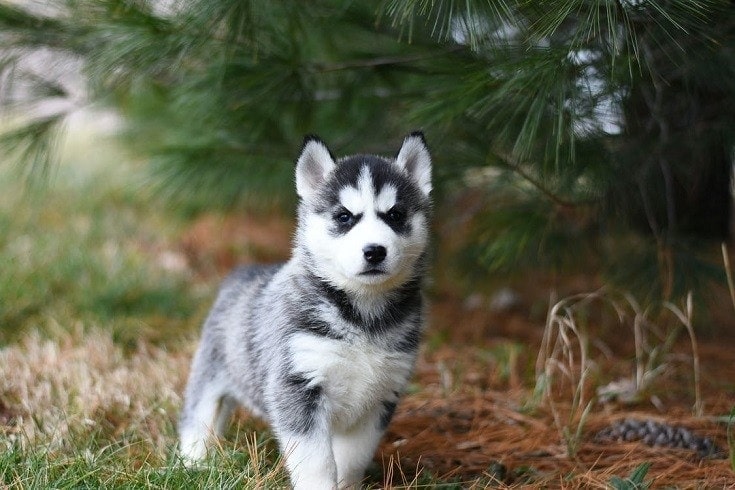
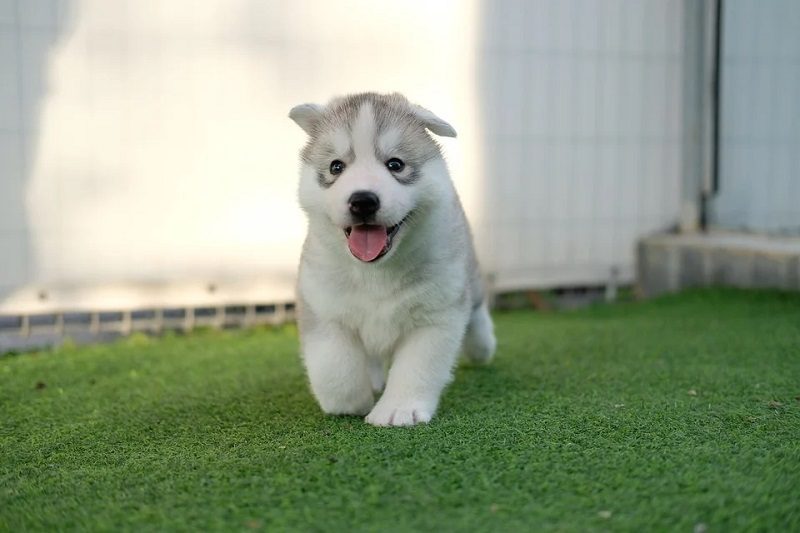
At 2 months of age, a Siberian Husky can be safely taken from their mother and added to your family. You’ll also want to make sure you provide their first vaccinations at this age and have them checked out by a vet.
Females at this age will likely weigh 8-12 pounds Males will be heavier, weighing 10-15 pounds, though they’re still the same height at this point.
12-Week-Old Husky / 3-Month-Old Husky
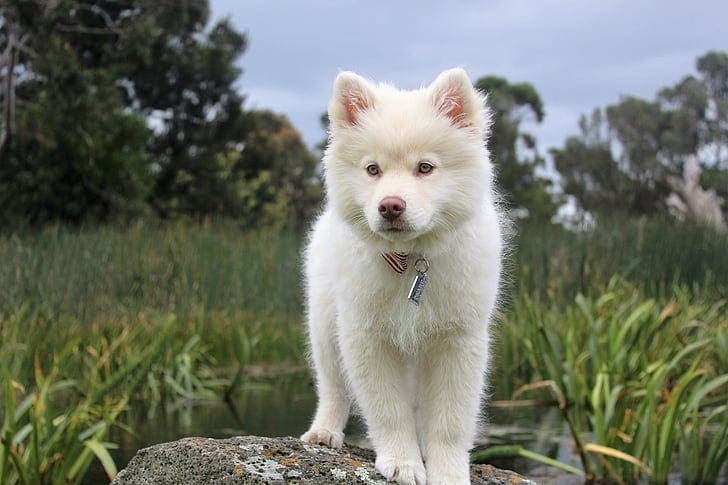
Now that your Husky is 3 months old, they should start showing some signs of their future personality. Because they’re so active, you can expect these Huskies to eat a substantial amount. That said, don’t be alarmed if they go through a short phase where they eat considerably less. This is a common occurrence when a Husky is teething.
At this point, you should still be feeding your Husky three meals a day. The average weight of a Husky female will be typically 13-20 pounds now, with males weighing about 18-23 pounds.
At this age, you’ll need to continue with the vaccination schedule and veterinary exams and begin socialization.
16-Week-Old Husky / 4-Month-Old Husky
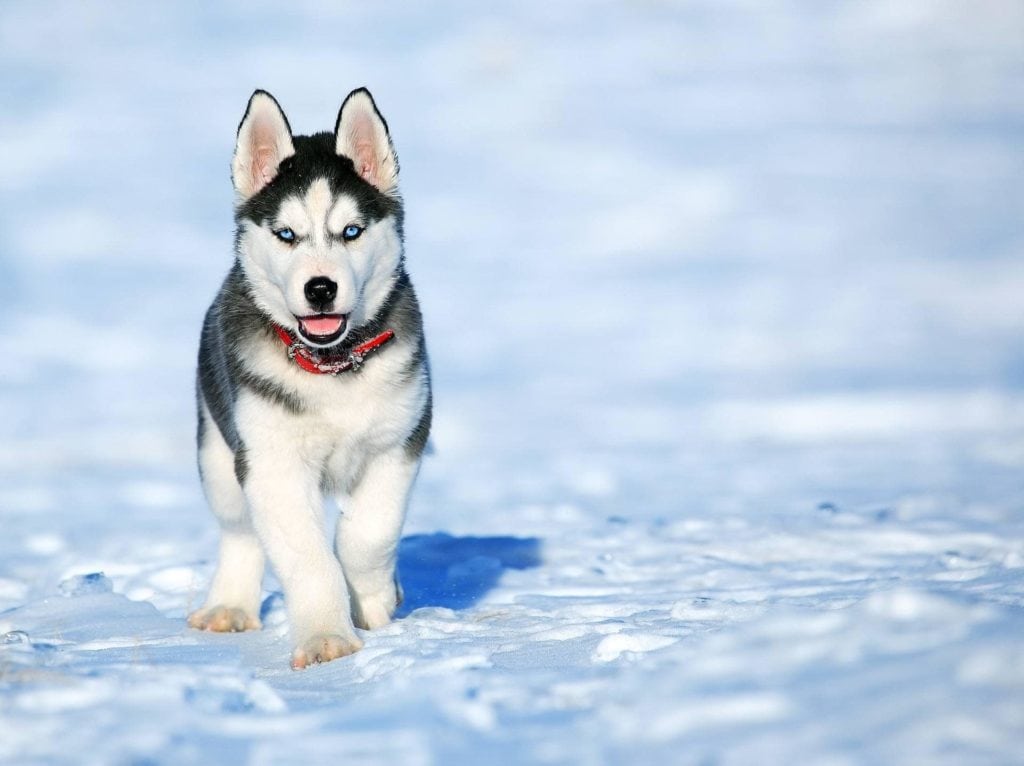
By now, your Husky is starting to show some real signs of growth. They will have sprouted a bit, with females weighing 18-25 pounds and males coming in at 22-30 pounds.
At this age, Huskies should start to have a pretty serious appetite and will generally eat anything you offer up. If your Husky isn’t gaining weight, this is the time you’ll start to notice it and need to pay attention.
Your Husky will likely be finishing up their vaccination schedule. Continue with socialization and obedience training.
6-Month-Old Husky
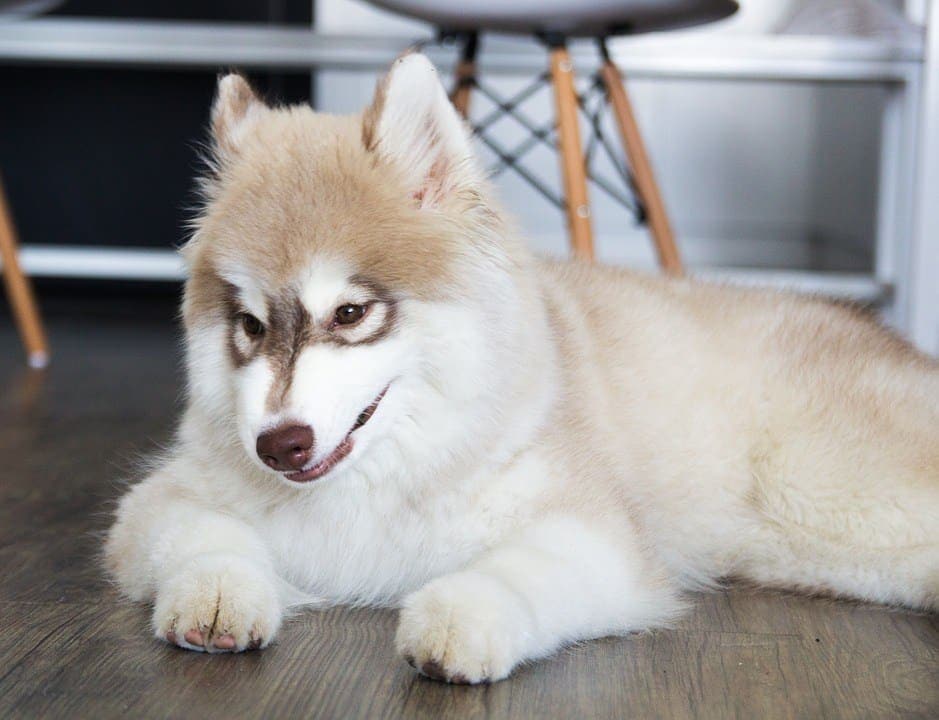
Once your Husky is 6 months old, you should be able to tell if they’re going to be on the smaller side or larger side of the spectrum. If your dog has been on the lower end of the weightcharts up to this point, expect them to stay there. You don’t want to see any major spikes or drops in weight at this point.
Females should weigh 23-33 pounds. Males are starting to widen the gap now, weighing 30-40 pounds on average. You should still be offering three feedings each day.
9-Month-Old Husky
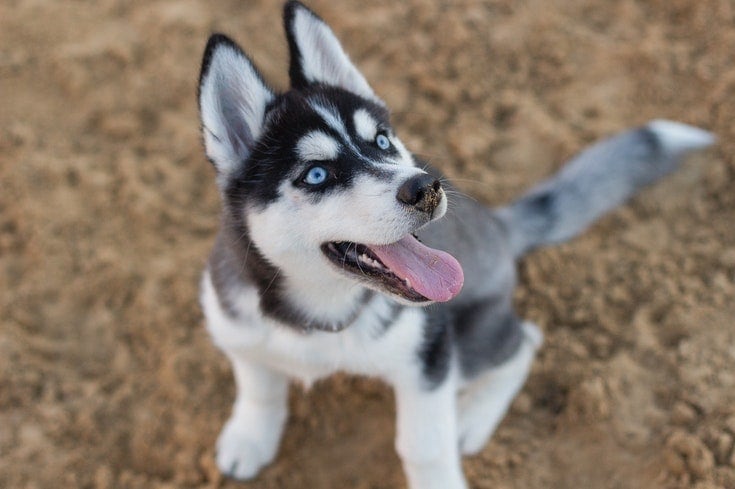
Males are now noticeably taller and heavier than females, weighing 39-52 pounds. Females are only 31-46 pounds.
You’ll likely be able to feed meals twice a day at this point. Make sure your puppy is getting appropriate exercise, training, and socialization every day.
1-Year-Old Husky
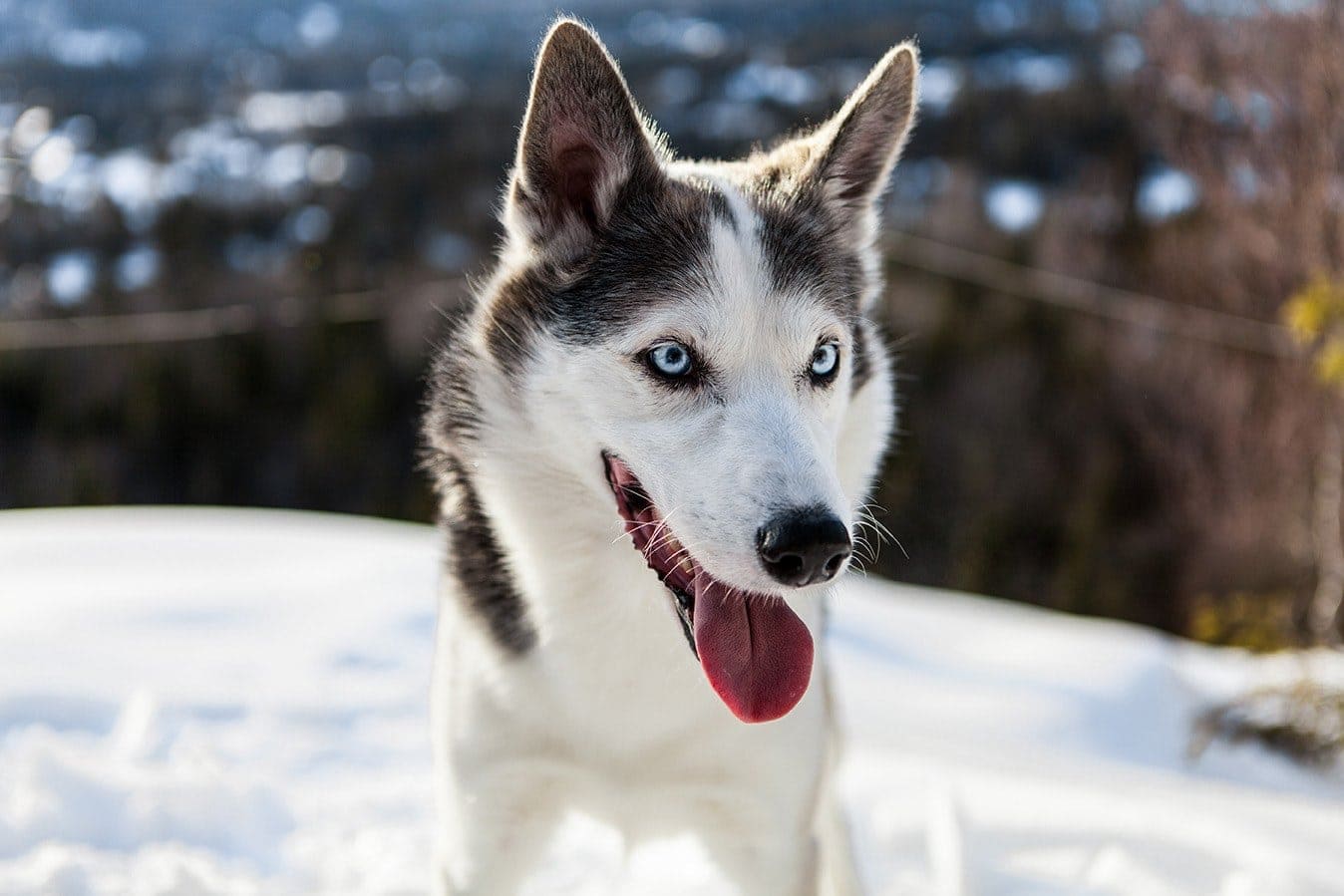
At 1 year of age, your Husky is getting close to their full height and weight. The average weight of a Husky male is now 43-57 poundsFemales can weigh anywhere from 34-49 pounds.You can now likely transition to an adult food and continue with regular exercise and mental stimulation, as well as veterinary visits.

When Do Siberian Huskies Stop Growing?
For male Huskies, adulthood begins at about 18 months of age. At this point, your dog has likely reached its full height and weight, though it is possible for them to still experience a small bit of growth. Females may stop growing a little sooner.
Temperamentally, your dog is mostly mature, though they’re still going to be growing mentally until about 3 years of age. That said, the bulk of the work is done, so the dog you have now is basically the dog you’ll have for the rest of its life. You shouldn’t expect any massive changes in size, weight, or temperament after this age.
How Does Neutering/Spaying Affect My Dog’s Growth?
Dogs should generally not be neutered or spayed until they’ve reached adulthood. For Huskies, this means about 18 months of age. If you spay or neuter them early, you can create some issues in your dog’s growth.
Performing these procedures too early in a dog’s life may cause them to be taller than they otherwise would. This is because spaying and neutering early increases the amount of time that the bone growth plates are open. While this may sound like an easy way to get a bigger dog, it’s not in your dog’s best interest. The problem is that increased growth may create issues with the way your dog’s joints align.
Dangers of Growing Too Quickly or Stunted Growth
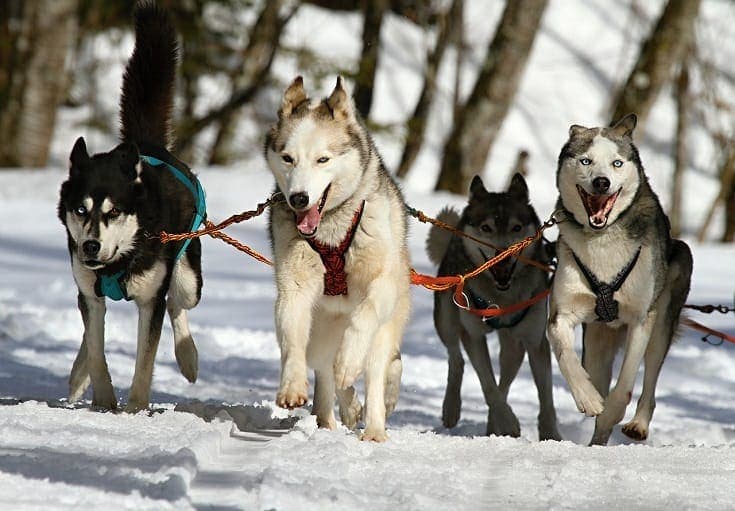
A Husky might be smaller or larger than expected at any point in their life. Some are perpetually smaller or larger than the charts might indicate they should be. This can be caused by several factors.
Your dog might be undersized due to their food. Huskies are notoriously picky eaters because of their sensitive stomachs. If your Husky isn’t eating enough, you might need to change up their diet.
Health issues can also be a prime candidate for causing improper growth. These are often accompanied by other signs like lethargy, depression, or pain. You’ll need to see a vet for help with a diagnosis.
If your Husky seems larger than they should be, it might be due to early neutering or spaying. Another possibility is that there are genes from other breeds in your dog’s bloodline affecting their size.
What if My Siberian Husky Is Not the Right Weight?
If your Siberian Husky’s weight isn’t quite right, there are several actions you can take.
The first step would be to closely monitor your dog’s food intake. If they’re not gaining weight, you’ll need to see if they’re eating or not. It may be that your Husky has a problem with their food since they’re known for having very sensitive stomachs.
Also, pay attention to how much exercise your Husky is getting. Too much or too little can affect their weight.
If you’ve taken these steps and still have no answers, then it’s probably time to consult your vet.
Conclusion
There are going to be a lot of differences between Husky puppies regarding their weight and height. Even puppies from the same litter can turn out to be different sizes in adulthood. If your dog has been on the small side since they were young, then you can expect them to remain on the smaller side for their life. Likewise, pups on the larger end of the spectrum should remain on the larger end.
What you mainly want to see is steady growth without any spikes or drops in weight, as shown in our Husky growth chart. If your dog suddenly jumps from the low end of the size spectrum to the high end or vice versa, then it could be an indication of an issue, and you may want to speak to your vet.
Related Reads:
Sources
Featured Image Credit: Juergen Bauer Pictures, Shutterstock
Get Hepper In Your Inbox


Pet care tips from our vets and experts, straight to your inbox.
You may opt-out at any time. View our Privacy Policy for more information.
Nicole is a lover of animals of all sizes but is especially fascinated with the feline variety. She’s the proud mom of Baby, a Burmese, and works every day so he can relax in the sunshine or by the fire. She’s always had a cat in her home and has spent countless days with others, observing behaviors and softening up even the grouchiest of the lot. Nicole wants to share her kitty expertise with you so you and your cat can live happy, healthy, and care-free.
Join the conversation
Ask a question, share your story, or send private feedback.