Hepper is reader-supported. When you buy via links on our site, we may earn an affiliate commission at no cost to you. Learn more.
Is a Humidifier Safe for a Dog? Vet-Approved Facts & FAQ


In this article
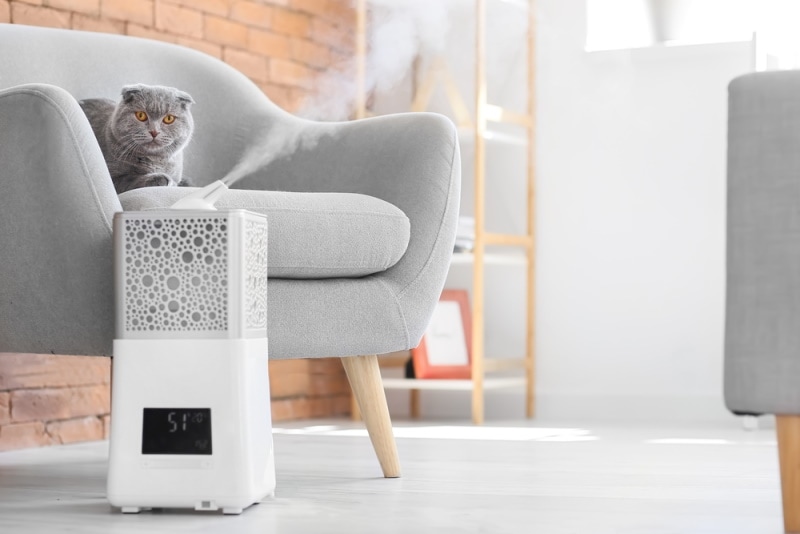
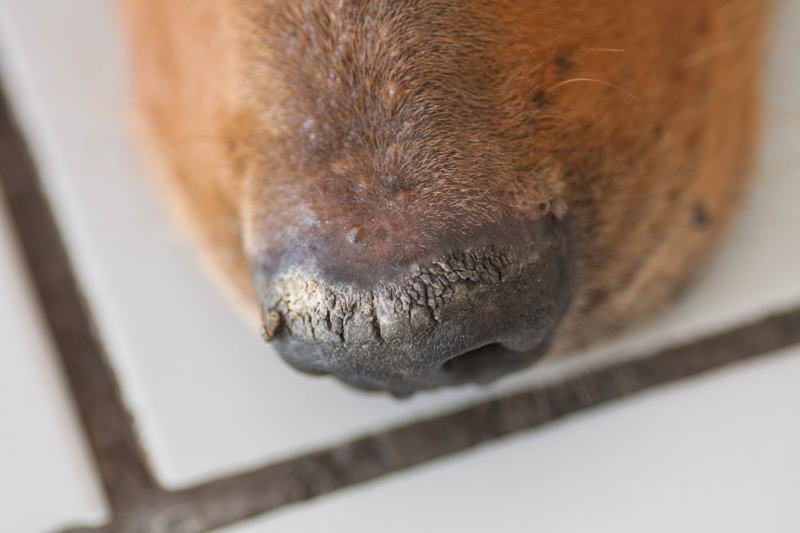
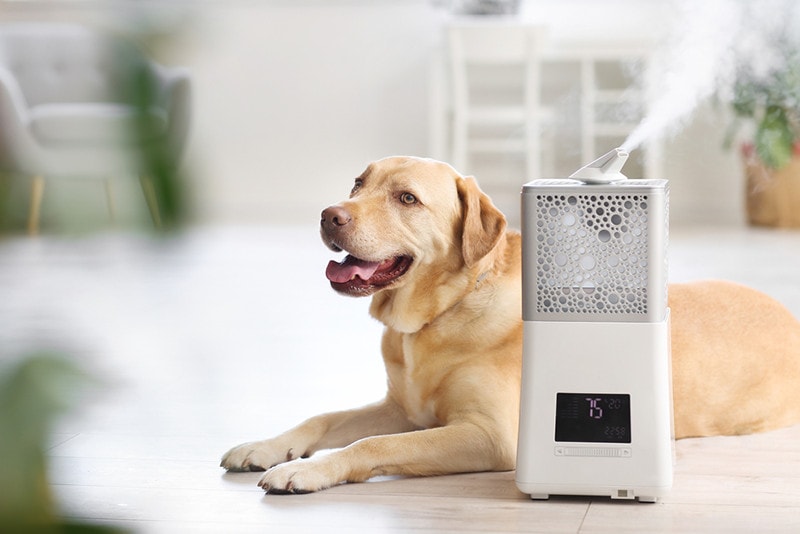
Dry air causes problems like making your allergy symptoms worse or your nose sore, and it can even cause dry skin. A humidifier can help, but if you have a dog, you might be worried that it isn't the safest solution. Fortunately, humidifiers are safe, even beneficial, for dogs, provided that you use the right type and keep the device well out of their reach.
To ensure that you choose the right humidifier or that your existing humidifier is safe for your dog, this guide will tell you everything that you need to know.

What Is a Humidifier?
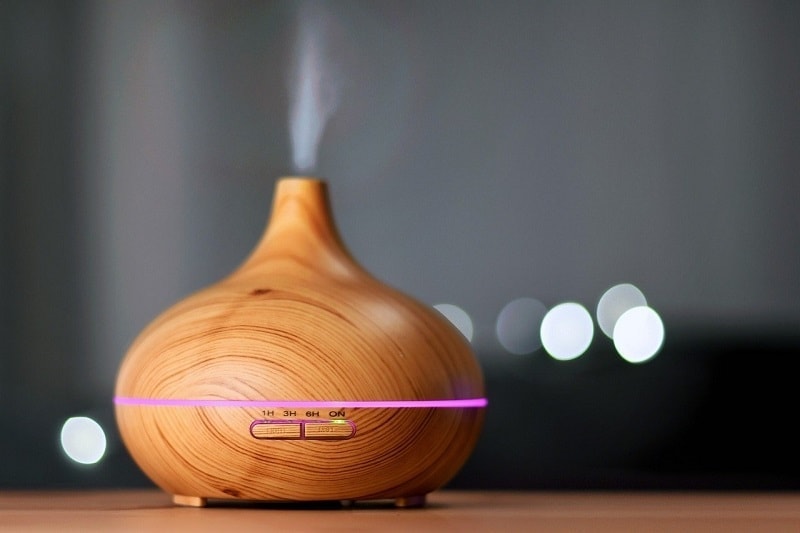
Humidifiers help reduce the problems caused by dry air by raising the humidity 1 level in your home. You fill the built-in reservoir with water, and the humidifier diffuses water vapor into the air, either by heating the water or using a fan or vibrations to release the vapor.
The right level of humidity can help soothe dry skin, nasal irritation, dry throats, sinus congestion, and headaches. Many people also like to use humidifiers to alleviate the symptoms of colds and flu.
Are Humidifiers Safe for Dogs?
Whether your humidifier is safe for your dog depends on how you use it and the type of humidifier that you have. All humidifiers help improve the quality of the air by creating a fine mist, but how each type does it can vary. There are three types of humidifiers that you can buy, and some are safer than others.
Keep in mind that all three types of humidifiers store water and should be kept out of your dog’s reach and away from electrical outlets. This will ensure that the benefits aren’t negated by your dog—or you—accidentally knocking it over.
- Cool Mist - There are two sub-types of cool mist humidifiers. Regular ones work by using a fan to evaporate water. The water isn’t boiled like in warm mist humidifiers, and the cool mist is preferred for warm climates and households where the risk of it being knocked over is greater. However, cool mist humidifiers tend to be noisy due to the buzzing or whirring of the fan.
- Ultrasonic - Ultrasonic humidifiers are the second sub-type of cool mist humidifiers. These devices rely on vibrations to create mist rather than heating the water or using a fan. This makes it much quieter than regular cool mist devices and less likely to scald somebody if it gets knocked over.
- Warm Mist - Humidifiers that pose the highest risk for you, your children, and your dogs are warm mist humidifiers. Unlike cool mist and ultrasonic humidifiers, these create vapor by boiling water. While the vapor has the same benefits as the other two types of humidifiers, it also has a much greater risk of scalding anyone nearby if it’s knocked over. Warm mist humidifiers also tend to be slightly more expensive than the other options.

What Are the Benefits of Humidifiers for Dogs?
Before you settle on a humidifier, be sure to consider all the pros and cons, especially if you have a canine friend sharing your home. The right humidifier will have health benefits for you and your dog.
What Are the Risks of Humidifiers for Dogs?
Although there are plenty of positives to having a humidifier in your home, there are also a few dangers. These are important to understand so you can decide if a humidifier is a beneficial addition to your home or a health risk.
Bacteria and Mold Growth
The problem with moisture in enclosed spaces is that it makes perfect spots for bacteria and mold to grow. If you don’t clean your humidifier regularly, it’ll quickly become home to all sorts of harmful bacteria.
These microorganisms will be released into your home with the vapor every time you use the humidifier. It won’t just smell bad; the bacteria and mold can also affect your and your dog’s health when inhaled and cause infections and respiratory problems.

Water
All humidifiers store water, which can cause a problem if the device is knocked over. If you’re lucky, you might only have a puddle to clean up, especially if you can get to it immediately.
However, the water can soak into your carpet, which can help encourage mold growth if it doesn’t dry. It can pose an even more serious risk if it lands on an electrical outlet or extension. Warm mist humidifiers rely on boiling water to release the steam, so knocking one of these devices over can lead to severe burns.
Essential Oils
Since humidifiers are designed to diffuse mist into the room that it’s placed in, you can add fragrance to your home by adding your favorite essential oils to the water. Unfortunately, not all essential oils are safe for use around dogs. They’re not as sensitive as cats, but they can still be affected by essential oil toxicity.
Dogs are naturally more sensitive to smells than we are. While you might find the scent of your favorite essential oil calming, your dog might find it overwhelming and stressful. Also, certain essential oils are toxic to dogs even if they’re not applied to the skin.

Popular essential oils that are toxic to dogs are:
Always check with your veterinarian before using any essential oils in your humidifier, especially if you have cats and dogs in the house.
Do You Need a Humidifier?
While humidifiers are incredibly useful, you might not need to buy a new device. If neither you nor your dog has any symptoms caused by dry air—like dry skin or nasal irritation—the humidity levels in your home are probably fine. To make sure, you can test the moisture level in the air by using a hygrometer. Too much humidity can be just as problematic as too little.
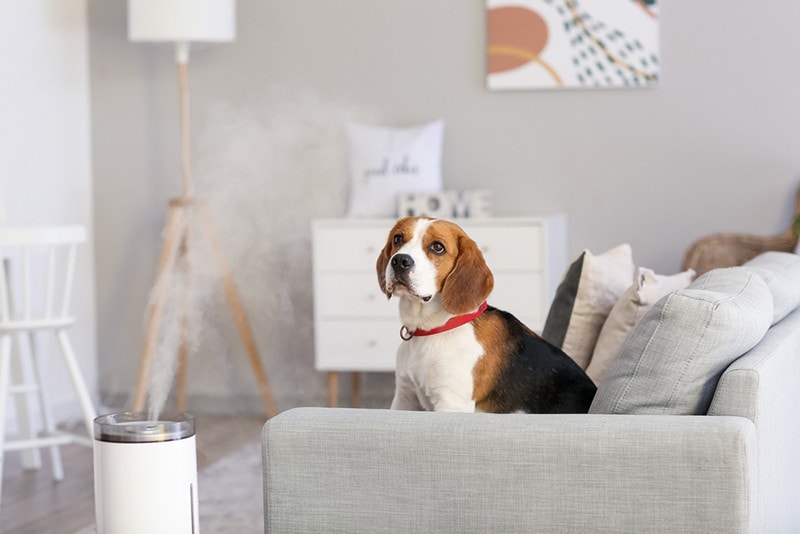
If you do decide to get a humidifier for your home, remember to consider all the downsides as well as the benefits. Dogs—and cats and children, if you have any—have a knack for getting into mischief. To keep them safe, be sure to put the humidifier out of reach. It’s also best to avoid using a warm mist humidifier, just in case your dog does knock it over.
Conclusion
When used correctly, humidifiers are perfectly safe for your dog and have many of the same health benefits for them as they do for us. Don’t use warm mist humidifiers, and keep the device well out of the way to avoid any spills. You should also avoid using essential oils and regularly monitor the humidity levels in your home. Overall, though, a humidifier can help alleviate allergy and cold symptoms, moisturize skin, and even reduce snoring.
Featured Image Credit: Pixel-Shot, Shutterstock
Get Hepper In Your Inbox


Pet care tips from our vets and experts, straight to your inbox.
You may opt-out at any time. View our Privacy Policy for more information.
Nicole is a lover of animals of all sizes but is especially fascinated with the feline variety. She’s the proud mom of Baby, a Burmese, and works every day so he can relax in the sunshine or by the fire. She’s always had a cat in her home and has spent countless days with others, observing behaviors and softening up even the grouchiest of the lot. Nicole wants to share her kitty expertise with you so you and your cat can live happy, healthy, and care-free.
Join the conversation
Ask a question, share your story, or send private feedback.