Hepper is reader-supported. When you buy via links on our site, we may earn an affiliate commission at no cost to you. Learn more.
How Far Can Dogs Smell? The Average & Maximum Distance
In this article
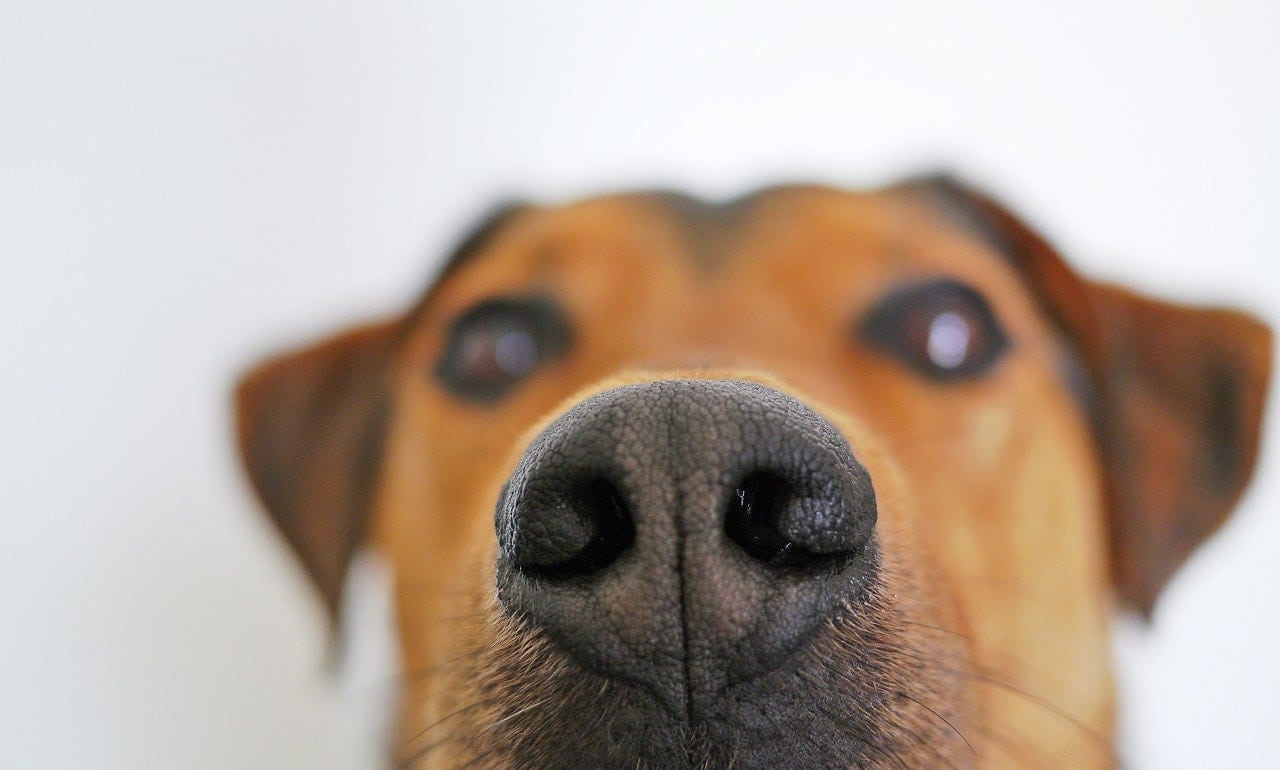
A dog's nose is one of its most powerful tools. Dogs have up to 300 million olfactory receptors, compared to just 6 million for humans.1 The canine sense of smell is also more accurate than ours, anywhere from 10,000 to 100,000 times more! That's how dogs can detect bombs, cancer, or that potato chip you dropped under the couch three days ago.
On average, dogs can smell both humans and objects at a maximum of 20 km or 12.4 miles away. That's under perfect conditions, such as a windless environment.
However, the maximum distance a dog can smell depends on many factors, including the breed of dog and the scent itself. If you think your dog is amazing, wait until you understand how their sense of smell works!

The Anatomy of a Dog's Nose
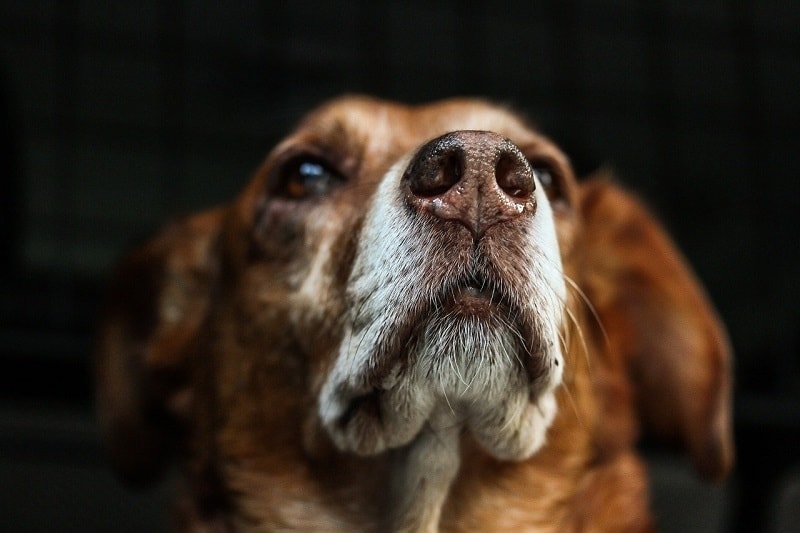
The canine nose is much more than just a sniffer. It's made up of a complex network of turbinates, or small passages and chambers.2 This helps dogs separate smells into different molecules so they can determine the source.
A dog's vomeronasal organ, or Jacobson's organ, is also an essential part of its scent-detecting arsenal. It's a small receptor located between the nose and the roof of the mouth that functions as a secondary olfactory system.3 What this organ does is detect "undetectable" chemical smells, such as those of another dog's urine or pheromones.
And because the canine nose is so important to virtually every aspect of their lives, their brain has evolved to "see" smells! The study has found a connection between a dog's nose to the occipital lobe, aka the visual center of the brain, meaning that dogs can actually process smells as visual information.4 And with at least 1/8 of their brains devoted to olfaction, it's no wonder that they can smell so far and so accurately.
The 5 Factors That Affect How Far Dogs Can Smell
1. The Breed of Dog
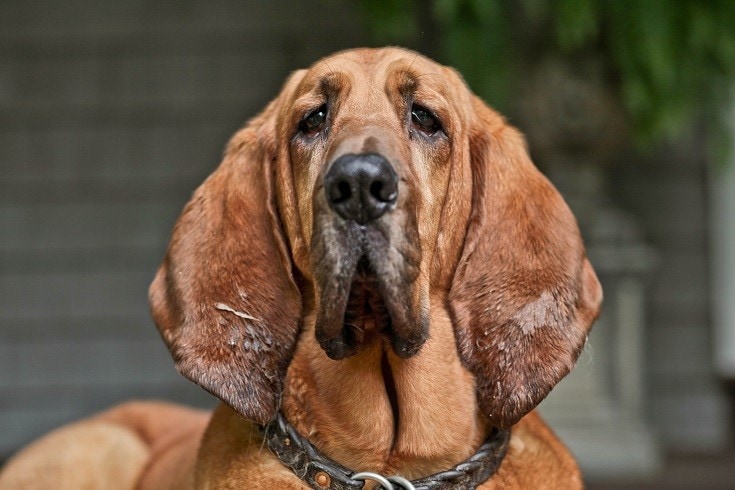
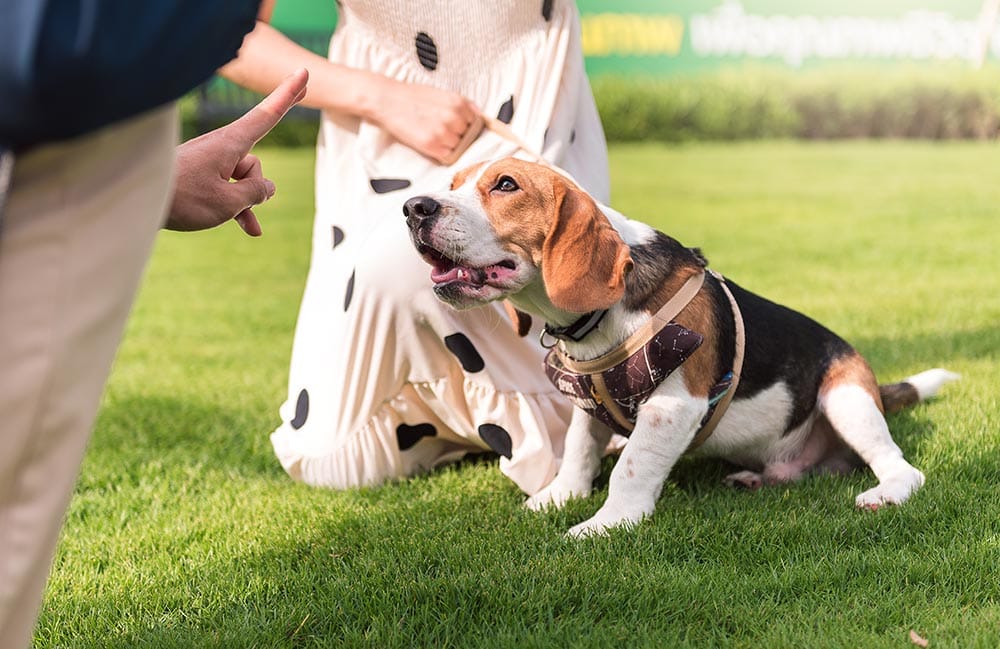
While all dogs have an incredible sense of smell, certain breeds are known for their exceptional sniffing powers. Breeds like Beagles and Bloodhounds have been bred specifically for their olfactory abilities, making them the go-to choice for hunting and detection.
2. The Size of the Dog
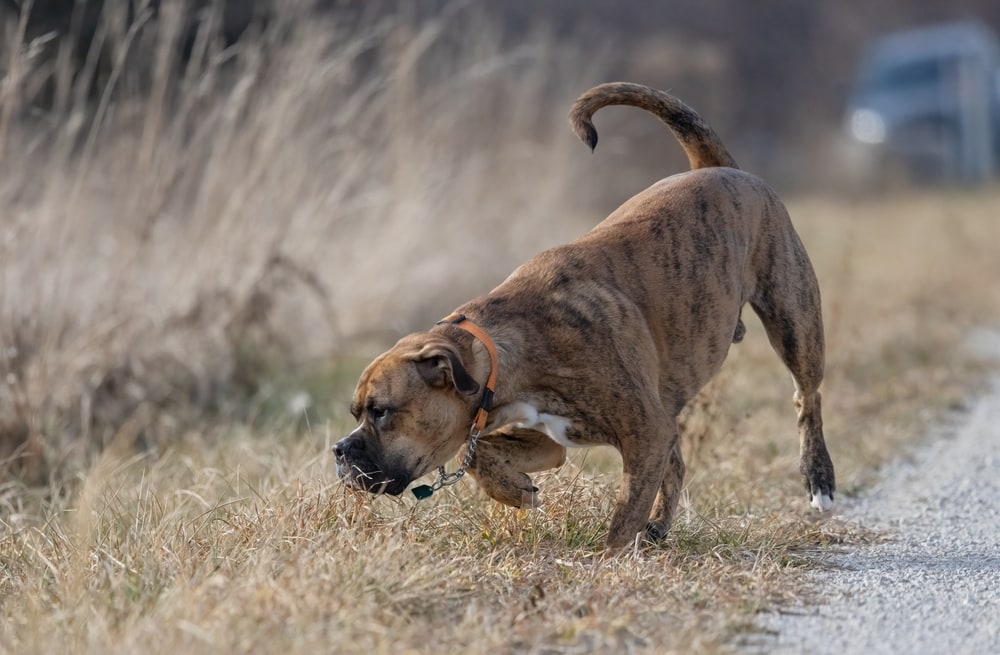
When it comes to how far a dog can smell, size does matter. Larger breeds with bigger noses can smell much further than smaller ones simply because they have more olfactory receptors.
3. Training
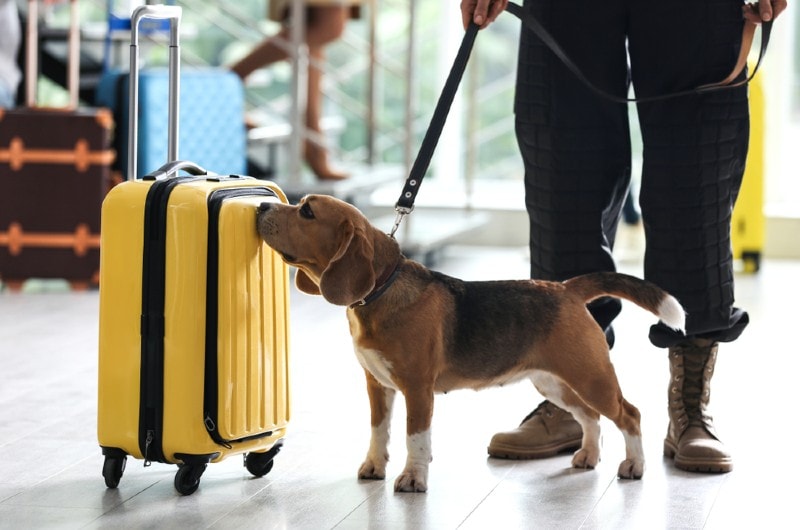
Ever wonder how German Shepherds can sniff out bombs and drugs? How about Labradors and their ability to detect low blood sugar in diabetics? These dogs weren't born that way; they were carefully trained to identify, isolate, and alert their handlers to certain smells.
In other words, dogs who've been trained to detect specific smells can smell further and more accurately than those who haven't.
4. The Scent Itself
Not all scents are created equal! Some smells, like sweat, will dissipate quicker than others, such as food or animal waste. The stronger the scent and the larger the area it's spread out in, the easier it is for a dog to smell it from a greater distance.
5. Environmental Conditions
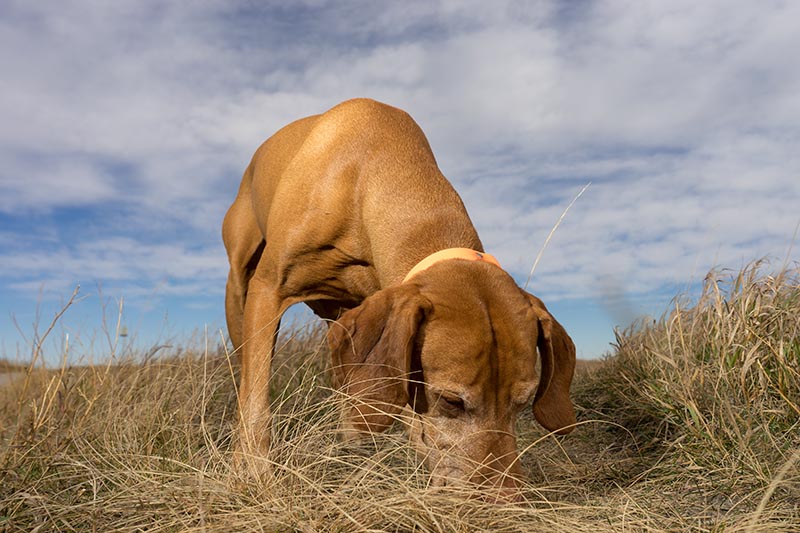
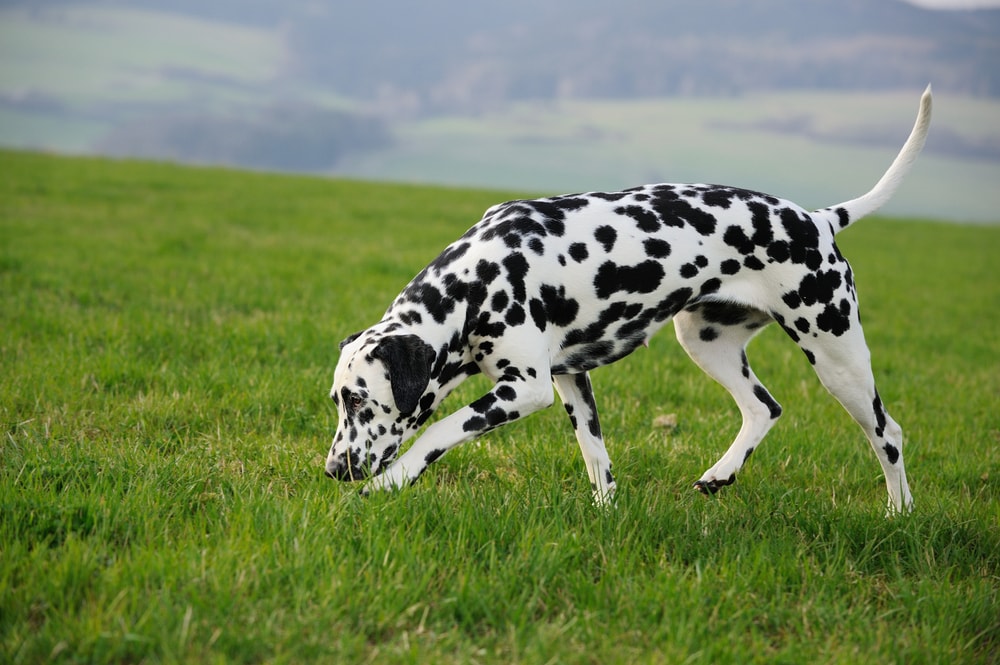
As with anything, environmental conditions can drastically affect how far a dog can smell. For instance, the direction of the wind can bring a smell closer or push it away. Rain, humidity, and even altitude can also play a role in how far a dog is able to smell.
The terrain itself plays an important role in how far a dog can smell, too. Open fields allow scents to travel much further than in densely wooded areas or heavily built-up urban centers.

How to Engage Your Dog's Sense of Smell
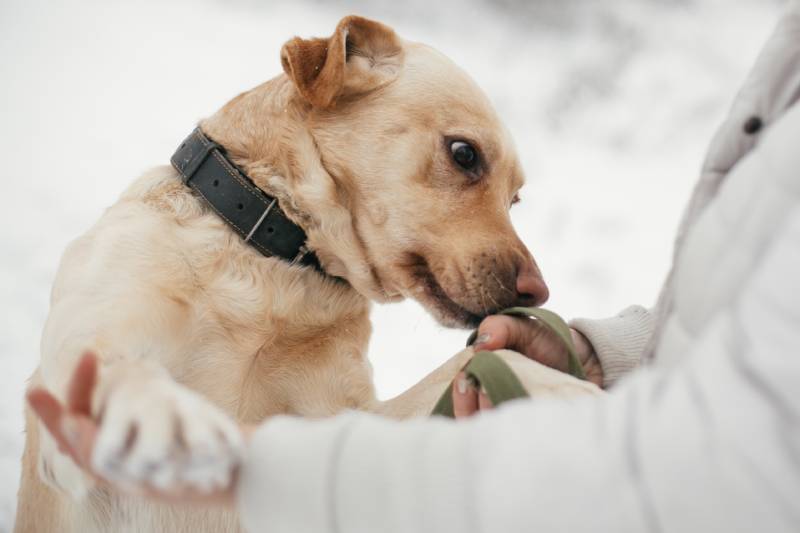
Your best bud may not need their nose to survive anymore, but engaging their powerful sense of smell will add tons of fun and enrichment to their daily lives.
In fact, taking advantage of those amazing sniffers is a great way to keep your pup mentally stimulated and physically active.
Here are some ideas you can try:
Conclusion
It's easy to forget just how powerful a dog's nose is, especially with them being so cute and cuddly. But understanding how your dog's sense of smell works—and how to engage it in exciting ways—can make life much more fun for both you and your furry friend.
Finally, don't be surprised if you can never get your dog by surprise. By the time you're 20 km or so away, they already know you're coming!
Sources
https://www.pbs.org/wgbh/nova/article/dogs-sense-of-smell/
https://www.dhs.gov/publication/canine-explosives-detection-program#:~:text=The%20Department%20of%20Homeland%20Security,and%20even%20fruits%20and%20vegetables.
https://bmccancer.biomedcentral.com/articles/10.1186/s12885-021-08651-5#:~:text=In%20several%20studies%2C%20sniffer%20dogs,9%2C10%2C11%5D.
https://set.adelaide.edu.au/news/list/2020/06/09/how-far-away-can-dogs-smell-and-hear#:~:text=If%20more%20air%20passes%20through,as%20far%20as%2020km%20away.
https://www.akc.org/expert-advice/training/why-does-my-dog-sniff-everything/#:~:text=In%20fact%2C%20one%2Deighth%20of,brain%20dedicated%20to%20interpreting%20sight.
Featured Image Credit: algae, Shutterstock
Get Hepper In Your Inbox


Pet care tips from our vets and experts, straight to your inbox.
You may opt-out at any time. View our Privacy Policy for more information.

Nicole is a lover of animals of all sizes but is especially fascinated with the feline variety. She’s the proud mom of Baby, a Burmese, and works every day so he can relax in the sunshine or by the fire. She’s always had a cat in her home and has spent countless days with others, observing behaviors and softening up even the grouchiest of the lot. Nicole wants to share her kitty expertise with you so you and your cat can live happy, healthy, and care-free.
Join the conversation
Ask a question, share your story, or send private feedback.