Hepper is reader-supported. When you buy via links on our site, we may earn an affiliate commission at no cost to you. Learn more.
Is My Betta Filter Current Too Strong? Vet-Reviewed Tips & Advice


In this article
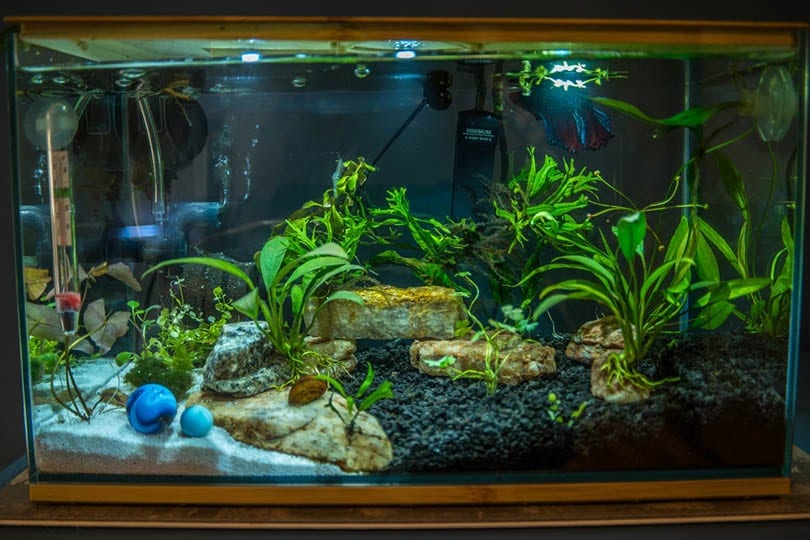
Betta fish are not fast swimmers. This makes them susceptible to fatigue and stress from a strong current. The main source of current in a betta fish tank will come from the filter or aeration system. This makes it important to ensure that the flow from the output of the filter is ideal for your betta fish and will not cause them to get blown around the tank.
One of the most common reasons for a betta fish to hang around the bottom of the tank or hide is because of a strong flow within the water column. We want our betta fish to be comfortable and happy in their environment, and this includes fixing any issues with the current of the water. This article will provide you with everything you need to know when it comes to choosing and ensuring the filter you are using is right for your betta fish.

Do Betta Fish Require Filtration?
Yes! All fish require a source of filtration. Filters have many noticeable benefits, one of which is that they help provide a colonizing ground for beneficial bacteria. The role of these bacteria is important: They turn toxic ammonia, which is a product of fish waste, into a much less toxic form known as nitrates.
Filters continuously take in the tank water, which will go through the nitrified bacteria media and then produce fresh clean water back into the tank. Most filters will also catch and trap any loose dirt and debris found in the water column. The carbon component of filters that come with a cartilage or compartment containing charcoal helps trap chemicals and remove them from the water. Filtration systems with a UV component can sterilize and remove contaminants like bacteria from the water.
How to Determine If the Filter's Current Is Too Strong
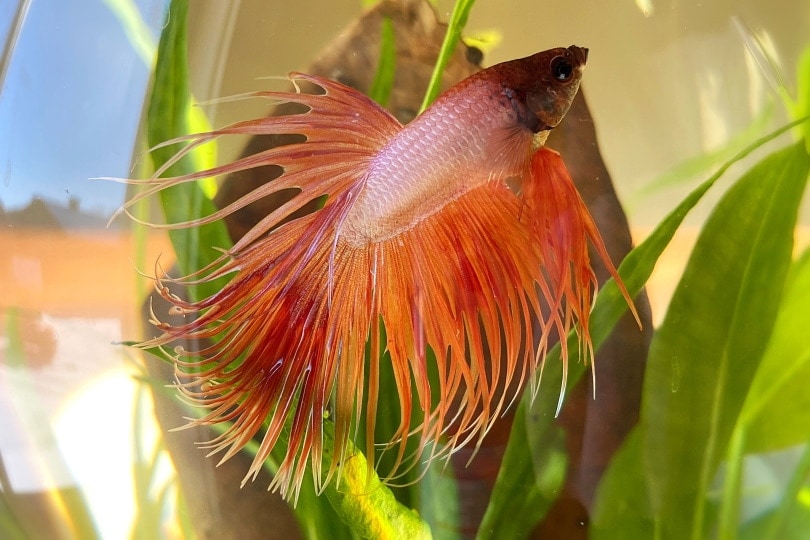
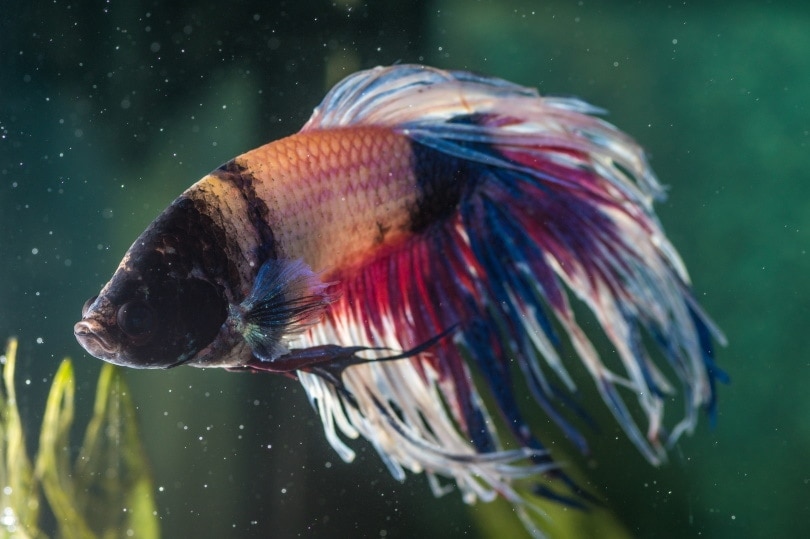
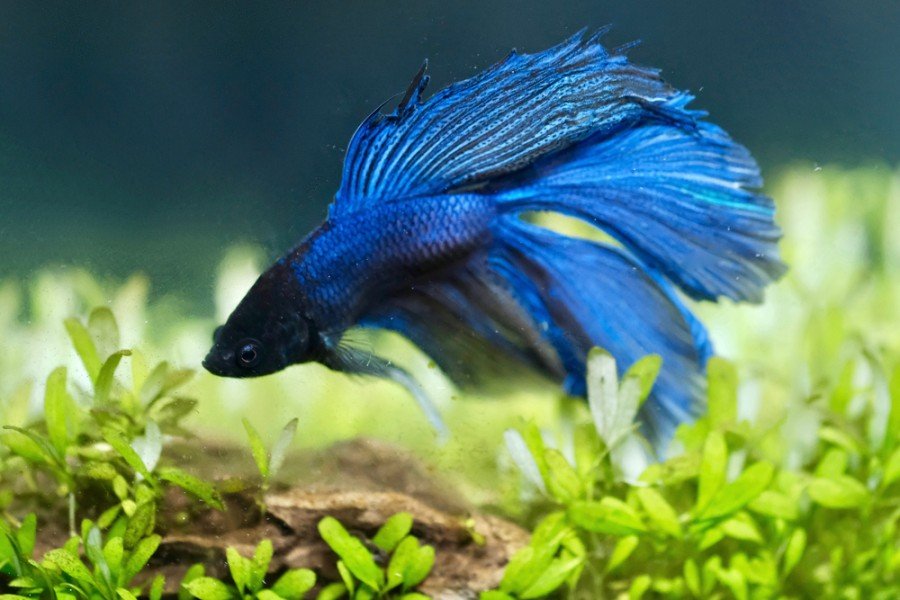
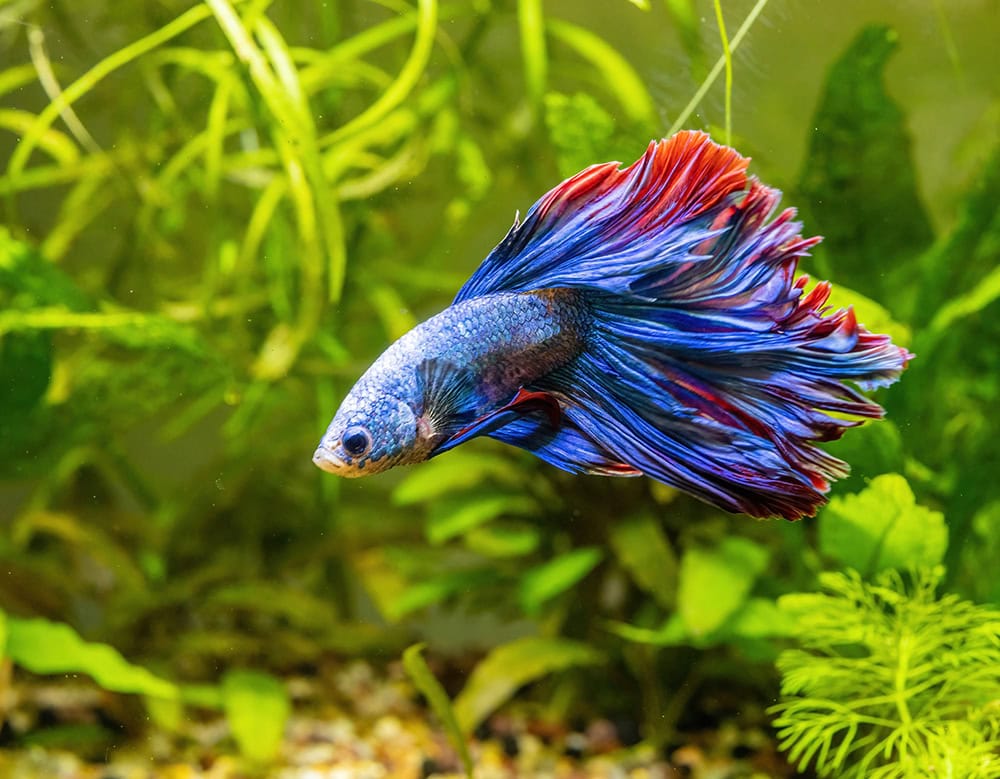
Long-finned bettas can struggle to swim in even the gentlest current. This is due to the habitat that they naturally inhabit: stagnant rice paddies, streams, and puddles. This problem is made worse for pet bettas because they are often bred to have long, flowing fins and tails, which makes them aesthetically pleasing but diminishes their tolerance of a strong current. Their long fins make it hard to swim and can become quite heavy. Therefore, you may see your betta fish resting on surfaces in the tank, such as flat leaves, or even lying on the bottom of the tank.
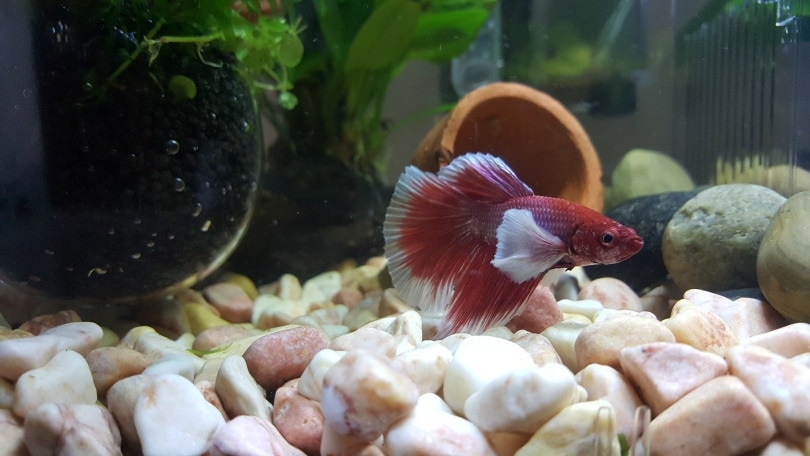
You can help their situation by providing them with large flat leaves near the surface of the tank or purchasing a betta hammock, which is a fake leaf attached to a suction cup and placed on the inner glass of the tank.
There are many ways to determine if the current in the tank is too strong for your betta fish, but you should make sure it is not linked to an underlying illness.
- Visual current: This is the most obvious sign; if you can see a current forming in your tank in the form of consistent waves, ripples, or whirls, odds are that the current is far too strong for a betta.
- Inactivity: A betta who is not enjoying the environment they are in will cease their usual activity. Bettas can be quite active fish, which makes it concerning to see them hanging listlessly in different areas of the tank. The betta fish gets tired of swimming against the current and may give up altogether.
- Poor stability: You may notice that your betta fish is getting tossed around the tank because of the strong current. They will swim uncontrollably, and their fins will get pushed against their body which will limit their mobility. They may also breathe fast because of exhaustion.
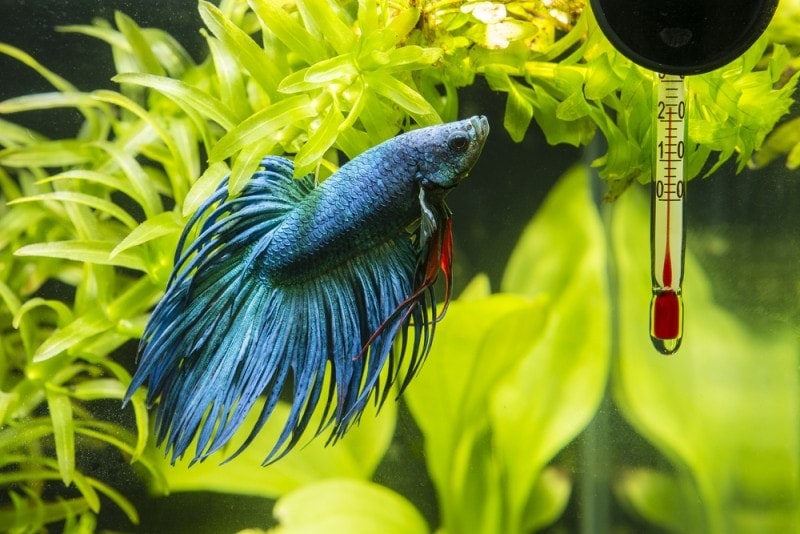
- Swimming head-up: The betta fish may begin to adapt to swimming in an unnatural position against the current of the filter.
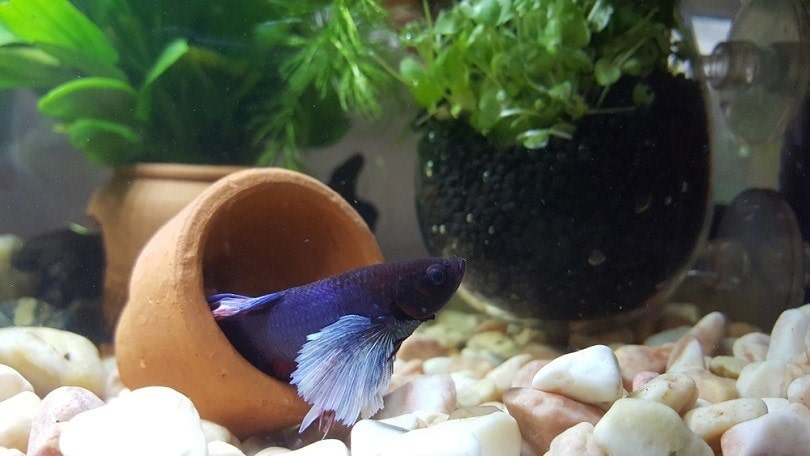
- Hiding: Stressed bettas will hide more frequently. They will typically hide behind the filter where the current is the weakest. You may also notice that your betta will hide between plants or inside of hideouts.
- Moving leaves: In planted tanks, a strong current will cause the leaves of most plants to list and sway with the flow of water. Floating plants might continuously seem to rotate in a whirlpool of sorts.
How to Reduce Harsh Flow
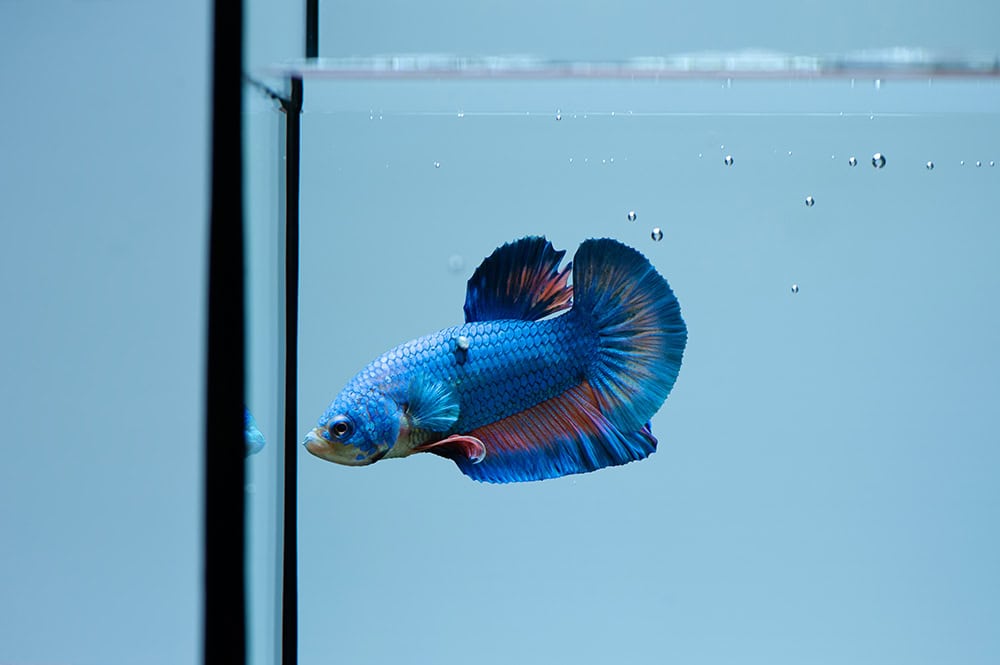
Reducing the flow is the first step in controlling the strong current. Once you have determined that it is the filter causing your betta fish to behave abnormally, you have a few options to resolve this issue. You can either swap the current filter for a sponge filter, or you can use different techniques to slow the speed on the current filter.
If you are using a canister filter with media like floss, activated carbon, and other add-ins, then you should compact each layer so that the whole filter is layered with different types of filter media. Adding in extra filter wool and large carbon pieces will significantly reduce the flow. This may not help a great deal, but it can be an option until you can purchase a better filter.
Another way to control the current with a canister filter is to apply a sponge to its inlet. This way, the filter’s current will become slightly weaker. Directing the filter’s outlet to hit the aquarium’s wall can also help reduce the current, but this is generally not the best way to distribute filtered water throughout an aquarium.
A better idea is to use tall plants to break the current near the outlet of the filter. Tall, sturdy plants like java ferns tied onto driftwood can be placed in such a manner that their leaves are directly in front of the water outlet. This way, the leaves will help break the current forming in your tank.
Some filters will have a knob or switch to manually control the total output of the filter. You may have to fiddle with the filter to find out where it is placed and then move the control to the lowest flow option.
Ideal Filters for Betta Fish
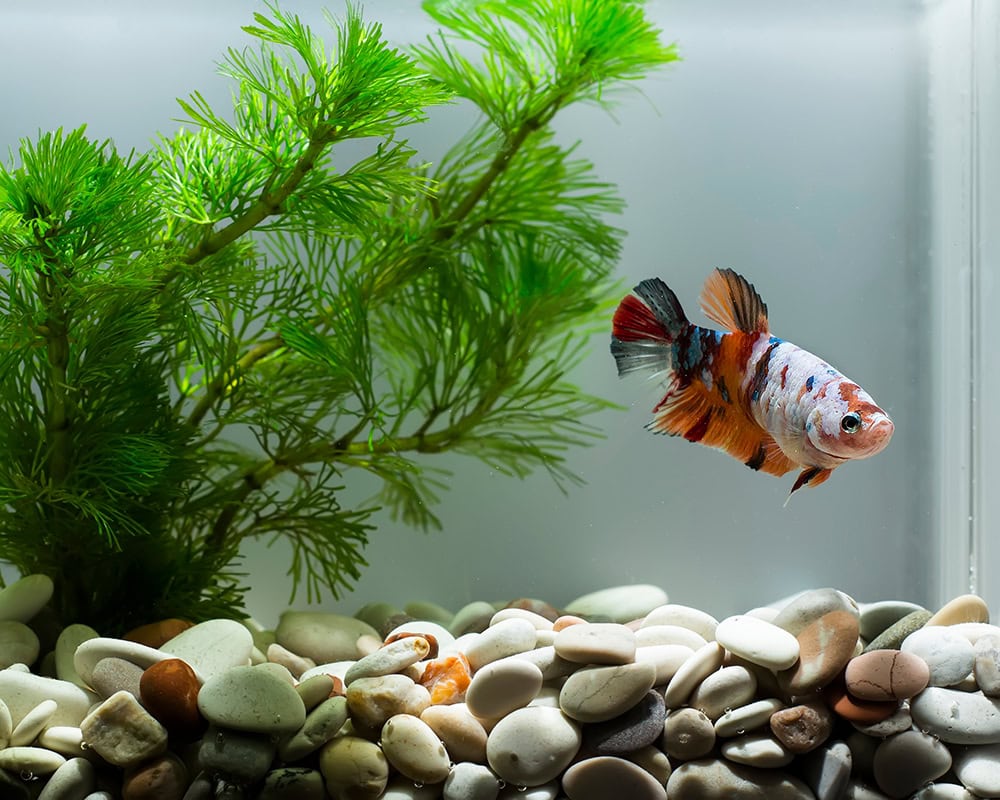
Sponge filters are the best options for betta fish. They do not have a side flow and generally only produce bubbles from the top. Many sponge filters connect to an airline tube and an air pump. The pump will push air through the tube and into the sponge filter. The sponge filter will also produce a slight pull to catch any debris and loose particles in the water. The speed of the filter itself can be controlled by adjusting the settings on the air pump.
Final Thoughts
Betta fish can be delicate creatures, but as long as you provide them with the right conditions and requirements, they are going to thrive. It is always important to ensure that the filter you choose is ideal for the type of betta fish you have.
We hope this article has helped you figure out the filtration method you use for your betta fish tank!
See also:
Featured Image Credit: Sandra Burm, Shutterstock
Get Hepper In Your Inbox


Pet care tips from our vets and experts, straight to your inbox.
You may opt-out at any time. View our Privacy Policy for more information.
Sarah is residing in South Africa with her partner and pets. She currently is interested in veterinary science and ichthyology, which she wants to study alongside her main passion: pet content writing. Sarah has over 60 fish including goldfish, tropicals, shrimp, and snails. She also keeps hamsters and a tarantula and wishes to provide quality content for readers and allow others to learn from her knowledge and experience. Sarah has much experience in all aspects of pet care, and providing the world with knowledge on ethical pet ownership is her lifelong dream.
Join the conversation
Ask a question, share your story, or send private feedback.