Hepper is reader-supported. When you buy via links on our site, we may earn an affiliate commission at no cost to you. Learn more.
Jindo Dog Breed Info: Pictures, Personality & Facts
In this article
Breed Overview
Height:
Weight:
Lifespan:
Colors:
Suitable for:
Temperament:
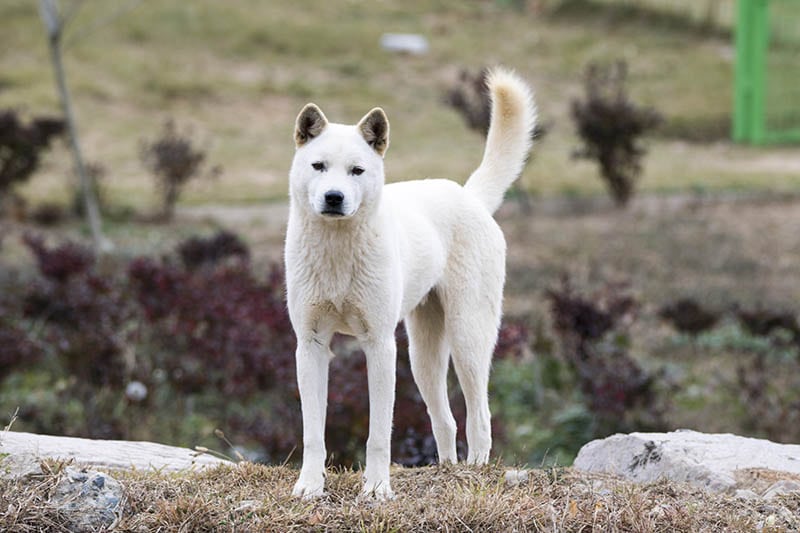
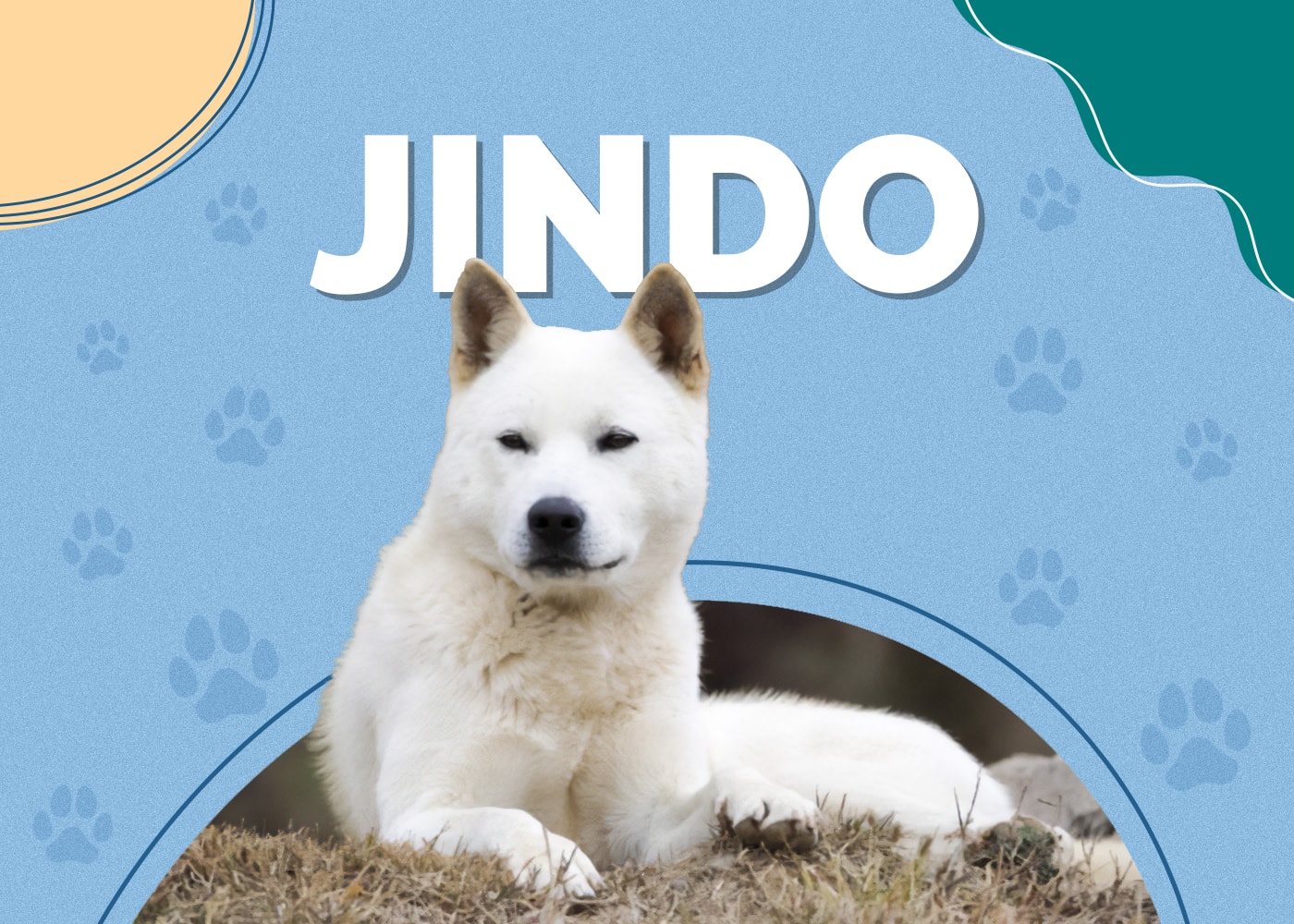
Jindos are as comfortable chasing down prey on the hunt as curling up quietly indoors with their loving owners, and they are adaptable dogs with a calm demeanor and impressive physical abilities. They have regal looks and a bold temperament, and they’re known for being incredibly faithful to their owners.
The Jindo breed comes from the island of Jindo off the coast of South Korea. They’re considered the offspring of indigenous Korean dogs and dogs that accompanied the Mongols when they invaded Korea in the 13th century. It wasn’t until 1938 that the Korean government named the breed a national treasure. Then, 50 years later, Jindo dogs even marched in the Olympics held in Seoul, South Korea.
Jindos are known to be excellent hunters. They’re highly athletic and are capable of agile movements and high speeds that help them succeed when chasing down prey. Likewise, they also excel as guard dogs since they’re naturally wary of strangers. They’re rather territorial, which is a trait that’s great for a guard dog but not so great for families with multiple pets.

Jindo Puppies
Jindo Characteristics
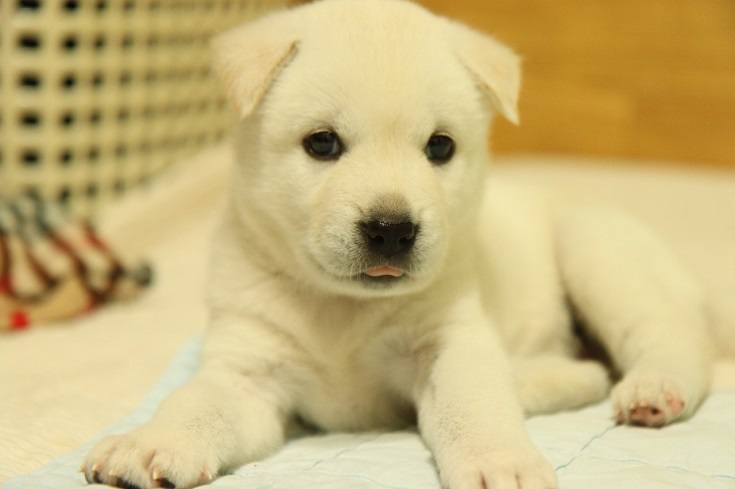
The AKC doesn’t officially recognize the Jindo. Instead, they’re a part of the AKC’s Foundation Stock Service. They can’t compete or be shown, which significantly impacts their pricing. From a respected breeder with a good reputation, you can find a healthy puppy, tour the facilities, and get health information about the dog.
On the other hand, you can visit a shelter or search the internet for Jindos that are available for adoption. This could save you quite a bit of money, and you can save a dog's life at the same time!
Jindos are known for being loyal pups who love to spend time with their human companions. They're a good option for people who spend a lot of time at home since they need constant care and affection.
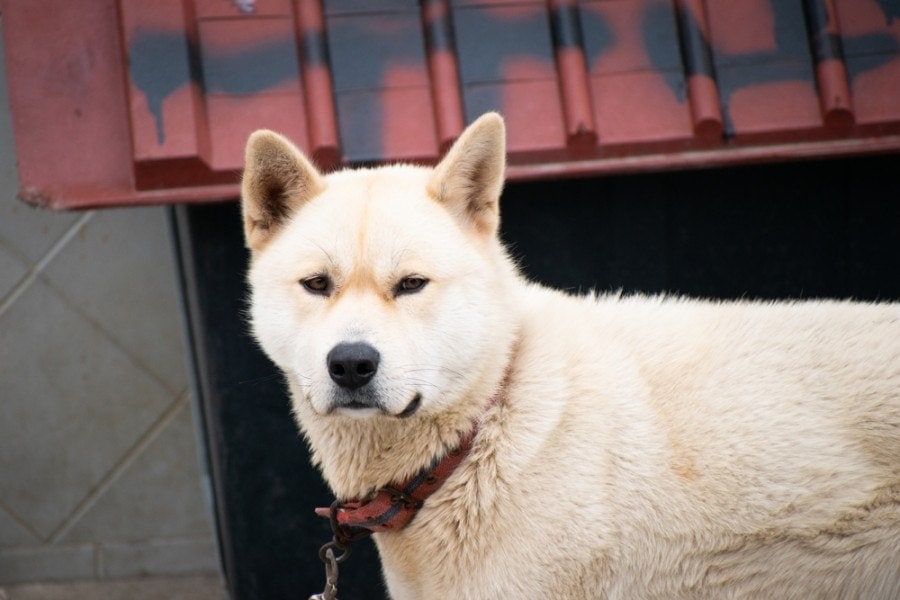

Temperament & Intelligence of the Jindo 🧠
Jindos are highly intelligent creatures. They’re extremely adaptable and are as comfortable living the spoiled life of a family pet or the much tougher life of a hunting dog. Their loyalty is the stuff of legends, and the strong bonds they form with their people make them great companions.
Though they’re incredibly athletic, they’re not terribly energetic. When you’re indoors, your Jindo will be calm and easy-going as long as you’re around. If you leave your Jindo alone for too long, you’re sure to see boredom and destructive behaviors soon following.
You won’t need to provide too much exercise for your Jindo; 30 minutes each day should suffice. They do well in apartments as long as you provide several brisk walks. You’ll also need to provide plenty of mental engagement. These smart dogs will get bored easily if you don’t keep them engaged.
Are These Dogs Good for Families? 🏡
Jindos can be good family pets as long as the family doesn’t have young kids. They don't tolerate the rough antics that some young children often engage in. However, Jindos need lots of attention, and having multiple people in the household can ensure that your Jindo always gets plenty of human interaction. Still, they’re a one-person dog and will bond strongest with only one member of the household, even though they’ll get along well with everyone. Just make sure no one gets jealous!
Does This Breed Get Along with Other Pets? 🐶 😽
Because of their strong prey drive, Jindos don’t do well with other pets. It’s worse with other male pets, which can drive a Jindo to aggressive and territorial behavior. It’s important that you socialize your Jindo early and often.
This can help to make them accepting of other animals, so you can take your Jindo to dog parks and other places where you might run into other pets without worrying about whether they're going to attack someone else’s dog!
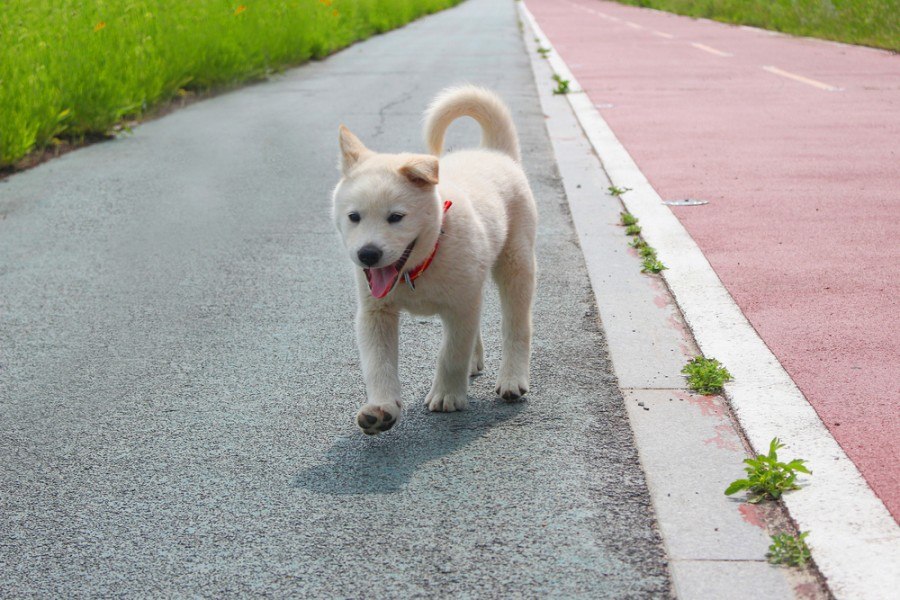

Things to Know When Owning a Jindo:
Food & Diet Requirements
Jindos are medium-sized dogs with moderately low physical activity levels. But unlike many western breeds, their digestive tracts are built to digest meat, not processed carbohydrates. This means that you’ll want to stay away from discount dog foods. Especially stay away from anything with corn in it as it is particularly unhealthy for Jindos.
You can cook meals for your Jindo at home, but you'll have to confirm with your veterinarian that the recipes contain the proper nutrients. If you can’t do that, you’ll need to get all-natural, premium dog food for your Jindo. If you need more help determining what to feed your Jindo, contact your veterinarian.
Exercise 🐕
Despite their exceptional physical abilities, Jindos don’t need too much exercise, and a half-hour of brisk walks each day should suffice. They don’t need a yard to run around in, so they make great dogs for apartment dwellers. Just don’t leave them alone for too long, or they can become irritated and destroy your furniture or belongings!
Training 🦮
Brimming with intelligence and loyalty, the Jindo is an easy breed to train. They want to please their owner, and they’re smart enough to understand what is being asked of them. Just be sure to provide plenty of positive reinforcement, and you’ll have your Jindo following obedience commands like a seasoned pro in no time.
Grooming ✂️
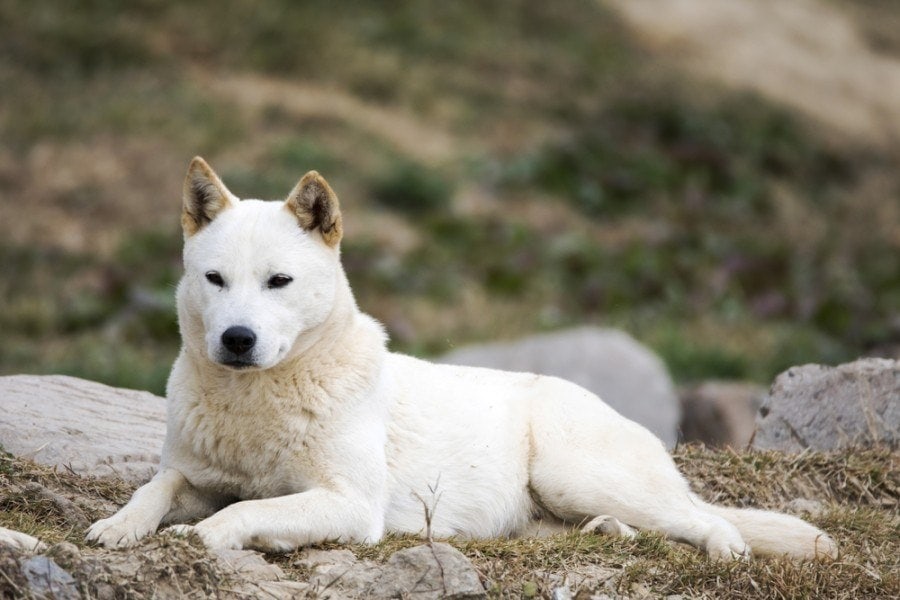
When you see a Jindo’s short but luxurious coat, you might expect them to be high-maintenance. While they shed a considerable amount year-round and even more in the summer, their self-cleaning coat takes care of most of the maintenance for you.
You will need to provide daily brushings to help remove all the dead and loose hairs. But you’ll find your Jindo grooming themselves often, similar to the way that cats do. This breed rarely needs bathing and won’t produce any unsettling odors.
You might want to check this out: 11 Best Dog Wipes: Reviews & Top Picks
Health Conditions ❤️
Most purebred dogs have several health conditions you should watch for as they age. Some breeds have a long list of common health ailments they’re susceptible to.
However, the Jindo seems to break all the rules here. There’s almost nothing that commonly affects this breed! Even the one condition that they’re sometimes susceptible to is a rarity.

Male vs Female
Both sexes of Jindo display similar behaviors. They’re even similarly sized; males are only an inch or so taller than females. Even temperamentally, they’re not very different. Both sexes display equal amounts of territorial behaviors and aggression, though males who haven’t been neutered might have a bit more proclivity for them.
3 Little-Known Facts About the Jindo
1. Jindos Have A Very Strong Prey Drive
Jindos make excellent hunters. Not only are they fast enough to chase down elusive prey, but they also love to do it. They have a naturally strong prey drive that perfectly suits them as hunters.
However, this same trait can be a real nuisance if you have other pets in the same household! Therefore, Jindos do best when they’re the only pet in the family. They especially don’t get along with other male animals, and small animals can easily ignite their prey drive, causing them to give chase!
2. Their Loyalty Knows No Bounds
Many dogs are considered to be loyal to their owners, but Jindos take it to new levels. There’s an incredible story about a Jindo named Baekgu who was sold to a new owner when his original owner moved. Seven months and 190 miles later, Baekgu found his old master. He was starving, haggard, and clearly worse for the wear, but he had managed an incredible feat that few other creatures could.
This story and others like it helped the Jindo reach a revered status in their homeland. In South Korea, there's a statue in honor of the breed.
3. They’re Incredible Jumpers
Part of the reason why Jindos make great hunters is their awesome athleticism. They’re incredibly fast and powerful, thanks, in part, to their muscular hind legs. Their legs also serve another purpose: helping Jindos escape backyards! If you’re going to have a Jindo as a pet, you need a pretty high fence. You can err on the side of caution and go for 8 feet. Any less, and you’re likely to open the back door to find that your Jindo has disappeared!
Conclusion
Whether you’re a hunter, an apartment resident, or a family with a large home, you’ll find the Jindo an excellent companion, friend, and beloved family member. They are highly intelligent and as faithful as a pet could be. They’re also highly adaptable and equally well-suited for a variety of lifestyles.
Your Jindo will need lots of attention from you, but they don't need much exercise, which is why they do well in apartments. But take care to socialize your Jindo early and often, or you might end up with an aggressive dog with an incredibly high prey drive. It's not a great combination when other people’s pets approach you!
Related Reads:
Featured Image: jamongcreator, Shutterstock
Get Hepper In Your Inbox


Pet care tips from our vets and experts, straight to your inbox.
You may opt-out at any time. View our Privacy Policy for more information.

Nicole is a lover of animals of all sizes but is especially fascinated with the feline variety. She’s the proud mom of Baby, a Burmese, and works every day so he can relax in the sunshine or by the fire. She’s always had a cat in her home and has spent countless days with others, observing behaviors and softening up even the grouchiest of the lot. Nicole wants to share her kitty expertise with you so you and your cat can live happy, healthy, and care-free.
Join the conversation
Ask a question, share your story, or send private feedback.