Hepper is reader-supported. When you buy via links on our site, we may earn an affiliate commission at no cost to you. Learn more.
Kitten Vaccine Schedule: Our Vet Explains When & What Shots Are Required
In this article
While most cat owners will know that kittens are supposed to see a veterinarian for a checkup and vaccines, beyond that, it’s pretty rare to fully understand everything they need and how often before speaking to your vet.
As it turns out, kitten vaccine schedules aren’t all that complicated.
We’ve pulled together everything you need to know about your kitten’s vaccine schedule, where to be and when, and why they need them. You can use this guide to steer your household through kittenhood with confidence!

What Are Vaccines?
Before we can go over why your kitten needs vaccines and why they need them on a certain schedule, it helps to fully understand what a vaccine is. According to the CDC, a vaccine is “a preparation that is used to stimulate the body’s immune response against diseases" 1.
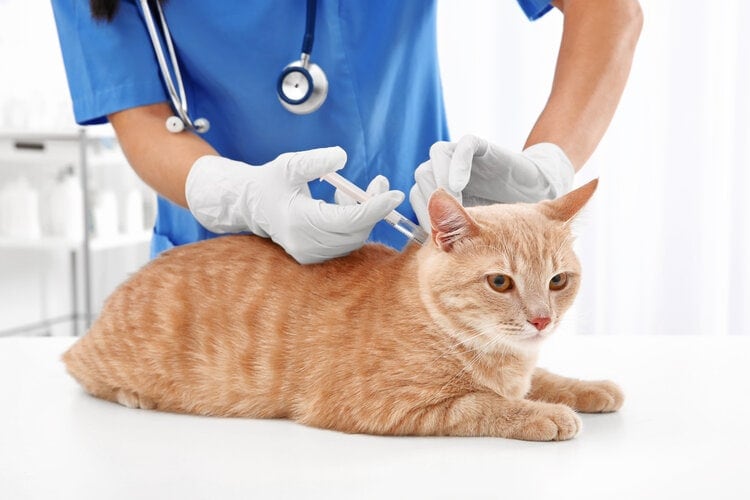
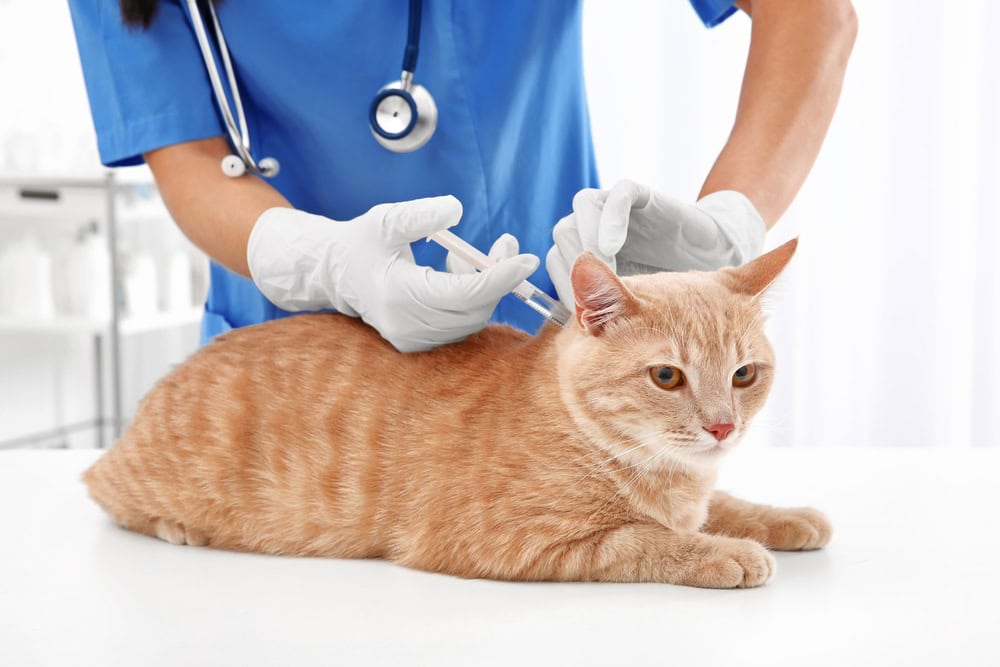
For cats, this almost always means an injection, which contains either live or killed viruses, possibly mixed with something to help stimulate the immune system 2.
How Do Vaccines Help Kittens?
The goal of introducing these vaccines to a cat’s body is to prepare their immune system to recognize certain viruses so they can effectively fight them if presented with them in the future. This can keep them from getting sick or prevent severe symptoms.
Kittens, in particular, have immune systems that are still developing. They rely on antibodies from their mother that they primarily acquire through nursing to help them fight infections, but this protection wanes after just a month or so.
The benefit of a kitten’s vaccine schedule, therefore, is that by starting vaccination at about the age they are no longer protected by their mother’s antibodies, they can have the information they need to protect themselves introduced to their immune system as often as it is needed to keep that information functional until they’re old enough and their immune system developed enough to build longer lasting immunity.
Kitten Vaccine Schedule: The Need to Know
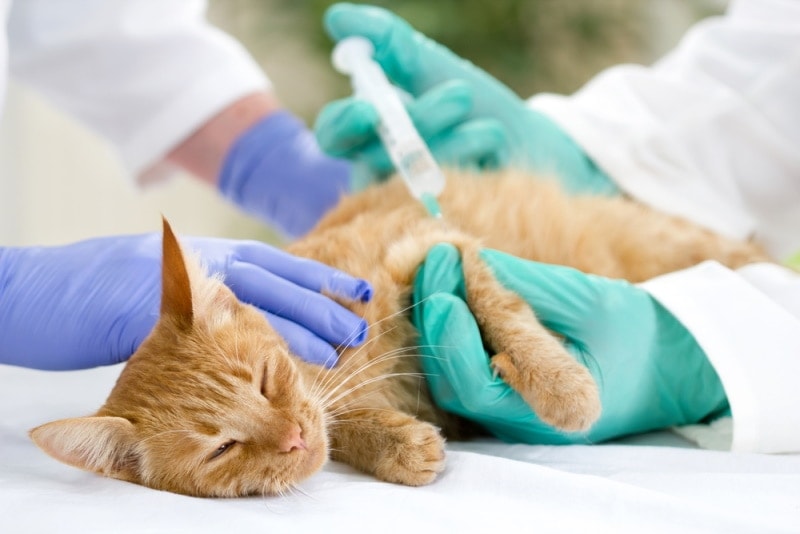
A kitten’s vaccine schedule is broken down into core and non-core vaccines for any cat in the United States. The American Animal Hospital Association (AAHA) releases updated vaccine guidelines for kittens every few years, and veterinarians in individual areas working with each patient can use that information to tweak the schedule to best fit the needs of that cat.
Kittens have two core vaccines everywhere: FVRCP and FeLV.
FVRCP stands for feline viral rhinotracheitis, calicivirus, and panleukopenia, meaning it protects against herpesvirus, calicivirus, and distemper.
FeLV stands for feline leukemia virus. This vaccine is only core for the first year of a kitten’s life, and then boosters can be maintained if relevant for that cat. In adult cats, FeLV is only considered core for cats that go outside or live with any FeLV-positive cats.
Rabies is an additional potentially core vaccine, and this decision is dictated on a state-by-state basis. It is considered core in states that require rabies vaccination in cats and not for those that don’t, though this can also differ by the standards of individual veterinary practice.
It is important to note that even if a cat is indoor only, rabid animals such as bats, squirrels, and mice can enter a house as part of their altered behavior, exposing an indoor-only cat to rabies. Unvaccinated animals bitten by rabies-suspect animals may undergo long quarantine periods or may even be euthanized per state protocols, so it isn’t uncommon for veterinary practices to require rabies vaccination of cats in their practice regardless of the state law.
The non-core vaccinations for kittens are chlamydia and Bordetella, which are needed almost exclusively within a shelter setting or multi-cat households experiencing an outbreak, and this is basically because these vaccines don’t provide complete protection against these diseases.
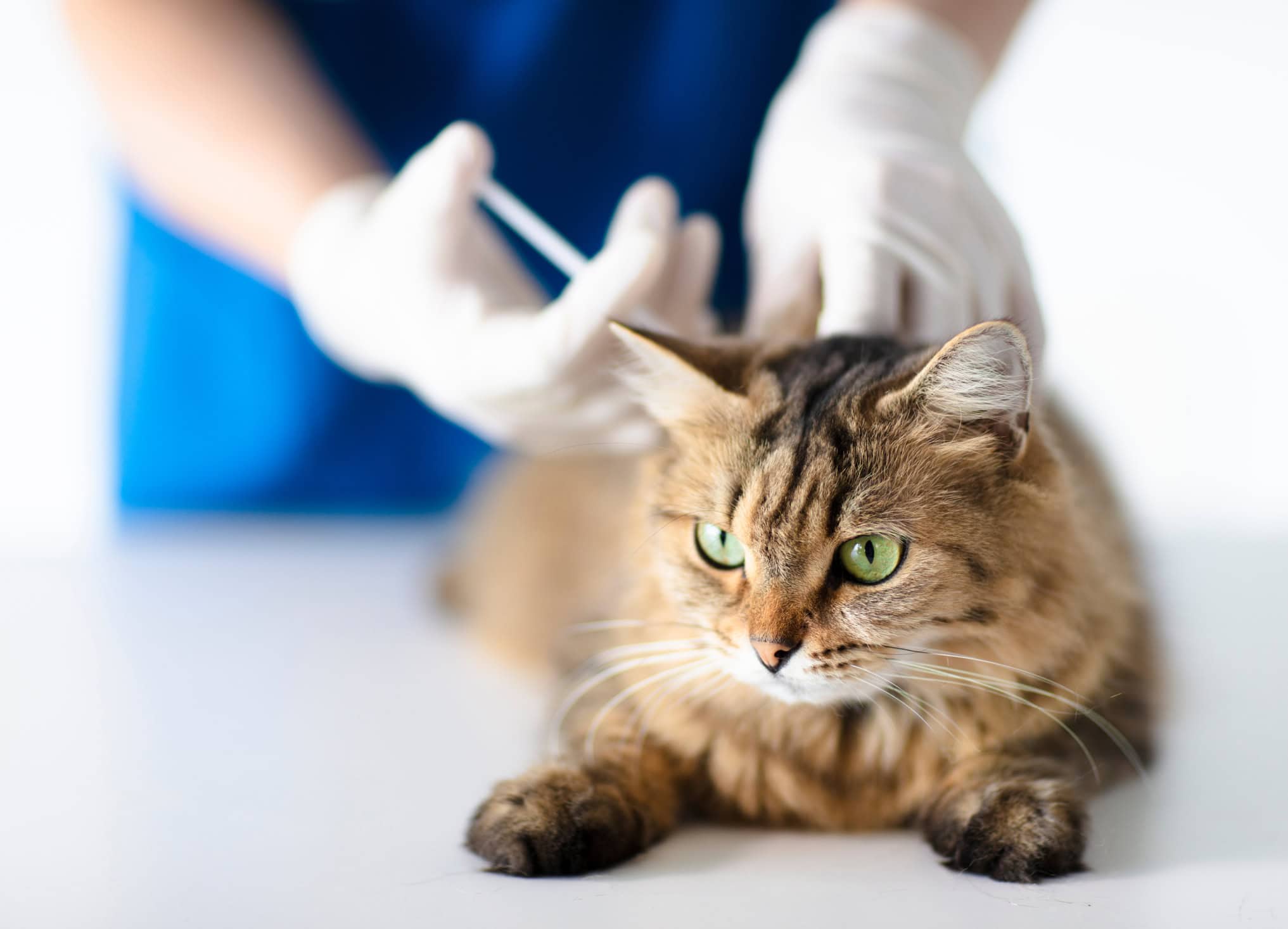
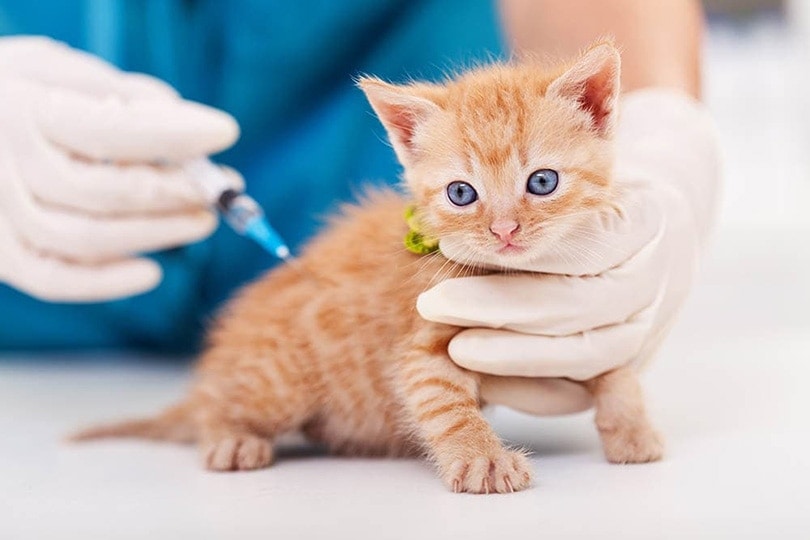
Kittens should receive their first vaccine at about 4–6 weeks of age when protection via their mom’s antibodies wanes. At four weeks, they can receive an FVRCP vaccine, which doesn’t include the panleukopenia component, or at six weeks, they can receive an FVRCP. FVRCP is then boostered every 3–4 weeks until the kitten is 6 months of age.
The first FeLV vaccine should be given at about 8 weeks and then boostered once 3–4 weeks later.
Rabies is given once without an immediate booster, usually around 8–16 weeks of age, often also dictated by state law.
All these vaccines can then be boostered a year after completing their vaccine series, and future vaccine booster schedules depend on the vaccine type.

Vaccination Side Effects in Cats
Vaccine side effects fall into two groups: mild or serious.
Mild side effects are common and would include pain, discomfort, or swelling at the site of their injection, decreased appetite, a single episode of vomiting or diarrhea, sneezing (if given an intranasal vaccine), and mild fever.
Serious side effects are rare and include persistent vomiting or diarrhea, hives, facial swelling, severe coughing, difficulty breathing, or collapse. If any of these serious side effects occur, you should contact your veterinarian and seek care immediately, and these are what we generally refer to as a vaccine reaction.
A small, firm, non-painful swelling may develop at the site of a cat’s vaccination that goes away within a couple of weeks. These should be monitored but are typically otherwise okay.
Cats can also develop tumors at the site of previous vaccinations weeks to years later, known as feline injection-site sarcomas.
Feline Injection Site Sarcomas
This rare side effect is specific to cats and can occur from any injection, not just vaccines. The exact cause is unknown but appears to be related to local inflammation triggering abnormal cell growth. The use of vaccines that do not include an adjuvant, the part of a vaccine added to stimulate a stronger immune response, has risen in recent years and appears to lower the risk for injection site sarcomas from vaccination for cats.
Veterinarians have implemented several policies to limit the risk of injection site sarcomas, such as using newer vaccines that lower the risk of sarcoma development, using certain vaccines in certain spots to be able to track what triggered the tumor if it happens, and placing the vaccine at locations where the tumor can be effectively removed to keep the cat safe.
The risk of an injection site sarcoma is not currently outweighed by the risk of a cat developing any of the diseases the vaccines protect against, but if this is a concern for you, it is always best to discuss the risks and side effects of vaccinations with your veterinarian.
Conclusion
Kittens start to receive vaccines at about 4-6 weeks of age and continue to get boosters every 3–4 weeks until they’re about 6 months old. This provides continuous protection against these diseases until a kitten’s immune system can catch up to keep them safe. Serious side effects from vaccines are rare, but some, such as injection-site sarcomas, lead to careful consideration of need when choosing vaccines and their schedule for kittens.
Every kitten’s schedule is on a case-by-case basis chosen by their veterinary team and owner.
Featured Image Credit: Ilike, Shutterstock
Get Hepper In Your Inbox


Pet care tips from our vets and experts, straight to your inbox.
You may opt-out at any time. View our Privacy Policy for more information.
Dr. Zayas has a passion for sharing her extensive knowledge base with everyone she can. She lives in Colorado with her dogs, cat, and fish and has traveled all over the world with them. Her various life and work experiences have allowed her to focus on not only clinical practice, but also providing informative, accurate answers to almost any question her clients and readers can ask of her.
Education
Dr. Zayas received her Bachelor’s degree from Bryn Mawr College and her Doctor of Veterinary Medicine degree from Ross University School of Veterinary Medicine.
Experience
Dr. Zayas owns a house call small animal and exotics veterinary practice. She has special interests in allergies, pain management, end of life/hospice care, and finding unique solutions tailored to her patients’ and families’ individual needs. She has worked in shelter medicine, home health, and everything in between.
Join the conversation
Ask a question, share your story, or send private feedback.