Hepper is reader-supported. When you buy via links on our site, we may earn an affiliate commission at no cost to you. Learn more.
How Common is Cancer in Cats? Vet Reviewed Types & Signs

In this article
Cancer. It’s a scary word to hear when talking about a loved one, whether human or fur baby. Sadly, it’s a word many cat owners will have to face.
The Flint Animal Cancer Center at Colorado State University reports that one in five cats will receive a cancer diagnosis in their lifetime, while the Cornell University College of Veterinary Medicine estimates that cancer might affect as many as 30-40% of all cats.
Currently, we have more information about cancer in dogs than cats, although in general, there hasn’t been widespread tracking of cancer in pets until recently. In May 2022, Jaguar Health Inc. launched a nationwide registry to assess the prevalence of cancer in dogs in the United States. Hopefully, an initiative like this will be available for cats in the future!
There have been a few studies over the years looking at rates and types of cancer in cats in defined geographical areas, which are summarized nicely in this article (along with explanations of why the data must be interpreted with caution).
In this article, we will discuss the most common types of cancer in cats, signs to watch for, and some steps pet parents can take to help decrease the likelihood of their cat developing certain cancers.

What Are the Most Common Cancers in Cats?
The most commonly reported feline cancers (in no particular order) are:
1. Mammary (Breast) Adenocarcinoma
The Cornell University College of Veterinary Medicine estimates that mammary cancer accounts for approximately one third of all cancer in cats.
Fortunately, this type of cancer is highly preventable. Most cases occur in female cats, and spaying before the first heat has been shown to reduce the risk of mammary cancer by up to 91%. Many veterinarians recommend spaying cats before six months of age for this reason.
2. Lymphoma
Lymphoma is cancer of the lymphatic system, which includes the thymus gland, spleen, bone marrow, and mucosal-associated lymphoid tissue (MALT) found along the small intestine. It is reported to occur in 41 to 200 out of every 100,000 cats and, unlike many other cancers, affects cats of all ages. This may be because of its association with feline leukemia virus (FeLV) and feline immunodeficiency virus (FIV).
In areas where many cats are vaccinated against FeLV, the gastrointestinal (GI) form of lymphoma seems to be most common. There is growing suspicion among veterinarians that chronic inflammatory bowel disease (IBD) may predispose some cats to this type of lymphoma, which tends to occur in older cats.
3. Squamous Cell Carcinoma (SCC)
Squamous cell carcinoma (SCC) is reported to constitute 10% of all feline cancers. It has two different forms:
Cutaneous SCC
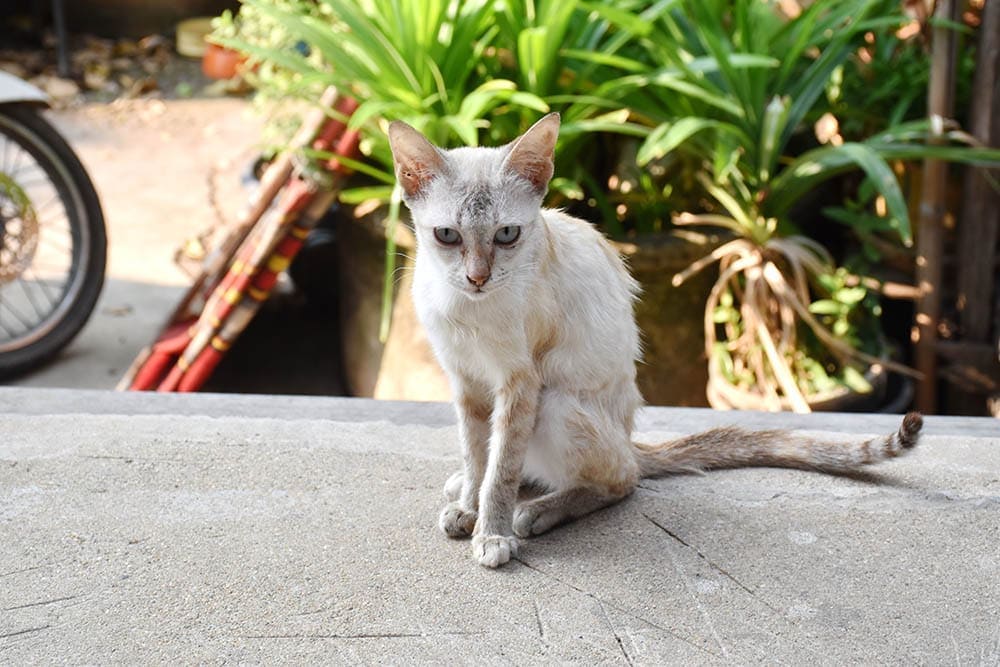
This type of skin cancer accounts for approximately 15% of skin tumors in cats. It is very treatable if caught early, but can be fatal if it spreads to other parts of the body. The most common cause is thought to be damage from the sun’s ultraviolet rays. SCC usually occurs on parts of the face with minimal fur (think nose, lips, ears, eyelids, and temples).
Oral SCC
This form of SCC is estimated to make up 75% of oral tumors in cats. The cause is unknown at this time, and the survival rate is unfortunately very low.
A Note About Feline Injection Site Sarcomas
You may have heard claims that vaccines can cause cancer in cats. While an association between vaccination and fibrosarcomas has been identified, the most current research suggests that these tumors occur secondary to the inflammation caused by injections, rather than vaccines specifically.
Feline injection site sarcomas are, fortunately, rare. Data from the United States and United Kingdom estimate that they only occur in one out of every 1,000 to 12,500 vaccinated cats. For many cats, the benefits of vaccination likely outweigh the risk, but your veterinarian will help you make an informed decision for your individual kitty.
The American Veterinary Medical Association has a great resource for cat owners here.
Are Certain Cats at Higher Risk of Cancer?
While there is currently little information available about this, some predispositions have been observed:
What Are the Symptoms of Cancer in Cats?
While a cat’s exact symptoms depend on the type of cancer they have, any of the following signs should prompt you to seek veterinary attention:
- New lumps or bumps
- Sore(s) that won’t heal
- Change in appetite (increase or decrease)
- Persistent vomiting and/or diarrhea
- Rapid weight loss
- Decreased energy
- Evidence of pain
- Difficulty breathing
- Swollen belly
- Hiding or other changes in behavior
If you are ever concerned about your cat’s health, it is best to have them checked out sooner than later. While the thought of your cat having cancer is scary, early diagnosis may mean more options for treatment, and possibly a greater chance of remission or cure.

Is Cancer Treatable in Cats?
Some feline cancers are considered very treatable! Treatment can involve:
If your cat has been diagnosed with cancer, consider asking your veterinarian for a referral to a veterinary oncologist. Even if you aren’t sure whether you want to pursue treatment, a consultation can be very helpful. An oncologist can provide you with the most up-to-date information about options and prognosis for your cat’s particular cancer, allowing you to make an informed decision.
It is important to note that cancer treatment often requires many appointments, which can be time-consuming and stressful—for both you and your cat. It can also be very expensive! Some pet insurance plans offer coverage for cancer, which might be something to think about if you have a new kitten, or even a young adult cat at home.
Please know that deciding not to pursue cancer treatment does not make you a bad pet owner! There are many factors to consider, but the most important is whether treatment is the right choice for your cat, and your family. If you have a cat that hates going to the vet or taking medication, treatment might be miserable for them (even if their cancer has a good prognosis). It is a very personal decision.
If your cat’s cancer is already very advanced at the time of diagnosis, treatment may, unfortunately, not be an option. In these cases, your veterinarian will help you keep your cat comfortable until it is time to say goodbye.
Can Cancer Be Prevented in Cats?
While some risk factors (like age and breed) can’t be changed, there are some things you can do to reduce your cat’s risk of developing cancer:
- Do not smoke around your cat
- Help your cat maintain a healthy body weight (obesity increases cancer risk)
- Spay your female cat before their first heat cycle, or at least by one year of age, to significantly reduce their risk of mammary (breast) cancer
- Limit the amount of time white and light-colored cats spend outside, particularly at times when the sun is strongest, to minimize their risk of squamous cell carcinoma (SCC)
- Vaccinate your cat against feline leukemia virus (FeLV), because FeLV infection can increase the risk of lymphoma or leukemia
- Don’t assume that intermittent vomiting is normal; it may be a symptom of irritable bowel syndrome (IBS), which is thought to lead to gastrointestinal (GI) lymphoma in some cats
- Schedule routine veterinary check-ups (at least annually; every 6 months is a good idea for older kitties), and consider regular bloodwork to identify any changes in your cat’s health
A Note About Cancer Screening
Just like in people, early detection of cancer in cats often means more treatment options and better outcomes.
Researchers are investigating feline cancer biomarkers, so keep an eye out for news related to the development of tests for early cancer detection (“liquid biopsy” is currently only available for dogs).

Is Any Support Available for Owners of Cats With Cancer?
Facing a diagnosis of cancer in your beloved cat comes with a lot of emotions, and it is normal to need some support.
Whether your cat has recently been diagnosed with cancer, is going through treatment, or has crossed over the rainbow bridge, help is available. Ask your veterinarian if they can recommend a local hotline or support group for pet owners. Alternatively, consider working with a licensed mental health professional who specializes in grief counseling.
See also:
Featured Image Credit: Anna Nikonorova, Shutterstock
Get Hepper In Your Inbox


Pet care tips from our vets and experts, straight to your inbox.
You may opt-out at any time. View our Privacy Policy for more information.
Dr. Sharon (as she is known by her clients) has had an intense love for animals for as long as she can remember. She grew up in Guelph, Ontario and fulfilled her childhood dream by obtaining her Doctor of Veterinary Medicine (DVM) degree from the Ontario Veterinary College in 2009. She has since found joy working in a variety of small animal clinics, focusing on cat and dog care. She loves sharing her expertise and empowering pet owners to take the best possible care of their fur babies!
Sharon currently lives in beautiful British Columbia with her husband, daughter, and Parker, her loveable Great Dane. When she’s not at work, she enjoys clogging, photography, and exploring the outdoors with her family.
Dr. Sharon (as her clients call her), was raised in Guelph, Ontario, and has loved animals for as long as she can remember. She fulfilled her childhood dream when she obtained her Doctor of Veterinary Medicine (DVM) degree. Sharon now lives in British Columbia, Canada with her husband, daughter, and Parker, their loveable Great Dane. When she’s not working, she enjoys clogging, photography, hiking, and camping with her family.
Education
Dr. Sharon obtained her DVM in 2009 from the Ontario Veterinary College in Ontario, Canada.
Experience
Dr. Sharon loves sharing her knowledge and empowering people to take the best possible care of their fur babies, which she has been able to do through her work. She has practiced in a variety of small animal clinics since graduating, with a main focus on cats and dogs.
Check out some of our top posts written by our veterinary team:
Why Does My Dog Snore? Should I Act?
My Cat Ate Paint! Our Vet Explains What to Do Now
How Common is Heartworm in Cats? 7 Things to Know About Heartworm Disease
Join the conversation
Ask a question, share your story, or send private feedback.