Hepper is reader-supported. When you buy via links on our site, we may earn an affiliate commission at no cost to you. Learn more.
What Is the FVRCP Vaccine for Cats? Our Vet Explains

In this article
Even if you are a new cat owner, you have probably heard of the FVRCP vaccine. Why? Because it is one of the core vaccines that every cat should get. Core vaccines are considered essential to every cat because they protect against diseases that are widely distributed and highly transmissible, as in the case of rabies. In addition, a vaccine for feline leukemia virus is also considered core for kittens and outdoor cats.
In this article, we will explain the FVRCP vaccine for cats, the recommended schedule, the cost, as well as the potential side effects.

What Is the FVRCP Vaccine For Cats?
The FVRCP vaccine is a combination vaccine that protects cats against three different viral diseases.
1. FHV-1
Feline herpesvirus 1, or FHV-1, is a viral disease that causes feline viral rhinotracheitis (FVR). This herpes virus is globally distributed and highly transmissible. The acute infection causes an inflammation of the nasal passages and trachea of cats. Eye and nose secretions, sneezing, fever, depression, and lack of appetite are some of the signs. It can also cause conjunctivitis and corneal ulcers. This virus disrupts the respiratory immune system, making the cat susceptible to upper respiratory tract infection by secondary pathogens such as bacteria or another virus.
On rare occasions, feline herpesvirus 1 can also cause oral ulcerations and lead to pneumonia.
2. FCV
Feline calicivirus (FCV) is another highly infectious respiratory virus that causes eye and nose secretions. Some strains can cause oral ulcerations, mouth infections, pneumonia, and could even infect the joints, causing kittens to limp.
Most infected cats develop a fever and become anorexic, which puts them at risk of dehydration. Like other viruses, the infection of FCV causes immunosuppression and can lead to other secondary infections.
Infected animals shed the virus in body fluids and feces even after recovery, and the transmission can be by direct contact or via objects like clothes, bowls, or beddings where the virus can survive for weeks.
3. FPV
Feline panleukopenia (FPV) also known as feline distemper or feline parvovirus, causes gastrointestinal, immune system, and nervous system diseases. The virus attacks the cat's bone marrow and lymph nodes causing a drastic reduction of white blood cells in the cat, these are normally the defense cells in the blood, so this disease makes cats very susceptible to acquiring other infections.
The signs of this disease are variable because it infects different systems. The respiratory signs include excessive eye and nasal secretions (usually caused by secondary infections), high fever, vomiting, profuse diarrhea, and dehydration. This virus causes ulcerations and damage to the lining of the intestinal tract commonly resulting in profuse bloody diarrhea. Pregnant females can suffer from pregnancy loss. Kittens can also suffer cerebellar ataxia if the virus infects the nervous system, causing incoordination and lack of movement control. The mortality rate is over 90% in kittens.
Infected cats shed the virus through body fluids even weeks after recovery. This virus can survive for long periods in the environment, so it is considered ubiquitous, which means that it’s present in every place that is not regularly disinfected.
The Necessity of the FVRCP Vaccine For Cats
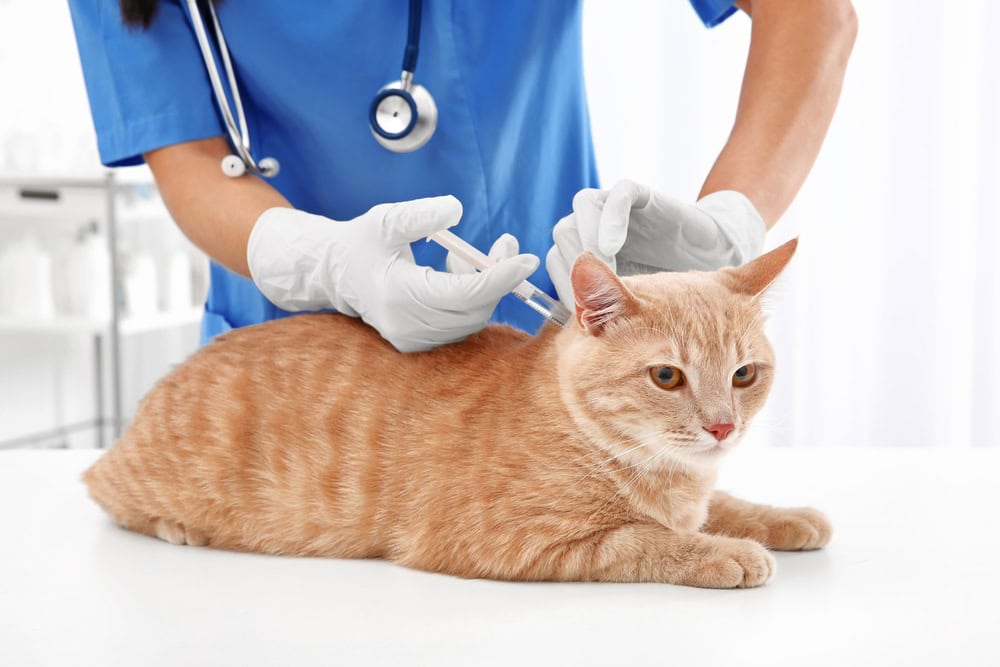
As you can see, these highly transmissible viruses are also resilient and can survive for long periods in the environment. These pathogens can be transmitted through direct and indirect contact with infected animals and their body fluids, that may contaminate their environment, through people and objects, which is the reason the FVRCP is considered a core vaccine. It is necessary even for indoor cats, as you or any visitor can bring the virus to your home via your shoes, clothes, or any other object. Cats could also get the disease via insects, such as fleas or through other animals, such as ferrets.
What Is the Recommended Vaccination Schedule for FVRCP?
When kittens are born and nursed by their mom, they receive more than nutrition from the milk, they also receive passive immunity. The first milk called colostrum contains specialized mother’s defense cells called immunoglobulins or antibodies that will protect the kittens during the first period of their life. This immunity does not last forever; it wears out and the kittens need to develop their immune system to survive.
Vaccines present the body with a form of the pathogen that is not viable to develop the disease. Exposure to these attenuated, modified, or inactivated pathogens stimulates the immune system by providing it with access to the virus or its parts. Having this information, the cat’s body is no longer naive to those viruses.
Vaccines provide the immune system with an opportunity to develop specific defense mechanisms against a pathogen without having to acquire (and survive) the disease. The repeated exposure to vaccines allows the immune system to be “trained and developed” in this way and the kitten acquires immunity and protection from the real pathogen.
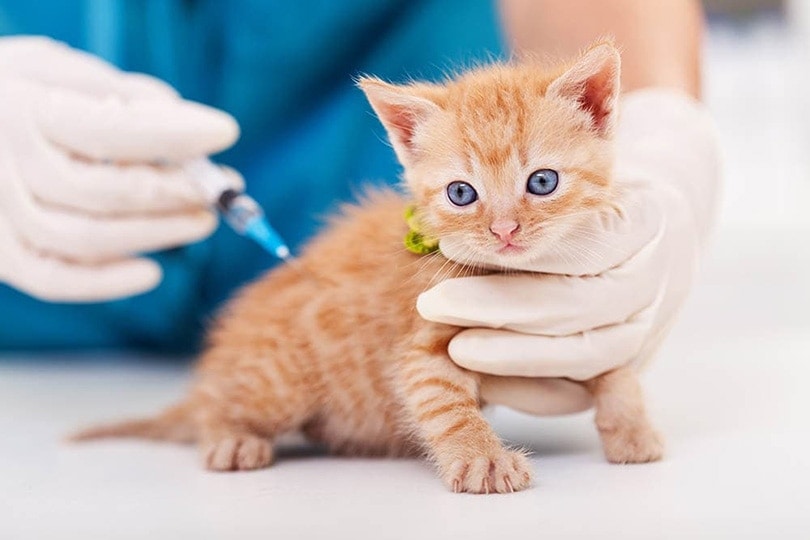
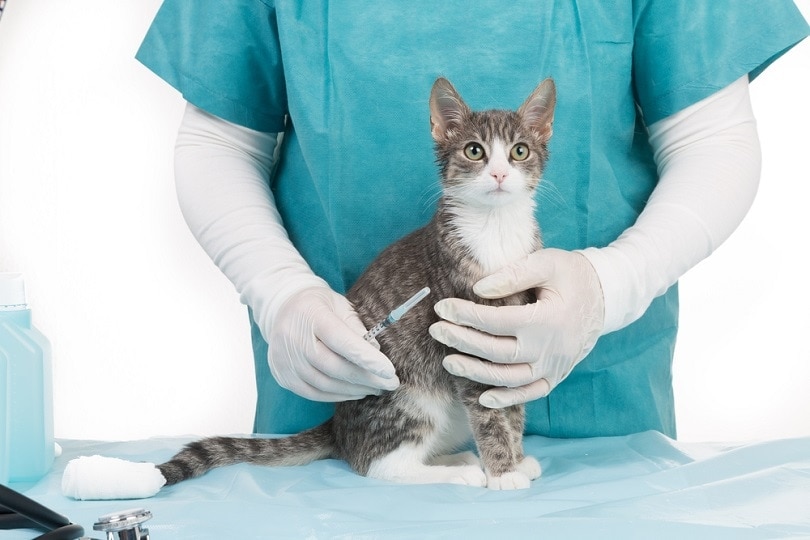
Kittens receive the first shot of FVRCP when they are between 6 to 8 weeks. At this age, they might still be protected by the mother’s immunity, but not for much longer. If this is the case, this initial exposure might not allow them to develop their own immunity against these viruses.
The second dose of FVRCP is 3–4 weeks after the first one when kittens are between 10-14 weeks old. Then the third dose should be when the kittens are 14–18 weeks old. Some kittens start their vaccination schedule a little later, but it is recommended that they have all received the first three shots of the FVRCP vaccine by the age of 5 months (20 weeks). This repeated exposure ensures that the kittens develop immunity against this virus.
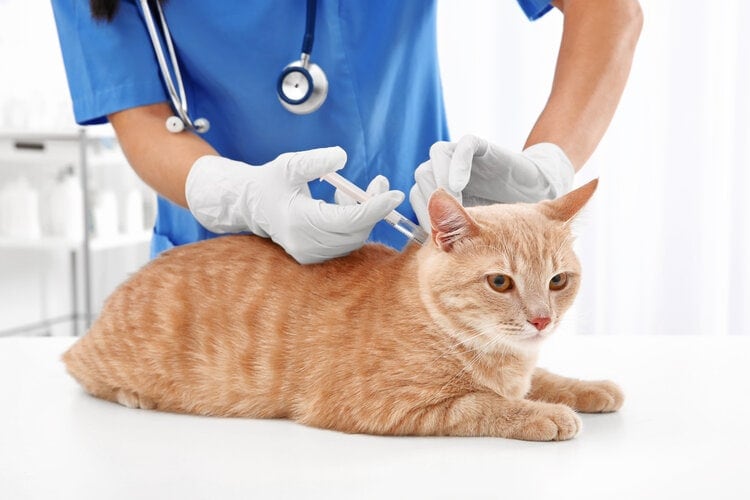
After the initial three shots, the fourth dose will be a year after the third one. Immunity might be “wearing off”, and these booster shots ensure the cat remains protected against this virus. After the first year, the FVRCP vaccine boosters can be given every one to three years based on the veterinarian’s recommendation and individual cat’s risk assessment, type of vaccine and manufacturer’s guidelines, in order to maintain the protection.
What Is the Cost of the FVRCP Vaccine?
The price of the FVRCP vaccine is variable in each country. In the USA, the price range is usually between $30–$60, depending on the state, the clinic, and the specifics of the vaccine brand and formulations.
What Are the Potential Side Effects of the FVRCP Vaccine?
For most kittens, there are no or minimal side effects of this vaccine. Few kittens may develop a fever and a slight decrease in appetite, and their energy levels might be a little low. On occasions, there might be swelling at the injection site. All these effects should disappear within a few days.
On rare occasions, kittens might suffer from an allergic reaction to the vaccine, developing a variable degree of swollen or red eyes, lips, face, itchiness, sometimes even vomiting and diarrhea. The veterinarian must be informed if your kitten develops any of these signs, with difficulty breathing being considered an emergency.
There is a rare form of cancer called soft tissue sarcoma that has been associated with the vaccine injection site in a small number of genetically susceptible cats. This controversial issue is still being studied, and because it occurs in a very small number of cats, the recommendation is still to get your cat vaccinated against these highly transmissible viral diseases, based on their individual risk assessment, pros and cons. The risk of a cat contracting these infectious diseases remains much higher than the risk of developing sarcoma.
Conclusion
The FVRCP vaccine protects cats from three different widely distributed and highly transmissible viral diseases. Kittens should receive three subsequent doses of the vaccine by the time they reach 5 months of age, as it is classified as a core vaccine. Booster injections will be required throughout the life of the cat to maintain immunity. While there are some possible adverse effects and a few risks associated with this vaccine, the benefits greatly outweigh the risks of vaccination as it protects your cat against three serious and potentially life threatening viral diseases.
See Also:
Featured Image Credit: Africa Studio, Shutterstock
Get Hepper In Your Inbox


Pet care tips from our vets and experts, straight to your inbox.
You may opt-out at any time. View our Privacy Policy for more information.
Paola Cuevas is a veterinarian and animal behaviorist, with over 18 years of experience working with a variety of species. Her passion is animal welfare and focuses on the importance of preventive medicine. Paola has skills in the fields of nutrition, microscopy, clinical pathology, diagnostic imaging, and endoscopy as well as extensive experience in animal training through positive reinforcement. As our in-house veterinarian, Paola is very happy to share her knowledge and experience with our readers and hopes to be helpful with any issue presented by your non-human family members.
Dr. Paola is our Senior In-House Veterinarian at Hepper, and she loves sharing her knowledge and experience with our readers. Paola hopes to provide helpful information for any issue presented by your fur babies.
Her passion is animal welfare and she focuses on the importance of preventive medicine.
Education
Paola graduated from the University of Guadalajara, Mexico.
Experience
Dr. Cuevas has over 18 years of veterinary and animal behaviorist experience and has worked with a variety of species, from companion animals to exotics. She has skills in the fields of nutrition, microscopy, clinical pathology, diagnostic imaging, and endoscopy as well as extensive experience in positive reinforcement animal training.
Things You Didn't Know About Dr. Paola:
As a student, Paola received an outstanding student scholarship. She had the opportunity to travel to Canada and learn about aquaculture diagnostics and pathology.
Paola and another colleague trained gentoo penguins to recognize shapes and colors and their project achieved an international first-place award in research.
Paola has trained several species of animals to voluntarily accept medical procedures such as ultrasound examinations, X-rays, and the collection of biological samples with the goal of improving their healthcare without additional stressors or the need for physical restrain.
Join the conversation
Ask a question, share your story, or send private feedback.