Hepper is reader-supported. When you buy via links on our site, we may earn an affiliate commission at no cost to you. Learn more.
Leonberger Dog Breed Info: Pictures, Personality & Facts
In this article
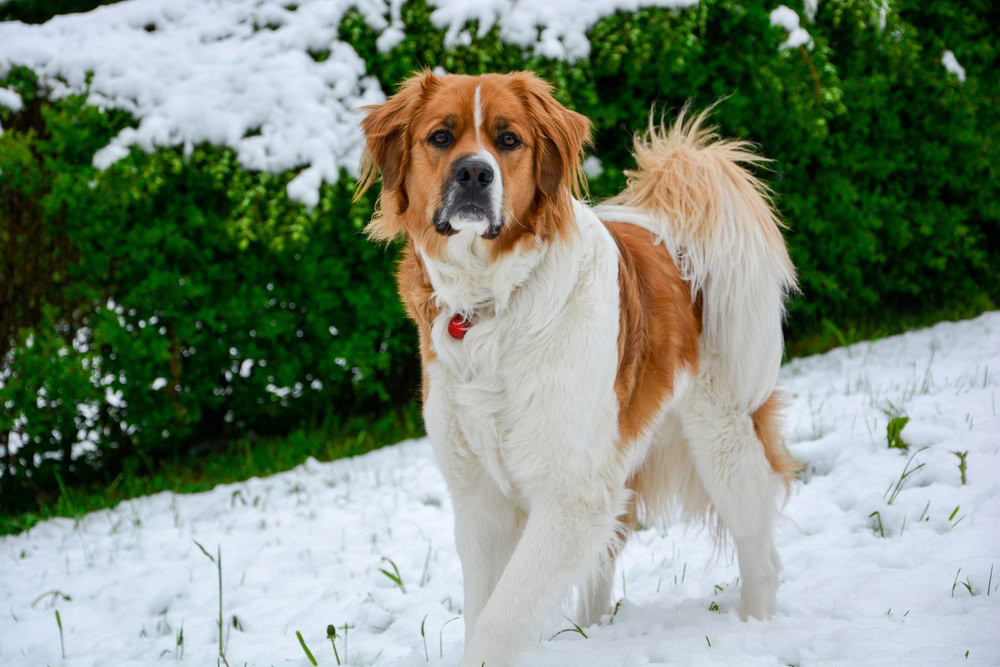
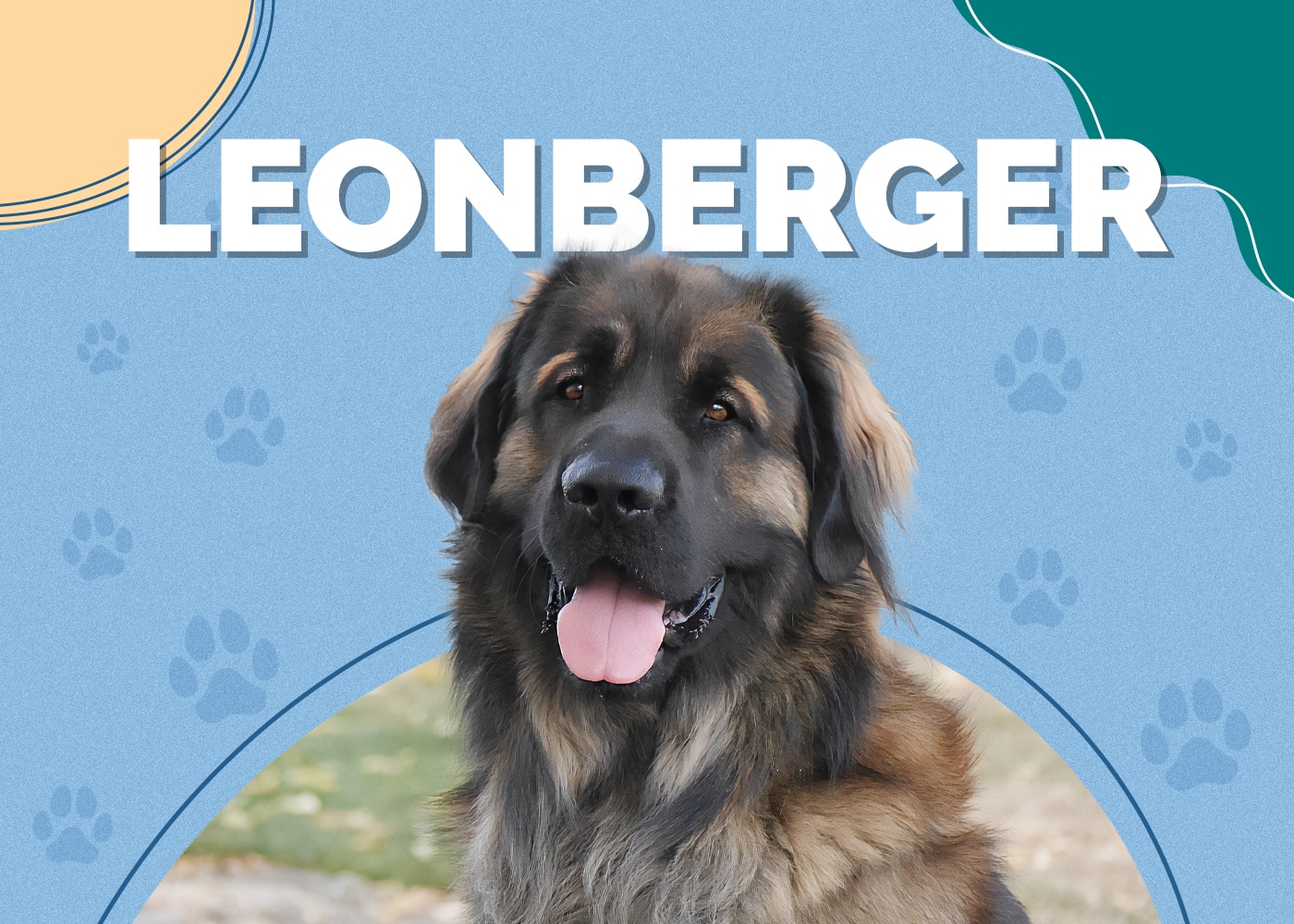
The Leonberger is a giant dog breed introduced in 1846 by Herr Heinrich Essig, who wanted to create an intimidating breed that looked like the lion on the Leonberg town crest. They are a purebred dog breed, having been accepted into the American Kennel Club in 2010, which also means that they are one of the latest additions to the club’s roster.
They are a giant breed but, apart from their size and their intolerance to being left alone for long periods of time, they are considered a relatively easy breed to own and rear. Leonbergers do not tend to drool, are not prone to being vocal, and they do not usually dig.
Breed Overview
Height:
Weight:
Lifespan:
Colors:
Suitable for:
Temperament:
They do, however, love exercise and being outdoors. They can be reserved with strangers and may be dog aggressive, but they can live with other pets and get on with people, assuming that they receive a decent amount of socialization from a young age. They are quiet dogs and are considered relatively easy to train.
This purebred dog does not have excessive grooming requirements. Their size means that they are not considered suitable for living in an apartment. Although they can cope with extremely cold weather, they do not do well in extreme heat.
Leonberger Characteristics

Leonberger Puppies
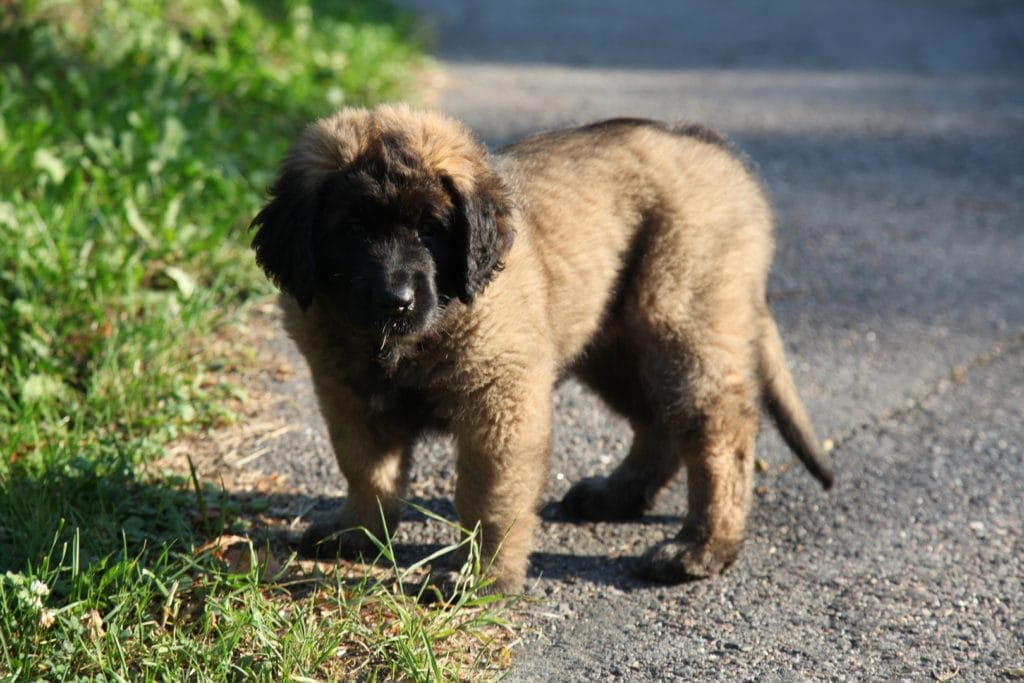
Leonbergers are very large and, for this reason, they are not as popular as smaller dogs. As such, there aren’t a lot of breeders that specialize in Leonbergers. You may have to shop around and do your research to find a breeder that is local to you, and this is especially true if you live in hotter areas. You should look for recognized breeders. These breeders will ensure that parents are screened for common problems like hip dysplasia, and they will also keep their dogs in good conditions and ensure that they have good living conditions. Breeders that are not recognized are not held to the same standards, which means that they may not have undertaken screening or other checks.
Ensure that you meet the puppy before you part with any money. You should also meet at least one of the parent dogs, typically the female. This will allow you to determine the temperament of the parent, which is a reasonable indicator of how the puppy will turn out. It will also give you a good idea of the size and look of this dog. While most people know that they are considering a giant breed, their size can still come as a shock when you first meet them.
Although the Leonberger is a purebred, it is still possible that you will find them in shelters. This may be down to the personal circumstances of the owner. On the other hand, Leonbergers can become difficult and challenging if they are not trained and socialized properly from a young age. Their size magnifies any behavioral problems, so while potential owners should always consider looking for a rescue dog, you need to make sure that you are not biting off more than you can chew.
Temperament & Intelligence of the Leonberger
The Leonberger is a companion dog. This means that he enjoys spending time with his human family, and he does not tend to do well when left on his own for long periods of time. His size means that he is not a good choice for apartment living, and the Leo has a reputation for being a messy dog because he loves to play in water and mud, and his long fur will pick up damp leaves and dirt.
Are These Dogs Good for Families?
There are many reasons to consider a Leonberger as a family pet. He is gentle and understanding with children, hence his use as a therapy dog. He loves to spend time with his human family, too. In fact, if he doesn’t get enough time with his family, he can develop behavioral issues and is prone to chewing furniture and other items.
Unfortunately, as well as requiring a lot of time with family and being messy, he also requires a lot of energy and extensive training. His size and boundless energy mean that he can cause accidents, especially where little children are concerned.
Another point of note is that the breed is considered sensitive, which means that they do not respond well to family arguments. If you argue in front of him, your Leo may try to intervene in a bid to end the argument and return the family status quo.
Does This Breed Get Along with Other Pets?
The Leo is a caring and loving animal, in general. As well as being good with children, he also takes well to living with other pets, especially if he meets them when they are both young. They can live with other dogs, if you have the room, and with cats. He will normally get along with dogs outside the house, but he may see chasing other cats as being a game, so you should take care when walking him outside.


Things to Know When Owning a Leonberger
The Leonberger could be the ideal family pet if you have the space and time to dedicate to one, but there are a number of things you should know before taking one of these giant dogs into your home and your hearts.
Food & Diet Requirements
As you would imagine from a dog of this size, the Leonberger has a big appetite. Depending on the size of your dog, as well as his activity level, you should expect to feed him anywhere between five and seven cups of good quality food a day. It is best to feed this as at least two equal meals split over the course of the day. The Leonberger is prone to putting on excess weight, so it is not a good idea to leave food down all day.
Exercise
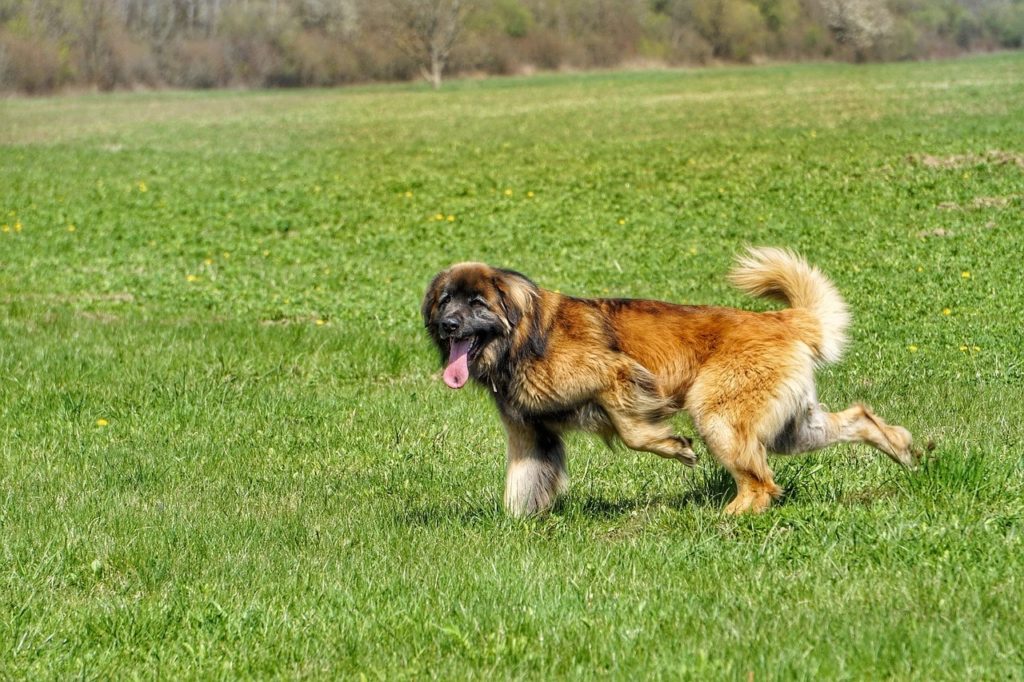
The Leo is a giant breed, and while many dogs of this size are happy staying indoors with minimal exercise, this is not the case with this breed. Expect to exercise your Leonberger for a minimum of one hour a day. Although they will enjoy a brisk walk, they will not usually be that keen to chase balls and frisbees, but they will benefit from other forms of high-intensity exercise. In particular, they excel at agility classes, weight pulling, and other challenging exercise regimens. He is also very good at water rescue exercises, especially thanks to his webbed paws and his innate love of the water.
Training
As a breed that loves his family and is incredibly intelligent, the Leonberger should be easy to train. However, he is also sensitive. This means that he does not respond well to harsh training methods at all, and although you will need to be firm during training, you will also need to show patience. You should be consistent in your training. This breed usually performs better when trained by an experienced handler or owner.
Grooming
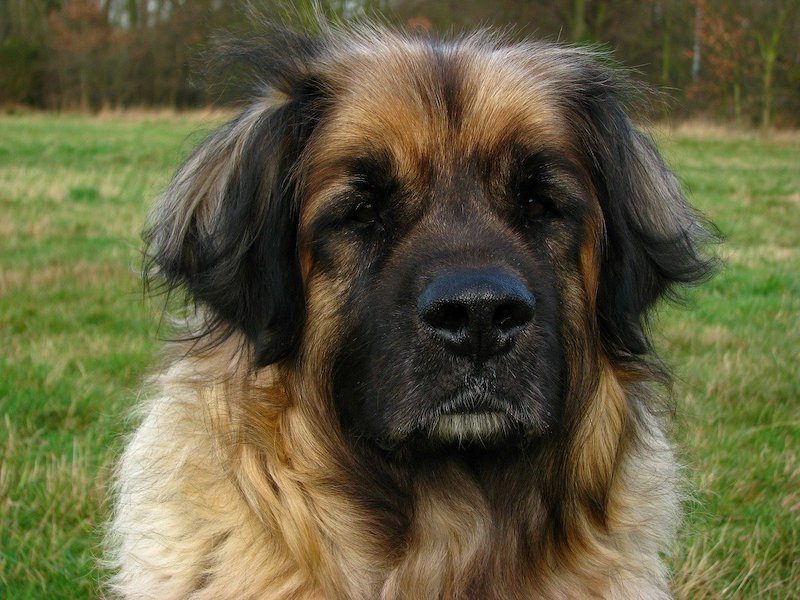
His long hair means that the Leonberger will take some brushing and you should expect to brush him twice a week, more often when he is shedding. This helps remove dead hair and can prevent matting and knotting, and it will keep him cool.
The Leo’s natural look is damp and covered in mud, which means that you will spend a lot of time drying him and removing leaves and other muck. You should avoid bathing him, except when absolutely necessary, though, because this can strip him of the oils that are naturally present in his hair, leading to itchy skin and other complaints.
Check his ears regularly. Ensure that there is no buildup of gunk, and also that his adventures in water and mud haven’t left them dirty. Clean them out with a clean, damp cloth, if necessary.
Your dog’s teeth also need regular care, so be prepared to brush twice a week, and also to clip his nails when they become long, which will usually be every two or three months.
Health and Conditions
Unfortunately, giant dogs like the Leonberger, are prone to illnesses and do tend to have a devastatingly short lifespan. The Leo has an average life of around eight years. Hip dysplasia, bloat, and cancer are regrettably common in this breed.
Male vs Female
The male Leonberger tends to grow a little taller and heavier than the female Leonberger, but they usually display the same characteristics and traits.

3 Little-Known Facts About the Leonberger
1. They Are Ideal Search and Rescue Dogs
In Canada, Germany, and countries around Europe, the Leonberger is used as a search and rescue dog, and for several good reasons. He has an acute sense of smell that helps him track missing people. He also has webbed feet, which explains his love for water as well as making him an excellent swimmer that can cope with almost any terrain and condition.
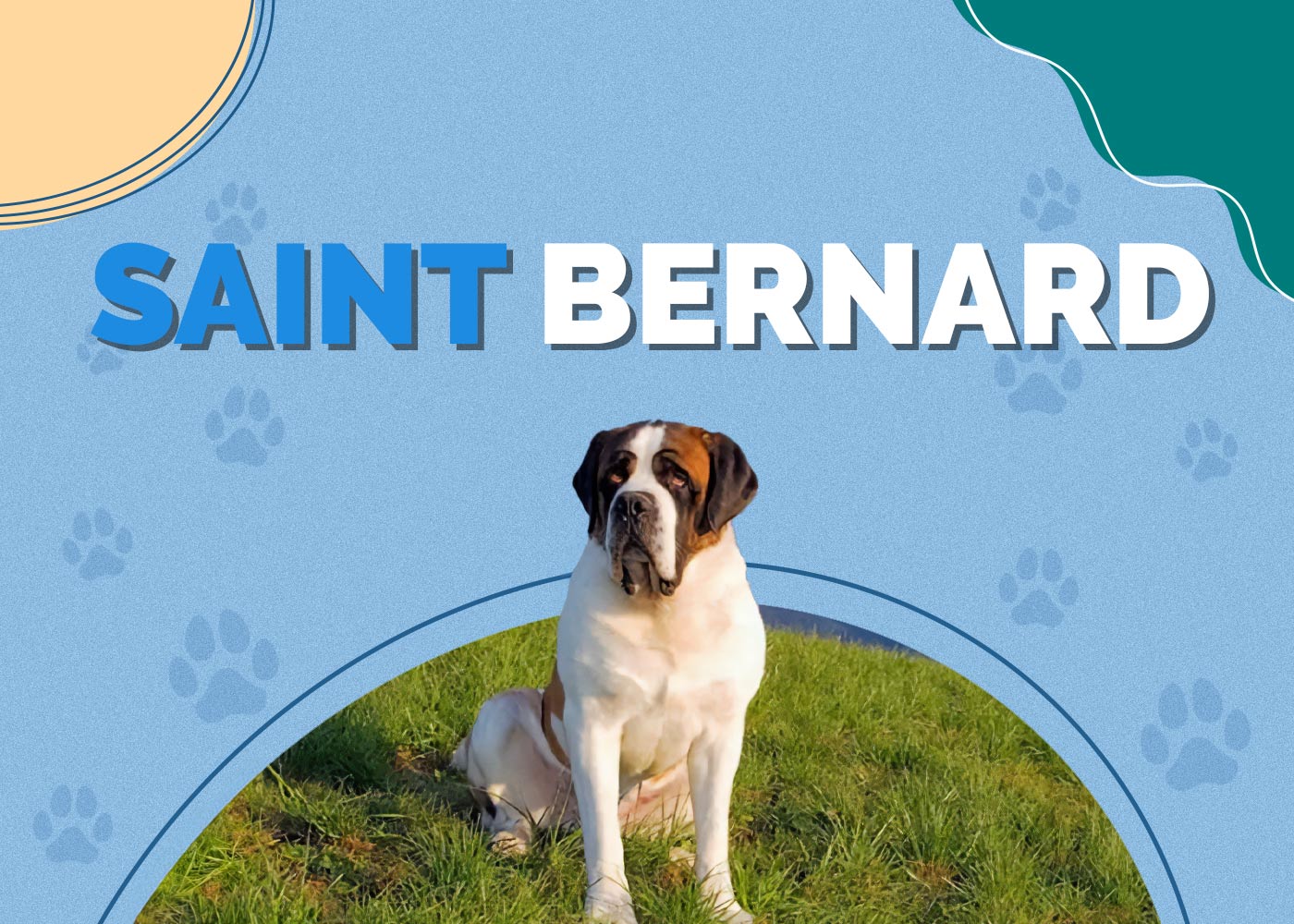
One of the breeds used in the creation of the Leonberger, back in the 19th century, was the St. Bernard. The St. Bernard is a renowned search and rescue dog, used to rescue people that got lost in the snowy Alps of the Italian-Swiss border. The Leonberger is a similarly effective rescue breed and is often still used for this purpose today.
2. He Was Bred from Three Giant Breeds
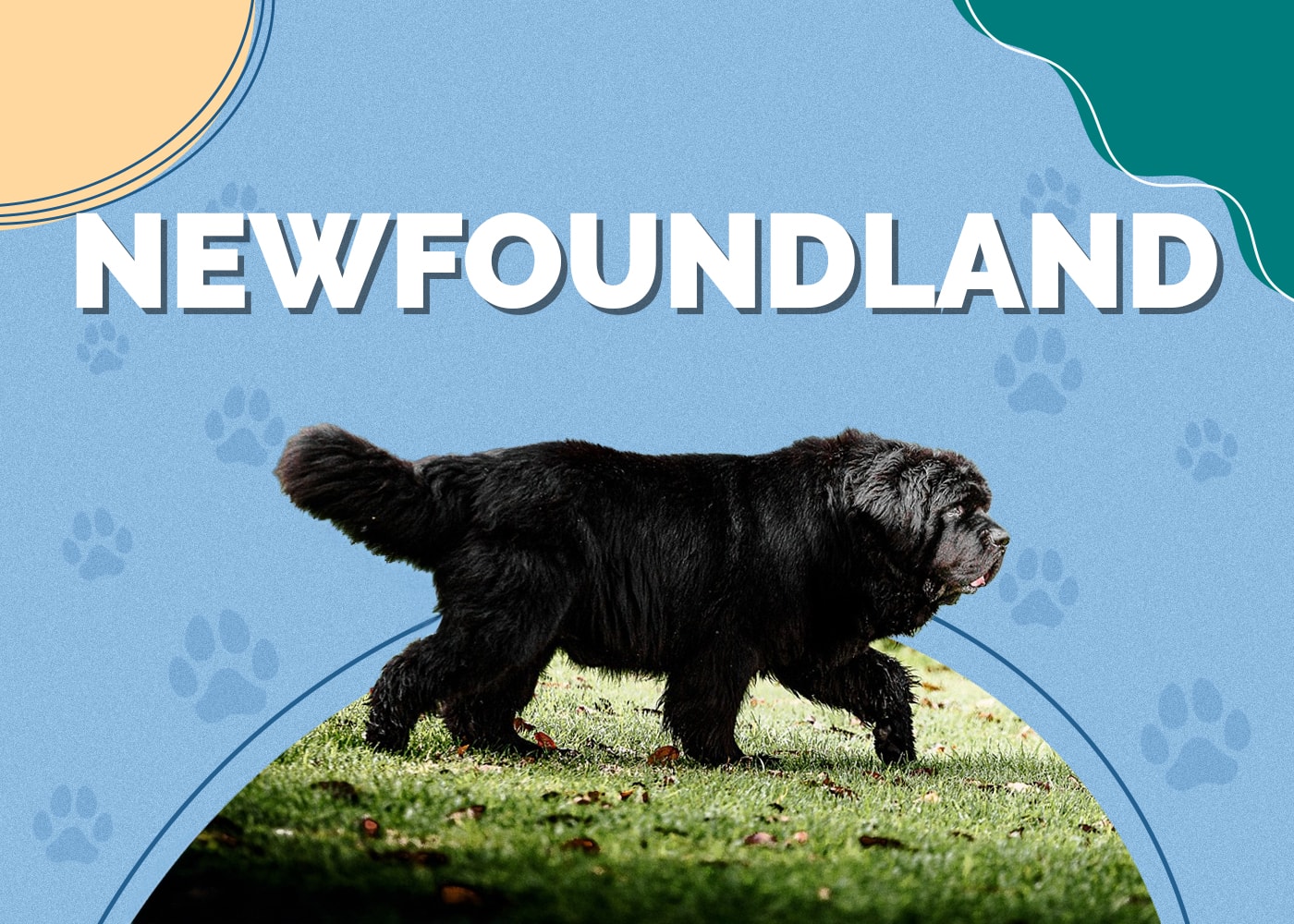
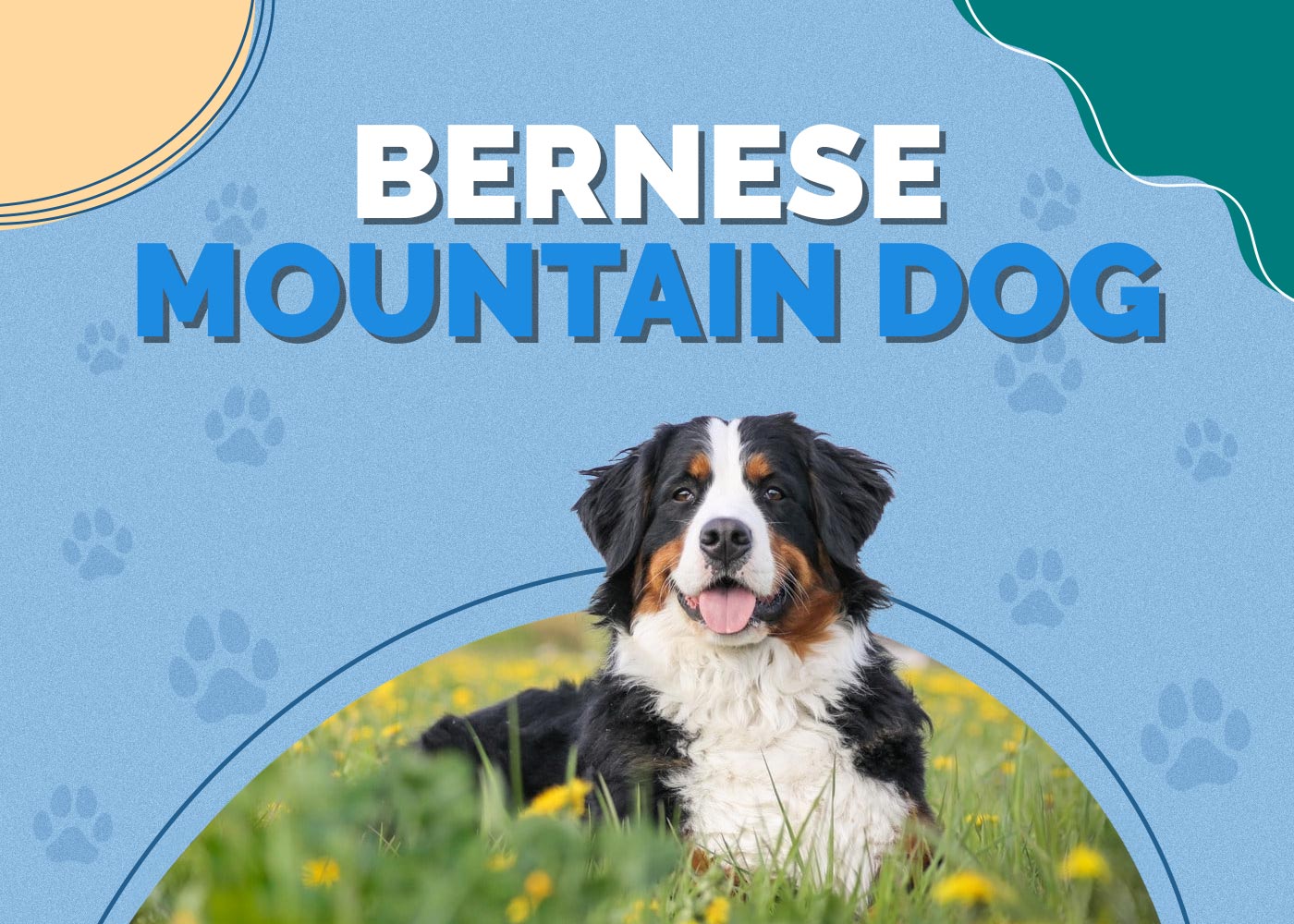
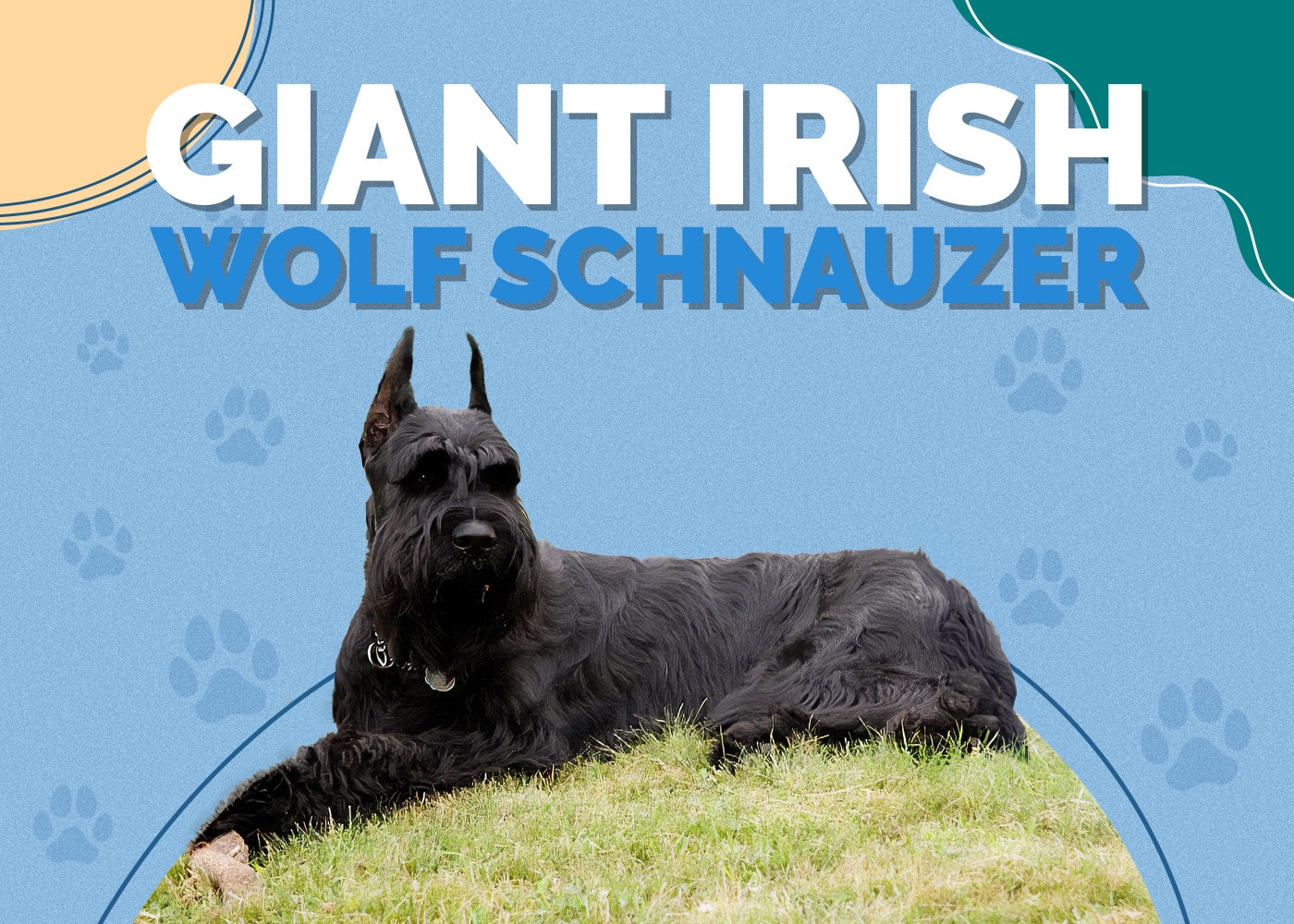
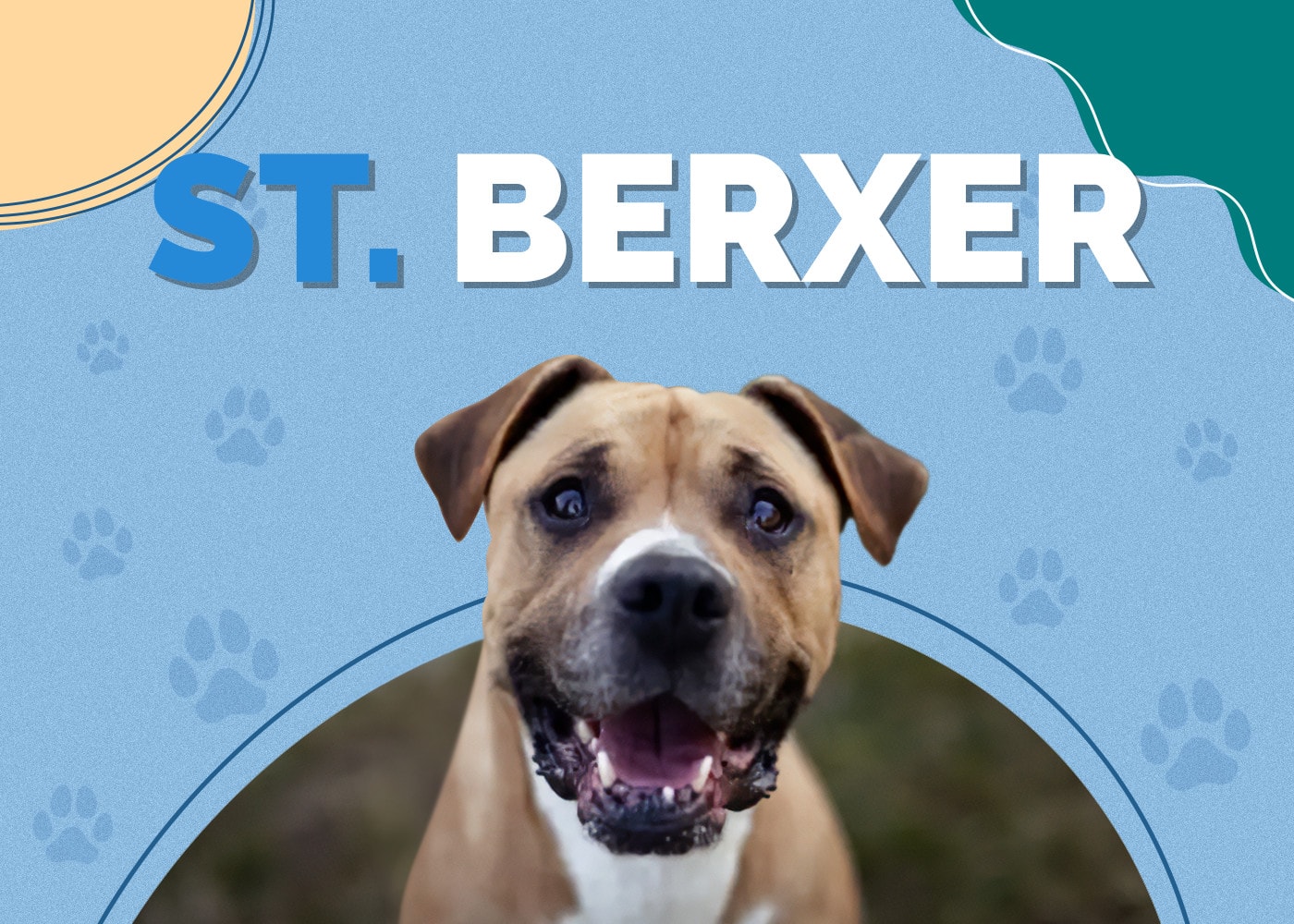
The Leonberger can grow to 150 pounds or more in weight and is classified as a giant breed with good reason. A look at his heritage explains exactly how he has become such a large dog. The breed founder, politician Heinrich Essig, crossed the giant St. Bernard with the giant Newfoundland and then crossed this with the equally giant Pyrenean Mountain Dog.
3. They Make Excellent Therapy Dogs
Therapy dogs are used to aid people in rehabilitation. They visit elderly peoples’ homes, hospitals, and other locations where people are recovering from illness. They need to be extremely patient, very gentle, and they should enjoy attention from people.
The Leonberger is regularly used as a therapy dog because he displays all of these characteristics, while his size means that he is easy to reach without the patient having to get down on the floor. Above all, it is their gentle nature that sets them apart as excellent therapy dogs. They have an innate sense of gentleness and calmness around children and are usually mild-mannered around the older generation too.

Conclusion
The Leonberger is a giant dog breed. He has a lot of love to give all of his family members, and is something of a sensitive soul, often being used as a therapy dog as well as a search and rescue dog.
He can make an excellent family pet and will get along with all human and furry family members, although his sensitivity means that he doesn’t do well with arguments and requires a steady training hand. Training is important, though, as he will grow to be a very large size and you will have to endure the problems that accompany this.
Only consider taking on a dog of this breed if you have plenty of indoor space, a decent yard, and a lot of time and energy to devote to him. Also, be prepared for the fact that he is prone to a number of health complaints and has a short lifespan.
See Also:
Featured Image Credit: sesheta, Pixabay
Get Hepper In Your Inbox


Pet care tips from our vets and experts, straight to your inbox.
You may opt-out at any time. View our Privacy Policy for more information.

Nicole is a lover of animals of all sizes but is especially fascinated with the feline variety. She’s the proud mom of Baby, a Burmese, and works every day so he can relax in the sunshine or by the fire. She’s always had a cat in her home and has spent countless days with others, observing behaviors and softening up even the grouchiest of the lot. Nicole wants to share her kitty expertise with you so you and your cat can live happy, healthy, and care-free.
Join the conversation
Ask a question, share your story, or send private feedback.