Hepper is reader-supported. When you buy via links on our site, we may earn an affiliate commission at no cost to you. Learn more.
My Cat Is Pulling Hair Out Along Their Spine: 3 Vet Reviewed Reasons


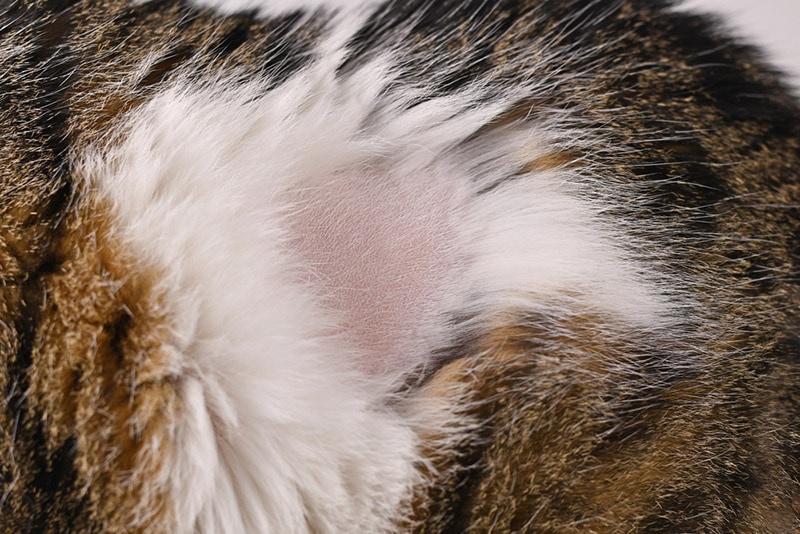
Cats are curious creatures; their behaviors both fascinate and perplex us. A trademark characteristic of cats is that they frequently groom themselves. While healthy cats do groom themselves on a regular basis, sometimes cats may take it too far and remove entire chunks of hair along their back, leaving bald spots. If you find your cat pulling excess chunks of hair out of their back, it is a sign of an underlying issue that needs veterinary intervention.
Still curious? Read on to find out the different possible explanations!

The 3 Reasons Your Cat May Overgroom Themselves
1. Itchiness
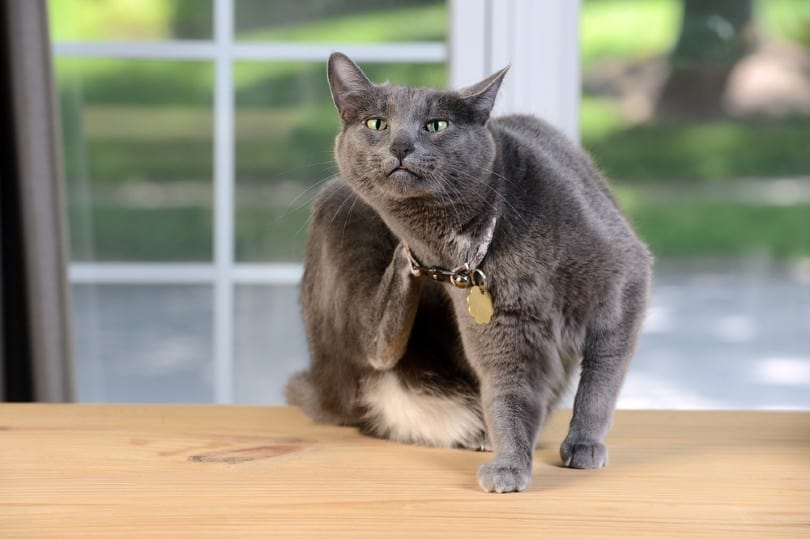
The first and most common reason as to why your cat may be pulling out chunks of hair from their back is because they are feeling something itchy. Excessive scratching and preening on a specific area may be your cat’s way of alleviating themselves from their itch. Common culprits of an itch along the back include hypersensitivities, parasites, and fungal or bacterial infections.
Hypersensitivity
Hypersensitivity is an over exaggerated response to anything that may cause an allergy. In cats, the most common culprit for such a hypersensitivity is from fleas. Many cats may develop an overly hyper response in response to flea bites, and excessively groom the area where they feel they itch. This condition is also known as flea allergy dermatitis. The most common site for this is along the back and rump, near the base of the tail.
Parasites
Another common reason for itch may be due to parasites. These include the aforementioned fleas, along with other parasites, such as mites, lice, and ticks. Fleas, mites, lice, and ticks all vary in size, but they can all cause immense discomfort and irritation on your cat’s skin whenever they bite your cat.
Fungal & Bacterial Infections
Fungal infections are relatively common in cats. They may also be referred to as ringworm, a fungal infection which gets its name for its characteristic ring-like shape when seen in humans. While cats don’t always get the typical circular lesions that humans do, the infection is nonetheless itchy, irritating and leaves bald, scabby spots as it spreads around your cat’s body. In addition, because felines can pass ringworm to humans and get ringworm from them as well, fungal infections mandate immediate, aggressive treatment.
Bacterial infections are typically secondary to an existing injury and can potentially irritate and worsen lesions. Often, these bacterial infections set in when cats repeatedly bite and scratch an irritated area, starting a vicious cycle of perpetuating further injury, resulting in infections of the skin setting in. In addition, deep bacterial infections, also known as pyodermas, are also very painful and itchy
2. Pain
In addition to an itch, cats may excessively pull out their hair along their back due to pain in the area. Cats are known to overly groom areas that they feel are painful. This is due to the soothing benefits grooming offers your cat, which they try to transfer to a "problem area" whenever pain sets in. For cats pulling out the hairs on their back, a probable cause may be due to skin discomfort. For example, your cat may overly groom an open wound. Open wounds are painful or uncomfortable, and a cat's way of relieving the pain from a wound may be through licking and chewing on the injured site.
3. Compulsive Behavior: Psychogenic Alopecia
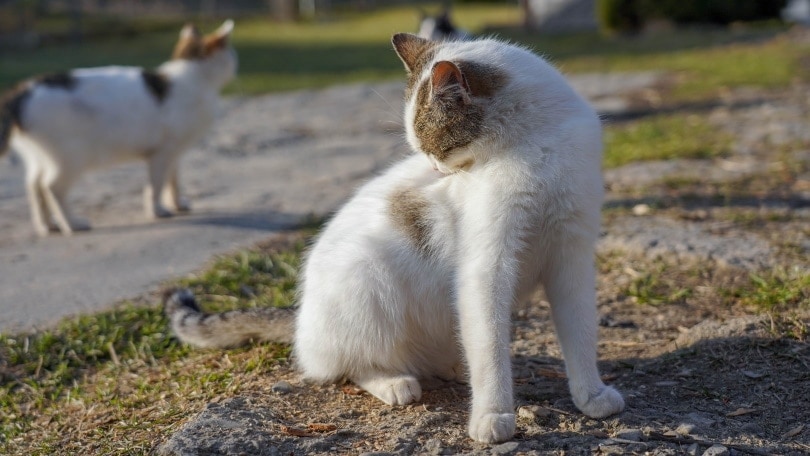
Cats can experience a condition called psychogenic alopecia, and may over groom themselves and end up plucking out excess chunks of hair due to a behavioral issue rather than a physical skin issue. In such instances, cats overly groom themselves as a coping mechanism. They can easily experience stress and anxiety to sudden changes in their environment or when their normal routines are disrupted.
Stressors or changes that can stress out your cat include:
These are some of the common stressors that can cause your cat to lick, bite, and pull out their hair on their skin, including their backs. They can also leave bald spots and lesions due to excess self-inflicted trauma on the skin.
Psychogenic alopecia has to be managed before bald spots and lesions worsen and potentially develop infections.
Why Do Cats Groom Themselves?
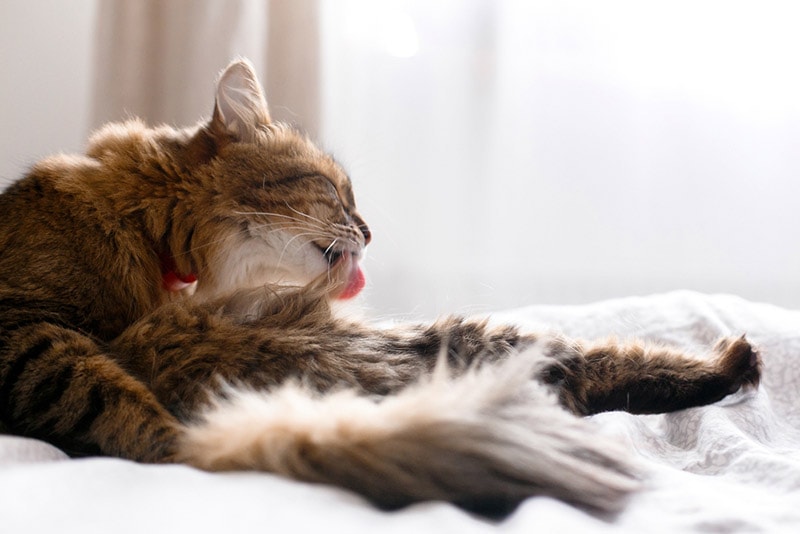
Grooming is a natural, instinctive, and healthy habit for cats. Cats are accustomed to grooming from birth – their mothers frequently groom them to keep them clean, and grooming even stimulates kittens to pass urine and poo. Kittens begin to self-groom at around 4 weeks of age and often groom their litter mates to strengthen their bond with each other.
Grooming is hard-wired into your cat’s DNA and has many benefits. Cats groom themselves using their tongue, teeth, and paws. Their inherent flexibility also makes them expert self-groomers.
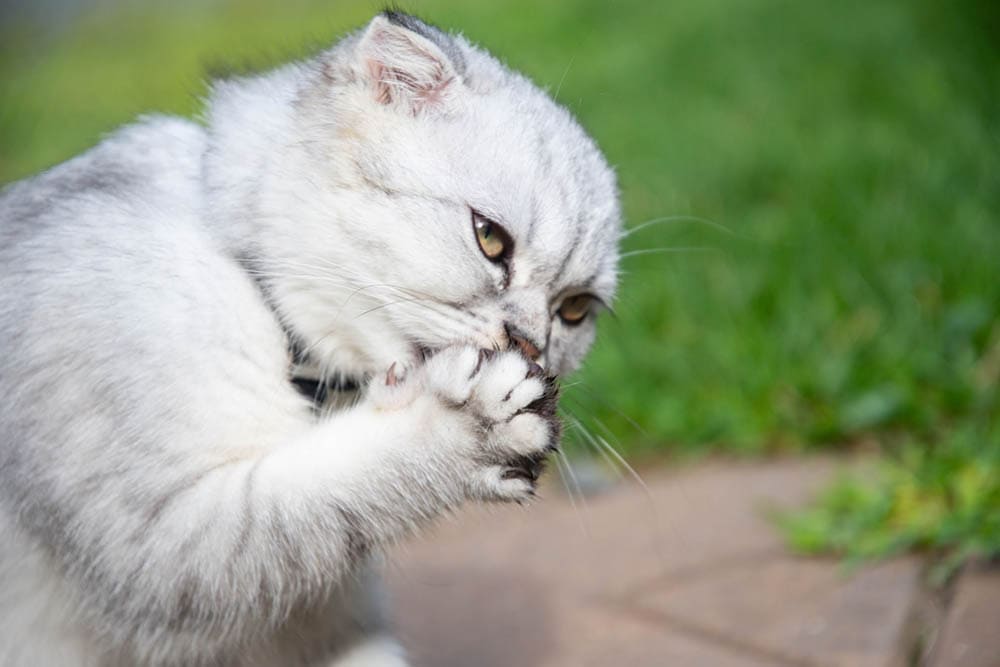
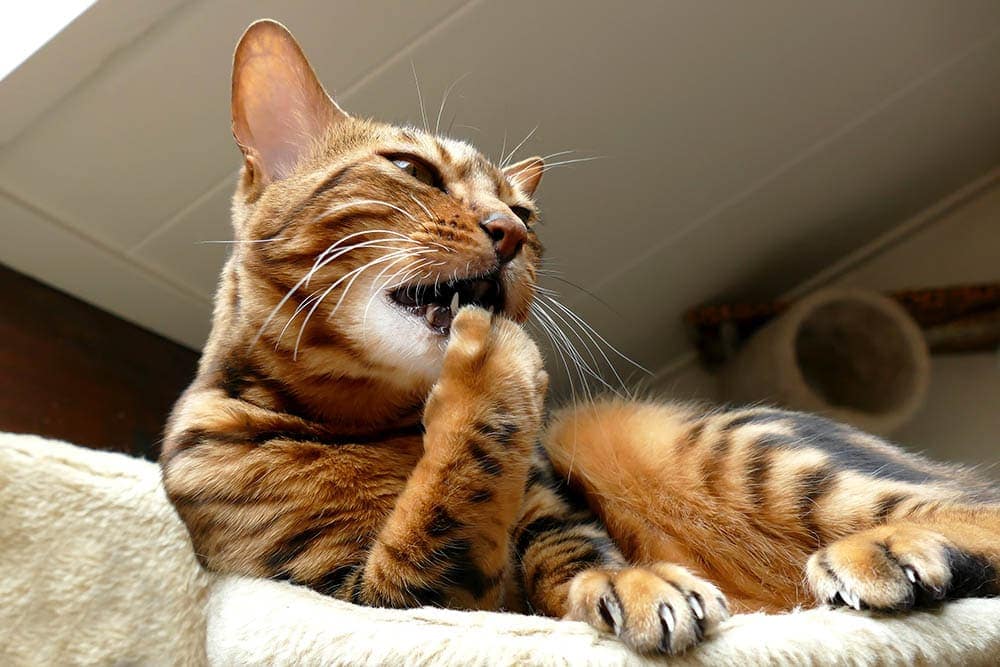
You may often notice your cat use their forepaws as a loofah and rub it over their face after a meal to begin self-grooming and enjoy its many benefits. Then, they often work their way down to the rest of their body.
The Benefits of Grooming
Therefore, it is a good sign to see your cat take the time to groom themselves throughout the day.

When Is Self-Grooming Considered "Not Normal"?
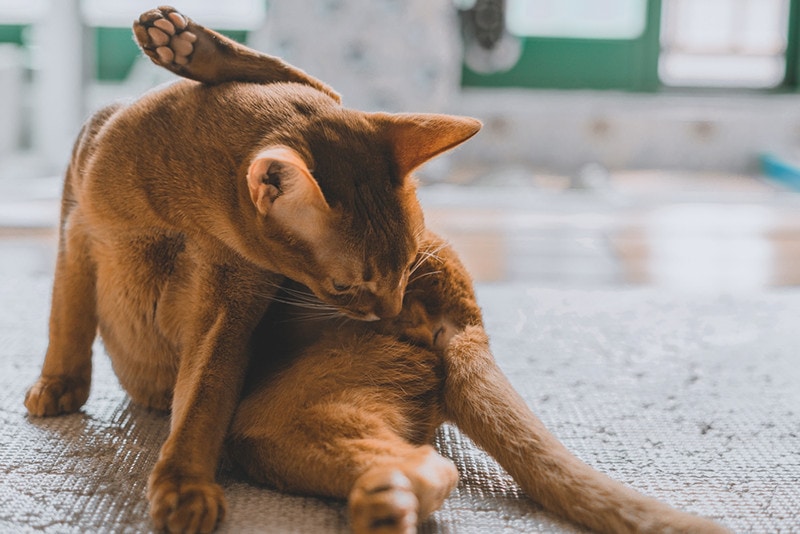
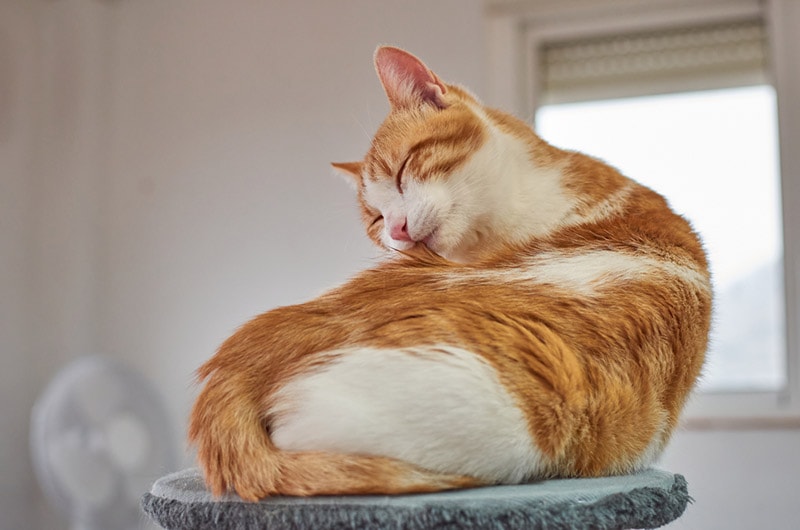
Self-grooming typically takes up a good portion of a cat’s day. They may spend up to half of their waking hours preening, licking, biting, scratching, and chewing different parts of their body. Seeing your cat perform these acts is completely normal and is part of your cat’s usual routine.
Self-grooming, however, becomes problematic when your cat starts overdoing it. If your cat starts pulling out big chunks of hair, excessively scratches, bites, and chews, leaves bald spots, and shows obvious signs of irritation and discomfort, then there may a more serious underlying issue.
Important
What Should I Do?
Should you suspect that your cat is overgrooming themselves or removing excess chunks of hair, it is best to take them to a vet before the condition worsens. Try to keep your cat from pulling out any more hair from their back. Elizabethan collars, also known as e-collars or donut/doughnut collars, can prevent your cat from licking, biting, and chewing an area.
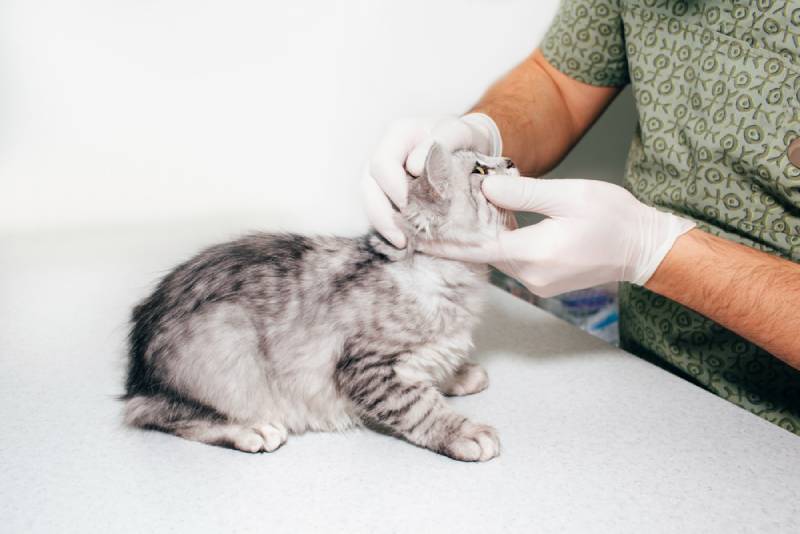
Your veterinarian will gather relevant medical history about your cat and perform a physical examination on your cat. Your vet may also perform additional tests on your cat’s skin and the hair around their “problem areas”. These may include impression smears, hair plucks, and laboratory tests. Depending on the possible cause of the problem, your vet may also run some blood tests on your cat.
Using the information from the physical examination and diagnostic tests, your vet will be able to determine the likely cause of the hair loss on your cat’s back and formulate a treatment plan that is most appropriate for the cause of your cat’s hair woes.
Final Thoughts
Self-grooming in cats is normal, but it can become problematic when your cat excessively scratches, bites, chews, and pulls out hair to an extent where they develop bald spots. Many causes of this unusual self-inflicted behavior may be due to skin irritations and pain, but other causes may also be a behavioral response to stress.
Regardless of the cause, it is important to take your cat to a vet anytime you suspect they are overgrooming themselves. The last thing we want is for our fur babies to continue hurting themselves!
Featured Image Credit: Firn, Shutterstock
Get Hepper In Your Inbox


Pet care tips from our vets and experts, straight to your inbox.
You may opt-out at any time. View our Privacy Policy for more information.
Nicole is a lover of animals of all sizes but is especially fascinated with the feline variety. She’s the proud mom of Baby, a Burmese, and works every day so he can relax in the sunshine or by the fire. She’s always had a cat in her home and has spent countless days with others, observing behaviors and softening up even the grouchiest of the lot. Nicole wants to share her kitty expertise with you so you and your cat can live happy, healthy, and care-free.
Join the conversation
Ask a question, share your story, or send private feedback.