Hepper is reader-supported. When you buy via links on our site, we may earn an affiliate commission at no cost to you. Learn more.
Why Does My Cat Have a Bald Spot? 5 Vet-Approved Possible Reasons

In this article
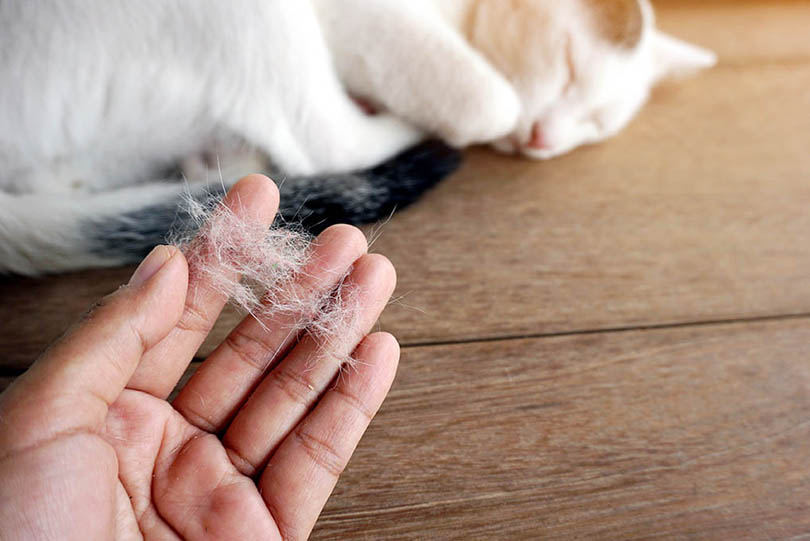
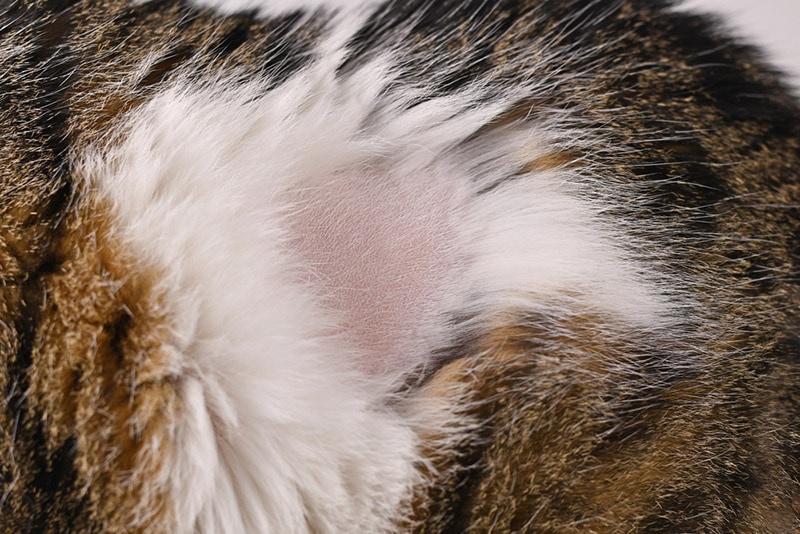
Alopecia is the scientific word for partial or complete loss of hairs in areas where they would normally be present. One way alopecia can develop in cats is as bald spots, and there are multiple causes as to why this might happen. A bald spot on your cat almost always indicates an underlying problem. It may be due to a condition that is causing their fur to fall out, or a problem that is causing them to lick and scratch and pull the hair out.
If you have noticed a simple bald spot on your cat or a few bald spots, it can be quite worrisome. Some root causes of alopecia are larger issues than others, so it’s always helpful to seek out the advice of a veterinary professional. Regardless, here are a few common reasons your cat may have one or multiple bald spots.

The 5 Possible Reasons Why Your Cat Has a Bald Spot
1. Fleas and Other External Parasites
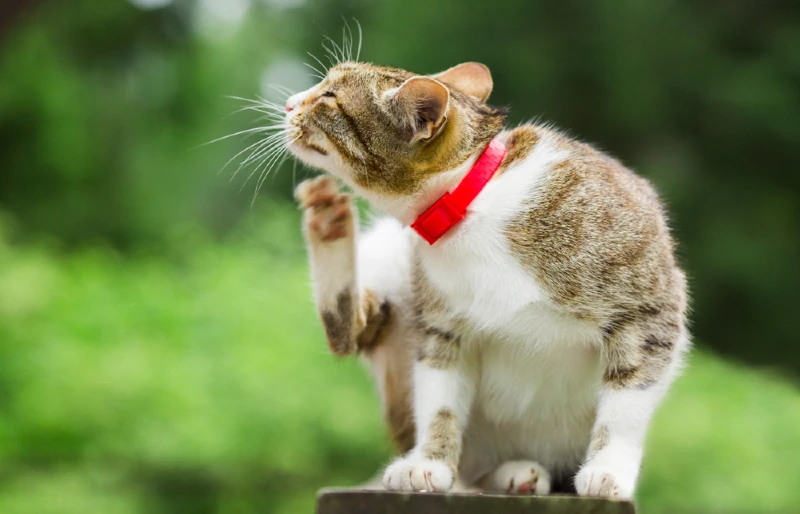
Fleas, mites, and other external parasites are perhaps one of the main causes of bald patches in felines. The typical area of baldness due to fleas is found at the base of the tail or back. The baldness usually occurs due to scratching and overgrooming from the itchiness caused by the parasite.
Other Signs of a Flea Infestation
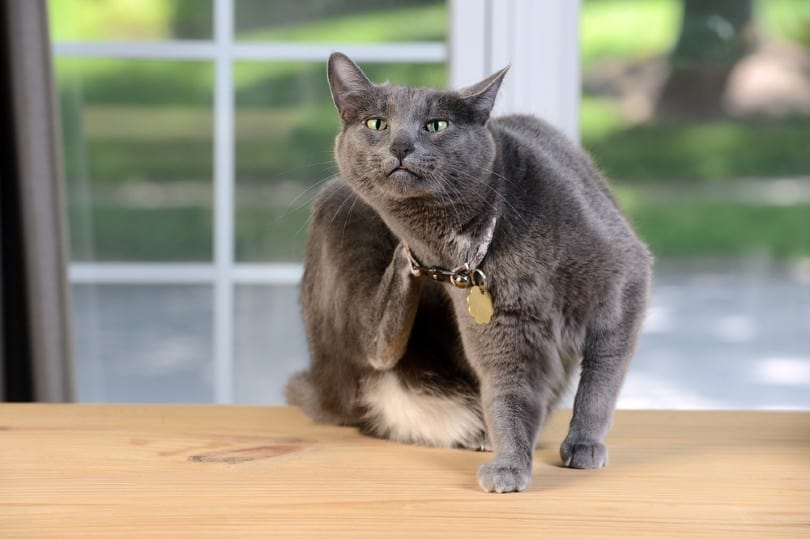
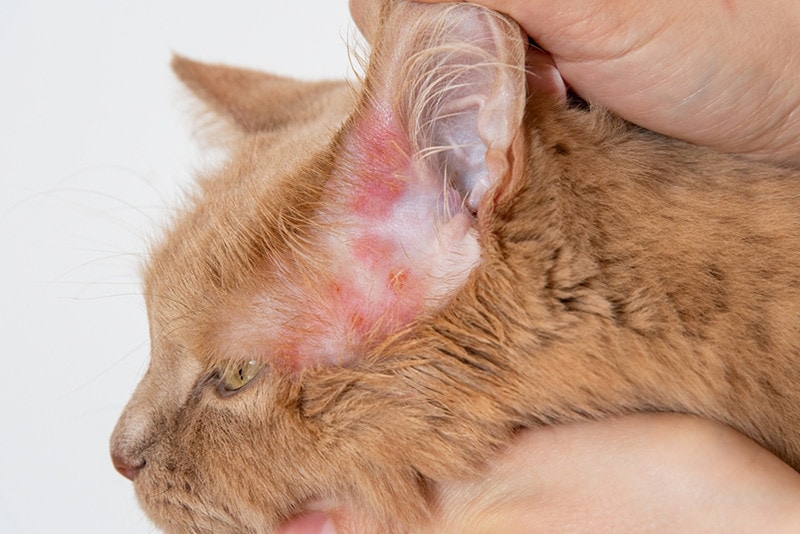
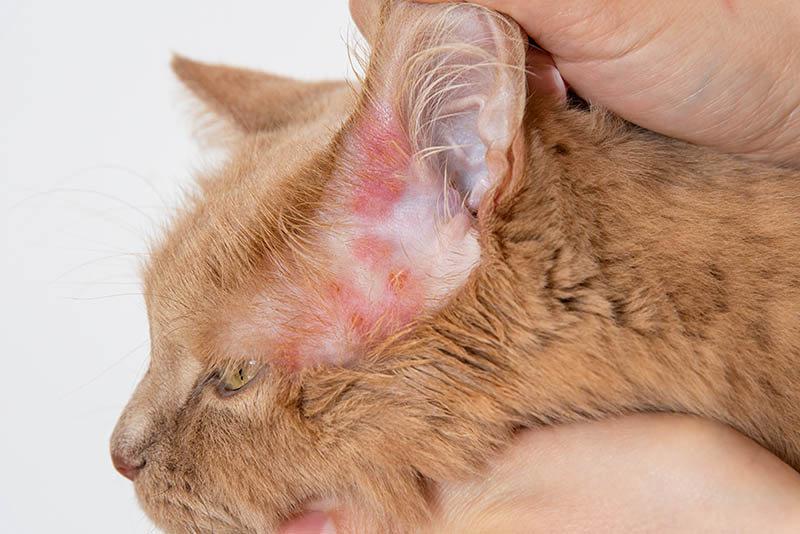
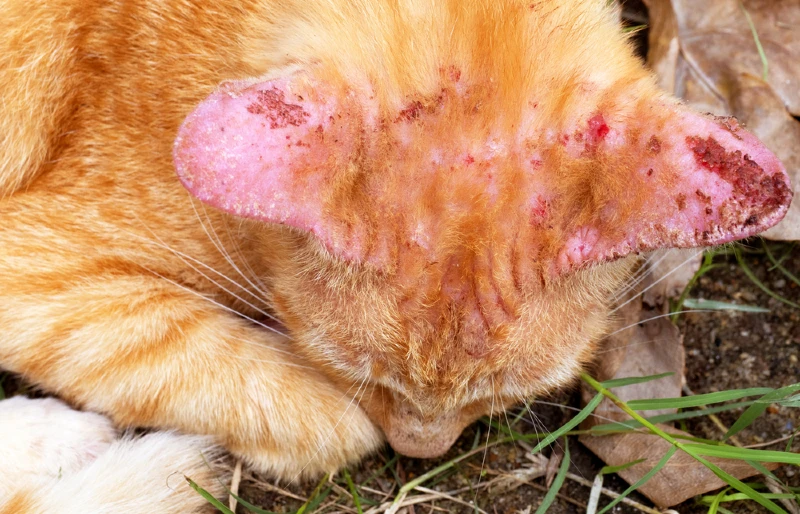
As well as a bald patch or two, you will most likely notice a general overall or significant increase in itching. Your cat may appear distressed and unsettled or suffer from disrupted rest and sleep due to the fleas biting and the subsequent itching. Their skin can also appear red or pink with scabby areas. Some cats have an allergy to fleas (specifically flea saliva) and experience even more intense itching after being bitten.
As fleas can transfer and affect other pets and humans, you may notice other cats or dogs in the same household itching. If you are being bitten too, this often presents as red spots on the lower calf areas. Hair loss and skin issues due to fleas usually resolve themselves after appropriate treatment from a vet.

2. Allergies
Bald patches due to allergies occur frequently because of excessive grooming and self-trauma/self-interference. Allergies may be environmental, seasonal, or food related, and all can manifest on the skin, making it itchy, uncomfortable, and irritated.
When skin itches or is sore, cats will lick and rub at it, which can increase hair loss and lead to bald spots. No single test can be used to diagnose skin allergies and the diagnosis is based on clinical history, examination findings and exclusion of other conditions that cause similar signs. Elimination diets may be advised to rule out food allergies, and blood and skin tests are available to help pinpoint specific environmental allergens. Medicines to control the itchy skin are usually prescribed while the underlying cause is investigated. Once appropriate treatment is started, the hair will hopefully return.
Allergies may also produce red/pink skin, scabby areas, itchy ears, ear infections, behavioral changes, disturbed sleep or rest, and gastrointestinal problems.
3. Stress, Anxiety, and Pain
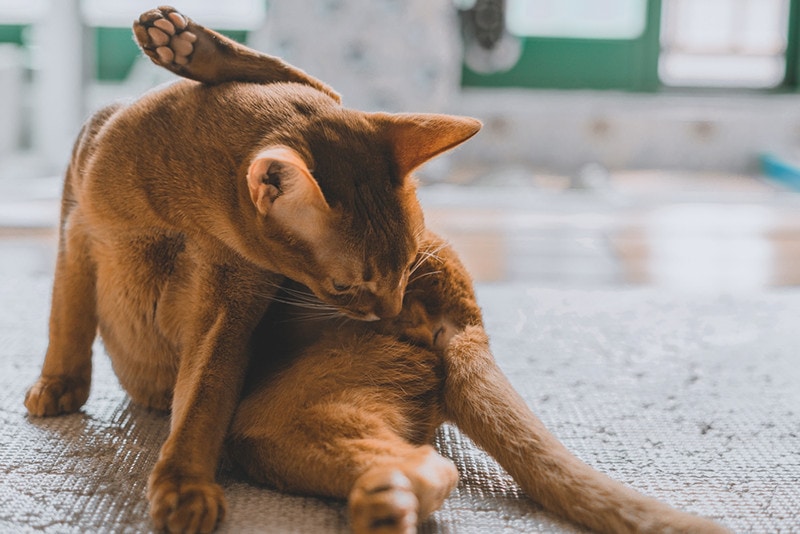
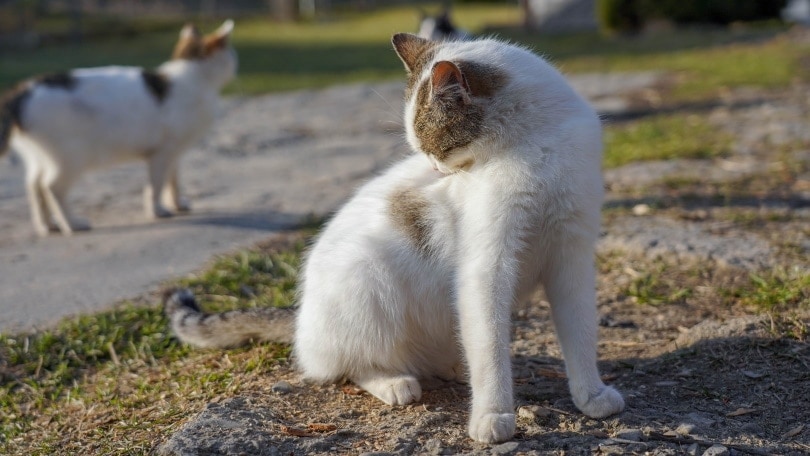
Cats are big groomers and will happily spend many hours licking their fur to keep it clean and in good condition. They pride themselves on a slick appearance; however, this can turn into a bad thing if they groom excessively. The fur will look like it is thinning, or bald spots may appear. It can become shorter and sparser with a bristly feel to it. As well as being caused by itchiness, overgrooming can also be due to stress, anxiety, or pain. This type of hair loss can be more complicated to treat, as detecting the cause can be a lengthy process.
If it is due to stress (which is generally more common than pain), your veterinarian or a behaviorist will work with you to find the right treatment and management plan to course correct the anxious behavior. If it is due to pain, your veterinarian will need to carry out more work and tests to ascertain the problem.
4. Cat Bite Abscess
Cats, especially unneutered males, find themselves in fights with other cats all too often. A feline scrap in the neighborhood over whose turf is whose it is very common. Unfortunately, these incidents can result in one or both of the cats being left with an abscess from being bitten by the other cat.
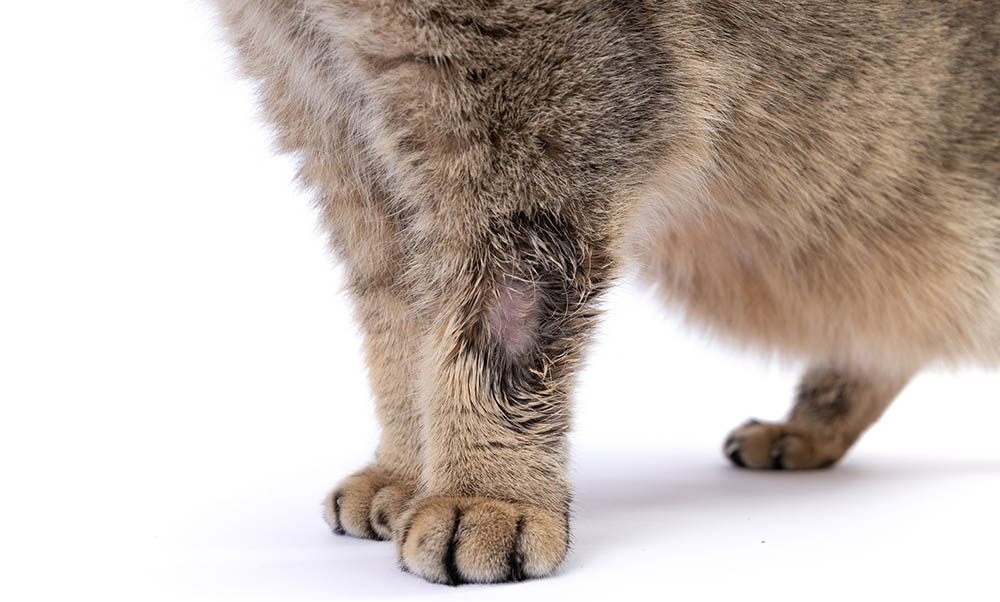
Cats hold lots of bacteria in their mouths. When the teeth sink into the skin of their “enemy,” the bacteria are injected into the skin, which can cause an abscess shortly afterward. This abscess may go unseen by you for a short time, as the puncture wounds can be hard to see. However due to the infection and overgrooming because of the pain and discomfort, a bald spot and swelling can appear. Treatment for these may include antibiotics and medication for pain relief, sometimes an abscess needs to be drained and flushed.
5. Ringworm
Ringworm is actually a fungal skin infection and causes patches of hair loss, often circular, and flaky skin. Ringworm is a zoonotic disease meaning it can be passed from an infected cat to humans that come into contact with it. Once diagnosed, treatment usually involves topical antifungal medications as well as oral medication.

When to Contact Your Vet
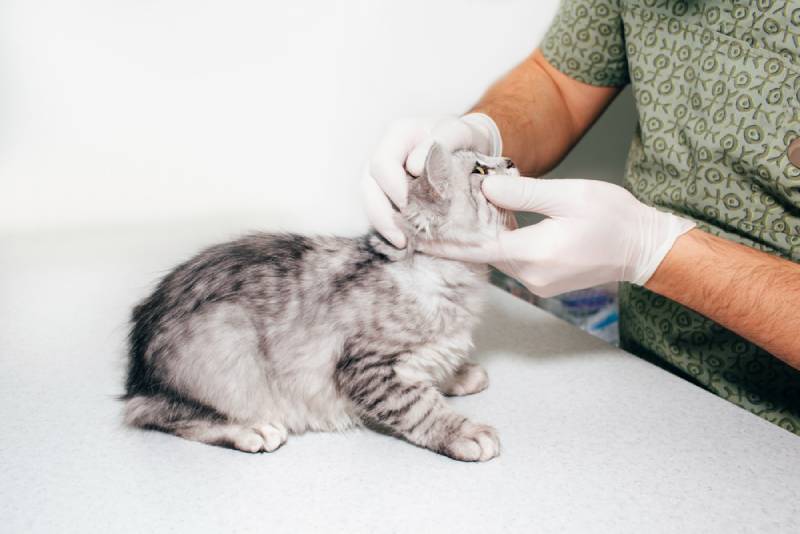
If you notice a bald spot or hair thinning on your cat, particularly if other signs (examples below) are exhibited, then book an appointment with your vet for an examination. A bald spot is usually a sign of a bigger problem, and some conditions are more serious than others. Either way, diagnosis, treatment and management are needed.
Other signs alongside hair loss that indicate you need a trip to the vet include:
Conclusion
To conclude, multiple conditions will result in a bald spot. It may be a simple case of fleas or a more complicated allergy. Equally, it could be a combination of more than one condition as well, or something not even mentioned on this list. Contacting your veterinarian is important, as the earlier you intervene, the faster and more successful the outcome will be.
Sources
https://www.purina.co.uk/articles/cats/health/skin-fur-ears/hair-loss-in-cats
https://www.msdvetmanual.com/cat-owners/skin-disorders-of-cats/hair-loss-alopecia-in-cats
https://www.pdsa.org.uk/pet-help-and-advice/pet-health-hub/symptoms/hair-loss-alopecia-in-cats
https://vetfocus.royalcanin.com/en/scientific/overgrooming-in-cats
Featured Image Credit: Firn, Shutterstock
Get Hepper In Your Inbox


Pet care tips from our vets and experts, straight to your inbox.
You may opt-out at any time. View our Privacy Policy for more information.
Annaliese began her career as a veterinary nurse in Edinburgh, later advancing her qualifications with a diploma in advanced veterinary nursing in surgery from London. Her work in small and mixed veterinary practices led her to become a head nurse, where she trained other veterinary nurses, managed the nursing department, conducted nurse clinics, and developed new patient care protocols.
Throughout her career, Annaliese has cared for thousands of patients and their owners, setting higher standards in nursing regimes with a focus on surgery and anesthesia. She co-authored multiple veterinary nursing textbooks and contributed to various mainstream publications in the UK and USA. After more than twenty years in the veterinary and pet care professions, she retired from clinical practice to pursue full-time writing. Having cared for thousands of patients and owners, Annaliese specialized in surgery and anesthesia. She was asked to co-author several veterinary nursing textbooks and contributed to a number of other publications in the UK and USA. After more than two decades in the veterinary and pet care industries, she retired her scrub suit and now works as a full-time writer.
Annaliese Morgan has been a dedicated veterinary nurse for over two decades, having completed a diploma in advanced veterinary nursing in surgery from London and qualifying from Edinburgh. Her professional experience includes managing a nursing department, training other veterinary nurses, providing patient care, and running nurse clinics in both small and mixed veterinary practices.
As an expert in surgery and anesthesia, Annaliese has treated thousands of patients and owners. In addition to being asked to co-author multiple veterinary nursing textbooks, she has written for a variety of publications in the UK and USA. After a long and successful career in the veterinary and pet care professions, Annaliese now dedicates her time to writing full-time. You can find out more about her work at www.annaliesemorgan.com.
Join the conversation
Ask a question, share your story, or send private feedback.