Hepper is reader-supported. When you buy via links on our site, we may earn an affiliate commission at no cost to you. Learn more.
How to Tell If a Cat Is Stressed: Vet-Reviewed Signs to Look Out For


We all know how it feels to be stressed out. But the last thing that you want is to have a stressed-out cat. Not only because it will end up adding to our own stress, but we also want our cats to be happy and well-adjusted.
However, how cats project their stress can take on forms that make it difficult to tell that something is bothering them. Cats are highly sensitive and are prone to experiencing anxiety and stress when things change in their everyday lives or over things that we might not give a second thought to.
Here, we go over the typical signs that a cat is stressed and what a few of the common triggers are. We also provide pointers on how to best help your stressed kitty.

The 3 Types of Stress Signs in a Cat
Cats, like most animals, tend to hide signs of stress and physical pain. This is an evolutionary process that helps prevent them from becoming targets when injured or unwell.
Stress can lead to other mental and physical illnesses, so it’s essential to figure out the cause and act. The following are a few of the common behavioral signs that a cat is enduring some form of stress.
1. Behavioral Signs of Stress
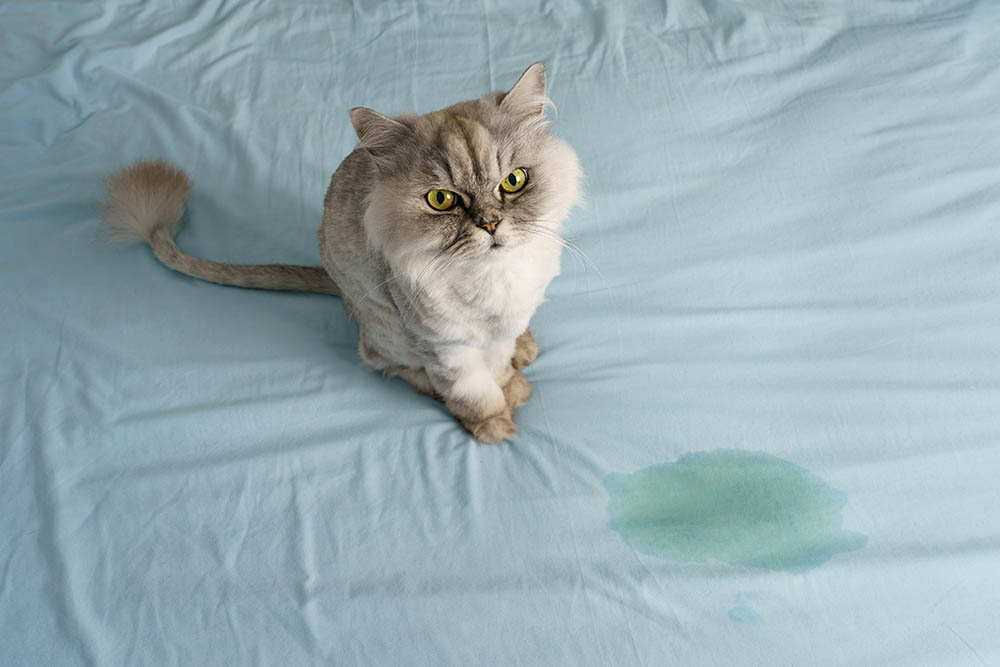
- Eliminating outside of the litter box
- Any unusual change in behavior and routine
- Increased meowing
- Scratching the furniture more than usual
- Marking or spraying urine on your walls and furniture
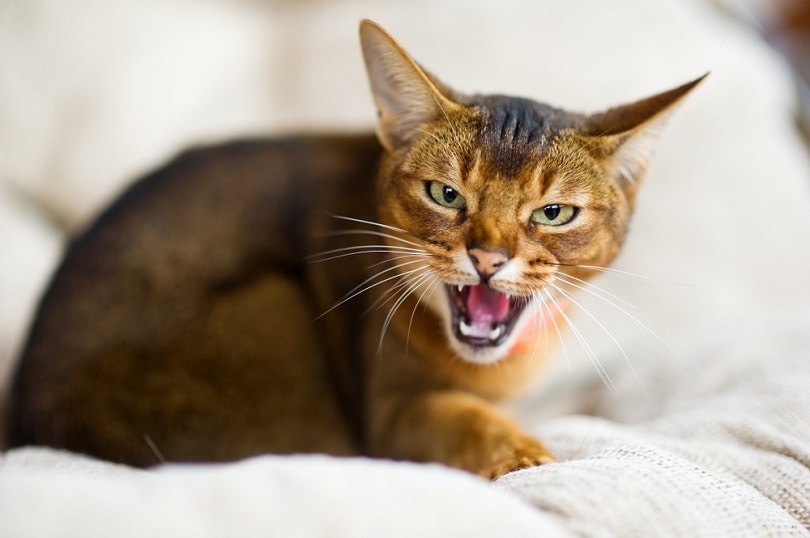
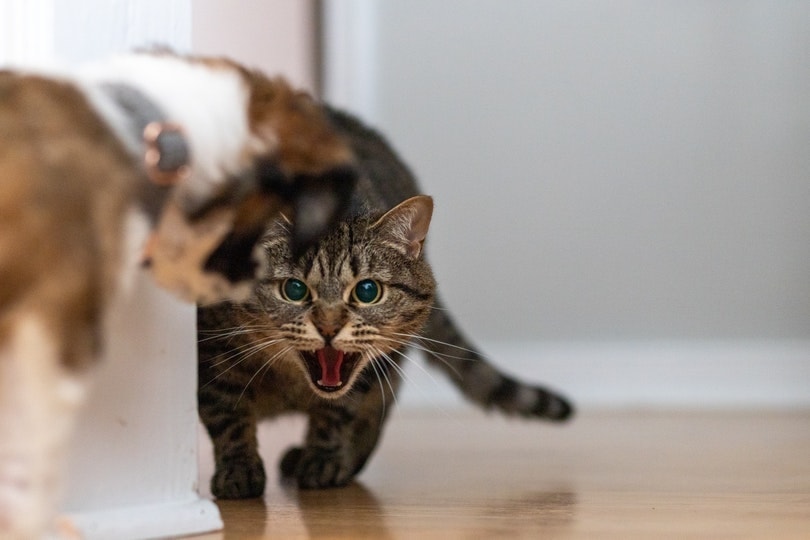
- Aggressiveness toward anyone (including pets) in the home
- Hiding from everyone (no interest in interactions)
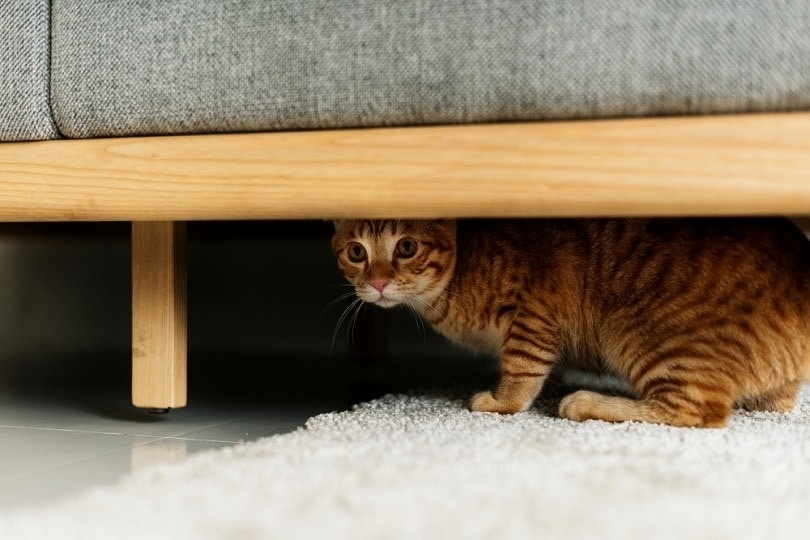
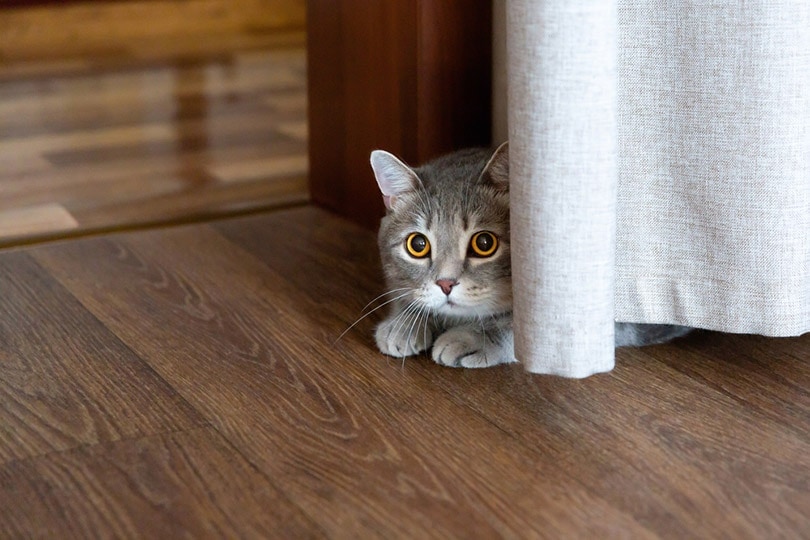
- Spends more time hiding under or behind things or high up
- Extreme nervousness and skittishness (might jump at sudden noises more than usual)
- Duller than normal (doesn’t seem to notice anything happening, no fear of sudden loud noises, etc.)
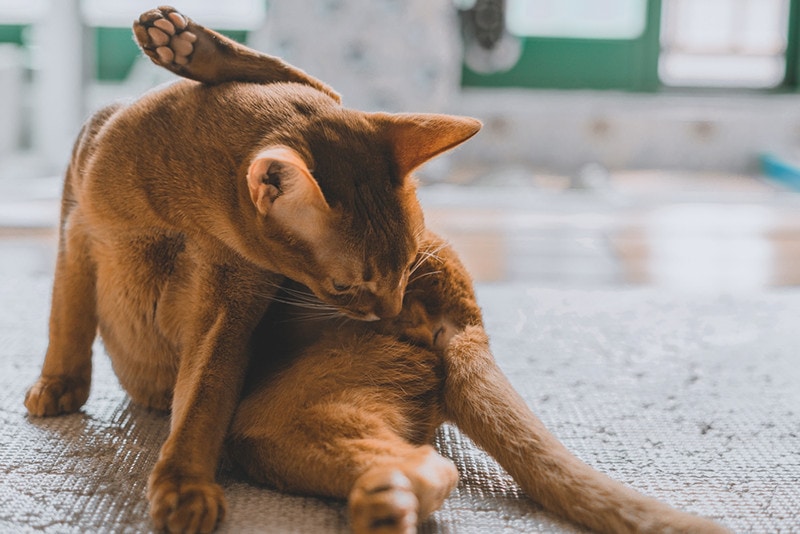
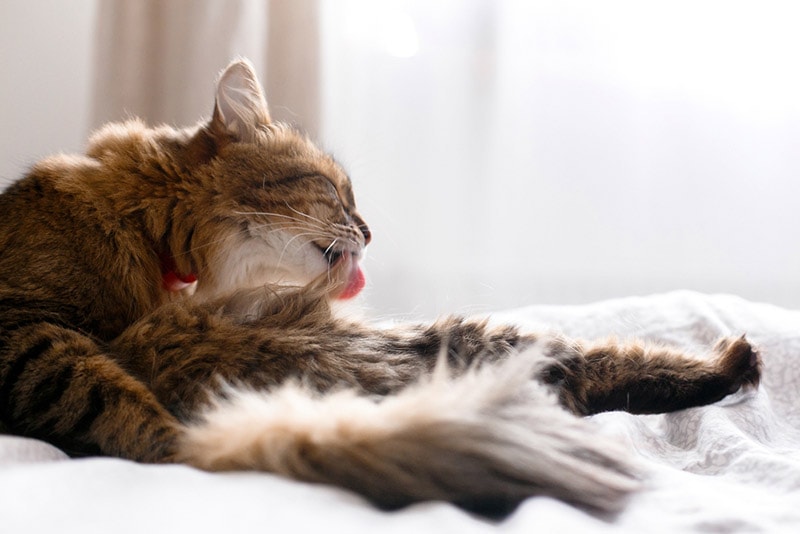
- Excessive time spent grooming (more than usual)
- Not interested in playing when typically quite playful
- Spends time pacing and meowing
- More clingy than usual (wants constant interaction and follows you around)
Keep in mind that some of these signs could also indicate an actual health problem. For example, if your cat suddenly stops using the litter box, it could potentially be a problem with the urinary tract or even an issue with the kidneys or liver. Your best bet is to take your cat to the vet when you see them acting out of sorts.
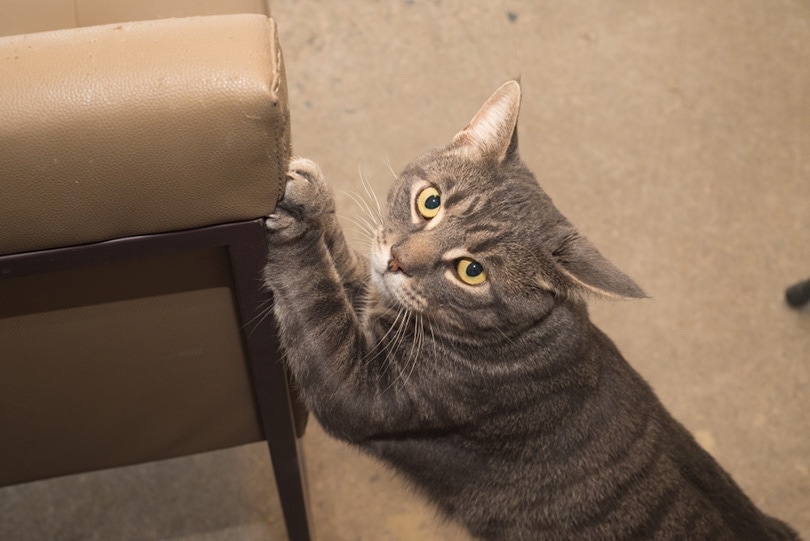
2. Physical/Illness Signs of Stress
- Sudden weight gain or weight loss
- Noticeable increase in eating
- Loss of appetite
- Diarrhea
- Constipation
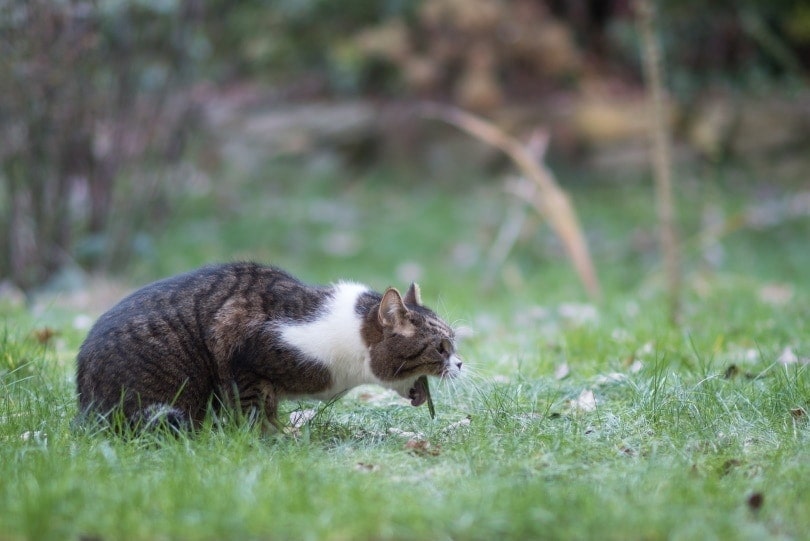
- Vomiting
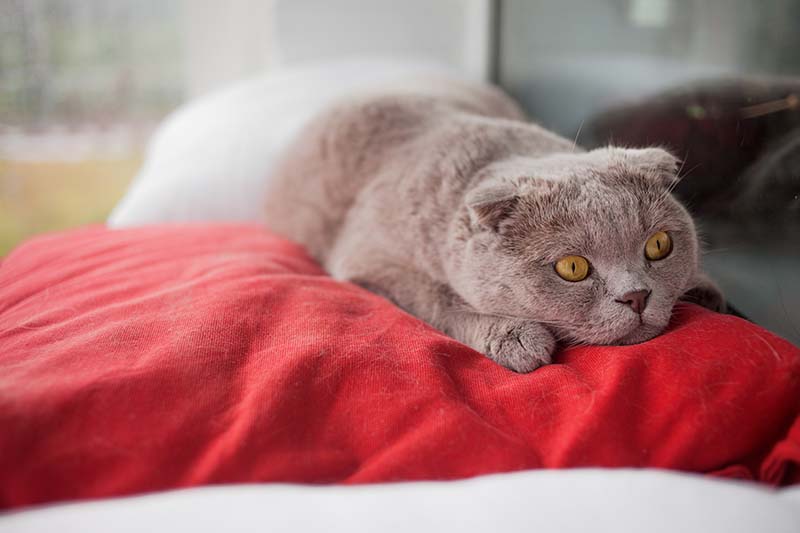
- Sleeping more than usual
- Poor and patchy coat quality (usually from overgrooming)
- Pica (eating things that are not food, such as fabric and plastic)
- Discharge from the eyes and nose (like a cold)
- Symptoms worsen or taking too long to improve when a cat has a chronic health condition
- Pain while urinating or defecating (going to the litter box too frequently and sometimes vocalizing while going)
- Not using the litter box as often as normal
3. Visual Signs of Stress
These signs relate more to your cat’s facial expressions and body language:
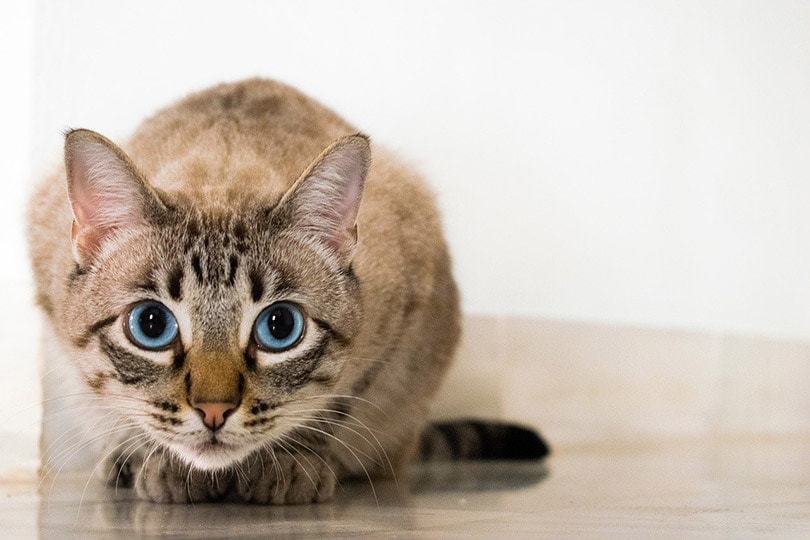
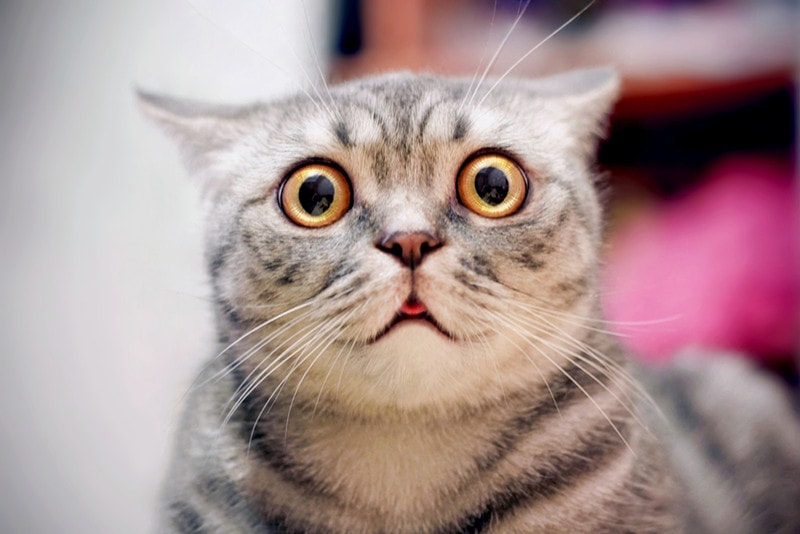
- Wide-open eyes with dilated pupils
- Ears flattened to the skull or rotating backward quite frequently
- Tense and crouched body
- Frequent head shaking
- Grooming rapidly and repeatedly (usually lasts around 5 seconds with excessive stopping and starting)
- Glazed and fixed eyes (staring at the floor at times)
- Habitual flicking of the tongue onto the nose and exaggerated swallowing
- Whiskers pointed down
- Flicking tail
- Walking with a low body, flat back, and head and tail down
- Twitching and rippling skin along the back
A few of these signs can be associated with cats that are just temporarily on alert or afraid of something (like a sudden, unexpected noise). But if your cat seems physically stressed most of the time, you should pay your vet a visit.
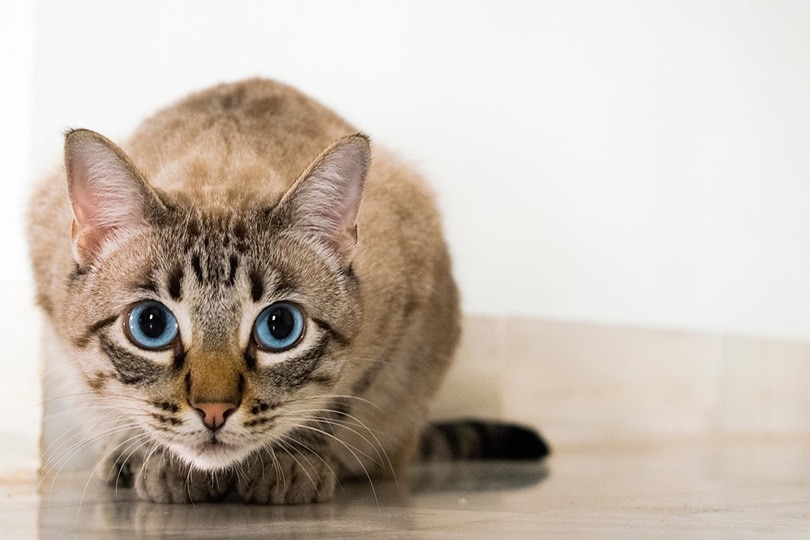
Common Causes of a Cat’s Stress
There are multiple reasons that cats become stressed. The more common ones tend to be significant upheavals in the household, but they can sometimes be less obvious.
There are many cats out there that won't become upset by the following stressors, but these are the most typical ones:
- New pets: One of the biggest stress events for cats is the introduction of a new pet. Or perhaps they themselves are a new pet, which means they need to get used to a new household and other animals.
- Moving: This one is considered one of the biggest stressors for humans, so imagine what it does to Since cats prefer routine and a familiar environment, the packing up, the noise and activity of the move itself, and the strange atmosphere of a new home are all reasons to cause anxiety in your cat.
- Renovations: While renovations aren’t as bad as moving, they still cause disruption in your cat’s routine. There are also usually many strange smells, loud noises and unfamiliar people in the cat’s environment.
- Guests: Any change in their routine and environment will upset a cat, so having someone stay in your home who doesn’t usually live there will be a stressor. Ensure that you teach your guests how to deal with your cat in the best possible way.
- New family member: This can include a new baby or a new family member, like a boyfriend/girlfriend, husband/wife, or even a stepfamily. This disrupts a cat’s routine and can add unfamiliar noises and scents to the home.
- Change in your own routine: Your cat will pick up on it when your own routine changes. This could be starting a new job or working different hours. This adds a certain amount of unpredictability to your cat’s usual routine, and since it involves you, their human, it can lead to a stressed cat.
- Neglect: Neglect doesn’t have to be intentional. It can be as simple as not cleaning out the litter box as often as you should (busy schedules don’t make anyone a bad cat owner). Not playing with your cat enough or a litter box that is too small or placed in a high-traffic area are also aspects that can stress out a cat. Double-check the kind of care your cat is receiving, and amend anything that seems to be lacking.
- Too much attention: Constantly cuddling your cat or seeking their attention when they might not want it at that time can also be stressors. Make yourself familiar with your cat’s body language so you can better read their
- Too many neighborhood cats: If you have a cat flap, there’s the risk of strange cats entering your home, which will definitely stress out your cat. Even just looking through the window to watch them in the backyard, which is still a part of your cat’s territory, can cause anxiety.
Many things can contribute to your cat’s stress. We have a few tips you can follow that should hopefully lessen that stress and make your cat feel a little more comfortable.
Helping the Cat Deal With Stress
How you deal with the stress will depend on the cat and the situation. If it seems to be an ongoing issue with your cat, you might need to talk to your veterinarian because they can help rule out any health problems that could possibly be leading to stress.
You’ll possibly be referred to an animal behaviorist. They can provide methods and a plan to start with figuring out the problem and how to help you and your cat manage it.
There are also calming treats and products like Feliway that are designed to calm anxious cats down. The treats are more for events (like going to the vet), but the Feliway is usually plugged in daily and uses pheromones that help calm down stressed cats. But it doesn’t necessarily work for every cat. If simple environmental changes do not help your cat, then your vet can prescribe anti-anxiety or behavior modifying drugs in more extreme cases.
Most stressful scenarios might just require a little common sense and sensitivity to resolve. Take the time to figure out what the problem might be, and do everything that you can to rectify it.
Pet parents with anxious kitties know the pain of watching their companions be uncomfortable—that’s where the Hepper Nest Bed comes in. Our product is designed with nervous pets in mind. The bowl shape with high rounded sides comforts your cat to make them feel safe and secure, while the self-warming, sherpa fleece insert and flexible molded foam ensure that they stay as cozy as possible. Learn more about how the Next can calm your anxious pet here.

- COMFY KITTY - Your cat or kitten will have an amazingly deep sleep in this self warming, nesting cat bed. The warm, fluffy cat bed lining provides calming stress relief for cats of all ages.
- PRETTY HOME - This round cat bed has a modern and unique design that’s perfect for a sleek indoor look. We don’t think of it as cat furniture but think of the Cat Nest as a “cat home”.
- SPACE SAVER - Reclaim your desk, window sill, or couch from kitten encroachment. This calming nest cat bed has an elevated, space-saving hideout so comfortable your kitty can't resist!
Final Thoughts
If the stress has come from a specific event like moving or from certain times of the year that involves fireworks, for example, the stress is usually short-lived. It would still be a good idea to set things up to help your cat deal with the stress better during these times.
However, if it seems to be an ongoing event, watch your cat and talk to your vet. The cause of the stress should also help lead you to the solution.
Your cat’s health and happiness are important, and your cat’s well-being can actually lead to your own health and happiness. So, watch and learn, and hopefully, you’ll be able to help your cat handle any stress.
See also:
Can Stress Cause a Heart Murmur in Cats? The Surprising Answer!
How to Help a Cat With Separation Anxiety: 11 Vet-Approved Tips
Featured Image Credit: Mantikorra, Shutterstock
Get Hepper In Your Inbox


Pet care tips from our vets and experts, straight to your inbox.
You may opt-out at any time. View our Privacy Policy for more information.
Kathryn was a librarian in a previous lifetime and is currently a writer about all things animals. When she was a child, she hoped to work in zoos or with wildlife in some way, thanks to her strong love for animals. Unfortunately, she's not strong in the sciences, so she fills her days with researching and writing about all kinds of animals and spends time playing with her adorable but terribly mischievous tabby cat, Bella. Kathryn is hoping to add to her family in the near future – maybe another cat and a dog.
Join the conversation
Ask a question, share your story, or send private feedback.