Hepper is reader-supported. When you buy via links on our site, we may earn an affiliate commission at no cost to you. Learn more.
My Dog Ate Plastic: Here’s What to Do (Vet Answer)
In this article
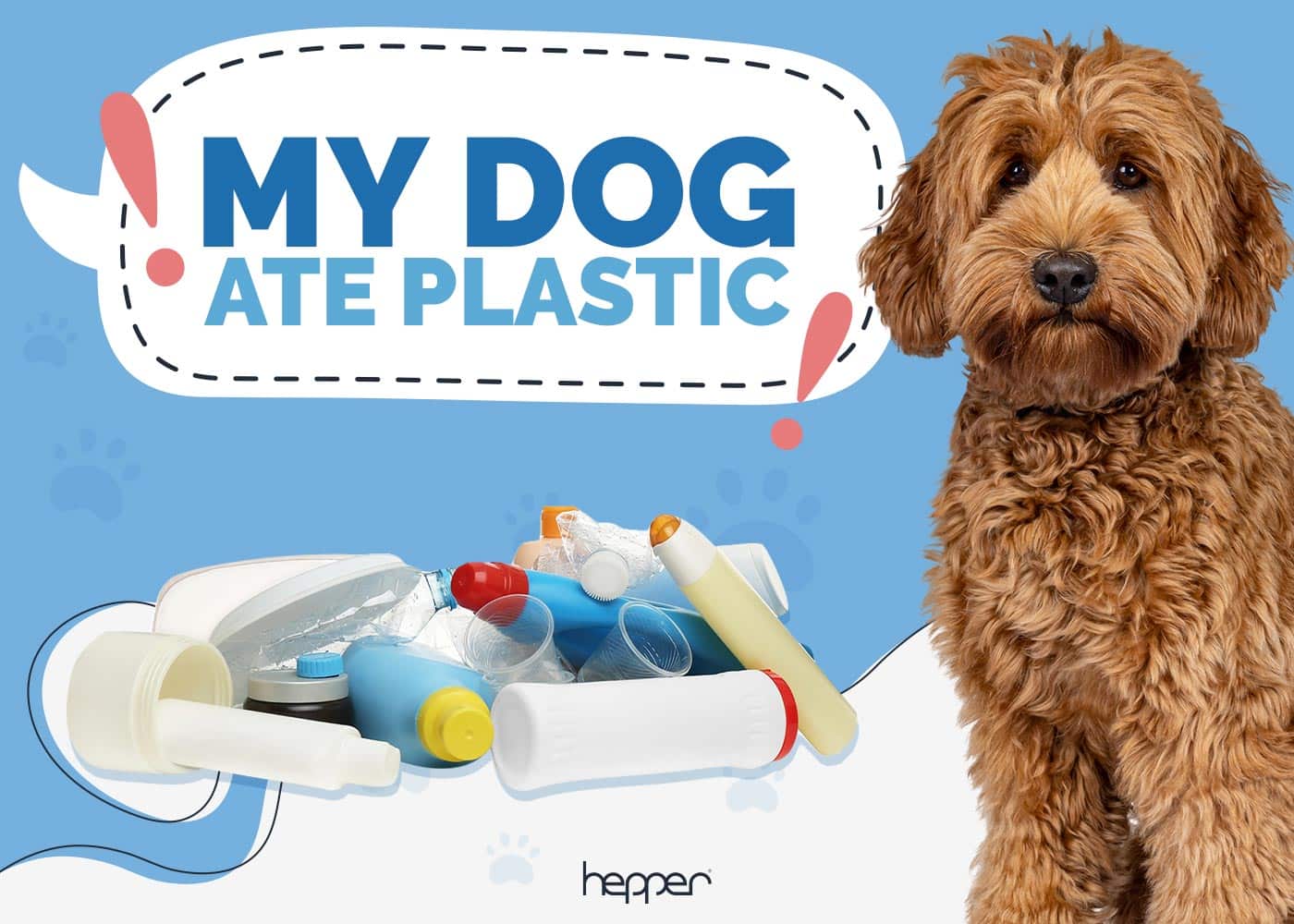
Dogs’ noses lead them to ingest all sorts of “treasures,” even the indigestible kind! So, what should you do if your dog has made a snack out of plastic? Plastic cannot be digested, so it must come out. However, can it come out on its own, and will it cause complications for your dog? In this article, we'll explore the concerns with plastic ingestion and the steps to take to ensure the safety of your beloved pet.

The Concern With Dogs Eating Plastic
The big concern with plastic ingestion is the possibility of choking and bowel obstruction. When inedible items are ingested, especially if they are large, sharp, or abnormally shaped, they can become lodged somewhere in the gastrointestinal tract. This can lead to the item being unable to pass through, impaired blood flow within the intestines (leading to damage), and pain.
There is also the chance that the plastic may not have reached the stomach before causing problems. In some cases, the foreign object may get lodged in the esophagus, compressing the trachea, or it may have been inhaled and become lodged in the trachea itself.
The 4 Things to Do If Your Dog Ate Plastic
1. Remove It if You Still Can
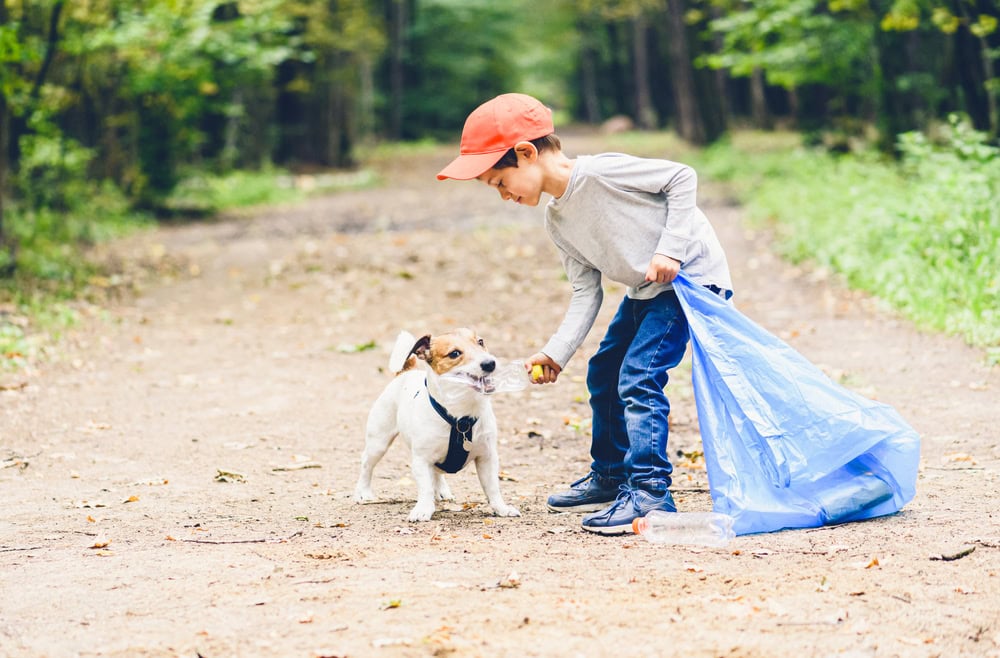
If your dog is chewing plastic, try to remove it from their mouth if it is safe to do so.
2. Evaluate Your Dog
Ensure that your dog is acting normally after ingesting the foreign object. If there is any indicator of discomfort or troubled breathing, a veterinarian needs to see your dog quickly.
3. Determine the Item Ingested
- What is the size of the object?
- What is the object used for?
- Is there a risk of toxin or drug exposure?
- Do you suspect the object was swallowed whole, or was it chewed?
- Is the object smooth or sharp?
- Is the material flexible or stiff?
4. Call Your Veterinarian
You should call your veterinarian to discuss the foreign body ingestion. Often, it can be challenging to predict which dogs may have secondary complications from plastic ingestion.
Your veterinarian will consider several factors when determining the best next steps for your pet. Factors to be considered include:
- The size of your dog
- Item consumed
- Concurrent medical condition
- Current clinical signs

Veterinary Involvement
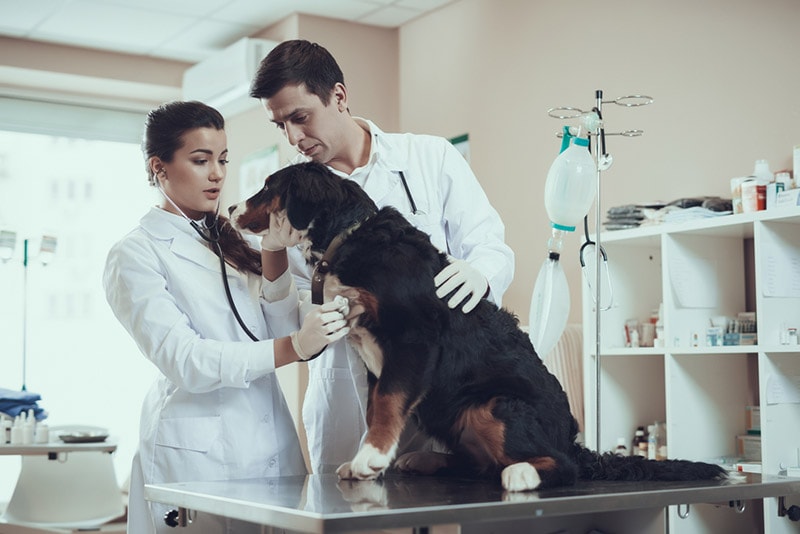
Depending on the object ingested, there are several routes that you may need to take for your pet. In some cases, observation and supportive care at home may be sufficient. Your veterinarian may recommend an appointment to evaluate your pet, and they may induce vomiting to bring up whatever was swallowed if they feel it is safe.
Alternatively, radiographs may help confirm the foreign body and identify its position within the gastrointestinal tract. In some scenarios, immediate removal of the foreign object through endoscopy or surgery may be warranted.
Diagnostics
If your dog has ingested a foreign body and is asymptomatic or has consumed a foreign body and is showing signs, diagnostics will be recommended. Your veterinarian will likely recommend a full blood panel examining white blood cell levels and organ values.
Additionally, radiographs of the abdomen and the chest will be recommended. Films of the thorax are essential to rule out esophageal foreign bodies. In some situations, radiographs with contrast may be performed. Contrast can help illuminate foreign bodies.
Supportive Care
Some patients may do well with high-fiber diets that coat foreign objects. This helps to facilitate transit through the gastrointestinal tract and can prevent sharp objects from causing injury to the intestinal mucosa. Fluid therapy may also be recommended, especially if the patient is dehydrated.
Monitoring
While waiting for the object to pass, you should closely observe your pet. At the first sign of discomfort or behavior change, a veterinarian should evaluate your dog. If the object can pass on its own, screening the feces for the object is recommended.
Signs of Gastrointestinal Blockage:
- Vomiting
- Lethargy
- Anorexia
- Discomfort
- Inability to defecate

Foreign Body Removal
Further intervention will be necessary if the foreign object is unlikely to pass through the gastrointestinal tract without causing problems or is already causing problems.
Endoscopic Removal
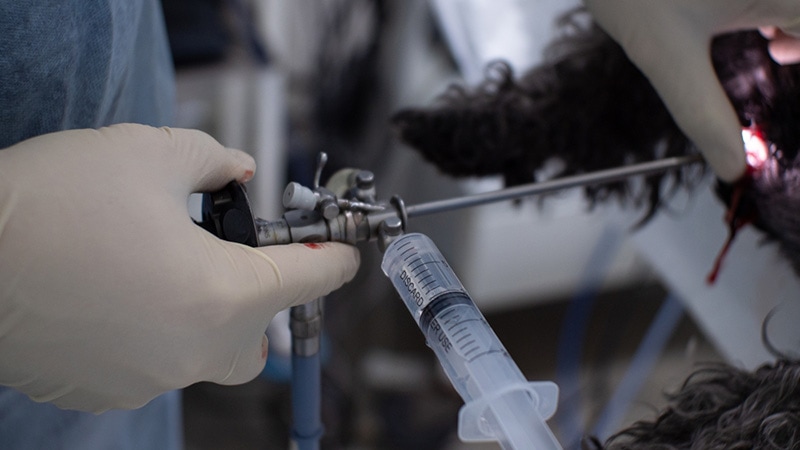
In some cases, if the object has not passed through the stomach, a noninvasive procedure called endoscopy may be used to retrieve the object. This involves passing a small camera down the esophagus. After the object has been identified, a separate tool attached to the camera can grab ahold and pull it up and out through the oral cavity.
Exploratory Laparotomy
In the event of an obstruction, an abdominal incision is made, which allows the veterinarian to evaluate all aspects of the gastrointestinal tract. The digestive tract will be palpated and examined for damage. If a foreign object is noted, a surgical incision is made into the affected tissue to remove the object. The tissue and the abdomen will then be closed.
After an abdominal procedure, your dog will likely need to be observed for 24–48 hours in a veterinary hospital to ensure appropriate recovery. When it is time to discharge the patient, the veterinarian will review at-home care instructions and dispense any necessary medications.
Pain medications and antibiotics are likely to be needed.
Conclusion
As much as we may try to keep our dogs out of harm’s way, sometimes they find a way of getting themselves into trouble. Setting your pet up for success by leaving tempting items out of their reach is essential. Consumption of plastic can be life-threatening, and recognizing clinical signs suggestive of gastrointestinal problems is vital. Do not hesitate to contact your veterinary team if you are concerned about your pet.
Related Reads:
Sources
Featured Image Credit: Maximilian100, Shutterstock
Get Hepper In Your Inbox


Pet care tips from our vets and experts, straight to your inbox.
You may opt-out at any time. View our Privacy Policy for more information.
Meet Dr. Marti Dudley, a dedicated small animal veterinarian who possesses a strong passion for preventive medicine and client education. She takes pride in serving as a valuable resource for pet owners, firmly believing that a collaborative approach results in the optimal care for our beloved animal companions. In addition to her clinical work, Dr. Dudley has a fondness for writing, using this skill as an innovative means to educate pet owners beyond the confines of the traditional veterinary office setting.
Meet Dr. Marti Dudley, a dedicated small animal veterinarian who possesses a strong passion for preventive medicine and client education. She takes pride in serving as a valuable resource for pet owners, firmly believing that a collaborative approach results in the optimal care for our beloved animal companions. In addition to her clinical work, Dr. Dudley has a fondness for writing, using this skill as an innovative means to educate pet owners beyond the confines of the traditional veterinary office setting.
Professional Background:
Dr. Dudley has been actively practicing veterinary medicine since 2014, accumulating a wealth of experience. Her special interest lies in preventive care, and she places significant emphasis on the importance of educating clients about the well-being of their pets. Dr. Dudley's professional journey in veterinary medicine has been diverse, having worked as a general practitioner, affording her the opportunity to encounter and address a wide array of medical conditions in animals.
Educational Achievements:
Dr. Dudley's academic background includes a bachelor's degree in biology earned from Longwood University in Virginia. She further pursued her passion by obtaining a Doctor of Veterinary Medicine (DVM) degree from Ross University.
Join the conversation
Ask a question, share your story, or send private feedback.