Hepper is reader-supported. When you buy via links on our site, we may earn an affiliate commission at no cost to you. Learn more.
Pitweiler (Rottweiler & Pitbull Terrier Mix): Info, Pictures, Characteristics & Facts
Breed Overview
Height:
Weight:
Lifespan:
Colors:
Suitable for:
Temperament:
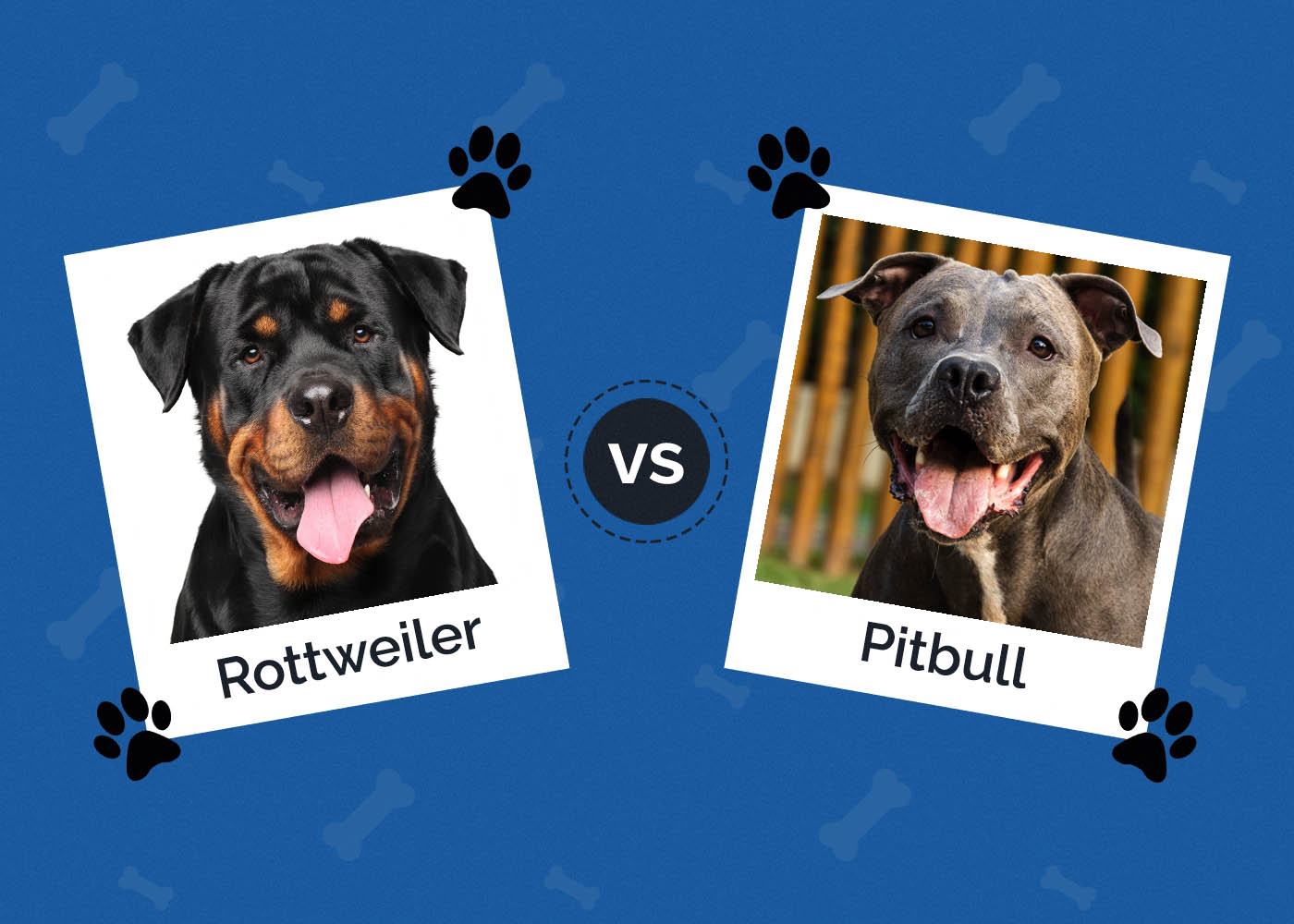
They might look extremely intimidating, but Pitweilers are actually loving and sensitive companions at heart. Both parents, the Rottweiler and the Pitbull are dogs that have unfairly been given a violent reputation, though both of them make very loyal and loving pets.
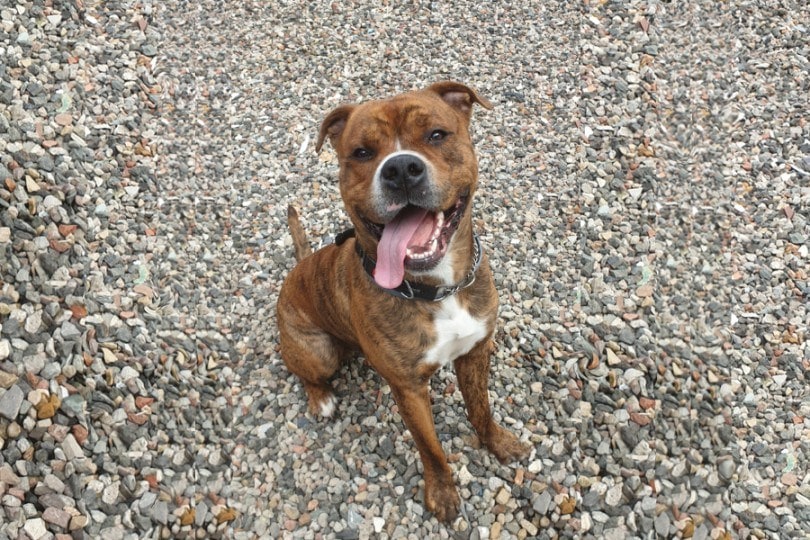
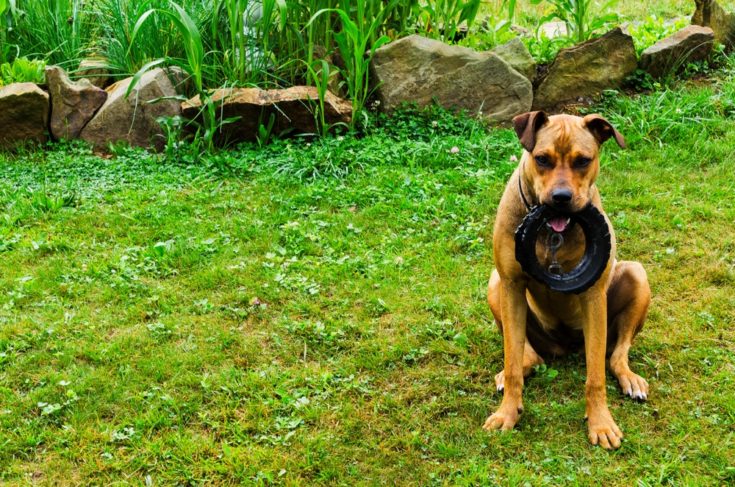
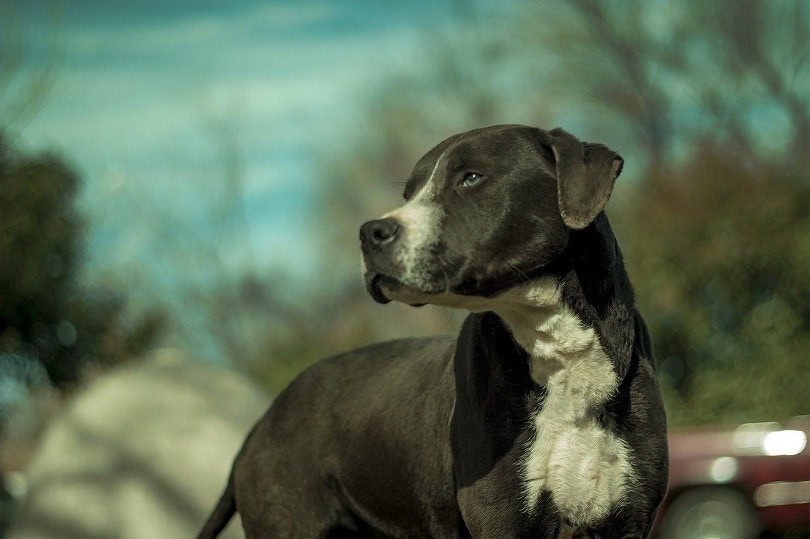
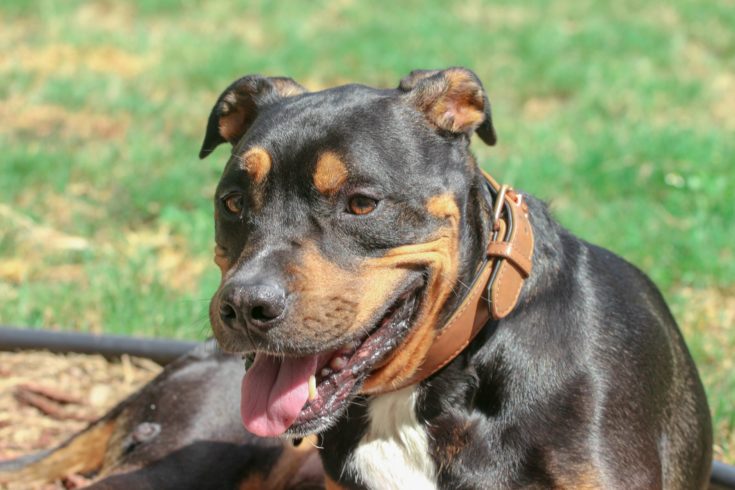
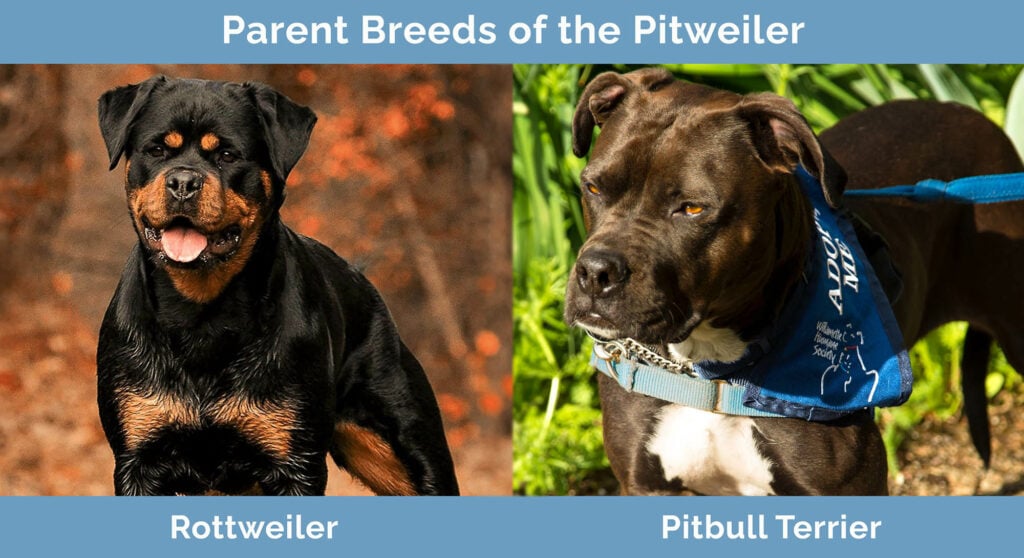
Rottweilers tend to be tall and muscular. Pitbulls are much shorter, very stocky, and broad-chested, with short, wide heads. When you put them together, the result is impressive, to say the least. Standing about two feet tall and weighing as heavy as 100 pounds, this is a large and powerful dog, no doubt.
But don’t let those menacing looks deceive you. Both Pitbulls and Rottweilers have devoted followings and are loved by many people because of their fiercely loyal nature and loving demeanor. Their offspring, the Pitweiler, is even more impressive to behold, with a surprisingly calm personality.
This dog is the definition of a gentle giant. But if it comes down to it, your Pitweiler won’t hesitate to use its large stature to protect the lives of its family.

Pitweiler Puppies
Pitweiler Characteristics
Because the Pitweiler is a designer dog, which means it’s a hybrid of two specific pure breeds, it’s not recognized by the AKC as a pedigreed breed. This means you can usually find Pitweiler puppies for cheaper than puppies of either parent breed. But they’re also less in demand than Pitbulls or Rottweilers, so it may be more difficult to locate one.
Pitweilers are much less common, so you’re less likely to luck into finding one while browsing the internet. You’ll have to locate a breeder for this designer dog. Since both parents are highly sought after and quite pricey, Pitweilers inherit a bit of that high cost as well. You can also try your luck at a dog shelter.
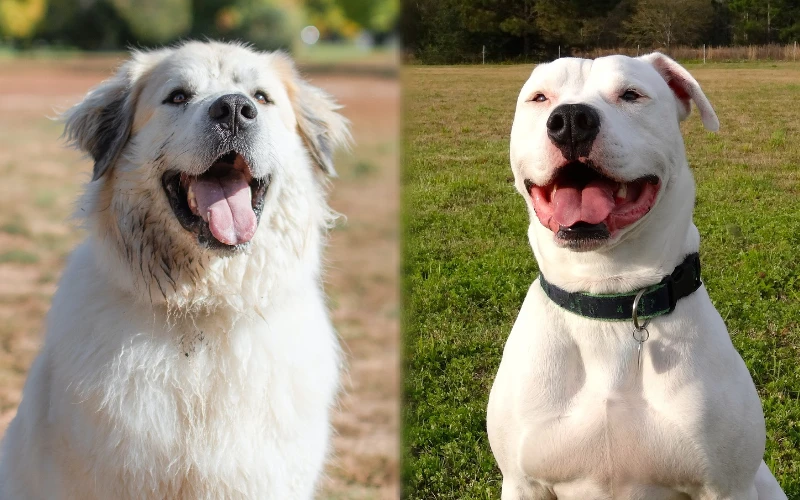
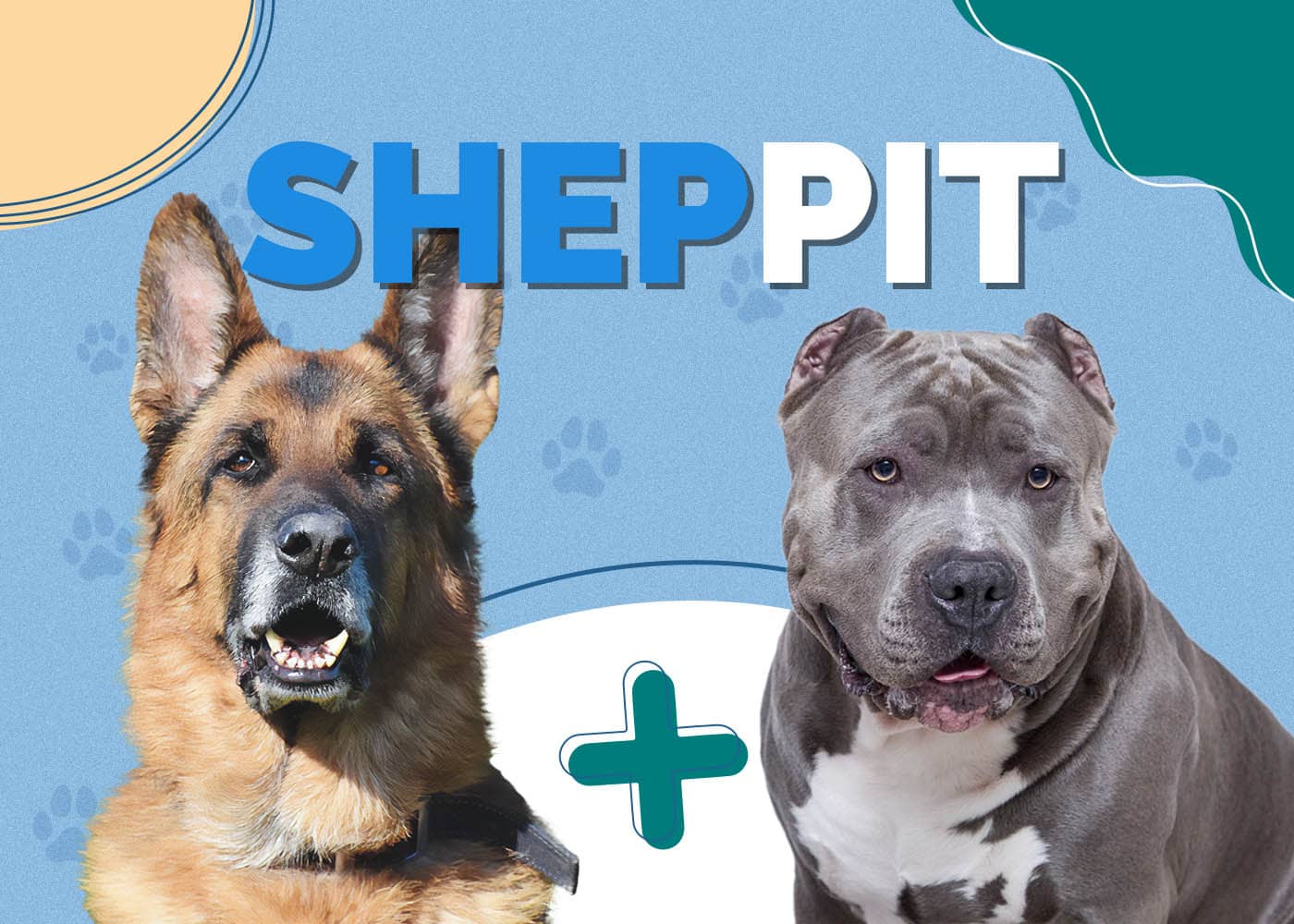
Finding a Pitweiler might not be an easy task but you can try finding another mixed dog that resembles the Pitweiler.
3 Little-Known Facts About the Pitweiler
1. They’re Sensitive and Affectionate
Pitbulls were bred for dogfighting. Unfortunately, though the practice was banned long ago, they’ve still been used in underground dogfighting rings in recent years. Rottweilers are known as excellent guard dogs, and they’re the quintessential guard dogs; large, intimidating, and scary.
The Pitweiler can be even more intimidating than either parent. While all three of them are definitely powerful animals that have the ability to cause some serious damage, it’s not actually in their nature. Pitweilers and both parents are actually loving and sensitive dogs. They make excellent family members, and everyone who’s owned one will tell everyone about how sweet they are.
2. Some Inherit a Double Coat
In general, Pitweilers are quite easy to care for. But some of them do inherit the double coat of the Rottweiler, which can make things a bit hairier. The Pitweilers that do end up with the Rottie double coat will need quite a bit more brushing and grooming than other Pitweilers, especially during the heavy shedding months.
3. They Often Have Short Stocky Bodies Like Pitbulls
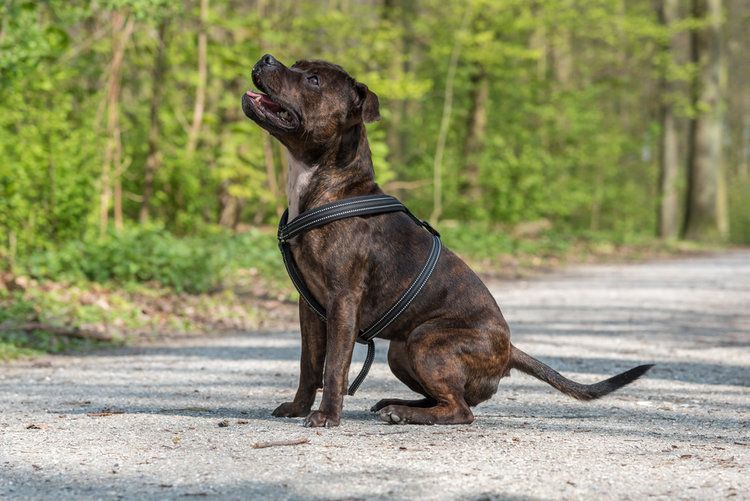
Pitweilers tend to be larger than regular Pitbulls thanks to the Rottweiler in their blood. However, they’re still much shorter than most Rottweilers, with loads of muscle dispersed over their stocky bodies. It’s hard to picture a dog that’s more built and muscular than the Pitweiler.

Temperament & Intelligence of the Pitweiler
Pitweilers are highly intelligent dogs. They come from dogs that have been used for fighting, working, and guarding, so being trained is in their blood. This helps them to learn quickly and adapt to new situations while remaining calm.
They’re naturally protective, taking on the role of family guardian. But inside, they’re soft, loving animals that need your affection just as much as you need theirs. They’re lovers at heart and will bond closely with their family or pack.
Make sure you have enough time to give your Pitweiler the attention it deserves. They don’t want to be left alone and can become destructive if they feel neglected. The last thing you want is a dog this big and muscular ripping up furniture or your lawn.
Are These Dogs Good for Families?
Pitweilers make excellent family dogs. They have so much love to give that everyone in the family will get some! Plus, they’re natural guardians, taking on the role of protector of the whole family, especially the kids.
Does This Breed Get Along with Other Pets?
Pitweilers can get along quite well with other pets, but you’ll want to socialize them early. They do have a natural prey drive, but you can quiet this natural urge by introducing them to other pets from a young age.

Things to Know When Owning a Pitweiler:
Food & Diet Requirements
Not only are these dogs often as heavy as 100 pounds, but they’re covered in nothing but solid muscle from head to toe. All that size takes a lot of sustenance, so expect to spend quite a bit on dog food for your Pitweiler. Three cups of high-quality dry dog food each day is a minimum, but some larger Pitweilers could eat more than that without fear of getting overweight.
Exercise
All of that muscle needs to be moved. Pitweilers have lots of energy and you’ll need to help them expend it. They’re calm dogs overall, but if you don’t give them an outlet for that energy, then they can become more dominant and even destructive; behaviors you don’t want to see from a 100-pound, muscular pooch.
For most Pitweilers, an hour a day of good hard play or exercise should be sufficient. But it’s best if this is broken up into several shorter sessions throughout the day.
Training
Pitweilers do tend to have a bit of a dominant side if you don’t train them early on. If you get a Pitweiler, you won’t want to neglect their training or socialization.
But provided you start early and continue their training, these highly intelligent dogs will learn quickly and become well-trained adults. They’re eager to please and they love being given tasks, so most Pitweilers take well to training of all kinds.
That said, if you wait until adulthood and your Pitweiler still isn’t trained, you’re going to have a hard time. By that time, their dominant streak may have fully blossomed, so you’ll be fighting against a 100-pound beast on the other end of the leash. Save yourself the trouble and start training your Pitweiler from the start.
Grooming ✂️
Most Pitweilers require very little in the way of grooming. But if your Pitweiler has the double coat of a Rottweiler, then you’ll have some additional grooming to take care of. In that case, expect to brush several times a week to remove dead hair, especially during the heavy shedding months.
Also, make sure to keep up on your Pitweiler's nails and teeth. Teeth need regular cleaning to keep them in top condition. Nails will also need weekly trimming to avoid becoming overgrown and breaking off.
Health Conditions ❤️
Pitweilers are a generally healthy breed, made even stronger by the crossbreeding that produces them. This often reduces the chances of inheriting the common health concerns of either parent breed. Still, some conditions are more common in both parents and might manifest themselves in your Pitweiler, so it’s good to keep an eye out.
Elbow dysplasia: When dogs go lame later in life, elbow dysplasia is the most common cause. It’s a malformation of the elbow joint, causing it to degenerate. It results in pain, loss of movement, and eventually lameness. This condition most commonly affects large-breed dogs such as Rottweilers.
Hip dysplasia: This is a very common condition, especially in large dogs. It’s caused when the hip forms inaccurately, causing the femur to seat incorrectly. This results in the bones rubbing on each other, which worsens with age. It’s not curable, but if caught early, it can be managed and the pain reduced.
Cataracts: When your dog’s eye becomes cloudy and glossed over, it’s a cataract. If it gets worse, it can cause blindness, though it’s not a serious condition unless allowed to progress.
Patellar luxation: This is simply when a kneecap is able to move out of place. It might cause your dog to randomly skip a step here or there, or even run on three legs momentarily.
Male vs Female
Like many dogs, the female Pitweiler tends to be a bit smaller in size than the males. Male Pitweilers tip the scales at the top of the weight range and size charts. But there are also some temperamental differences.
Female Pitweilers often have a hard time socializing with other female dogs. They tend to become more dominant and aggressive when around other females. This doesn’t seem to hold true for male Pitweilers though, who socialize much easier and don’t seem to have a problem with anyone in particular.
Final Thoughts:
Pitweilers are an intimidating-looking breed of dog. They stand just two feet tall or shorter, but they can weigh up to 100 pounds! That takes a whole lot of muscle, layered over stocky shoulders with a thick neck and short head.
But don’t take this dog at face value. It may look like a scary beast, but these are loving and gentle dogs at heart. They’ll assimilate into your family, looking for love and affection from everyone.
That said, they can be dangerous if needed, which is why they make great guard dogs. They’re naturally protective but fiercely loyal and devoted to their family.
Featured Image Credit: LifeGemz, Adobe Stock
Get Hepper In Your Inbox


Pet care tips from our vets and experts, straight to your inbox.
You may opt-out at any time. View our Privacy Policy for more information.

Nicole is a lover of animals of all sizes but is especially fascinated with the feline variety. She’s the proud mom of Baby, a Burmese, and works every day so he can relax in the sunshine or by the fire. She’s always had a cat in her home and has spent countless days with others, observing behaviors and softening up even the grouchiest of the lot. Nicole wants to share her kitty expertise with you so you and your cat can live happy, healthy, and care-free.
Join the conversation
Ask a question, share your story, or send private feedback.