Hepper is reader-supported. When you buy via links on our site, we may earn an affiliate commission at no cost to you. Learn more.
Staffordshire Bull Terrier & Rottweiler Mix (Staffie Bullweiler) Info, Pictures, Facts
In this article
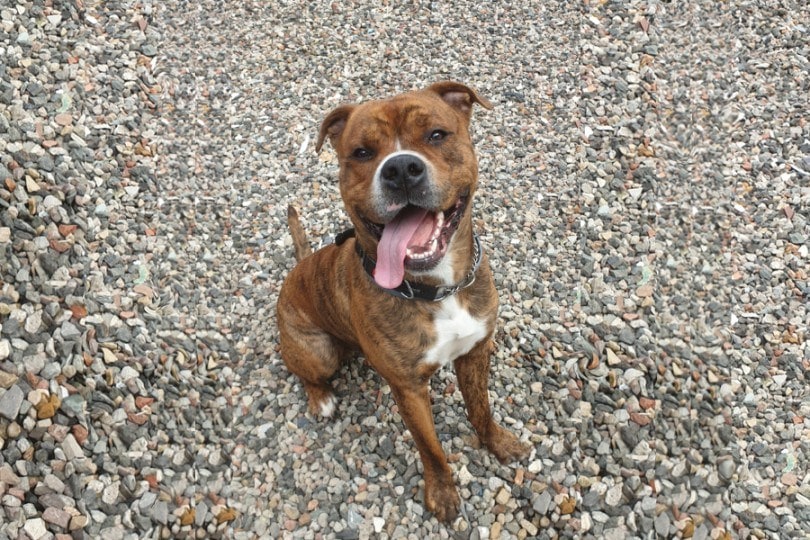
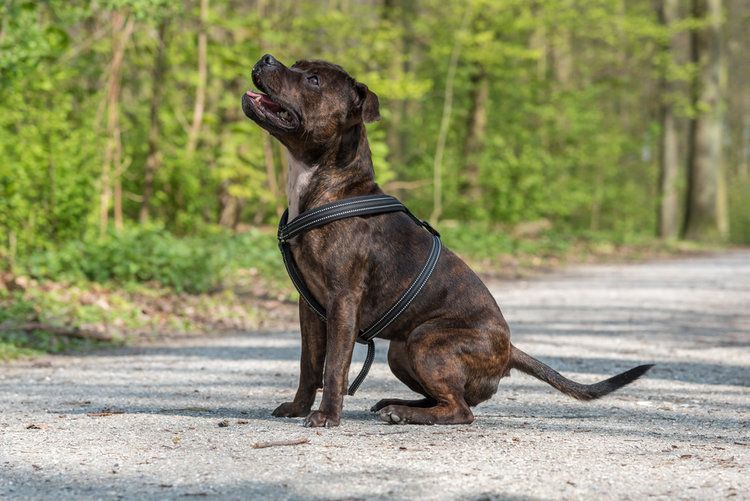
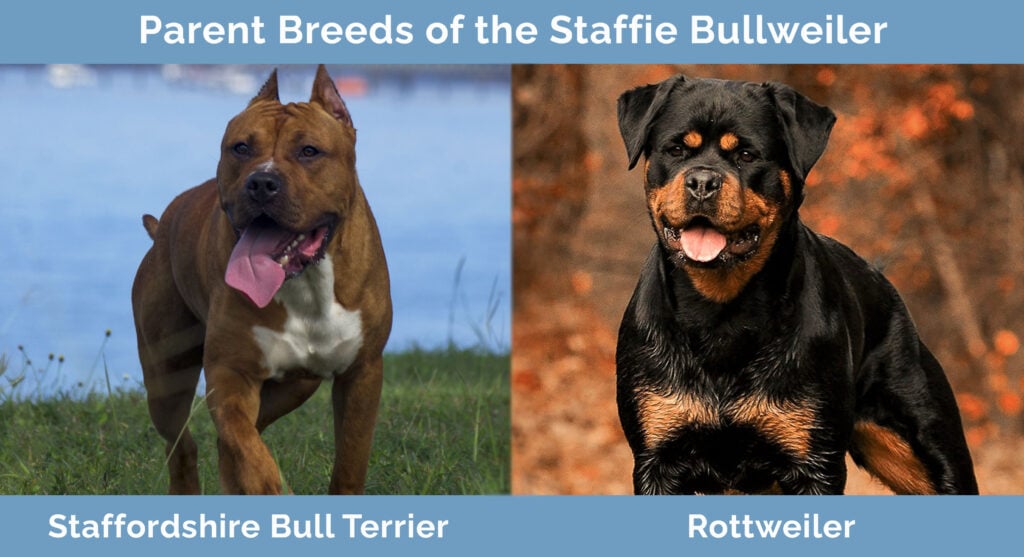
The Staffie Bullweiler, also known as the Staffweiler or just the Bullweiler, is a hybrid dog, created by mixing the Staffordshire Bull Terrier with the Rottweiler. Little is known about the hybrid because it only has a short history, but as a hybrid of two purebred dogs, we can determine the likely characteristics of this cross.
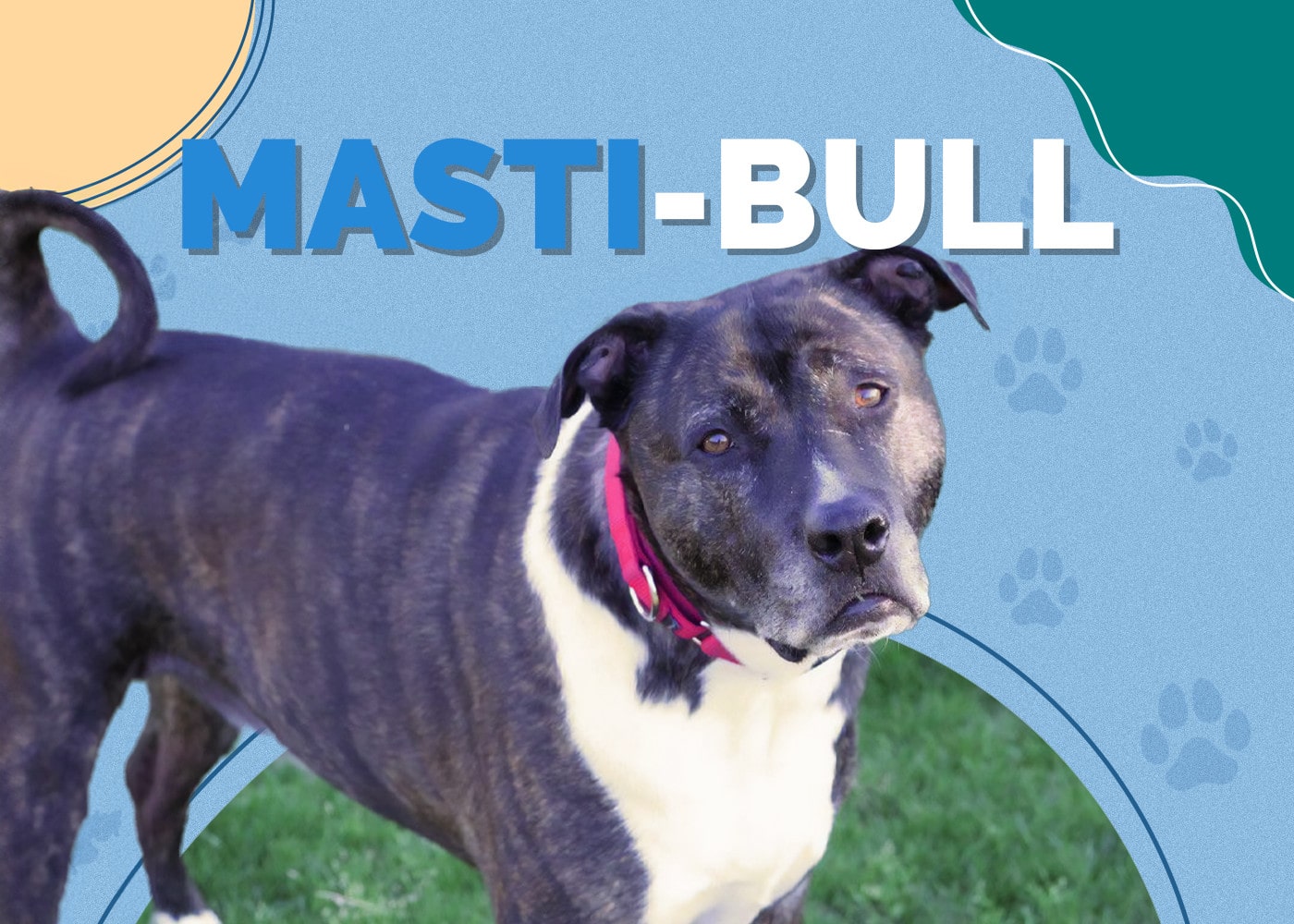
The Staffordshire Bull Terrier was bred as a fighting dog but with the intention of being gentle with his owners. Despite having a somewhat bad reputation, well-socialized and well-trained Staffies are extremely loyal, very loving, and make great family pets. They are also lively and energetic, have plenty of energy, and are strong dogs.
Breed Overview
Height:
Weight:
Lifespan:
Colors:
Suitable for:
Temperament:
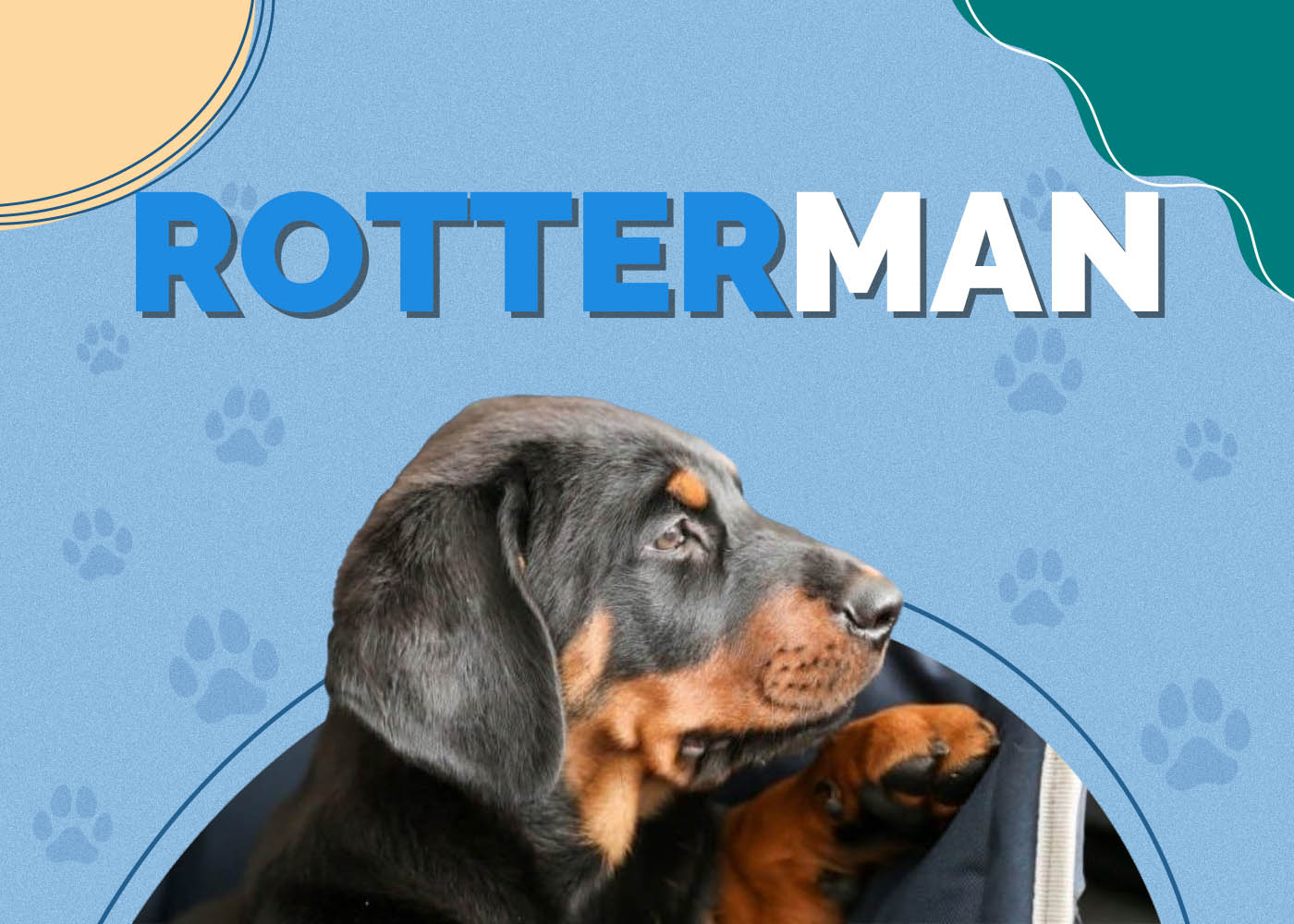
The Rottweiler, on the other hand, is a German breed that was originally bred as a war dog but was later used to herd cattle. Like the Staffie, the Rottweiler may show signs of aggression if he is trained that way, but also like the Staffordshire Bull Terrier, he is far more likely to be loving, kind, and a good family pet.
As well as making a good family pet that enjoys playing and will show love to all family members, the Staffie Bullweiler will make a guard dog. He will always protect his family.
Staffie Bullweiler Characteristics

Staffie Bullweiler Puppies
Staffie Bullweilers are bred from high-pedigree stock. When buying from a breeder, it is always important that you meet the dog’s parents and ask to meet any remaining siblings. This is especially important with breeds like Rottweilers and Staffordshire Terriers because you need to ensure that the parents are not aggressive. Aggressive parents do not guarantee an aggressive puppy, but it might be best to avoid those dogs. Ideally, the puppy’s parents will have had a limited number of litters, and if you can find a breeder that comes recommended by others, this is a good sign.
The Staffie Bullweiler tends to be a loyal and loving pup. They are easy to train but can also be very energetic so make sure you have enough time and energy to provide enough exercise for your Staffie Bullweiler to avoid boredom.

Temperament & Intelligence of the Staffie Bullweiler
The Staffie Bullweiler is usually a friendly, energetic, and fun dog with heaps of energy and excitement. As the dog’s owner, you will need to find ways to prevent that energy from becoming pent up, so expect to spend a lot of time training, exercising, and otherwise engaging your dog. However, the rewards are well worth it.
The Bullweiler will return your positive handling with friendship and love. They will be incredibly loyal and can be very protective of their owners. They tend to get on well with other dogs, including those in their own home, and they are good family pets for those with children. They do not do well in confined spaces, though, so you should avoid locking them in a room. They can adapt to life in an apartment, but you will need to provide your dog with a lot of exercise if they do not have a yard or garden in which to play.
The Bullweiler has longer legs than any other Staffie breed which means that they can jump higher and run harder, so if you do have a yard, you must ensure that it is secure to prevent your dog from getting out.
Despite their usually positive temperament, this breed is not recommended for first-time owners because they need firm training to prevent them from getting their own ideas of what is right and wrong. Their size and strength also make them a challenge for a first-timer.
Are These Dogs Good for Families?
Staffies and Rottweilers have endured a lot of bad press over the years. The Staffie can be mistaken for a Pitbull, which is banned in a lot of countries, while the Rottweiler’s protective nature and strength means that he has been used as an attack dog over the years. However, the Bullweiler makes a loving, caring, and protective family pet with the right training. Ensure you start training at a young age and socialize them with people as often as you can.
It is never a good idea to leave any dog with a baby or toddler, no matter how cheerful and loving the dog is. Babies tend to grab at things, and this includes dog ears, tails, and other bits, and if this causes pain or surprise it can lead to your dog growling or nipping.
Does This Breed Get Along with Other Pets?
Staffies are notorious for wanting to meet other dogs. Unless very well trained, and with very strong recall, they are usually best walked on a leash. But their friendliness means that they can make a great addition to your family, even if you already have one or more dogs. In fact, your Bullweiler will not only appreciate the companionship but will also enjoy having another dog around to play with.
Introducing this breed to cats is possible, but it is best done when both animals are young. With that said the protective nature of the breed means that your Bullweiler could be highly protective of their feline and other friends.
Things to Know When Owning a Staffie Bullweiler:
The Staffie Bullweiler is a big dog with a lot of energy. He needs regular exercise, will eat pretty much any amount of food you put in front of him, and will require training to prevent bad habits and encourage good ones.
His ideal home is one with a fenced garden because then he will be able to charge around in the garden and play. His ideal owner is fit and active and has previous experience in training potentially headstrong dogs. They are considered a healthy dog breed and are relatively free of known conditions, although they may suffer from a form of dementia that is known to be common in Staffies.
Food & Diet Requirements
The Bullweiler is sometimes referred to as a medium to large dog, but they tend to grow to large dog size. They are also very energetic, and this means that they do have a large appetite. They will easily get through four cups of good quality kibble every day, and they can become overweight if fed too much, so it is a good idea to provide them with two or three meals a day. This also helps add structure to their lives, which can help with behavior and training.
Because the breed is muscular, they will benefit from a high-protein diet. Protein is used to build and repair muscle and is important in puppies as well as muscled dogs. If you use treats when training, ensure that they are not fatty and that they are healthy but appealing snacks. These will help with training, because the breed is known for enjoying a snack, but should prevent your dog from becoming overweight. Too much weight places undue strain on the dog’s muscles and joints and can lead to joint pain and other complications. It is also very difficult for dogs to shed excess weight.
Exercise
The Bullweiler is a very active dog and has a lot of energy in those muscles. He will happily play with toys but prefers a human companion when doing so, and he will need a lot of daily activity to keep him well-adjusted. A well-exercised Bullweiler is a happy dog. Spend a minimum of 45 minutes a day walking your dog and set aside some time to play and train him, too. This is also a good bonding experience, and bonding is important to this breed.
Although they do enjoy outdoor exercise, this breed is not suited to life outside. He should be given time in the yard to run around but should not be kept in a kennel or other outdoor area because he will miss human interaction.
Training
An out-of-control Bullweiler can be very difficult to handle, and they will become unruly if not given proper and consistent training. Although they are intelligent dogs and enjoy pleasing their owners, their attention can wander and they can be headstrong, so if they don’t want to do something, it takes an experienced handler to be able to convince them otherwise. The experienced handler will know how to be firm but fair and will consistently train their steed.
Enroll in puppy classes from a young age because this will teach you and your dog all about training. It will also allow them some time to socialize with other dogs and with people.
Grooming
Both parent breeds are moderate shedders, so you should expect your Bullweiler to be a moderate shedder as well. Daily brushing during shedding season helps remove dead hairs, keeps your dog comfortable, and prevents them from getting too hot. It also helps you to control the dog hair build up in your home.
Fortunately, the hair is long and straight. This means that it is easy enough to brush dirt from their coat without having to bathe them. Dogs have a natural oil in their coats that helps protect them, and frequent bathing strips the coat of this oil. Only bathe your dog when it is absolutely necessary.
Dental hygiene is just as important to your dog as it is to you, so get into the habit of brushing your dog’s teeth two or three times every week. This will prevent tartar buildup and protect their gums.
You should aim to keep your dog’s claws at a reasonable length. If they regularly walk on concrete or other abrasive surfaces, this will help to naturally wear their nails down, but you may still have to give them the occasional cut. Generally, you will know when it is time to trim the nails because you will be able to hear them walking across wooden or other hard floors.
Finally, to prevent ear infections, check his ears every week or every time you brush his teeth. Use a tissue or damp cloth to wipe out any debris or dirt. If allowed to build up, this dirt can become uncomfortable and may lead to infection.
Health and Conditions
Both parent breeds are expected to live to around 12 years old, and the hybrid Bullweiler has a similar life expectancy. This breed is known to be hardy and resilient to most health conditions, but joint dysplasia is more common in dogs of this size. Staffies can also suffer from a neurometabolic disorder that leads to dementia, and you should ensure that your puppy has been screened for this condition to avoid it.
Male vs Female
The male of the Bullweiler breed is usually noticeably larger than the female. A fully-grown female Staffie Bullweiler will tend towards a maximum weight of 90 pounds. A male Bullweiler can reach a maximum weight of 120 pounds.

3 Little-Known Facts About the Staffie Bullweiler
1. Staffie Bullweilers Are Very Loyal Dogs
The Staffie Bullweiler mix is loyal to his family members, and if you train them early, usually within the first year or so, they will form a very strong bond with you. Early training is very important with this breed because they can be manic and, on occasion, aggressive.
Training enables you to encourage good habits and get rid of bad habits, teaches your dog what is expected of him, and is also a good opportunity for early socialization. Socializing your dog means that they will be better equipped to deal with meeting new people and animals. They will learn to respect other animals and it can help to alleviate the excitement displayed when meeting another dog, which is an especially common trait in the Staffordshire Terrier.
2. They Have a Lot of Energy
The Staffie Bullweiler is brimming with energy and needs an outlet for that energy in order to prevent him from getting bored and making his own exciting games like chewing the sofa. Regular exercise is important, and you should expect to have to walk this breed for an hour or more every day if you hope to tire them out.
Ideally, you will also have a walled or fenced yard in which they can play. They will enjoy playing fetch and tug of war, giving them a chance to exercise their jaws and other muscles. Agility classes are also a good idea for this breed. They offer another way to burn off excess energy and to keep the dog mentally stimulated, too.
3. Rottweilers Nearly Became Extinct
The Rottweiler is now one of the tenth most popular dog breeds in the USA, according to kennel club figures. However, it hasn’t always been a popular breed. They were used as herding dogs and when railway tracks and roads were built in the mid-19th century, there was less demand for droving dogs. As such, their popularity dwindled at around this time.
By the 20th century, a group of Rottweiler lovers had established the breed as an intelligent and brave police dog. Rottweilers were among some of the first rescue dogs sent to the Twin Towers site immediately after the 9/11 attacks. They still serve as rescue and police dogs today and have been growing in popularity as family pets, too.

Final Thoughts
The Bullweiler is a mix of the Staffordshire Bull Terrier and the Rottweiler. Both these breeds have been used for fighting and trained as attack dogs in the past and have gained a mostly unfair reputation because of this. In fact, both breeds make loving and incredibly loyal family pets. They get on well with children and other dogs, and some get on well with cats and other animals.
They are filled with boundless energy and are very muscled dogs that, without proper training, have a tendency to jump up when meeting new people. Training a Staffie Bullweiler is easy for the experienced trainer but might prove a lot more challenging for the novice owner because they can be headstrong and stubborn if they don’t understand the reasoning.
Be prepared to give your Staffie Bullweiler plenty of exercise, in the shape of regular walks but also through fun and boisterous play. This breed loves tug-of-war and fetch games, can do very well at agility courses and agility-style training, and they will keep going seemingly forever. Also, be prepared for them to eat with similar feverishness because they love their food.
The Bullweiler is a healthy dog, usually, and can live for 12 years or more. When fed a good diet, given plenty of exercise, and properly trained and socialized, they can provide companionship for even longer than this.
Related Reads:
Featured Image: Nieuwland Photography, Shutterstock
Get Hepper In Your Inbox


Pet care tips from our vets and experts, straight to your inbox.
You may opt-out at any time. View our Privacy Policy for more information.

Nicole is a lover of animals of all sizes but is especially fascinated with the feline variety. She’s the proud mom of Baby, a Burmese, and works every day so he can relax in the sunshine or by the fire. She’s always had a cat in her home and has spent countless days with others, observing behaviors and softening up even the grouchiest of the lot. Nicole wants to share her kitty expertise with you so you and your cat can live happy, healthy, and care-free.
Join the conversation
Ask a question, share your story, or send private feedback.