Hepper is reader-supported. When you buy via links on our site, we may earn an affiliate commission at no cost to you. Learn more.
Pomeranian vs. Yorkie: What Are the Differences? (With Pictures)
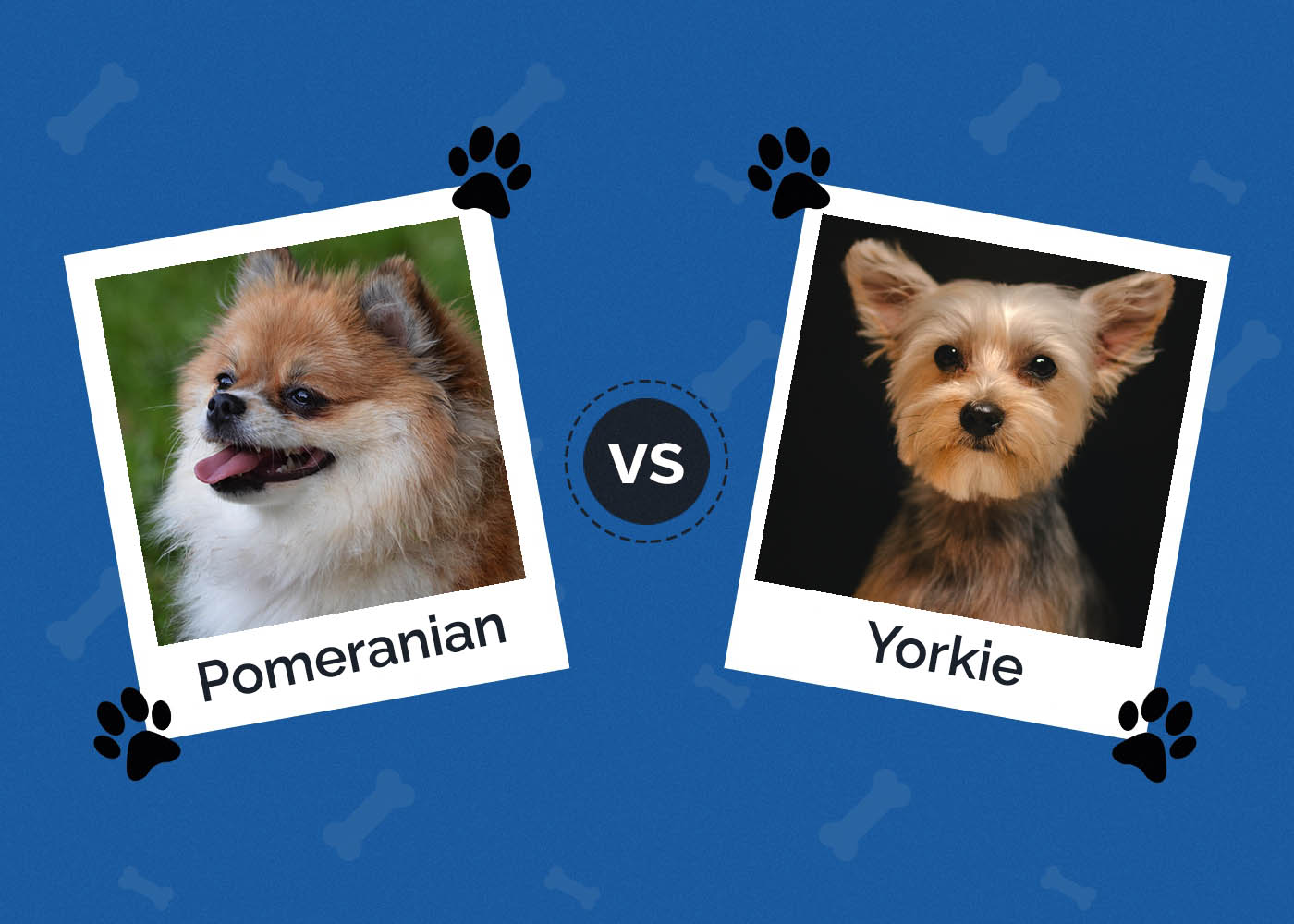
The Pomeranian and the Yorkshire Terrier are popular companion dogs with personalities far bigger than their small statures. Both dogs are small and great for apartment living but have a few traits that can be challenging to new owners.
If you are looking for a small companion pup to keep you company without too much need for space or exercise, either breed is a great choice. To help you decide which one to choose, we put together this guide to compare the breeds and their unique traits and temperaments.

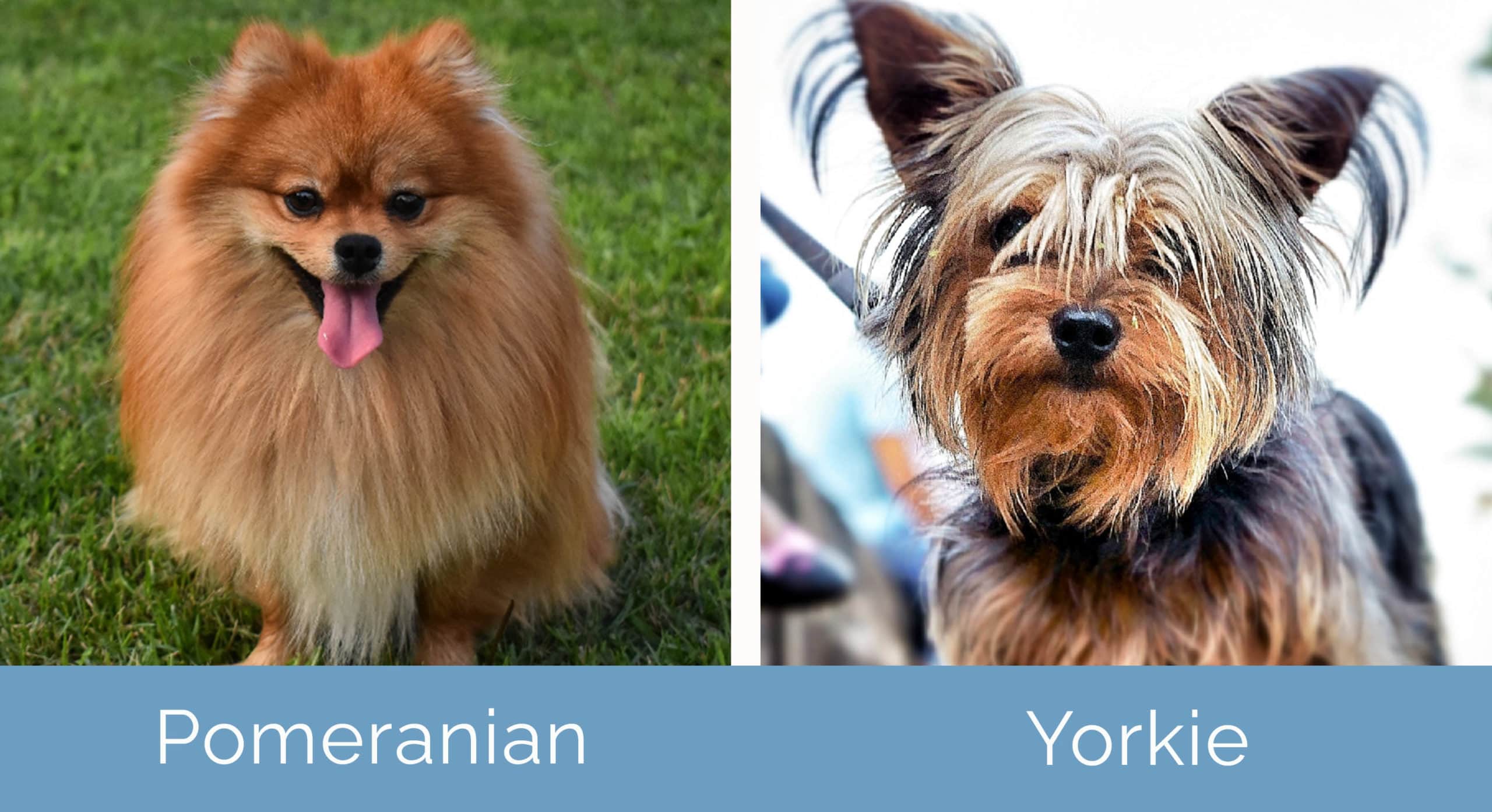
Pomeranian vs. Yorkie: Visual Differences
A Quick Overview

Pomeranian Overview
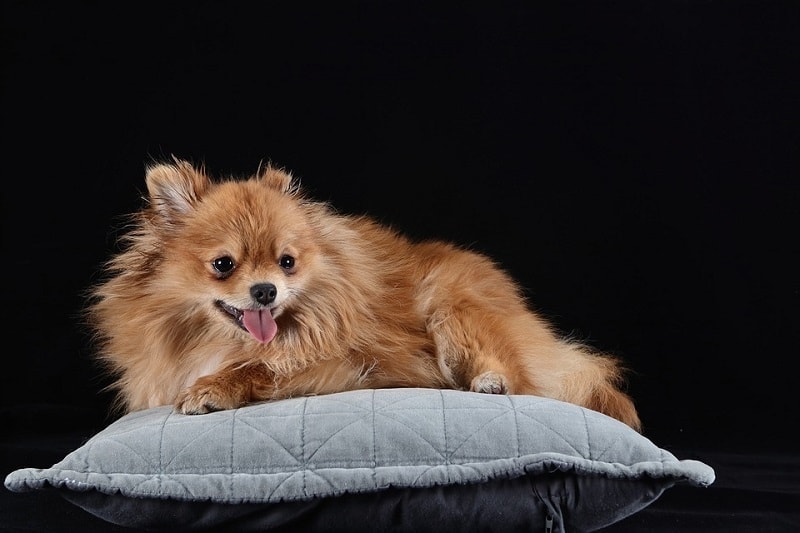
This Spitz-type breed was originally bred as a sled dog, a trait you might be surprised by, considering their pint-sized stature. They have become one of the most popular toy breeds in the world. They were named after Pomerania, the region of Germany where they were bred down from their larger cousins into the small and feisty breed that we see today.
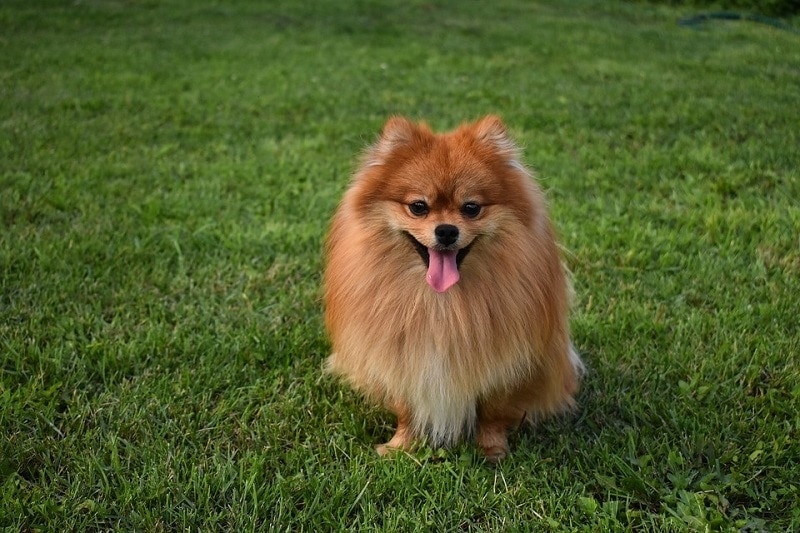
They have a highly recognizable, fluffy double coat that comes in dozens of colors but is most commonly seen as light brown or red/orange. These little dogs are known for their large personality and enjoy being the only pup in the home—or at least the undisputed pack leader! They are generally great with children, but this fiery disposition can become an issue around other dogs if they are not properly socialized.
Personality
Pomeranians are fiery and self-confidant pups, but they are also highly affectionate, loyal, and intelligent dogs that make great family pets. They are exceedingly curious about their surroundings and highly alert, making them fantastic little watchdogs. They are a great choice for older owners and those who are away from home frequently, as they are not overly dependent or clingy animals. They are independent pups that are happy to be on their own for extended periods.
Training
Pomeranians are typically easy to train, though they can be independently minded and stubborn on occasion. They are intelligent dogs that can pick up commands quickly and are known for learning tricks with ease. They have recently become popular in agility and tracking circles and have also been successfully trained as therapy and hearing assistance dogs.
Early socialization is key with these dogs because they are bold and fiery pups at times, and in their minds, they are much larger than they are in reality. This trait combined with their devotion and loyalty to their owners can get them into trouble with other dogs. With proper and early socialization, though, they are generally friendly and playful with other dogs and friendly toward new faces.
Although these dogs are not overly energetic, they will still need at least 1 hour a day of exercise to stay happy, healthy, and out of mischief. They, like all dogs, will benefit greatly from daily exercise and enjoy meeting new faces and seeing new spaces, especially if they are apartment dogs.
Pomeranians can take some time to housetrain, so you’ll need to exercise patience and consistency.
Health and Care
Pomeranians are a healthy breed in general and don’t have many serious genetic issues to worry about. Minor issues common in Poms are allergies, epilepsy, and a few eye issues, all of which are easy to treat or manage. Some Poms suffer from patella luxation, which is also easily managed, and occasionally, collapsing trachea, an issue that commonly affects smaller breeds.
Your Pom’s thick double coat will need regular brushing to avoid matting and knotting. Also, this thick coat makes them highly prone to heatstroke, so you’ll need to exercise caution in warmer climates to make sure they don’t overheat.
They’ll need around 1/2 a cup of high-quality dry kibble per day, divided into two meals. Of course, this is largely a generalization and will depend on the size and energy levels of your unique dog.
Suitability
The Pomeranian is an ideal family pet with their loving and loyal nature but makes a great companion for single and seniors too. They adapt well to apartment living and are easy to train, but they can be a bit temperamental toward other dogs, so early socialization is key.
Yorkie Overview
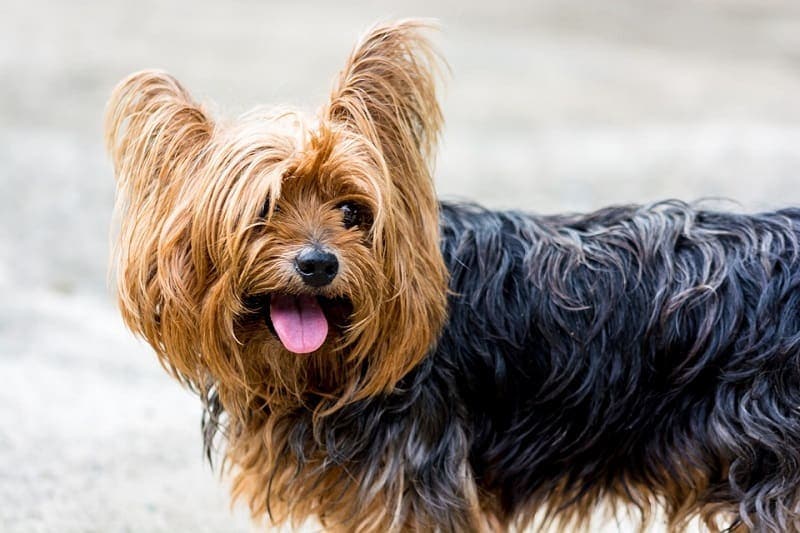
Developed in the English counties of Yorkshire and Lancashire, the Yorkshire Terrier was bred as a lapdog and favored for their long silky coat. But underneath this pampered, often floor-length coat is a feisty Terrier that is a more than capable ratter. These dogs are among the most popular breeds for city-dwellers due to their small size and friendly temperament. They can be fiery and ferocious little pups at times and are known for their bravery and loyalty.
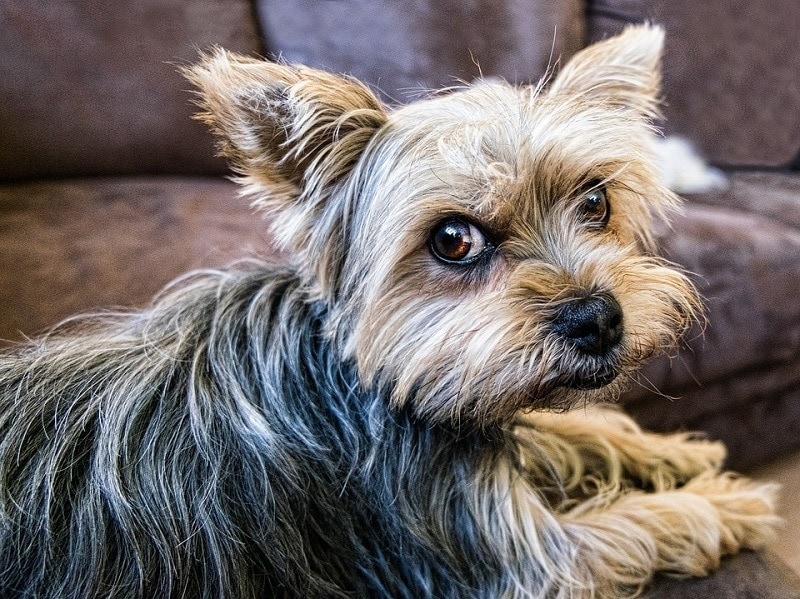
Their smooth and silky brown and tan coat is their most recognizable characteristic, and its similarity to human hair makes it ideal for owners with allergies.
Personality
Yorkies are intelligent, confident, and adventurous little pups that love to be around people. In fact, they will suffer from separation anxiety if left alone for long periods and are happiest when close to their owners. They can be fiery and courageous dogs that have a bark far bigger than their bite, which can lead them into trouble with larger dogs. That said, these dogs are gentle and loving with both adults and kids, though their loyal streak can make them slightly nippy at times with younger children.
Yorkies have a tendency for yapping, so early socialization and training is essential.
Training
Yorkies are known for being difficult to house train, but their intellect and eagerness to please their owners makes them easy to train in general. Positive reinforcement training is recommended with these little dogs, as they thrive off of reward-based command training. Beginning training early, along with socialization, is essential for these dogs due to their somewhat strong-willed spirit, and the younger they are, the more receptive they will be to learning. Early training also has the added benefit of preventing any bad habits.
House training is a challenge with Yorkies, as they need to do their business more often than larger breeds. This may be as often as every hour in the first few weeks, and you should take them outside as often as possible during this time and reward them with loads of praise. Make a habit of taking them out 10–20 minutes after every meal, as this is the most likely time when puppies will need to do their business.
Health and Care
Due to their long and luxurious coats, Yorkies need daily grooming and brushing to prevent knotting and matting. Small breeds like Yorkies are fairly prone to dental disease, so special care must be taken to keep up their dental hygiene. Brushing their teeth several times a week will prevent tartar and plaque build-up. Yorkies have long droopy ears, so you’ll need to check them for any infection or redness and keep them dry at all times.
Yorkies are a relatively healthy breed but are prone to certain issues that small breeds tend to suffer from. These include patellar luxation, progressive retinal atrophy, and collapsed trachea.
Feeding a Yorkie is an easy affair, and around ½ a cup of high-quality kibble per day divided into two meals is ideal. Be careful not to overfeed these pups, as they can quickly become overweight, and this is one of the most common health issues with this breed. They are highly food motivated, which may be great for reward-based training but is not ideal for free-feeding.
Suitability
Yorkies are small yet highly active dogs with large personalities. They are great for apartment living, so long as they get sufficient exercise, and make ideal pets for seniors. They are great family dogs too, but you may need to keep a close eye around small children, as they are known to nip occasionally. Of course, this can be largely avoided with proper training and socialization.
Conclusion
Pomeranians and Yorkies are similar in more ways than one: They are both small and easy to train and are purposely bred for and make great companion animals. The biggest difference between the two is the Pomeranian's slight stubborn streak that can make them a bit more of a challenge to train, and the Yorkie’s moderate prey drive that can be a problem around cats and other small pets. Both dogs have a somewhat fiery nature at times, with barks far worse than their bites, though this trait is easily managed with proper training.
If you are looking for a companion but are not at home often, the Pomeranian's independent nature may make for a better choice. If you are a novice dog owner and are looking for a new shadow to keep you company and have the space and time to give your pup loads of attention, the Yorkie may be a perfect fit.
Ultimately, it comes down to your unique needs, your lifestyle, and whether you have other pets. Both breeds are ideal family dogs that can adjust well to any living situation, but the Yorkie will need more attention and affection than a Pomeranian.
See Also:
Featured Image Credit: (L) Trent Pickering, Unsplash | (R) Ramiro Pianarosa, Unsplash
Get Hepper In Your Inbox


Pet care tips from our vets and experts, straight to your inbox.
You may opt-out at any time. View our Privacy Policy for more information.

Nicole is a lover of animals of all sizes but is especially fascinated with the feline variety. She’s the proud mom of Baby, a Burmese, and works every day so he can relax in the sunshine or by the fire. She’s always had a cat in her home and has spent countless days with others, observing behaviors and softening up even the grouchiest of the lot. Nicole wants to share her kitty expertise with you so you and your cat can live happy, healthy, and care-free.
Join the conversation
Ask a question, share your story, or send private feedback.