Hepper is reader-supported. When you buy via links on our site, we may earn an affiliate commission at no cost to you. Learn more.
Rabbit Body Language: 10 Behaviors & What They Mean
Even though they may have started as a food and fur source, it wasn’t long before people fell in love with rabbits and their lovable personalities. You may think they aren’t expressive animals. However, any pet owner will tell you they make sounds and have specific behaviors that tell you exactly what they’re feeling.
Many things are universal, whether you see them in a dog, cat, or rabbit. Bunnies differ from other pets because they are prey species in the wild. That affects their anatomy, natural history, and behavior. Let’s review what you may observe in your pet rabbit.

The 10 Behaviors That Rabbits Observe
1. Grunting
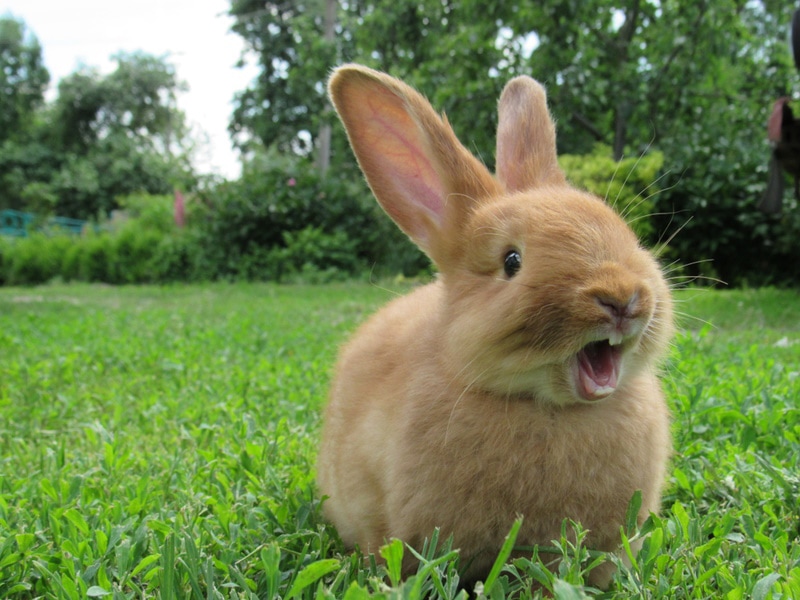
Grunting isn’t a happy sound. It typically means a rabbit is either frightened or angry about something. It might not be feeling well. Your bunny may want to be left alone and not handled. While pets often vocalize, their wild counterparts, the European Rabbit (Oryctolagus cuniculus), are usually quiet. After all, being a prey species means not wanting to draw attention to yourself.
2. Stomping Its Hind Feet
Rabbits typically avoid conflict at all costs. However, communication is essential for this social animal. Raising the alarm about threats is a common behavior. Stomping its hind feet gets the message across to its cohorts with a sound a predator might not detect or connect with a prey species. An annoyed bunny will do the same thing, often accompanied by unmistakable sounds of displeasure.
3. Spraying
While rabbits are gregarious, they are also territorial, especially when it comes to their mates. Many animals use silent forms of communication, like spraying. Males or bucks do the same thing for the same reason. Sometimes even females will spray. It makes a solid case for neutering or spaying your pet to avoid this unpleasant behavior.
4. Hissing
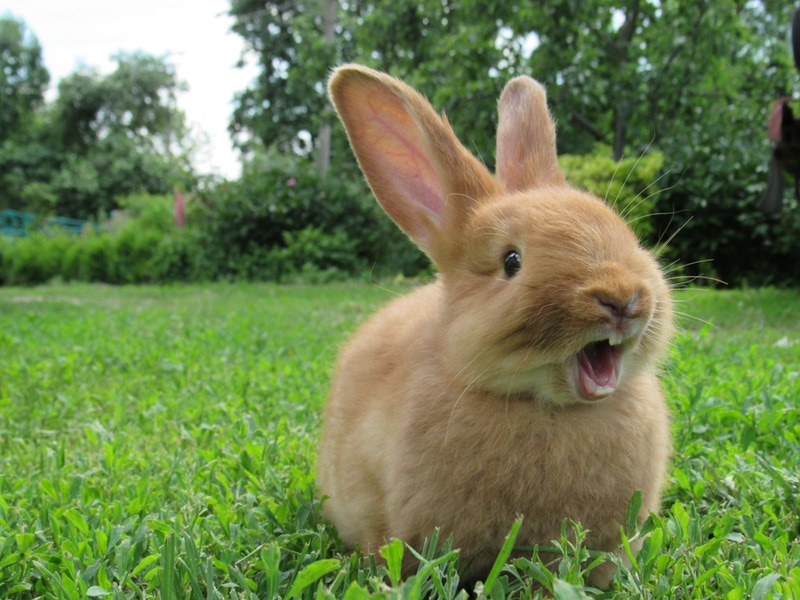
When you hear a rabbit hiss, there’s no mistaking the fact your bunny is quite upset. It’s often not just a matter of being angry. It can also denote potential aggressive behavior. Just like in cats, it’s a warning sign meant to tell another animal—or human—to back off now. It sounds mean and hostile because that’s its purpose. Remember that rabbits can bite and scratch if pushed too far.
5. Screaming
Screaming is never a good sign. It’s an extreme vocalization that means something bad. It could be a rabbit that is very scared or one that is in a lot of pain. An animal on the verge of death may also scream. It’s a sound you’ll never forget if you ever hear it. Unlike grunting or hissing, it’s never a warning or alert. It’s the real deal.

6. Nipping
There’s a difference between biting and nipping. The former hurts, and the latter might not—unless you fail to heed the message. Your pet might nip at your hands if you try to pick it up, something some rabbits dislike. Remember that lagomorphs can’t see well. It might not realize what’s trying to grab it and mistake you for a predator.
7. Purring
Purring is a pleasant behavior, unlike the negative ones we’ve discussed so far. While it sounds a bit like a cat, a bunny uses its teeth to make its form of purring by gently grinding them together. You can rest assured your pet is content and enjoying the moment. The only time it means something different is if it’s loud. That may indicate an animal is in pain.
8. Clucking
A rabbit that clucks is a happy one. It often makes this chicken-like sound when it’s eating, particularly if it’s something it enjoys. The smart pet owner will listen for it to learn which foods or treats their bunny likes. It’s not a loud sound, but it is distinctive. You’ll know it when you hear it.
9. Circling
Rabbits often engage in instinctive behaviors even though they are far removed from being wild animals. Circling is one example. It’s a good sign and one you’ll see a lot in a happy bunny. While it does it during mating, it also is a way your pet may show affection toward you. It might be playing or simply trying to score a treat from you.
10. Bunny Dancing
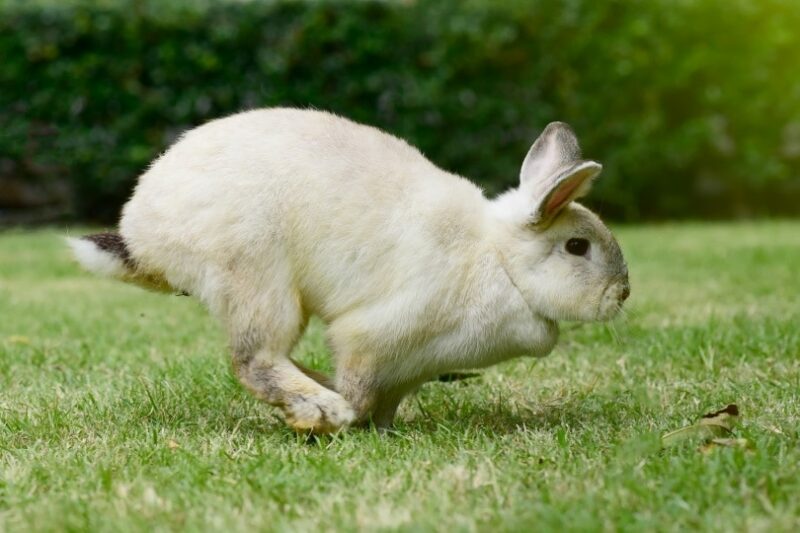
Sometimes, rabbits will just act silly and hop and dance around a room. They may zoom to and fro, playing with any objects they encounter. It’s a fair assumption that your pet is happy and wants to show it. If it gets your attention, all the better. It’s worth noting that an animal must feel quite safe and secure to engage in this behavior. It shows you’re doing an excellent job as a pet owner.
Tips for Happy Bunnies
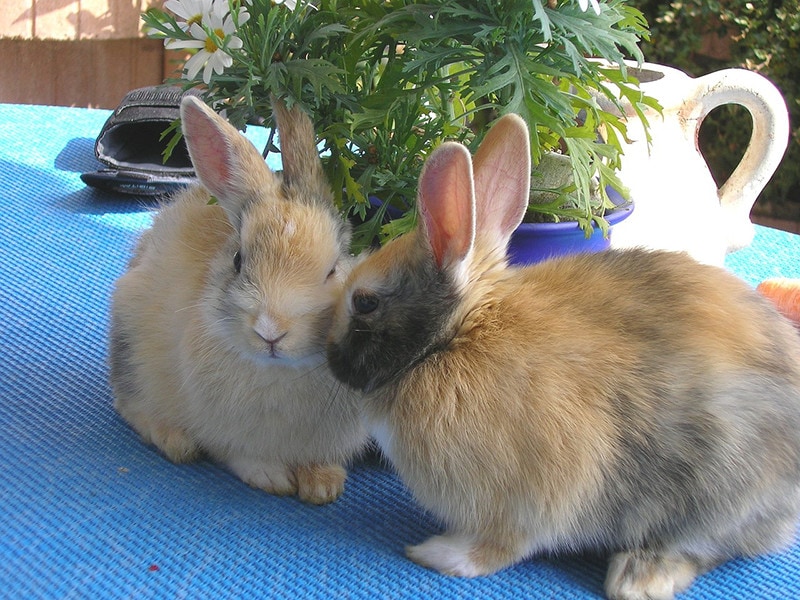
Rabbits don’t handle stress well. The key to keeping them happy and content is to minimize it. One of the best ways is through socialization and playing with your pet frequently. Remember that you’re filling in as its lagomorph companion. They’re not solitary animals but ones that prefer living in colonies. The attention you give your bunny will improve its quality of life and provide welcome mental stimulation.
Conclusion
Rabbits make delightful pets as long as you give them the attention and care it needs. There’s a good reason why 1.5 million American households count at least one bunny among their pets. They’re easy to care for and will reward you for the time you take to bond with them. Luckily, their behavior is pretty straightforward if you know the signs of an annoyed versus a content bunny.
Related Read: 10 Pet Rabbit Sounds & Their Meaning (With Videos)
Sources
Featured Image Credit: Pentium5, Shutterstock
Get Hepper In Your Inbox


Pet care tips from our vets and experts, straight to your inbox.
You may opt-out at any time. View our Privacy Policy for more information.

Chris is an experienced pet writer specializing in science topics, with a particular passion for health and the environment. She has been a writer for over 15 years and lives with her husband and three cats in Michigan.
Beyond writing about cats and dogs, Chris loves to learn about wine. She has WSET 1 and 2 certifications and is currently pursuing her Certified Wine Specialist Award (CSW).
Join the conversation
Ask a question, share your story, or send private feedback.