Hepper is reader-supported. When you buy via links on our site, we may earn an affiliate commission at no cost to you. Learn more.
8 Scottish Terrier Health Issues to Watch For (Vet Answer)


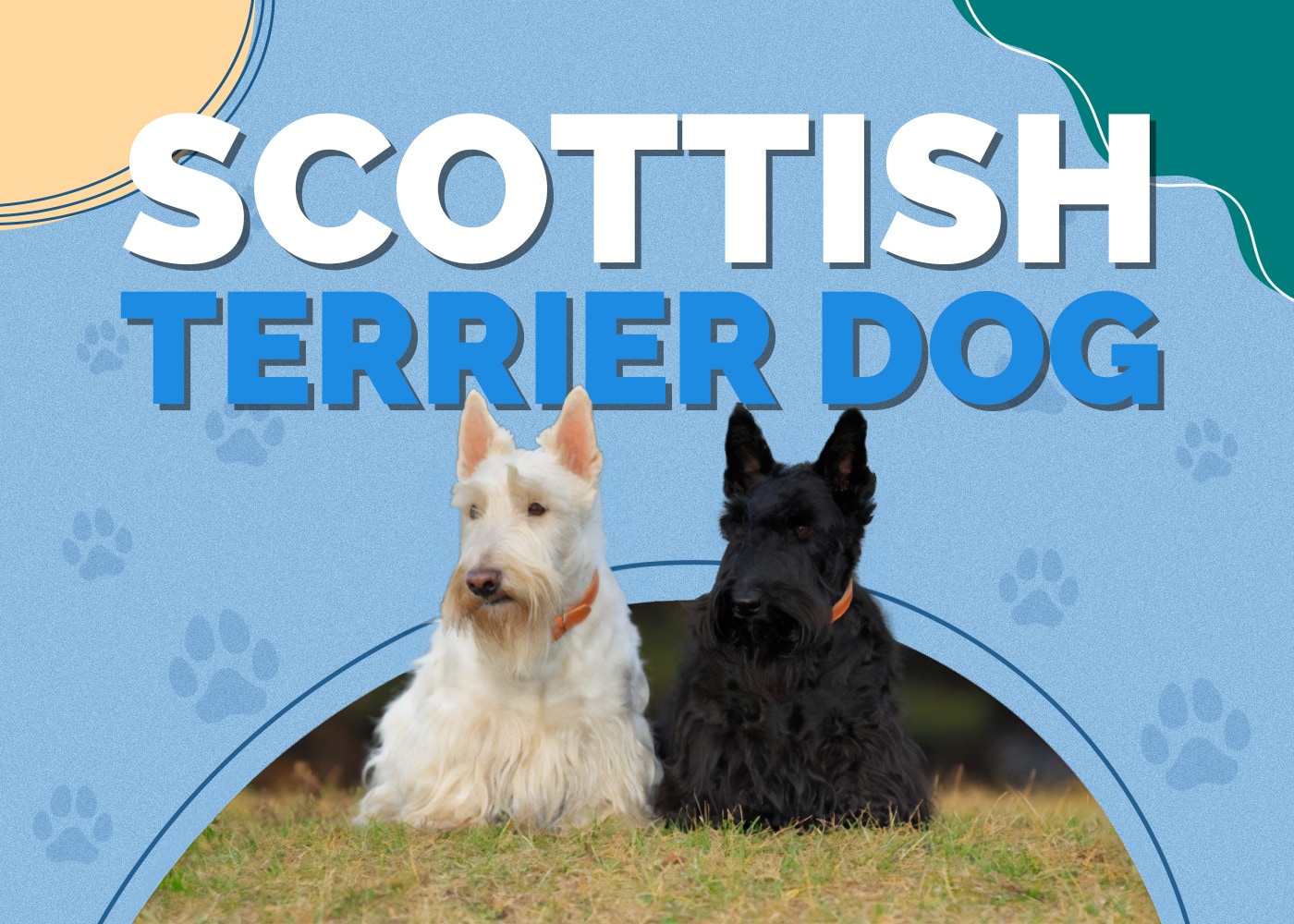
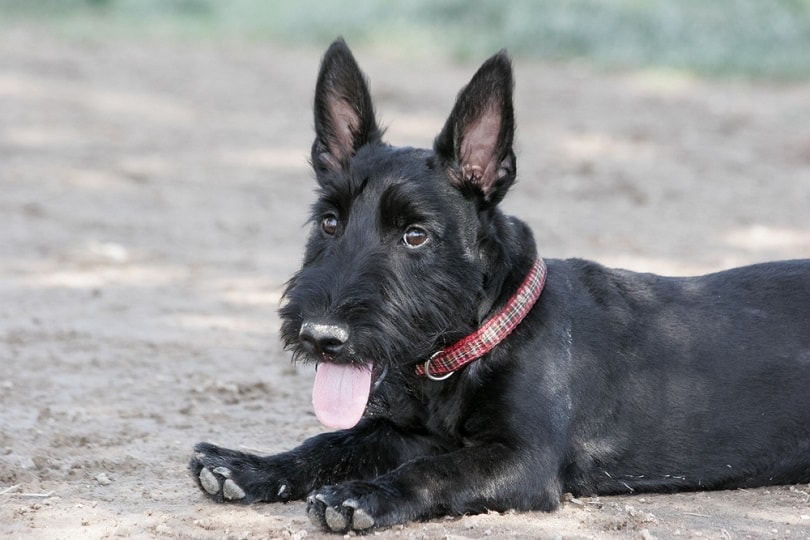
Independent, confident, and spirited are the three words chosen by the American Kennel Club to describe the Scottish Terrier, and it is certainly an apt description. Powerful and compact, these tenacious dogs were ideal for hunting rats and other vermin, but their quirky personalities and unique appearance saw them move from the farmyards of the Scottish Highlands to the executive residence of The White House. As the breed favored by Presidents Franklin D. Roosevelt and George W. Bush, Scottish Terriers have served as “The First Dog” for six presidential terms!
We may know about their unmistakable looks and entertaining personalities, but for those of us lucky enough to share our homes with a Scottish Terrier or are looking to do so, knowing what sort of health issues the breed is predisposed to is vital. In the following article, we will explore eight health conditions seen in Scottish Terriers and discuss if and how they can be avoided.

The 8 Scottish Terrier Health Issues
1. Von Willebrand's Disease (Type III)
Von Willebrand’s Factor (vWF) is a protein that helps platelets stick together to form a clot. Dogs with von Willebrand’s disease (vWD) can have decreased levels of vWF, ranging from mild (Type I) to severe (Type III). Type I vWD is the more common variant, seen predominantly in the Doberman Pinscher, and is also a much milder form of the disease. Scottish Terriers are genetically predisposed to Type III vWD, with affected dogs producing extremely low or no levels of vWF, which can lead to spontaneous hemorrhage and death.
Breeders are strongly urged to have genetic testing of their dogs to try to eliminate the faulty gene from the breed. Prospective owners should insist on seeing paperwork to confirm this testing has been performed before purchasing a Scottish Terrier pup.
2. Craniomandibular Osteopathy (CMO)
Sometimes known as Scottie Jaw, Westie Disease, or Lion Jaw, CMO results in symmetrical bony growths on the lower jaw (mandible) and sometimes the long bones of affected dogs. The condition usually appears in puppies around 6–8 months of age and can affect the opening and closing of the jaw, resulting in pain and difficulty eating.
It is usually a self-limiting condition, stopping once skeletal growth slows down at 12–18 months, so the later the clinical signs start to appear, the better the prognosis. Treatment typically involves the use of anti-inflammatory drugs and pain relief to try to slow down the progression of the disease and improve comfort levels. Surgical intervention may be required if the growths significantly affect function, but the success rate is not high.
The primary goal is to rely on genetic testing and judicious breeding to reduce the incidence of this condition in the population.
3. Scottie Cramp
This is a neuromuscular syndrome that results from a lack of serotonin, causing sporadic muscular spasms or cramps, particularly after exercise. Episodes can last between 5–20 minutes but have no long-lasting effects. Diagnosis of this condition is one of exclusion - ruling out any other causes of lameness.
Dogs with Scottie Cramp are usually started on selective serotonin reuptake inhibitors (SSRIs), such as Fluoxetine, to increase their serotonin levels.
Although it is a genetic condition, there is no genetic test for Scottie Cramp, so the only way to reduce its frequency in the Scottish Terrier population is to avoid breeding from individuals who have suffered from the condition.
4. Cerebellar Abiotrophy
This is a hereditary condition that results in degenerative changes in the cerebellum, which leads to gait abnormalities, such as ataxia (wobbly gait) and difficulty walking. In Scottish Terriers, the condition is relatively mild and rarely progresses to a point where quality of life is significantly affected. There is no specific treatment for this condition, apart from the management of any pain or discomfort that may occur as a result.
Genetic testing is available and should be used in breeding animals to help reduce the incidence of this condition.
5. Luxating Patellas
Sometimes referred to as “wobbly kneecaps,” this is a common cause of intermittent lameness in numerous dog breeds, both large and small, but is particularly prevalent in smaller Terriers with a “bowed” hind limb stance. It occurs when the patella (kneecap) pops out of the femoral groove, resulting in a skipping lameness, which usually settles down quickly.
The mobility of the patella can be due to the strain placed on the patella ligament by the angular positioning on the stifle joint or result from a shallow femoral groove.
There are 4 grades of patellar luxation:
The treatment is dependent on the severity of the condition, with conservative management usually appropriate for Grade 1 and Grade 2. Grades 3–4 usually require surgical correction, as do some Grade 2 cases.
As a heritable condition, breeding from dogs with any form of patellar luxation is strongly discouraged.
6. Chondrodystrophy (CDPA) and Chondrodysplasia (CDDY)
Both of these genetic mutations are essentially forms of dwarfism that result in the elongated back and shortened legs of breeds like Dachshunds, Basset Hounds, and Scottish Terriers.
When both CDPA and CDDY are inherited together, the dog has a significantly higher risk of developing Intervertebral Disc Disease (IVDD), a common cause of acute spinal pain and paralysis in these breeds. Genetic testing to identify which individuals carry the CDDY mutation may reduce the risk of IVDD in these breeds while maintaining the desired physical attributes from the CDPA gene.
7. Degenerative Myelopathy
Degenerative myelopathy is an inherited muscle wasting disorder, characterized by the gradual and progressive weakness of the hind legs to the point of muscle atrophy, paralysis, and incontinence, for which there is no treatment.
Genetic screening is needed to remove dogs carrying the gene for this condition from breeding populations.
8. Atopy/Skin problems
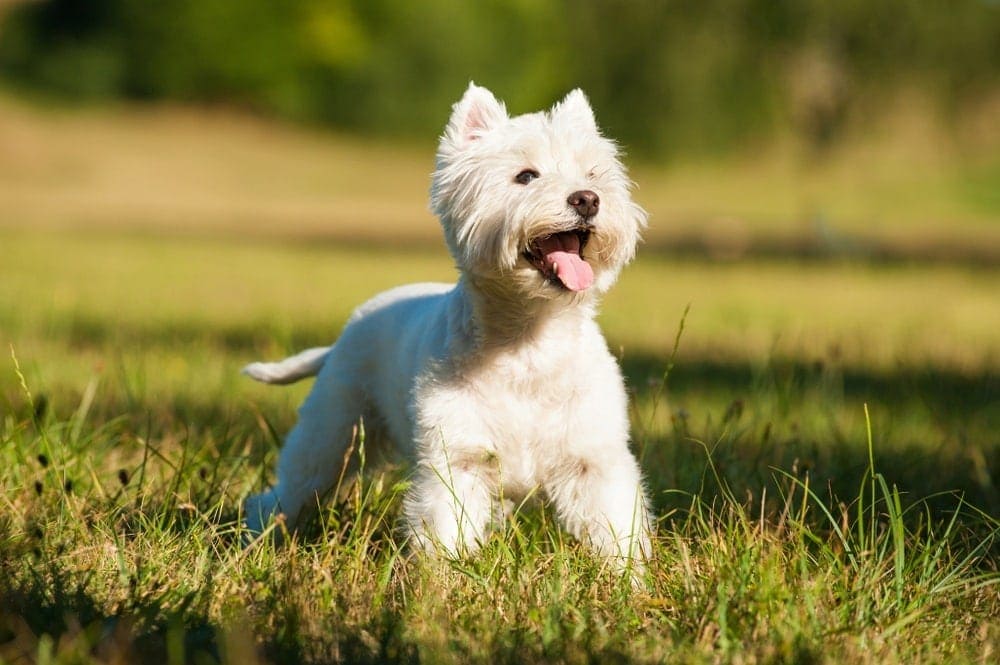
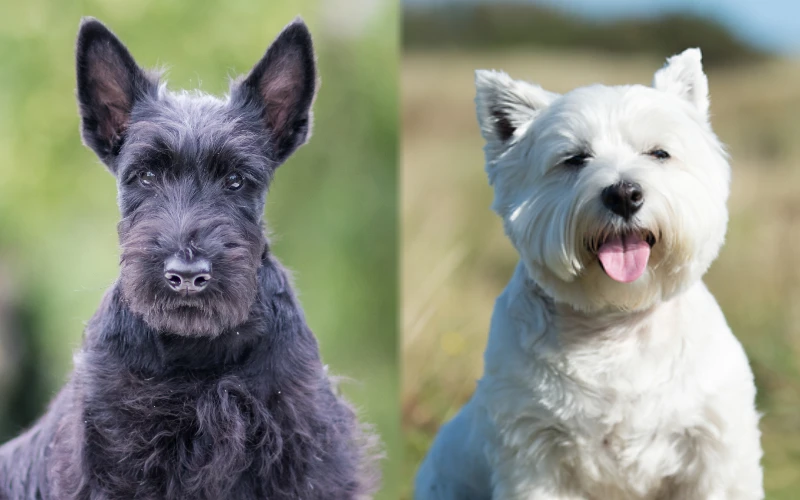
Although not as commonly affected as their West Highland counterparts, Scottish Terriers do suffer from their fair share of allergic skin conditions. These are sometimes linked to seasonal changes, food, or environmental allergens but can also be due to the condition known as atopic dermatitis, or atopy.
The best way to describe atopy is to think of a dog placed in a hermetically sealed box with nothing to eat (a hypothetical dog, of course!). A dog with atopy would still be itchy. Although dogs with atopy are more sensitive to external allergens as well, a large part of their itchiness is due to immune-mediated dysfunction.
Atopy cannot be cured, but there are multiple ways in which the clinical signs can be managed, and allergen loads can be reduced, which will significantly improve the life of an atopic dog and their family.

Final Thoughts
As we can see, the Scottish Terrier is a breed with quite a list of heritable health concerns, many of which will hopefully reduce over time with genetic testing and responsible breeding. As pet owners, it is also up to us to increase the awareness of genetic health conditions in dogs and insist upon seeing the evidence of these tests when looking to adopt from a breeder.
The loving nature and indomitable spirit of the Scottish Terrier are traits that will continue to make them popular pets in the future, so it is up to us to ensure that the future is as bright for them as possible.
Featured Image Credit: Plotitsyna NiNa, Shutterstock
Get Hepper In Your Inbox


Pet care tips from our vets and experts, straight to your inbox.
You may opt-out at any time. View our Privacy Policy for more information.
Karyn has lived in the UK for the past 10 years after moving from Queensland, Australia. In 2010, she graduated from The University of Queensland School of Veterinary Science, and also holds a Bachelor’s degree in Zoology. Karyn is passionate about using evidence, experience, and owner collaboration to provide the best solutions for pets, and believes in making reliable information about animal health accessible to all. She shares her home with 5 cats, 4 dogs, and 1 husband, and when she is not practising as a veterinary surgeon, she spends her time writing, gardening, and cleaning up pet hair!
Karyn comes from Queensland, Australia, but has lived in the UK for the past 10 years. She is passionate about using evidence, experience, and owner collaboration to provide the best solutions for pets, and believes in making reliable information about animal health accessible to all.
She shares her home with 5 cats, 4 dogs and 1 husband, and when she is not practising as a veterinary surgeon, she spends her time writing, gardening, and cleaning up pet hair!
Education
In 2010, Karyn graduated from The University of Queensland School of Veterinary Science and also holds a Bachelor’s degree in Zoology.
Experience
Dr. Kanowski has worked in small animal practice, both in Australia and the UK, and she will be very happy if she never has to see another post-Brexit Animal Export Certificate again! Karyn has special interests in acupuncture and canine behavior and loves challenging surgical cases.
Join the conversation
Ask a question, share your story, or send private feedback.