Hepper blog

Search our database of over 9,984 posts with up-to-date information from our experts and veterinarians.

Hepper is reader-supported. When you buy via links on our site, we may earn an affiliate commission at no cost to you. Learn more.

Siberian Cat Grooming: Vet-Approved Step-by-Step Guide

By Brooke Bundy · Reviewed & fact-checked by Dr. Paola CuevasVet Approved
Dr. Paola Cuevas
Reviewed & Fact-Checked byDr. Paola CuevasMVZ (Veterinarian)
Paola Cuevas is a veterinarian and animal behaviorist, with over 18 years of experience working with a variety of species. Her passion is animal welfare and focuses on the importance of preventive medicine. Paola has skills in the fields of nutrition, microscopy, clinical pathology, diagnostic imaging, and endoscopy as well as extensive experience in animal training through positive reinforcement. As our in-house veterinarian, Paola is very happy to share her knowledge and experience with our readers and hopes to be helpful with any issue presented by your non-human family members.View authorThe information is current and up-to-date in accordance with the latest veterinarian research. Read about our vets
Share
Ask us a question in the comments
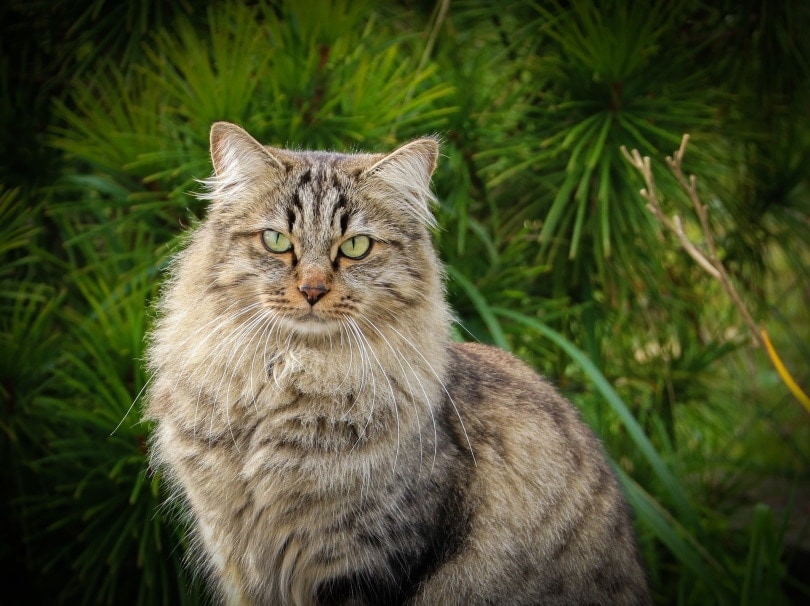
siberian cat_claudia125_Pixabay

The Siberian cat has long hair that is prepared for harsh Russian winters with its three coats. Siberians are rare in the United States, but the cats flourish in their native country, and it is believed that they still live in clans in Siberian forests. They only recently crossed the Atlantic in 1990, following intense negotiation with cat breeders after the Berlin Wall fell and opened up Russian trade.

They are also thought to be ancestors of all long-haired cats and is the only long-haired cat considered hypoallergenic, meaning they produce less dander than others. Their lengthy, triple-layered coat may look intimidating to maintain, but it's quite easy. Your Siberian cat will only need brushing a few times a week and bathing no more than once a month to look its best.

How to Groom Your Siberian Cat

Siberians are the only long-haired cats considered hypoallergenic. However, unlike hypoallergenic dogs, Siberians still shed. On the plus side, you don’t have to cut their hair. Siberian cats have three coats: a downy undercoat, wavy awn hairs, and coarse guard hairs on their outer coat.

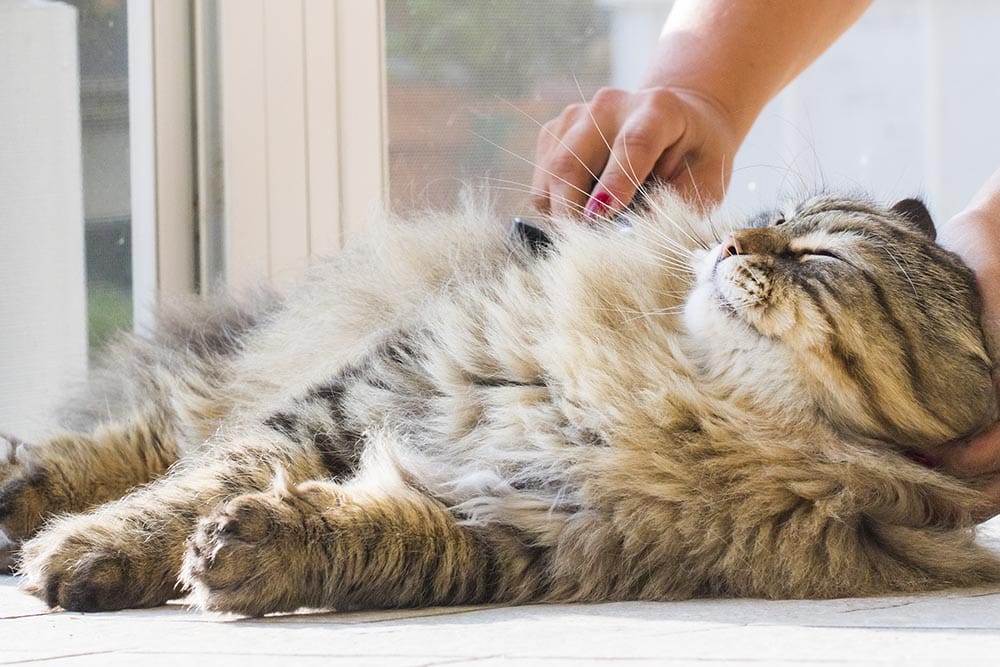
In a normal week, your Siberian will shed a moderate amount, and you'll need to brush them once or twice a week to maintain their coat. It's best to use a combination of a slicker brush, soft brush, and metal comb to care for their three coats.

During the late winter and the summer, your Siberian will go through molting seasons where they will lose more hair than they do the rest of the year. You’ll want to brush them daily when they are molting, so they don’t become matted.

You don’t need to give them a haircut. It is best if you don’t cut any cat’s hair unless they are excessively matted. Cats take pride in their appearance and do not like being shaved.
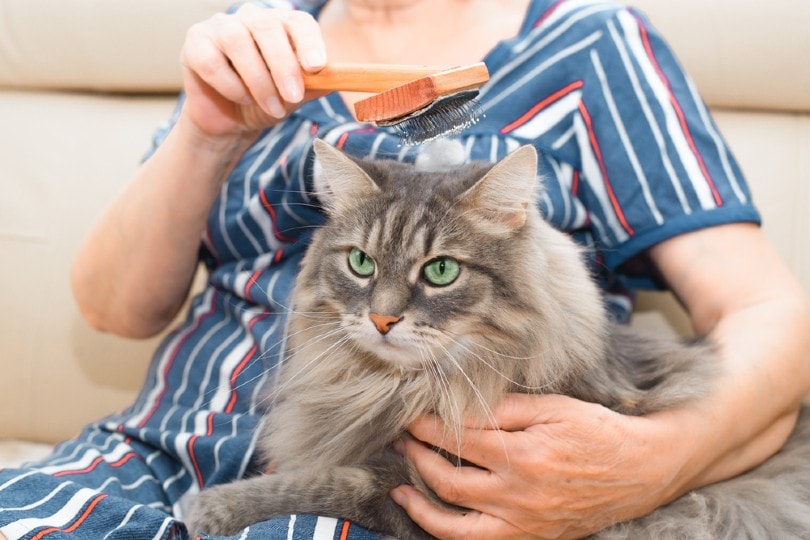
woman grooming a siberian cat
Image Credit by: Sergio Photone, Shutterstock

How (and When) to Bathe Your Siberian Cat

Cats clean themselves for hours daily. Siberians produce oil to keep their coats nourished in the winter and cool in the summer. Washing their fur strips that oil, so your Siberian cat really should only be bathed as needed, and no more than once a month. If you suffer from cat allergies, you may prefer to bathe them at least once or twice a year to reduce the dander trapped in their coats, but brushing is the best method to combat loose fur and dander.

To wash your Siberian cat, you’ll need to:

  • Gather your supplies ahead of time: Your cat may have nine lives, but they don’t want to waste any time when it comes to grooming. To bathe your cat, you’ll need a cat-friendly shampoo, a couple of towels, a slicker brush, a soft brush, a metal comb, and a hairdryer. Some cat owners prefer to bathe their cats in buckets set in the tub. This helps your cat stay in a contained space that’s easier to control. You can also use a collar and leash attached to the tub to hold them in place. If you suspect your cat might claw or bite, you can use rubber gloves to protect your hands and arms.
  • Brush out the tangles: Using a slicker brush, remove the excess fur to prevent tangles and make the drying process easier.
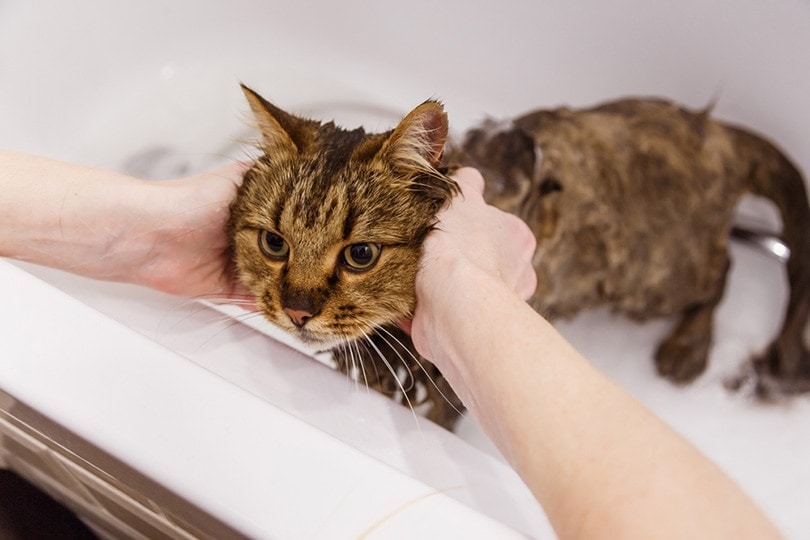
  • Slowly lower your cat into the dry tub or lower them into a semi-full bucket of lukewarm water: There are two methods for bathing your cat. One is to set them in a bucket of warm water immediately, and the other gets them acclimated to the tub before turning the water on. Choose the most appropriate one based on how you think your cat will respond. Either one you pick, encourage them with praise, and slip them a couple of treats to teach them that bath time is a good time. This is also when you’d attach them to the leash if you’re using one.
  • Turn the water on if you’re using a tub: Reassure them with a calm voice and turn the water on. Make sure it’s not too hot or too cold (about the temperature you’d bathe a human baby).
  • Gently wet them: Make sure the water is penetrating all three of their coats by running your wet hands through their fur. Just don’t get any water near their face. Water can damage their sensitive ears!
  • Massage a cat-friendly shampoo into their fur: Rub the cat shampoo through all three layers for a couple of minutes to let it do its job.
  • Rinse out the shampoo: Make sure you get all of the shampoo out, so it doesn’t cause build-up. If your cat is afraid of the shower head, you can use a cup to scoop water and pour it over their body.
  • Towel dry your cat: Lift your cat out of the tub or bucket and wrap them in a towel. You can rub them dry or use a hairdryer on the lowest setting, depending on their tolerance to noise.
  • Brush your cat: Starting with the metal comb, gently untangle your cat’s fur. Switch to the soft brush as their coat dries to create a fluffy appearance. Your cat will look like they’ve been to the salon by the time you’re done!

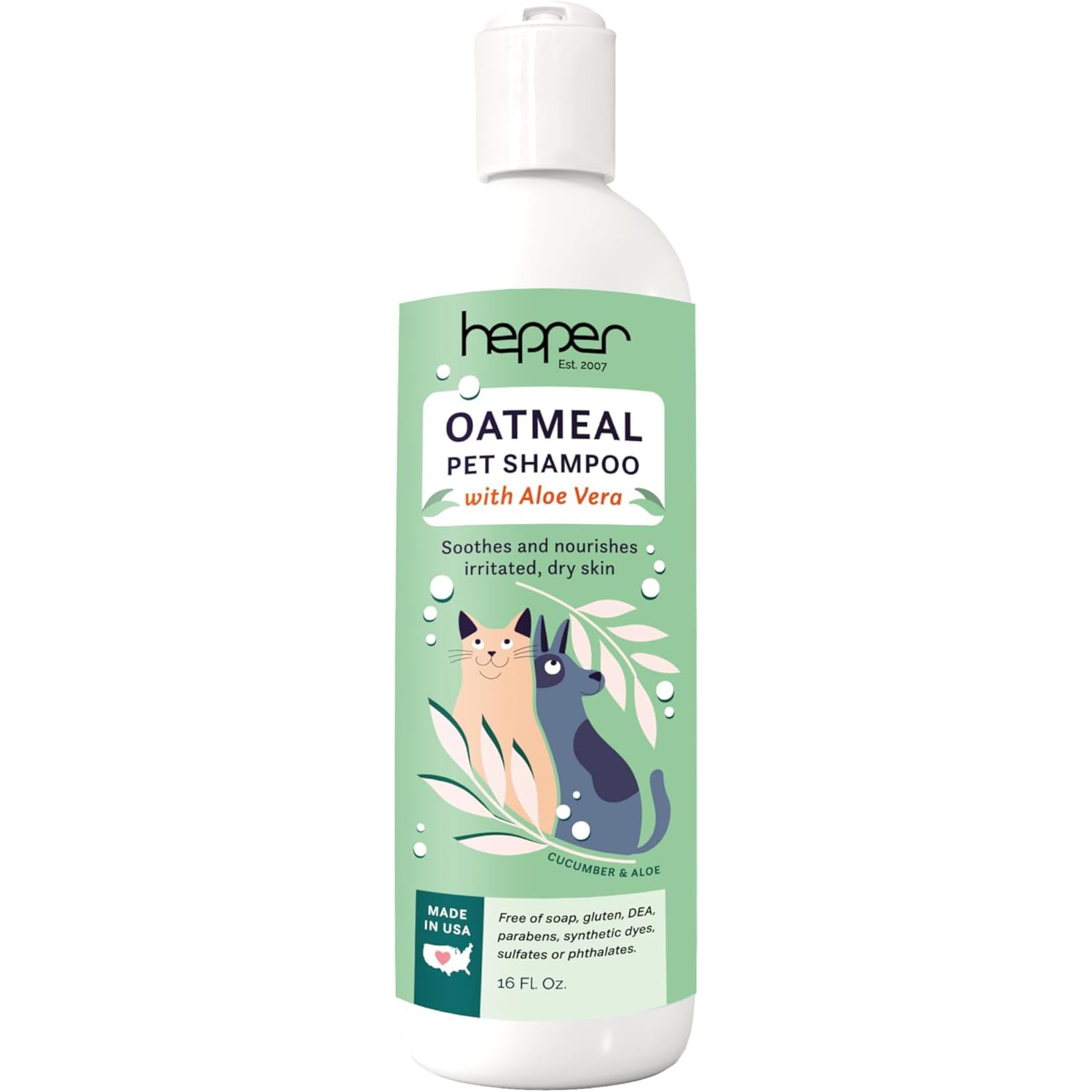
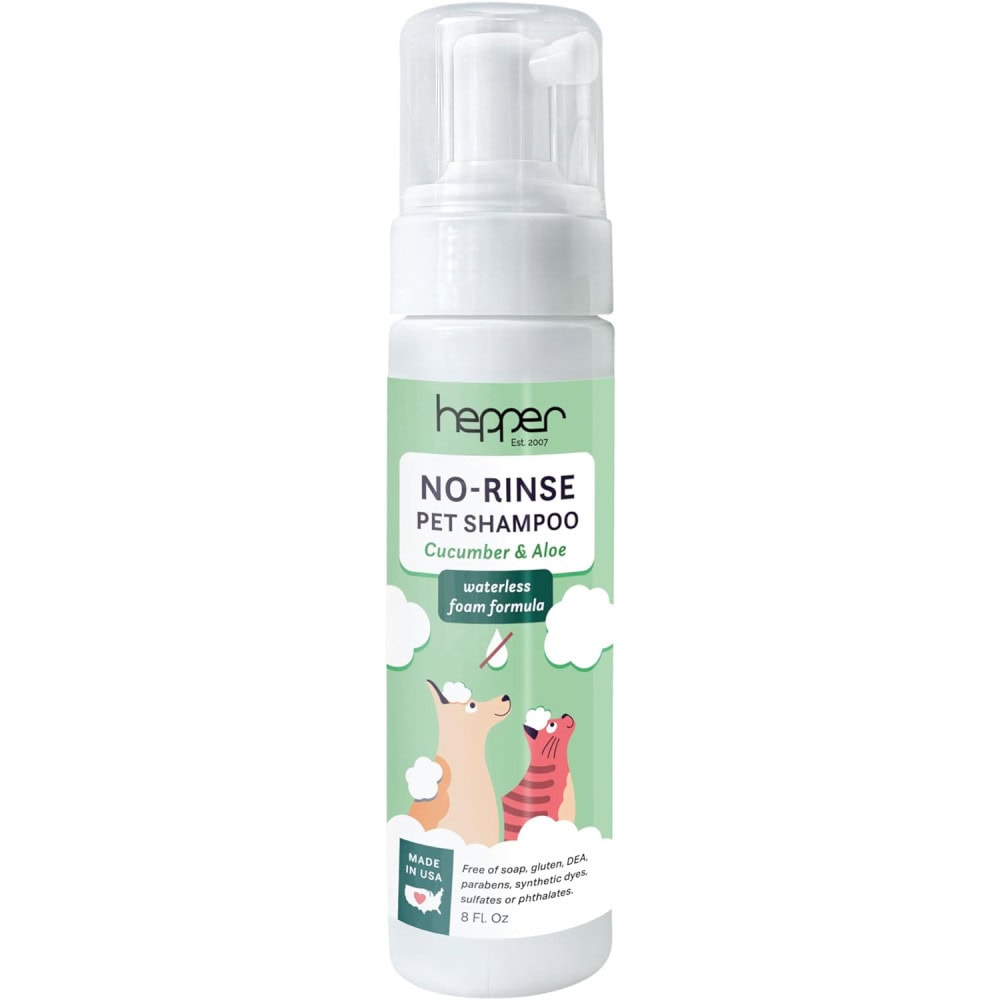
There are a lot of pet shampoos on the market, but not all of them will keep your pet's skin and coat happy and healthy. The Hepper Pet Shampoo products are pH balanced and made with natural, safe ingredients like soothing oatmeal and aloe vera. Our shampoos will keep your pet clean, smelling fresh, and fully moisturized! The hardest part is deciding whether to get to traditional shampoo or the rinse-free version! Here’s a quick guide to help you choose the right option for your pet’s next bath!

Image Product Details
Hepper Colloidal Oatmeal Pet Shampoo Hepper Colloidal Oatmeal Pet Shampoo
  • Safe for Dogs & Cats
  • Soothing Oatmeal
  • Lightly Scented
  • Hepper Waterless No Rinse Pet Shampoo Hepper Waterless No Rinse Pet Shampoo
  • Waterless cleaning
  • Natural ingredients & pH balanced
  • Fresh scent
  • Other Grooming Requirements

    In addition to frequent brushing and occasional bathing, your Siberian cat also needs their teeth brushed several times a week and their nails trimmed. Please don’t declaw your cat. This inhumane process amputates the last bone in their paws and gives them little hope of survival if they were to run away. Declawed cats are more likely to bite you since they can’t scratch.

    Conclusion

    Despite their fluffy, multi-layered coats, Siberian cats do not require a lot of grooming. If you brush them several times a week and bathe them only when they need it (no more than once a month), your cat will clean itself. A Siberian cat is a perfect friend for an allergy sufferer because they are considered hypoallergenic. Even so, you’ll probably want someone else in the family to do the brushing because they still shed.

    Sources

    Featured Image Credit by: claudia125, Pixabay

    Get Hepper In Your Inbox

    Pet care tips from our vets and experts, straight to your inbox.

    List

    Select all that apply.

    You may opt-out at any time. View our Privacy Policy for more information.

    Brooke Bundy
    Authored by

    Brooke Bundy

    Join the conversation

    Ask a question, share your story, or send private feedback.
    Rate this post
    Required to post. Only our editors see your rating.
    Who should see this?

    A human reviews every comment before it appears. Your email is never published.

    Picked to go with this article

    Siberian Cat: Breed Info, Pictures, Care Traits & Facts

    Siberian Cat: Breed Info, Pictures, Care Traits & Facts

    The Siberian cat is a natural breed that originated in Russia. They were not purposefully bred by people but were instead naturally developed over hundreds of…

    Kristin Hitchcock
    By Kristin Hitchcock ·
    Norwegian Forest Cat Grooming (Step-by-Step Guide)

    Norwegian Forest Cat Grooming (Step-by-Step Guide)

    Built to withstand the cold, harsh winters of Norway, their country of origin, the Norwegian Forest Cat is one of the fluffiest cats around. Their thick double…

    Nicole Cosgrove
    By Nicole Cosgrove ·
    Do Siamese Cats Shed? Facts & FAQ

    Do Siamese Cats Shed? Facts & FAQ

    Siamese cats are well-known for having extremely short hair. However, this doesn’t mean that they don’t shed. In fact, Siamese cats often shed just as much as…

    Kristin Hitchcock
    By Kristin Hitchcock ·
    How to Groom a Long Haired Cat – 11 Expert Tips

    How to Groom a Long Haired Cat – 11 Expert Tips

    Long-haired cats are highly sought after for their elegance and beautiful look but caring for their coat is a group effort. While your kitty can take care of i…

    Chantelle Fowler
    By Chantelle Fowler ·

    Keep reading

    More stories you might like

    Can I Wash My Cat with Just Water? Vet-Approved Bathing Tips

    Washing a cat can be a tricky process, and it can be tempting to rinse your cat with water and hope that it is good enough. But is it? The answer is that it de…

    Jordyn Alger
    By Jordyn Alger ·
    Can I Wash My Cat with Just Water? Vet-Approved Bathing Tips

    How Much Does a Siberian Cat Cost? 2026 Price Guide

    The Siberian cat is an ancient breed that originated in Russia. It’s a naturally occurring cat, and breeders have only recently created a standard to judge its…

    Ed Malaker
    By Ed Malaker ·
    How Much Does a Siberian Cat Cost? 2026 Price Guide

    Bathing Sphynx Cats: 8 Vet Reviewed Tips

    Sphynx cats are famous for their sweet personality and distinctive hairless body. That look comes with some high-maintenance grooming needs, however. You may t…

    Nicole Cosgrove
    By Nicole Cosgrove ·
    Bathing Sphynx Cats: 8 Vet Reviewed Tips

    How to Brush a Cat: 6 Vet-Approved Steps

    As the owner of a cat, you know that your feline friend grooms himself regularly by licking every little bit of his fur. This self-grooming is done to remove d…

    Nicole Cosgrove
    By Nicole Cosgrove ·
    How to Brush a Cat: 6 Vet-Approved Steps

    How Often Should I Bathe My Cat? Care and Grooming Tips

    If you have ever tried, you probably know that bathing a cat isn't an easy task most of the time. They practically act like you're the worst person on earth ev…

    Ashley Bates
    By Ashley Bates ·
    How Often Should I Bathe My Cat? Care and Grooming Tips

    Male vs. Female Siberian Cat: The Differences (With Pictures)

    Are you thinking of adding a Siberian cat to your family but have no idea which gender to choose? If so, you’ve come to the right place. The Siberian cat hails…

    Rachel Giordano
    By Rachel Giordano ·
    Male vs. Female Siberian Cat: The Differences (With Pictures)

    Do Cats Like to Be Brushed? Grooming & Care Tips

    Cats groom themselves with their tongues, leaving many people slightly misinformed about their grooming needs. Many people assume that cats do not need to be g…

    Luxifa Le
    By Luxifa Le ·
    Do Cats Like to Be Brushed? Grooming & Care Tips

    Do Cats Need Baths? Reasons, Facts & Tips

    The thought of cats brings to mind sprinting in the woods, hiding in the alley, or appearing when you least expect it. These prowling, independent, nighttime-l…

    Nicole Cosgrove
    By Nicole Cosgrove ·
    Do Cats Need Baths? Reasons, Facts & Tips