Hepper is reader-supported. When you buy via links on our site, we may earn an affiliate commission at no cost to you. Learn more.
7 Great Tank Mates for Rope Fish: Compatibility Guide 2026
In this article
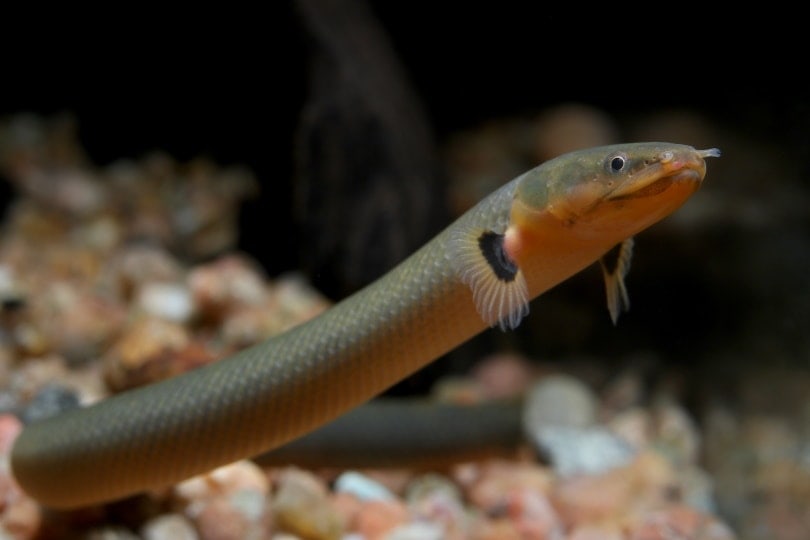
The Rope Fish—also known as the Reed Fish or Snake Fish—is an odd-looking, slender fish that resembles an eel and moves like a snake.
Despite its large size, the Rope Fish is not known for being aggressive. This makes them good tank mates for other non-aggressive fish. They don't do well in a tank with smaller fish because they will likely eat the smaller species. Nor do they do well with aggressive fish because they will be under constant attack.
Keep reading to learn more about some of the best choices for Rope Fish tankmates and Rope Fish care.

The 7 Tank Mates for Rope Fish
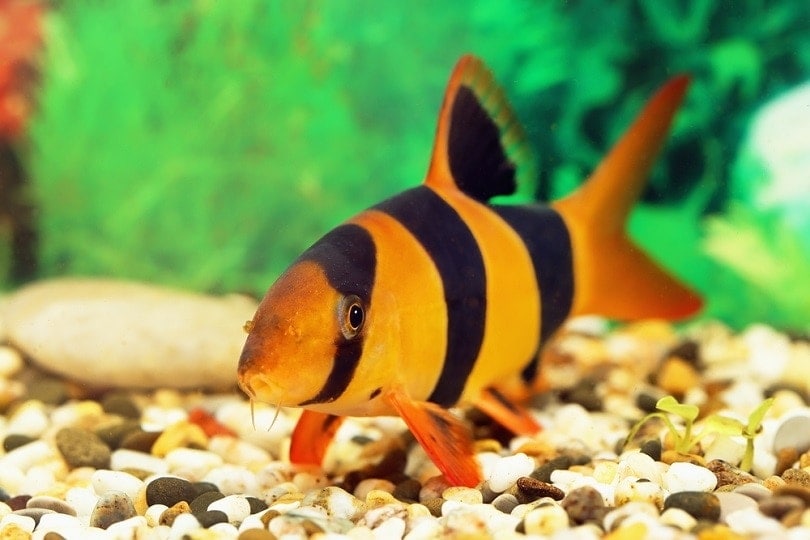
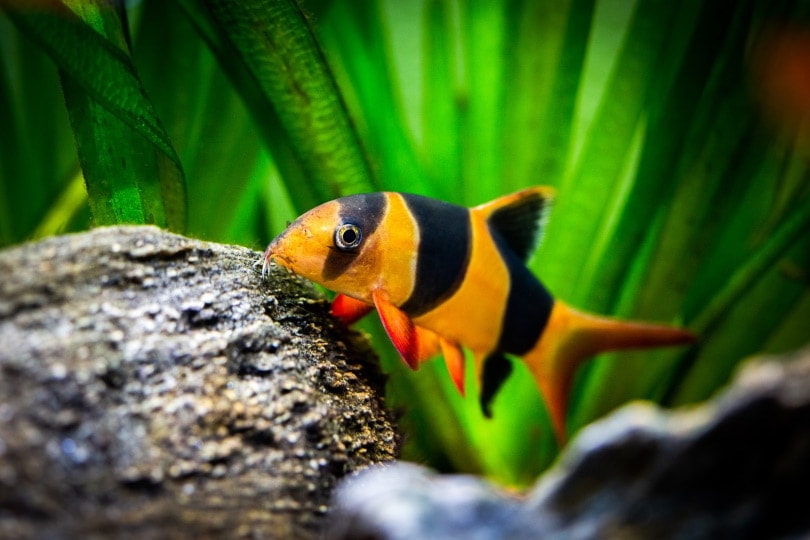
1. Clown Loach (Chromobotia macracanthus)
| Size | 5–8 inches (15–20 cm) |
| Diet | Worms, fish flakes, and pellets |
| Minimum tank size | 75 gallons (283 liters) |
| Care Level | Easy |
| Temperament | Peaceful |
Clown Loaches are very peaceful fish that are easy to care for. This makes them a popular choice for freshwater tanks. They pair well with rope fish because they are very active during the day, which is when you won’t usually see your rope fish out and about. The Clown Loach is also a beautiful fish with a bright orange body covered with thick dark bands. They make a great addition to any tank!
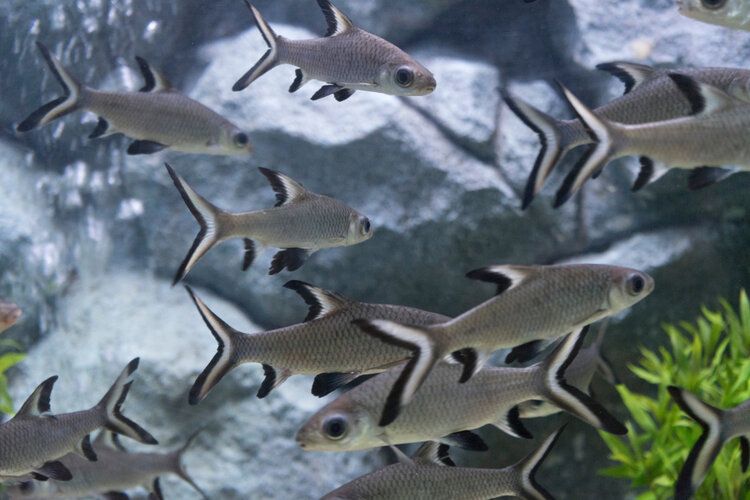
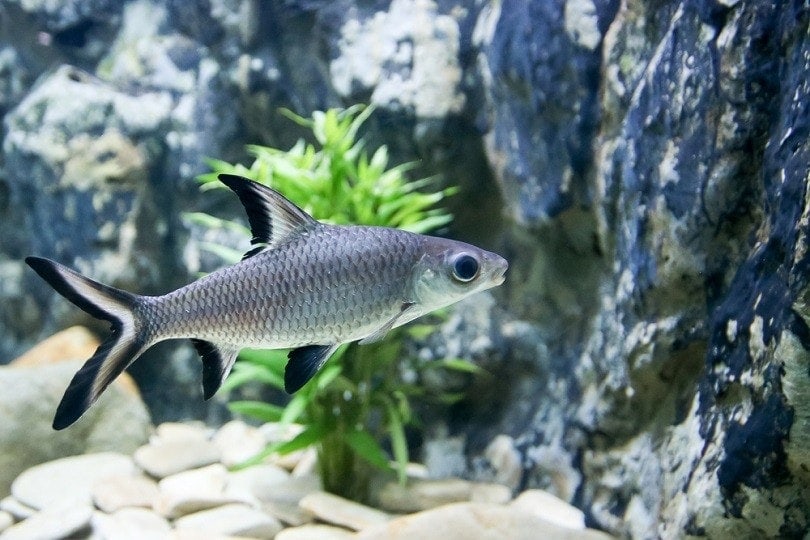
2. Bala Sharks (Balantiocheilos melanopterus)
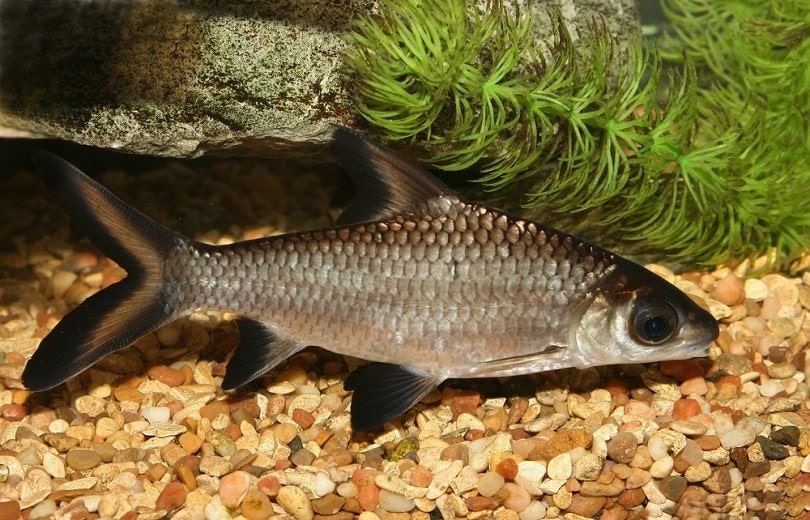
| Size | 14 inches (35 cm) |
| Diet | Carnivore (pellets, flakes, freeze-dried food, live food) |
| Minimum tank size | 125 gallons (473 liters) |
| Care Level | Easy |
| Temperament | Peaceful, shy |
The Bala Shark is not actually a true shark. They're often mistaken for one because their bodies resemble that of a shark. However, these large fish are peaceful tank dwellers who get along well with most other fish. Like the Rope Fish, they may mistake smaller tank mates for food, so they are best kept with other larger species.
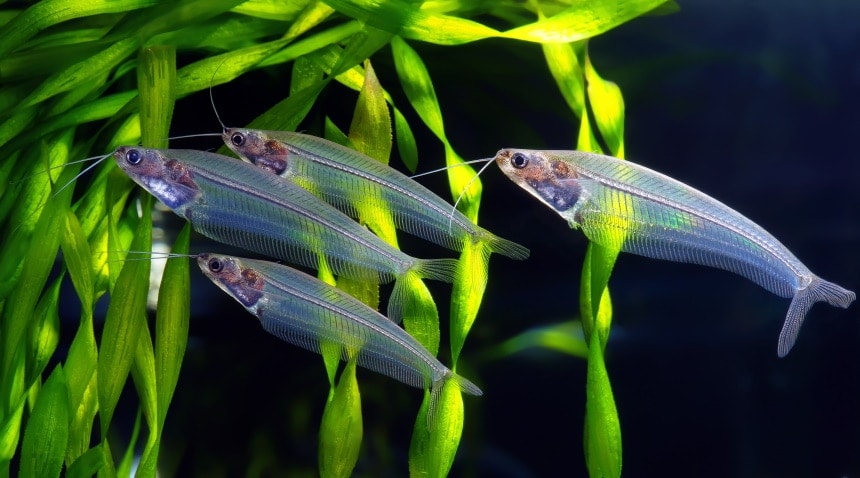
3. Glass Catfish (Kryptopterus vitreolus)
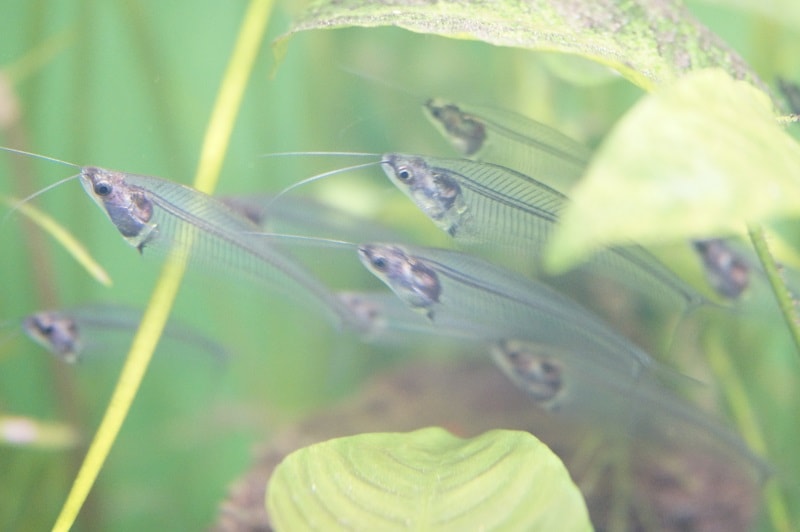
| Size | 3–4 inches (7–9 cm) |
| Diet | Omnivore |
| Minimum tank size | 35 gallons (132 liters) |
| Care Level | Easy |
| Temperament | Peaceful |
The Glass Catfish is also known as the Ghost Glass Catfish. These fish are unique in that, as the name implies, they are like glass. You can see right through their exterior and see the internal organs at work. They are also peaceful omnivores who won’t bother other fish in the aquarium, making them a good tank mate for the Rope Fish.
4. Siamese Algae Eaters (Crossocheilus oblongus)
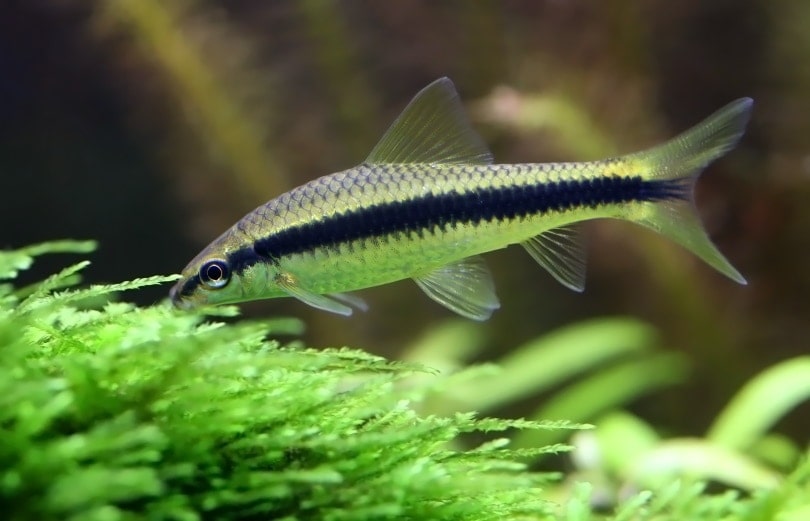
| Size | 6 inches (16 cm) |
| Diet | Omnivore |
| Minimum tank size | 30 gallons (113 liters) |
| Care Level | Easy |
| Temperament | Generally peaceful |
The Siamese Algae Eater is a great choice for pairing with a rope fish. The algae eater thrives in tanks with many plants because they can feast on the algae that can grow around tank plants. Rope Fish like tanks with plenty of plants for them to hide in. The Siamese Algae Eater is generally peaceful with other fish, although they can become aggressive towards their own kind if there isn’t enough space in the tank.
5. Dwarf Gourami (Trichogaster lalius)
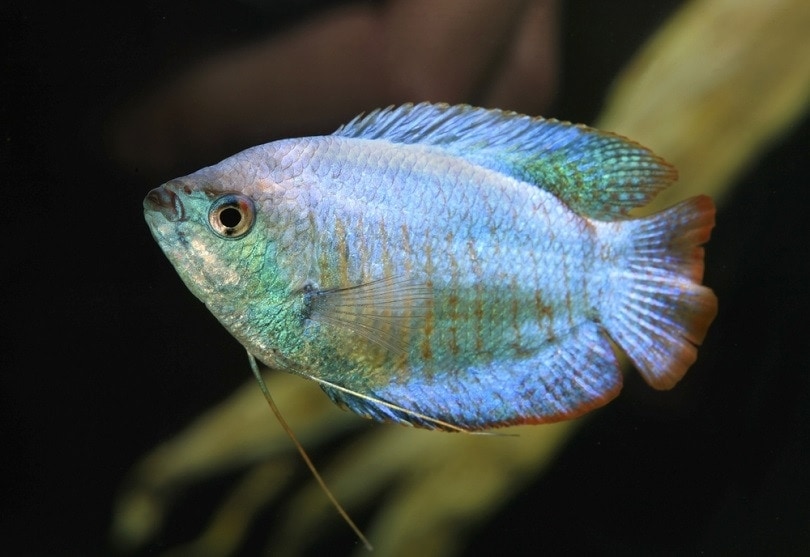
| Size | 3.5 inches (9 cm) |
| Diet | Omnivores |
| Minimum tank size | 10 gallons (38 liters) |
| Care Level | Easy |
| Temperament | Peaceful |
The Dwarf Gourami is much more peaceful than its aggressive cousin the standard gourami. They won’t bother other peaceful fish and make good tank mates in most freshwater aquariums. They feed on both flake and freeze-dried foods. However, they are very timid so you will need to keep an eye on them when feeding to ensure they aren’t bullied out of the way.
6. Pictus Catfish (Pimelodus pictus)
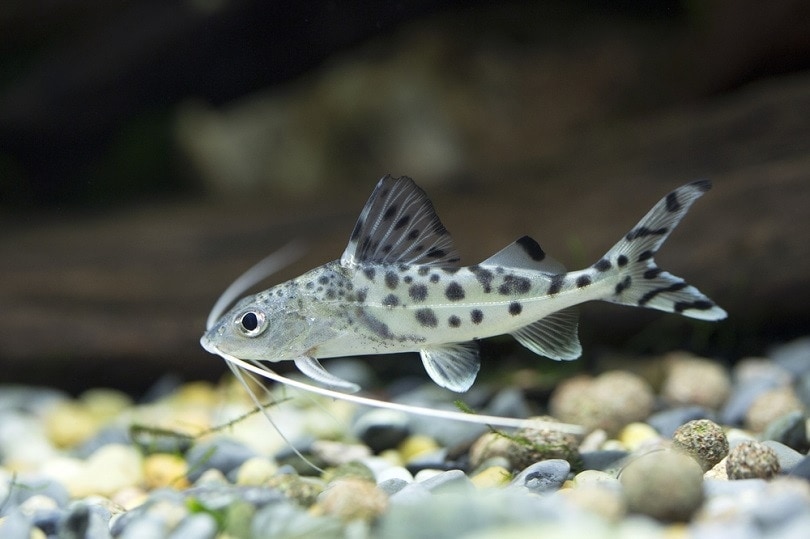
| Size | 4–5 inches (10–12 cm) |
| Diet | Omnivores |
| Minimum tank size | 50 gallons (189 liters) |
| Care Level | Easy |
| Temperament | Peaceful, shy |
The Pictus Catfish prefers to dwell at the bottom of the tank. They are nocturnal so you won’t see them much during the day. They will eat fish that are smaller than they are but will leave larger fish alone, much like the Rope Fish. Even though they’re bottom dwellers, they prefer not to clean the tank. Instead, you’ll need to provide them with some extra food at night.
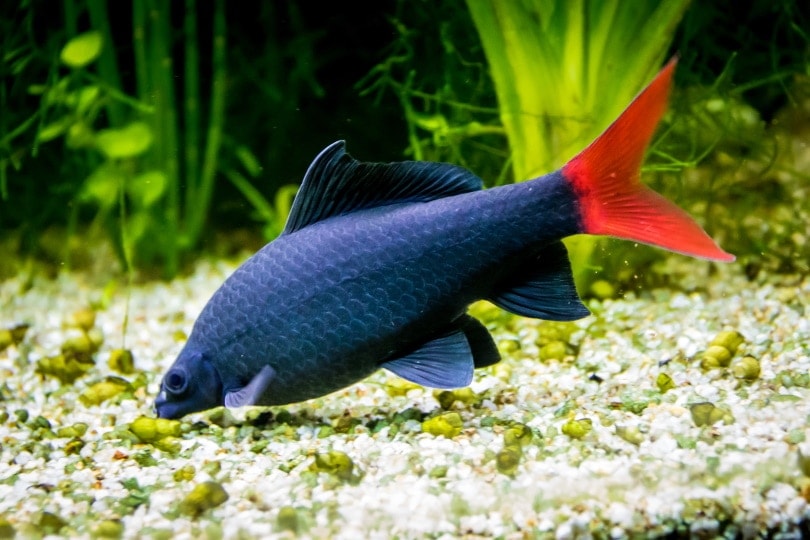
7. Rainbow Sharks (Epalzeorhynchos frenatum)
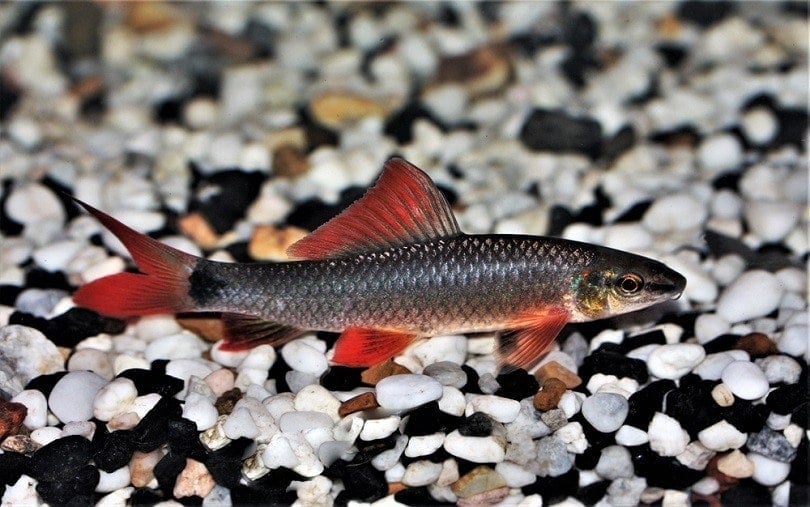
| Size | 6 inches (15 cm) |
| Diet | Omnivore |
| Minimum tank size | 30 gallons (113 liters) |
| Care Level | Easy |
| Temperament | Peaceful |
The Rainbow Shark isn’t a true shark but, like the Bala Shark, closely resembles a shark. They have grey, black, or blue bodies with bright red fins. The Rainbow Shark makes a good addition to most freshwater tanks because it eats algae and leftover fish food that has fallen to the bottom of the tank. Interestingly, these fish are peaceful with one exception: they don’t like other Rainbow Sharks! You should only have one Rainbow Shark in your tank to prevent problems between them.

What Makes a Good Tank Mate for Rope Fish?
Good tank mates for Rope Fish are generally medium to large-sized fish that are non-aggressive. They can be housed with other Rope Fish too, as long as you have a large enough tank to accommodate them.
Because the Rope Fish is an omnivore, smaller fish aren’t good tank mates—the Rope Fish will eat them. They also shouldn’t be paired with aggressive fish who may attack these gentle giants.
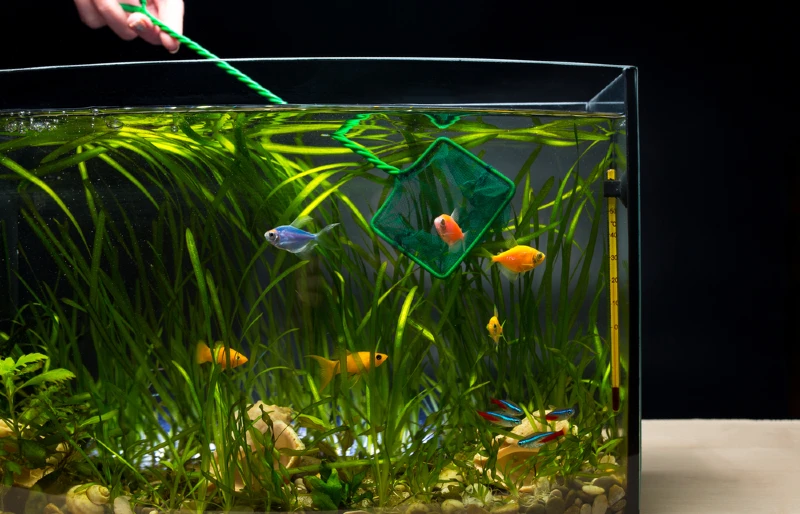
Where Do Rope Fish Prefer to Live in the Aquarium?
Rope Fish typically hang out near the bottom of the aquarium. However, this species has a lung-like organ attached to its intestinal tract. In the wild, this helps them to survive in times of drought because they can use this organ to take in oxygen from the atmosphere and absorb it into their bloodstream this way rather than from the water. Even in non-drought times, the rope fish needs to go to the surface to take in air. You’ll notice them doing this in your tank from time to time.
Water Parameters
The Rope Fish is native to Central and Western Africa. In the wild, they are primarily found in slow-moving or standing fresh water. They do best in warm water, usually between 72 and 82 degrees Fahrenheit. Since they have both lungs and gills, they can survive in relatively shallow water in the wild. However, they should be kept in a tank that holds at least 50 gallons, if not more, when in captivity.
Size
The Rope Fish is long and slender. Typically, they will reach about 15 inches in length when fully grown, although some have been known to grow up to 20 inches. They have a fan-like fin on either side of their necks and a series of small bumps along their backs.
Aggressive Behaviors
The Rope Fish is a peaceful creature. They generally don’t display aggressive behaviors toward other fish. However, they are omnivores, so if you house them with smaller fish or crustaceans, they might mistake them for food and eat them. If they are attacked by other more aggressive species in your tank, their reaction is to hide by burying themselves in the substrate rather than attacking in return.
The 3 Benefits of Having Tank Mates for Rope Fish in Your Aquarium
There are several benefits to having tank mates for your Rope Fish. These include:
Conclusion
The Rope Fish is a gentle giant that does just fine with other peaceful fish, as long as the other fish aren’t small enough for them to eat. They are interesting to observe as they will both lurk around the bottom of the tank and take trips to the surface.
It is very important that you get a tank that is large enough to accommodate these fish so that they have enough room to swim around and explore. The other key to their care is maintaining a clean, warm environment. This will prevent infections and diseases that may shorten their life span.
With proper care, you will be able to enjoy your Rope Fish for up to 20 years!
Featured Image Credit: Dan Olsen, Shutterstock
Get Hepper In Your Inbox


Pet care tips from our vets and experts, straight to your inbox.
You may opt-out at any time. View our Privacy Policy for more information.

Lindsey discovered her passion for fish keeping after a junior high school field trip to the Shedd Aquarium in Chicago. Prior to becoming Editor-in-Chief of It's a Fish Thing, Lindsey studied marine biology at the University of California-Santa Cruz. She loves goldfish, tetras, and mystery snails, and recently began experimenting with a saltwater aquarium.
Join the conversation
Ask a question, share your story, or send private feedback.