Hepper is reader-supported. When you buy via links on our site, we may earn an affiliate commission at no cost to you. Learn more.
What Do Pufferfish Eat in the Wild and as Pets? Nutrition Facts & FAQ
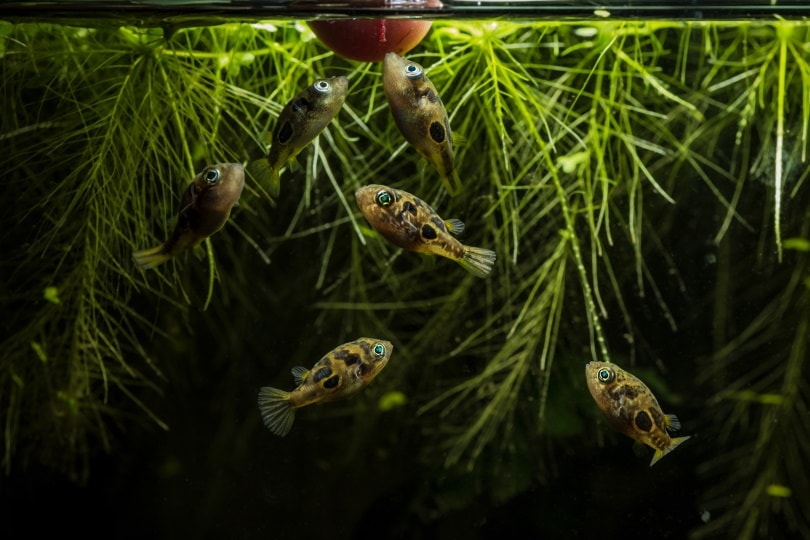
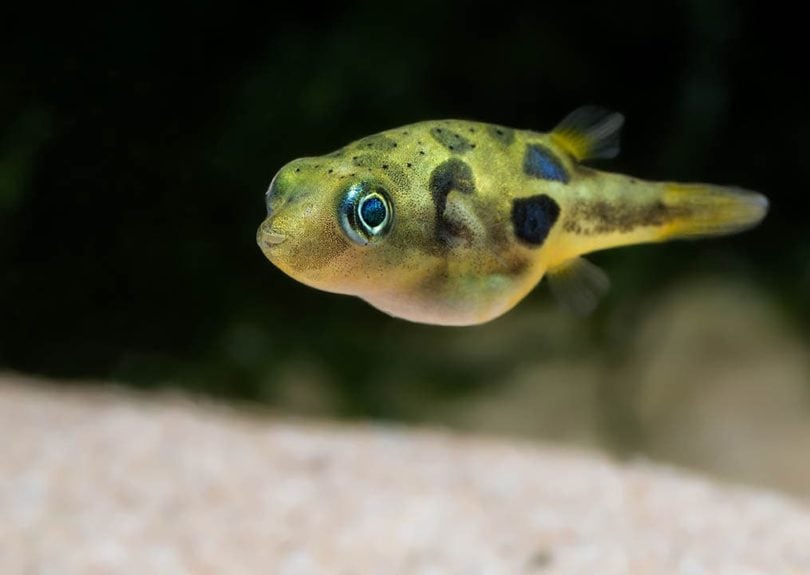
Pufferfish are part of the Tetraodontidae family which contains various types of pufferfish. The most common pufferfish in captivity is the pea puffer, whereas the spotted puff is a common marine or saltwater pufferfish. Puffers are rapidly gaining popularity as a pet, and they are fascinating to watch as they swim around and explore their captive environment.
These fish have a set of thick teeth on the bottom and top part of their mouth. They use these teeth to eat through hard-shelled invertebrates that they forage for within the substrate or plants. They are also popularly known for their ability to puff up like a balloon when they feel threatened.
If you are lucky enough to own one of these creatures, you may be wondering what the best diet is for them. This article will provide you with everything you need to know about their diet to keep them healthy and happy.

What Do Freshwater Pufferfish Eat?
In the Wild
Freshwater pufferfish will eat a variety of different foods in the wild. They will eat foods like crustaceans, snails, algae, and shrimp. Algae make up about 20% of their diet, and protein-rich foods make up 80% of their diet. Since most freshwater pufferfish are smaller than marine pufferfish, they feed on smaller invertebrates that can fit in their mouth so that their strong beak can easily break through the food.
In Captivity
The captive diet is slightly different than their wild diet. Pufferfish should be fed commercial food with protein supplements. Some commercial diets include pellets, flakes, or gel foods formulated to meet the pufferfish's nutritional requirements. They should be supplemented with small shrimp, snails, algae pellets, small crabs, and young crayfish.
What Do Saltwater Pufferfish Eat?
In the Wild
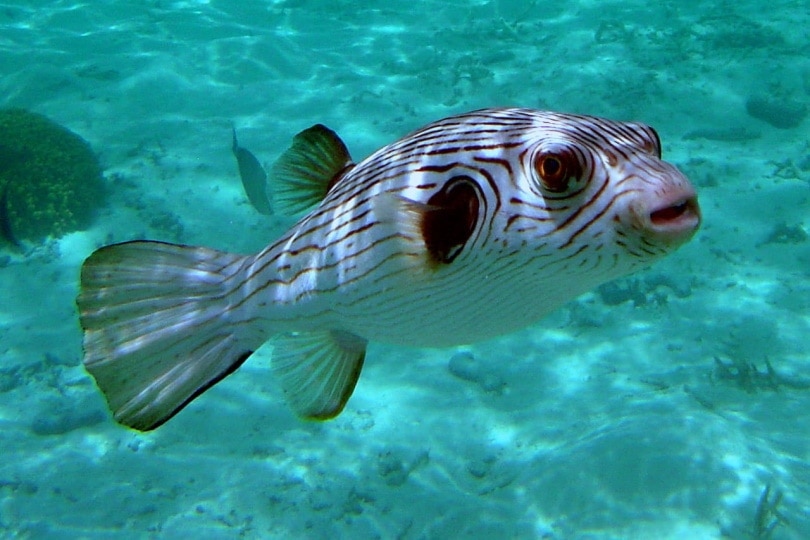
Saltwater pufferfish typically feed off the tips of corals, hermit crabs, clams, snails, and other marine invertebrates. This diet helps to keep their beaks trim while providing them with minerals that they use for growth and development. They will occasionally feed on marine algae which they will nip at.
In Captivity
They should be fed a diet of frozen crustaceans like crabs and crayfish. The shell casings should be left on so that they can wear down their beak. They should also eat mussels, clams, oysters, sponges, corals, algae tabs, and snails in captivity. Their captive diet is different than the freshwater pufferfish and feeding can be difficult.
Types of Pufferfish
The different types of pufferfish you get are classified as freshwater, which means that they should be kept in water with a low salinity content. You also get a variety of marine pufferfish that should be kept in a saltwater tank. Each puffer has a different diet, so it is important to determine what type of pufferfish you keep to better understand their diet.
General Nutrition Info
All types of pufferfish are omnivores. This means that they primarily eat live foods and minimal plant matter which should make up most of their captive diet. The diet of the pufferfish primarily includes foods such as algae and smaller invertebrates. Some larger pufferfish can crack open clams, shellfish, and mussels with their strong and hard beaks. They feed on a variety of food, and this provides them with all the nutrition and minerals they need for growth and health. Interestingly, it is believed that pufferfish synthesize their tetrodotoxin from the bacteria in the animals that they eat.
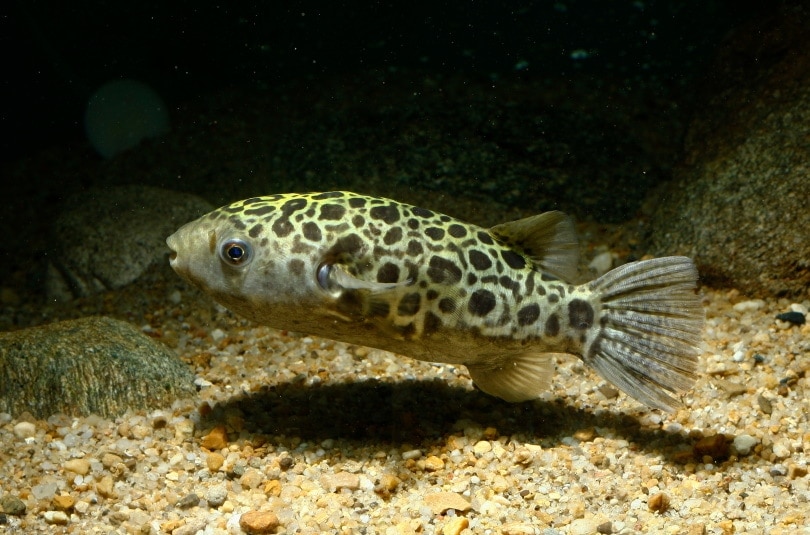
This is a list of the foods pufferfish naturally eat:
- Crabs
- Molluscs
- Shrimp
- Algae
- Snails
- Crayfish
- Cockles
- Clams
- Oysters
- Corals
- Worms
- Urchins
Pufferfish are also at risk of overgrown beaks. This makes it important for them to have hard foods in their diet. Too much soft food does more harm than good. They require hard invertebrates to wear down their beaks. Their teeth never stop growing and it is risky to trim the beak yourself.
Foods like clams and oysters are best left to adult pufferfish who can efficiently eat them. They are very messy eaters which is why they need a very large tank and strong filtration system to keep the water chemistry ideal. They should only be fed between 2 to 3 times a day depending on the type and size of pufferfish you keep.
The Dwarf Pea Puffers Diet
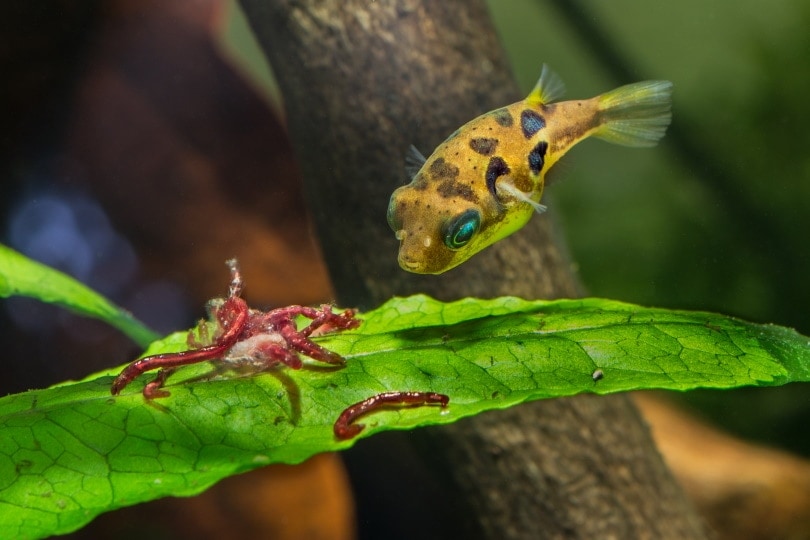
The most popular pet pufferfish are pea puffers. They are beginner-friendly and small. Pea puffers should be fed a slightly different diet than most freshwater and marine pufferfish. They are carnivores and should be fed frozen foods in captivity. These foods include pest snails, brine shrimp, bloodworms, algae, small crabs, and grindal worms. It may also be a good idea to feed them a pea puffer commercial diet of pellets. These pellets should be high in protein and contain little plant matter.
Pea puffers may be small, but they have a mighty appetite! They enjoy having constant access to foods that they can hunt and scavenge for. Placing a variety of small pest snails in the tank will provide them with hours of enjoyment as they happily scavenge for the snails. Aside from this, you should also keep the shells on invertebrates so that they can maintain a healthy beak.
In the wild, they mainly feed on small invertebrates, crustaceans, algae, and microworms. They naturally forage for these foods amongst vegetation and sift through sandy substrates in search of food. It is beneficial to bury some of their food under the substrate so that they can be enriched by finding and eating the food.

Conclusion
Pufferfish are attractive and interesting fish that are best suited to aquarists with experience in caring for exotic fish. Marine pufferfish should be kept by experts who have the sources to get the foods they require. It is generally quite difficult for a standard home aquarium to keep marine pufferfish healthy.
Once you understand the basic nutritional requirements of the pufferfish, feeding them will become easier and you will find it enjoyable to watch them munch away on their food. They have a funny way of eating, and this amuses many pufferfish owners.
Featured Image Credit: Toxotes Hun-Gabor Horvath, Shutterstock
Get Hepper In Your Inbox


Pet care tips from our vets and experts, straight to your inbox.
You may opt-out at any time. View our Privacy Policy for more information.

Sarah is residing in South Africa with her partner and pets. She currently is interested in veterinary science and ichthyology, which she wants to study alongside her main passion: pet content writing. Sarah has over 60 fish including goldfish, tropicals, shrimp, and snails. She also keeps hamsters and a tarantula and wishes to provide quality content for readers and allow others to learn from her knowledge and experience. Sarah has much experience in all aspects of pet care, and providing the world with knowledge on ethical pet ownership is her lifelong dream.
Join the conversation
Ask a question, share your story, or send private feedback.