Hepper is reader-supported. When you buy via links on our site, we may earn an affiliate commission at no cost to you. Learn more.
Live vs. Plastic Plants for a Goldfish Aquarium: Pros, Cons & Verdict
In this article
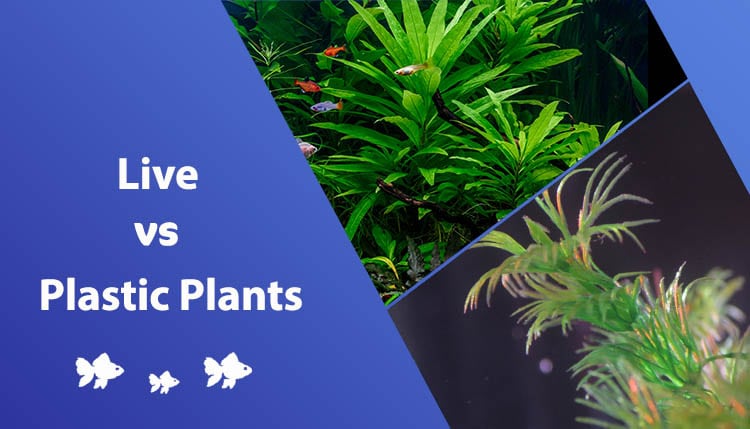
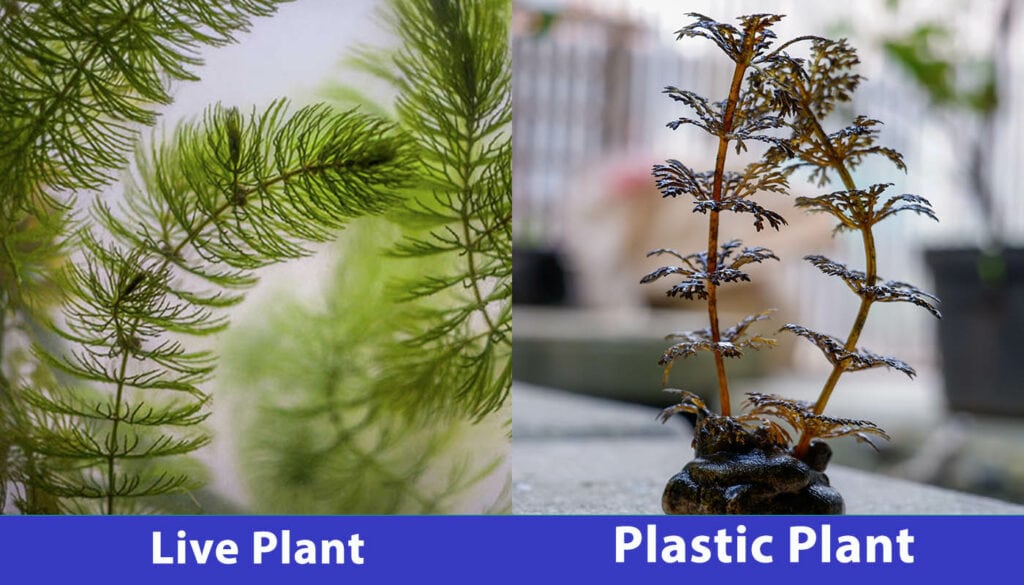
While this may not qualify as an “age-old” question, many people struggle to choose between live and plastic plants for their aquariums. Plastic plants burst onto the scene decades ago, and they’ve only increased in creativity, color, and size since then. However, live plants are more widely available now than ever before. It is tough to choose between the two, especially if you are dealing with goldfish. Goldies are notorious for uprooting and consuming live plants, but there are actually pros and cons to both options.

Visual Differences
At A Glance
Overview of Live Plants
Tank Health
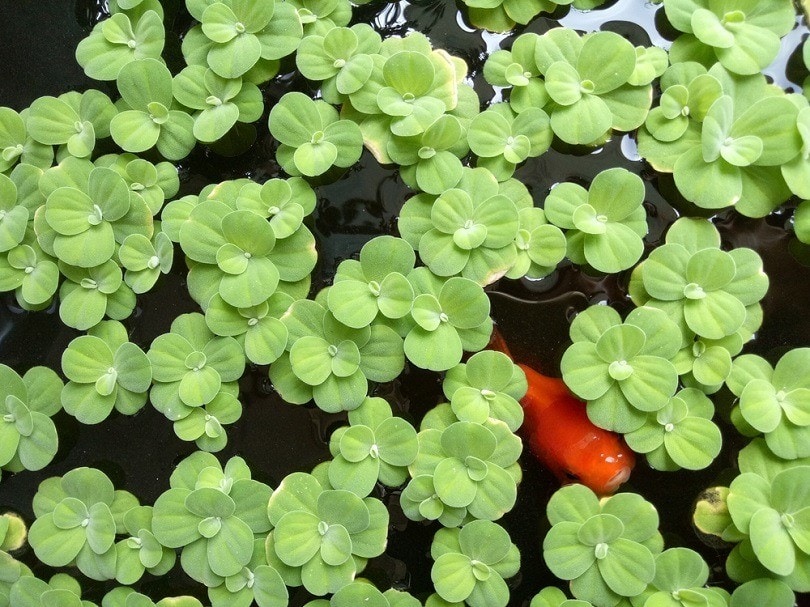
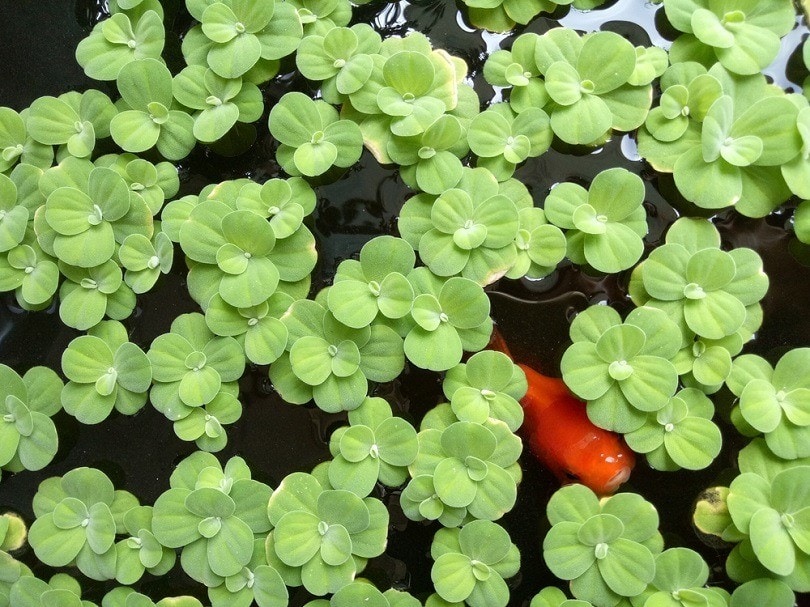
Live plants are an excellent addition to an aquarium because of their ability to positively impact water quality. Plants feed on waste products, especially nitrate. While ammonia and nitrite levels can be controlled with an effective filtration system, nitrates have to be used or removed from the tank, resulting in frequent water changes. Live plants will feed on nitrates in the water, supporting the growth of the plants and increasing the tank health for your goldfish.
On top of that, aquatic plants release oxygen into the water. While goldfish have a labyrinth organ that allows them to breathe surface air, they also need oxygenated water so their gills can pull oxygen from the water. The addition of live plants can improve the oxygen levels in the water, even if your filtration system fails.
Fish Enrichment
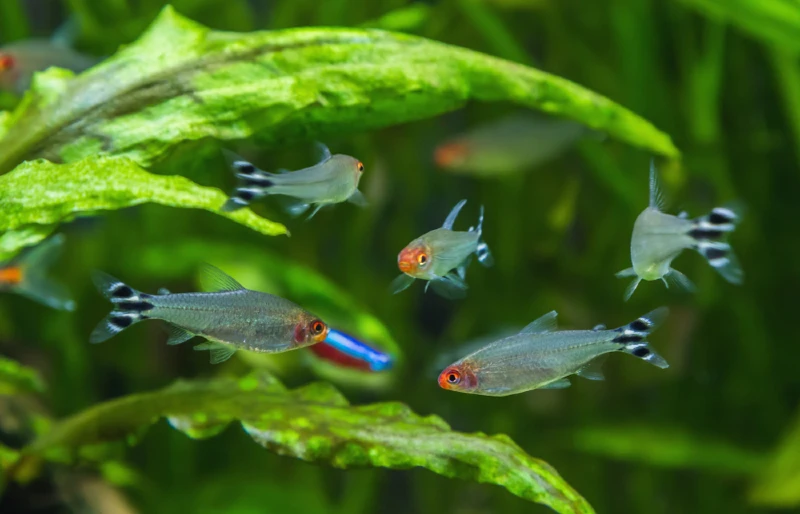
If your goldfish were living in a pond or lake, they would have access to a variety of plants. Live plants make the environment feel more natural for goldfish, which can improve their happiness. Goldfish love to scavenge, and live plants are a great way to support this need through the collection of food on the leaves and in crevices, as well as the plants themselves becoming food.
Live plants can also function as a spawning mop, collecting eggs after fertilization and keeping them safe until they hatch. Those same plants then provide shelter to the fry as they grow.
If you're new to the world of goldfish or are an experienced goldfish keeper that loves to learn more, we recommend you check out our best-selling book, The Truth About Goldfish, on Amazon.
From diagnosing illnesses and providing correct treatments to ensuring your goldies are happy with their setup and your maintenance, this book brings our blog to life in color and will help you to be the best goldfishkeeper you can be.
Cleaning and Maintenance
Over time, algae growth can occur on live plants, although it occurs less frequently than in fake plants. In fact, live plants actually reduce the occurrence of algae, thanks to their ability to remove waste products from the water that algae would otherwise feed on.
When algae growth on live plants occurs, it can lead to the death of the leaves as the algae begins to block the leaves’ ability to synthesize light. Because of this, algae must be controlled on plants. Plants also may require regular pruning, as well as moving and reseating when uprooted.

Overall Appearance
Live plants will enhance the appearance of your goldfish tank by bringing a natural feeling to the environment. This natural feeling isn’t just beneficial for your fish, but it also creates a small oasis in the middle of your home. Some plants, though, without proper management and care, may begin to shed leaves or die, which can detract from the overall look of your tank.
Ecological Impact
When it comes to making a selection that is better for the planet, live plants are the way to go. They are fully biodegradable and replaceable. The important part of owning live plants, though, is to ensure that they aren’t allowed to get out into the natural environment. Some plants can rapidly become invasive if not disposed of properly.
Pros
- Improve water quality
- Support water oxygenation
- Provide enrichment and shelter
- Enhance the appearance of your aquarium
- Eco-friendly option
Cons
- Require routine maintenance
- May detract from the tank’s appearance without proper care and maintenance
- Some can become invasive if allowed out into the natural environment

Overview of Plastic Plants:
Tank Health
When it comes to improving tank health, plastic plants have nothing to offer. They are inert, meaning they aren’t going to release anything into the water that will impact the chemical concentration within the water. In some cases, cheap plants can be produced irresponsibly, resulting in toxic paints and other materials getting into your tank, sometimes even poisoning fish.
Fish Enrichment
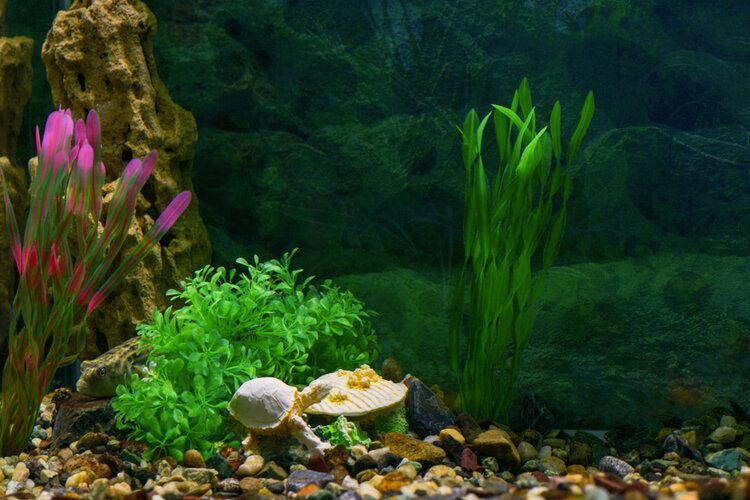
If you’re looking for something to provide your goldies enrichment by creating an environment that feels safer and more natural, then plastic plants can be a good option. However, they won’t fulfill your fish’s desire to scavenge in the same way that live plants will. Of course, the inability of your fish to consume plastic plants means you won’t have to replace them or worry about them dying.
In the same way that live plants can function as a spawning mop, plastic plants can as well. The benefit of plastic plants for this purpose is that they are easier to remove if you are removing the eggs.
Cleaning and Maintenance
While plastic plants may require no pruning or feeding, they do still require cleaning and maintenance. Plastic plants are an ideal breeding group for algae, as well as providing a surface for both good and bad bacteria to adhere to. Plastic plants are easier to clean than live plants since no care has to be taken to ensure the plant survives the cleaning, but make sure you only clean your plastic plants with chemicals that are safe for your aquarium.
Overall Appearance
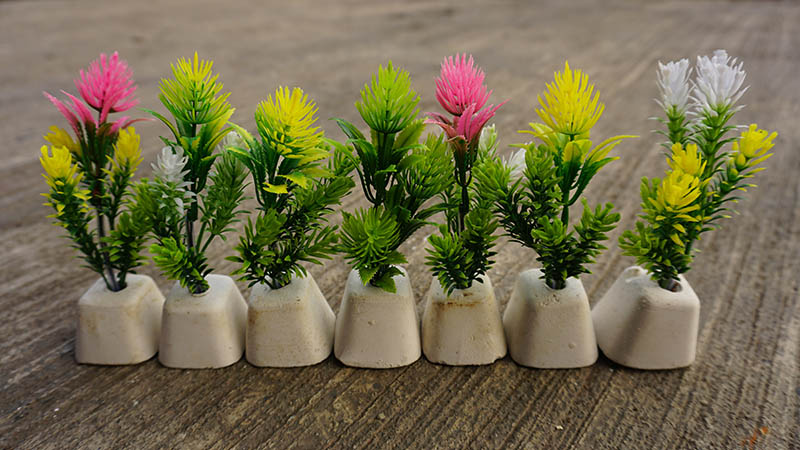
Plastic plants can be very pretty in your aquarium, but they can also look very childish and silly as well. Even in the world of realistic plastic plants, it can be very difficult to find plants that actually look real. In many cases, plastic plants are bright, unnatural colors and shapes, so they give themselves away immediately as not being live plants. Depending on the look you’re hoping to achieve with your tank, plastic plants may be the perfect addition, but they’re definitely not for everyone.
Ecological Impact
We’ve all heard about the damage that plastics are doing to the environment. Even recyclable plastics often end up in landfills and oceans. Unfortunately, plastic aquarium plants simply add to this collection of waste that will never biodegrade, only break down into microplastics. To make things worse, many plastic plants are cheaply made in factories that don’t observe environmentally friendly production practices.
Pros
- Provide enrichment and shelter
- Can easily be moved and removed
- Inedible
- Easy cleaning
- Allow for more creative aquarium designs
Cons
- May worsen water quality in some instances
- Provide fewer scavenging opportunities
- Don’t create a look that everyone will appreciate
- Not an eco-friendly option

Which Should I Choose?
When choosing between live and plastic plants, it’s important for you to weigh all the pros and cons for your own tank. How much time and effort are you willing to put into cleaning and maintenance? Are your goldfish known for uprooting and consuming live plants? If so, are you tired of replacing them? Are you looking for a tank design that is fun and playful, as opposed to natural?
Plastic and live plants both have their place in the world of aquatics, so it’s up to each individual as to which option they feel is better for them. In some cases, you may even be able to combine plastic and live plants to create a completely unique tank. Neither will negatively impact the other, although it may be very obvious which is live and which is plastic.

Conclusion
Overall, live plants take the cake for being the better option, thanks to their ability to improve the environment around them. They’re also fully biodegradable, and, in most cases, live plants are farmed, so they aren’t harming natural environments by being harvested. Plastic plants aren’t good for the planet and won’t improve the water quality in your tank. They are easier to care for, though, and they’re available in many bright and interesting appearances that you can use to create a fun and unique tank.
Featured Image Credit: (T) Bukhta Yurii, Shutterstock | (B) viczanuzzo, Shutterstock
Get Hepper In Your Inbox


Pet care tips from our vets and experts, straight to your inbox.
You may opt-out at any time. View our Privacy Policy for more information.

After nine years as a veterinary assistant, Brooke Billingsley transitioned to a career as a nurse in 2013. She lives in Arkansas with her boyfriend, sharing their home with three dogs, two cats, five fish, and two snails. A dedicated animal lover, Brooke has a special place in her heart for special needs pets, including a three-legged senior dog and a famous cat with acromegaly and cerebellar hypoplasia. Fish keeping is one of her hobbies, and she is constantly improving her knowledge to care for her aquarium pets. Brooke is an active yoga enthusiast, having obtained her 200-hour yoga teacher certification in 2020. She believes in the importance of continuous learning and dedicates time each day to developing new skills and expanding her knowledge.
Join the conversation
Ask a question, share your story, or send private feedback.