Hepper is reader-supported. When you buy via links on our site, we may earn an affiliate commission at no cost to you. Learn more.
Why Do Cats Bite Each Other’s Necks? 6 Vet-Reviewed Reasons


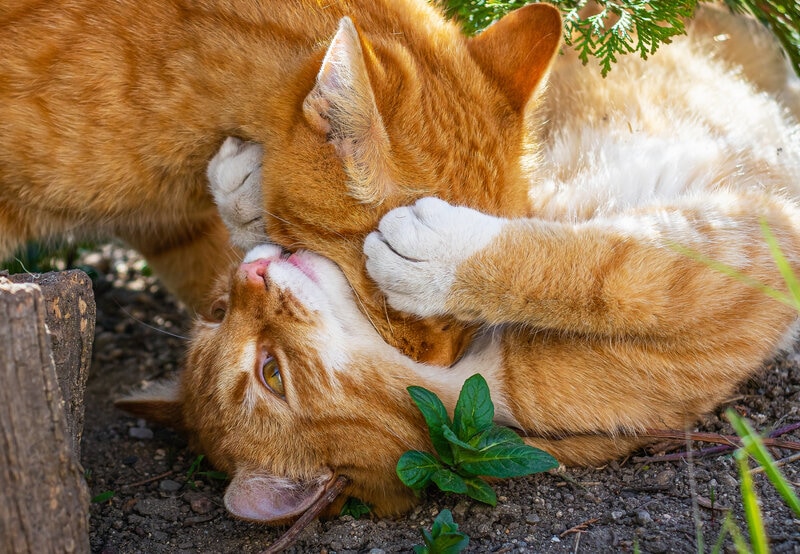
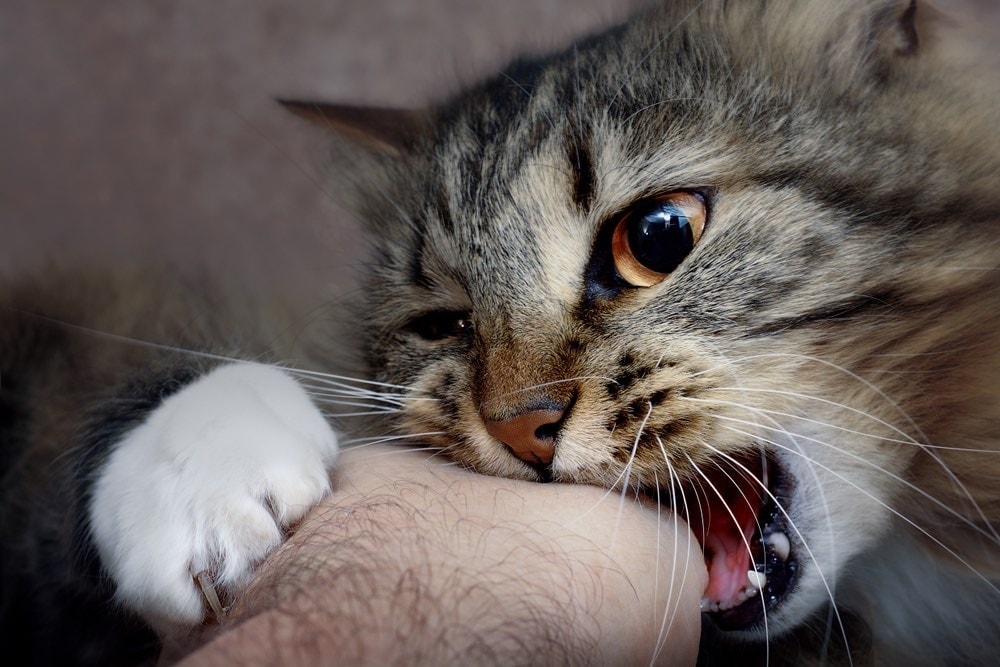
Your cats are just casually hanging out when suddenly, one of them pounces on the other and starts biting their neck. Why on earth is this happening? We know that cats are unique in their ways of doing things. Neck biting is yet another behavior to add to the list.
If you’ve seen your cats engage in this behavior, or perhaps you’ve just watched a video with two cats neck biting, you probably have a few questions. In this article, we'll discuss six reasons that cats partake in this behavior and how you can prevent it from happening, particularly if it seems to be aggressive.

The 6 Main Reasons Cats Bite Each Other's Necks
1. Play Behavior
If you have kittens, you’ll notice them playing in ways that mimic aggressive and hunting behavior. They stalk, pounce, bite, claw, and jump on other kittens and objects.
This kind of play teaches them the essential hunting and communication skills that they need when they become adults. When they attack their siblings, they learn important social cues and information about the world around them, though they can sometimes be overexuberant.
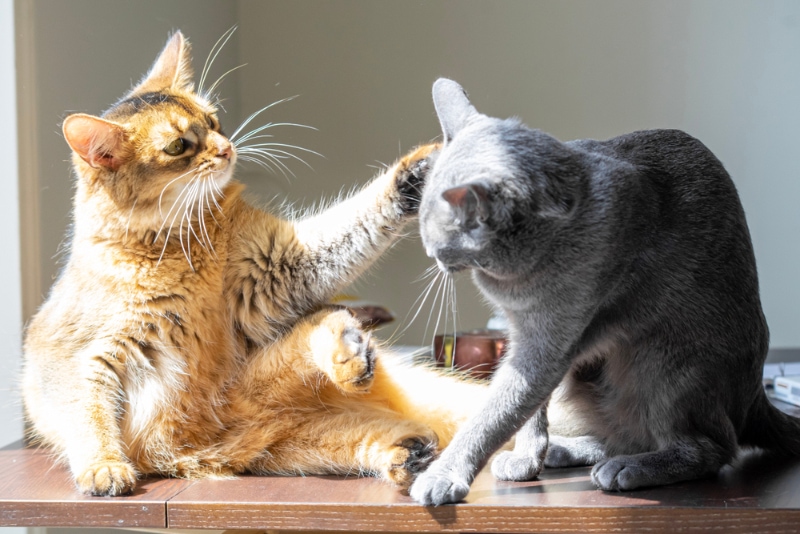
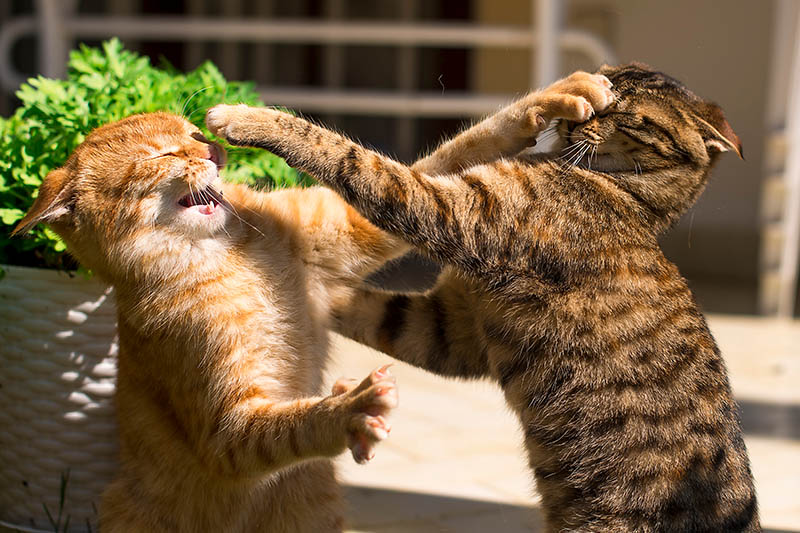
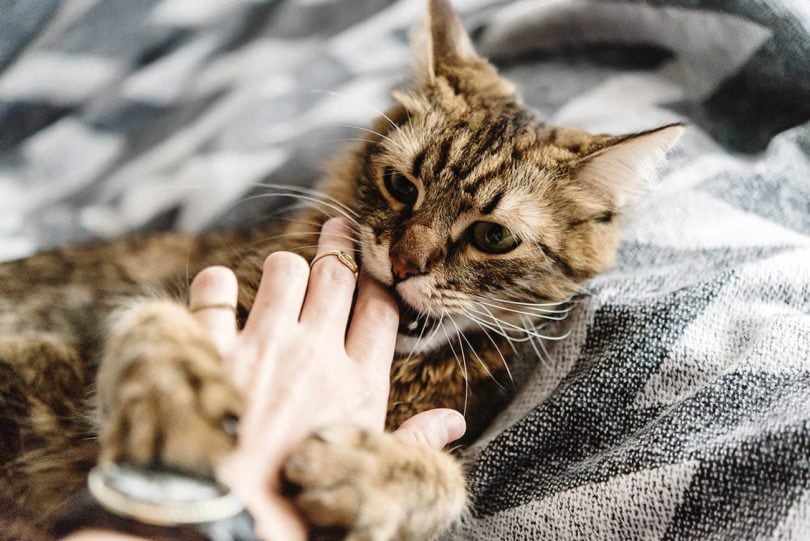
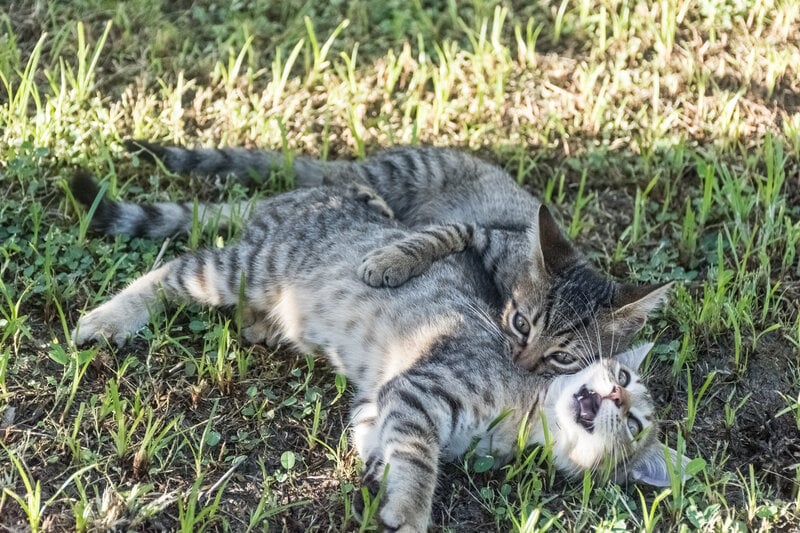
Neck biting can occur during these playfighting sessions, and while most cats will outgrow this behavior, some will not. If two siblings bite each other’s necks but don’t demonstrate any real aggression, they are play-biting.
2. Mating Behavior
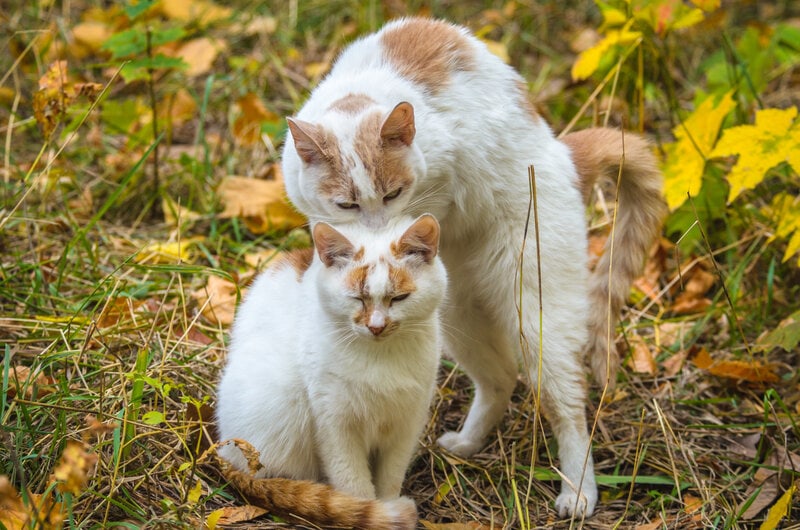
When an intact male mates with an unspayed female, the copulation is brief, noisy, and seemingly aggressive. During the act, the female will scream at the male and attempt to either escape or attack him, so the tom bites the back of her neck. This helps hold her in place and ensures his safety until he’s finished.
While this behavior is normal under these circumstances, sometimes spayed and neutered cats will still take the mating stance, even with cats of the same sex. This might happen because they are exerting dominance or because they enjoy it. You might even notice this behavior directed toward toys or other pets.
3. Showing Dominance
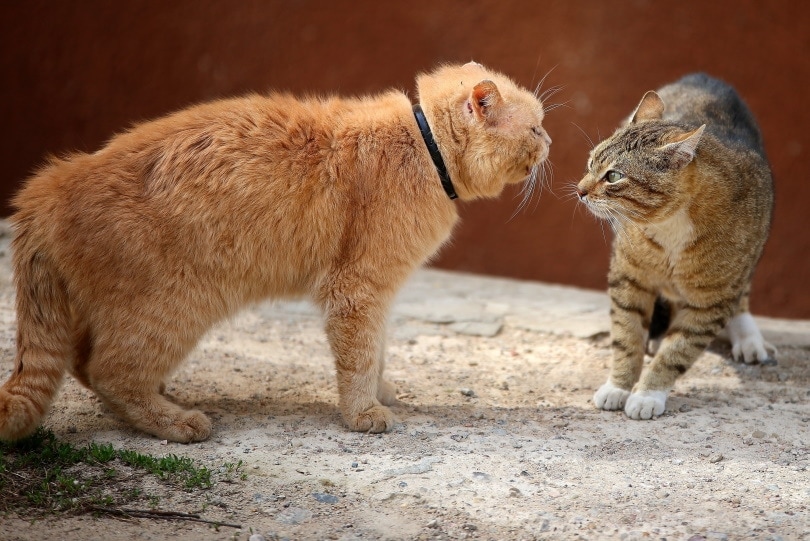
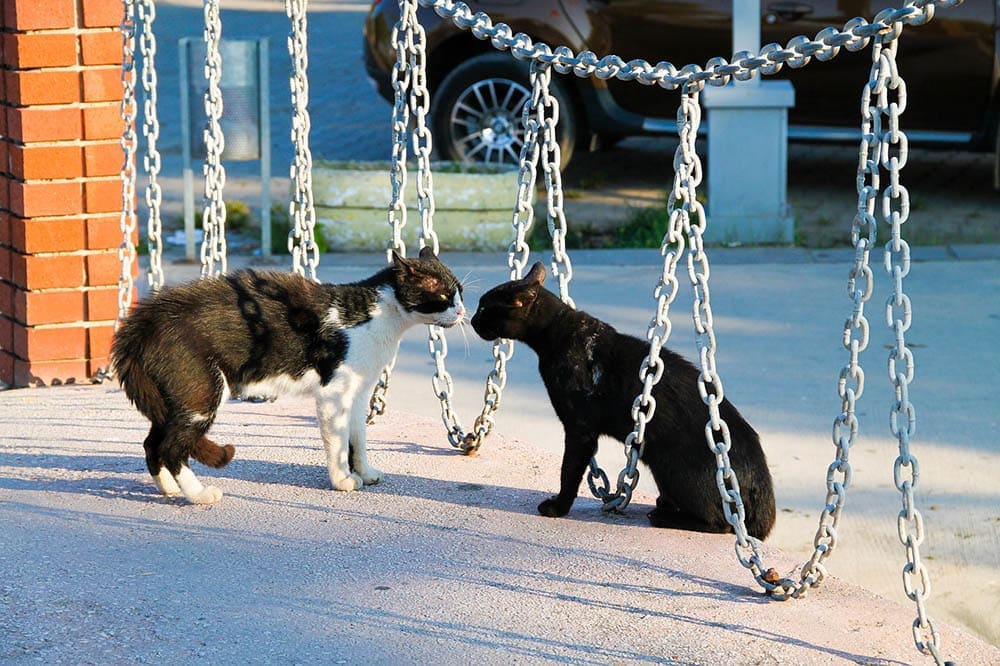
In some cases, when a cat shows dominance over another cat, it happens because a new cat has been introduced into the household. This behavior can occur inside or outside when a cat is claiming territory. The neck is easy to reach and a common target due to their hunting instincts.
This instinct to dominate also shows up between two cats that know each other well. As long as the cat being bitten doesn’t seem to be in pain, it’s usually a combination of play and dominance.
4. Hunting Instincts
The neck is one of the most vulnerable areas for hunting purposes. All predators go for the neck when attacking prey. Grabbing another animal at the neck can sometimes be the result of inborn hunting instincts kicking in.
These instincts are typically more common in younger cats because it’s a part of learning about hunting. When cats get carried away with playing, their predator urges might kick in, though usually without causing damage or pain to the other cat.
5. Fighting for Resources
Neck biting might manifest as aggression over toys, food, or attention. This is part of the “showing dominance” side of neck biting. A dominant cat can claim resources as their territory because they feel like they are protecting their belongings.
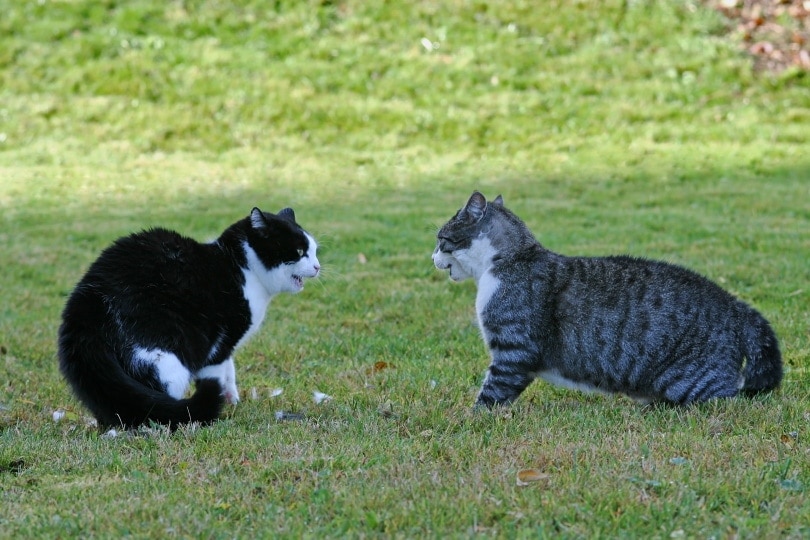
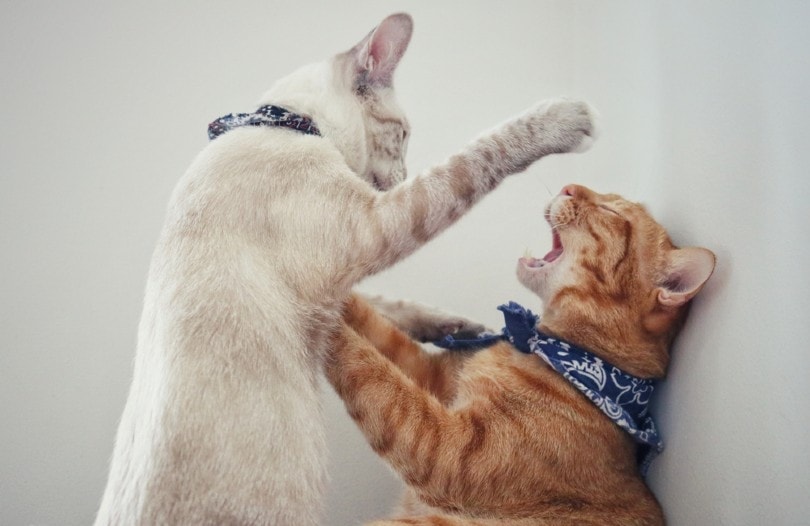
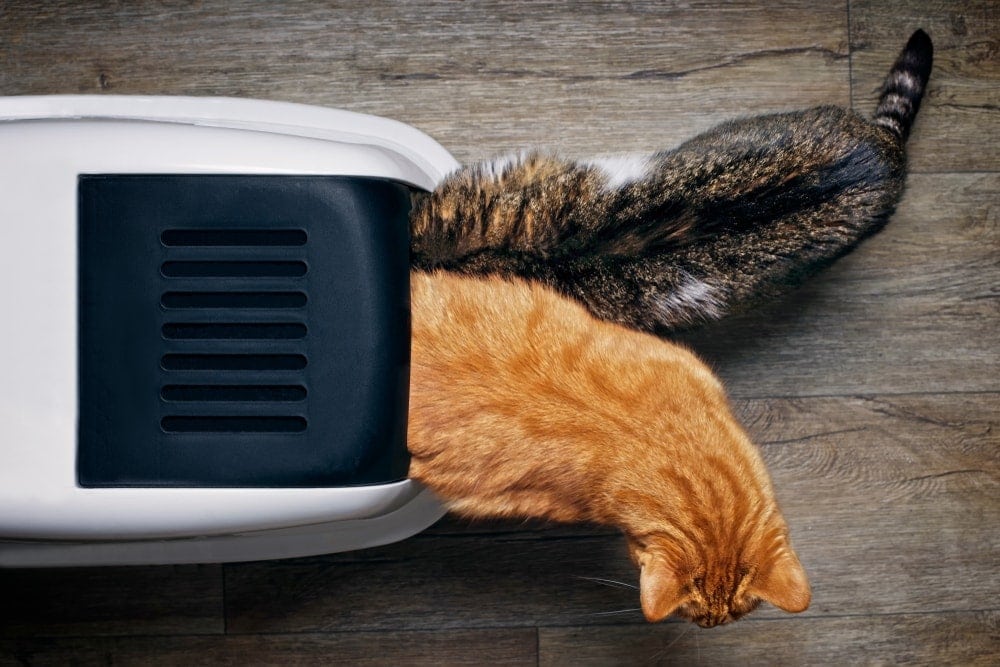
However, the neck biting might also be accompanied by hissing, yowling, and full-on fights, which go beyond play and into aggression. If one cat seems to be protecting the litter box or bites when you’re petting the other cat, you’ll need to address the issue.
6. Medical Reasons
You should only worry if your cat has started neck biting and has become more aggressive lately. If your cat seems to have had a sudden behavioral change, it could be from a medical problem. A cat in pain can direct it toward another cat through redirected aggressive behavior.
Some medical conditions, such as hypothyroidism, hormonal imbalances, and cognitive problems, can all result in aggression. If you notice a sudden change in your cat’s behavior or mood, immediately make an appointment with your vet.
How Can You Stop Aggressive Biting?
There are a few steps that you can take if you’re worried about neck biting, particularly if it seems more aggressive and less playful. Sometimes, you might need to speak to your vet or an animal behaviorist.
- Learn to recognize the precursors. The best way to deal with aggressive behavior is to prevent it. A crucial step is learning to recognize the precursors of aggression by understanding what triggers it and knowing the steps that can be taken in order to avoid and redirect it.
- Don’t reward. It’s best to try to stop the behavior before they start biting. If you give a treat to a cat after an attack, they will believe you’re rewarding their behavior.
- Don’t punish. Remember that punishment will not work with cats. They will only grow to fear and resent their owners, and they might also take it as an invitation to act more aggressively.
- Be consistent. Make sure everyone in your household knows the rules and consistently follows them. Your cat might get mixed messages, which means the lessons won’t work.
- Keep them busy. Provide several toys they can chase, bite, hunt, or kick instead.
Or, if you're thinking of getting your cat something a little different, that entices play and looks like a modern piece of furniture in your home, you might think about giving our Hepper Hi-Lo Cat Scratcher a try! Its curved design targets a full range of motion, and with three height configurations and a durable design, you can be sure your cat is getting the exercise, height, and adventure they naturally desire. Click here to learn more about our innovative, functional, and funky, Hi-Lo cat scratcher.

- Premium Materials - Hepper's cardboard scratcher is made with dense, B-flute cardboard, and a metal core. Encased in a 1/2" plywood frame with gloss coating. Stable and beautiful, use after use
- High, Low and Lower - A single cat scratch pad won't keep your cat engaged. 3 unique positions keeps them coming back, and back, and back again. Finally, something to get them away from the couch!
- Activates Muscles - The Hi Lo isn't just a cat nail file to stop the chief cat couch scratcher. The deep cat scratcher wave encourages maximum musculoskeletal activation for a healthier workout
Conclusion
In many cases, cats might just be playing a little rough, which is normal behavior and nothing to worry about. If you notice more behavioral changes and the cat is becoming more aggressive, contact your vet for an examination to determine if they have a health problem.
If this behavior starts suddenly but you’ve also brought a new pet into the home, it could be a dominance and territorial issue. Keep an eye on the situation, and only step in if things seem to be getting out of hand.
As long as the cats aren’t screaming and hissing and there isn’t any fur flying, they are just playing. Cats have a unique way of showing love and affection, not only with other cats but also with their people.
Feature Image Credit: Michael Cabal, Shutterstock
Get Hepper In Your Inbox


Pet care tips from our vets and experts, straight to your inbox.
You may opt-out at any time. View our Privacy Policy for more information.
Kathryn was a librarian in a previous lifetime and is currently a writer about all things animals. When she was a child, she hoped to work in zoos or with wildlife in some way, thanks to her strong love for animals. Unfortunately, she's not strong in the sciences, so she fills her days with researching and writing about all kinds of animals and spends time playing with her adorable but terribly mischievous tabby cat, Bella. Kathryn is hoping to add to her family in the near future – maybe another cat and a dog.
Join the conversation
Ask a question, share your story, or send private feedback.