Hepper is reader-supported. When you buy via links on our site, we may earn an affiliate commission at no cost to you. Learn more.
Why Do Cats Eat Grass? Vet Approved Science-Based Facts & FAQ


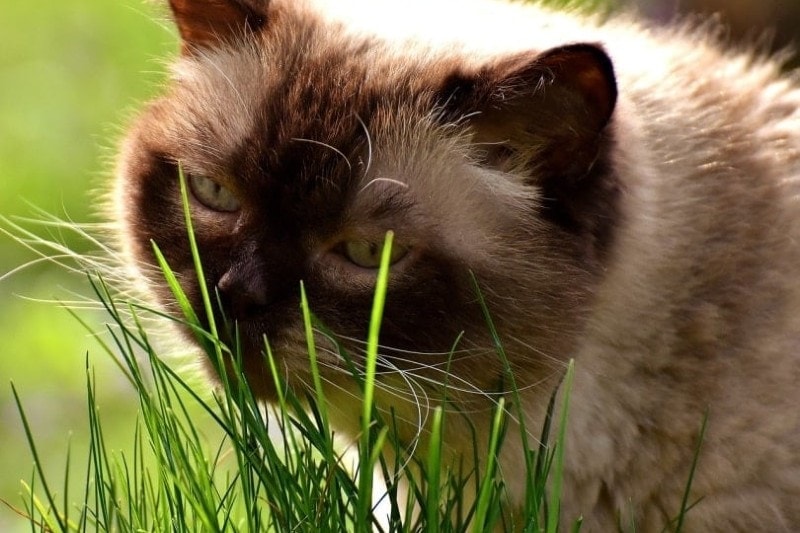
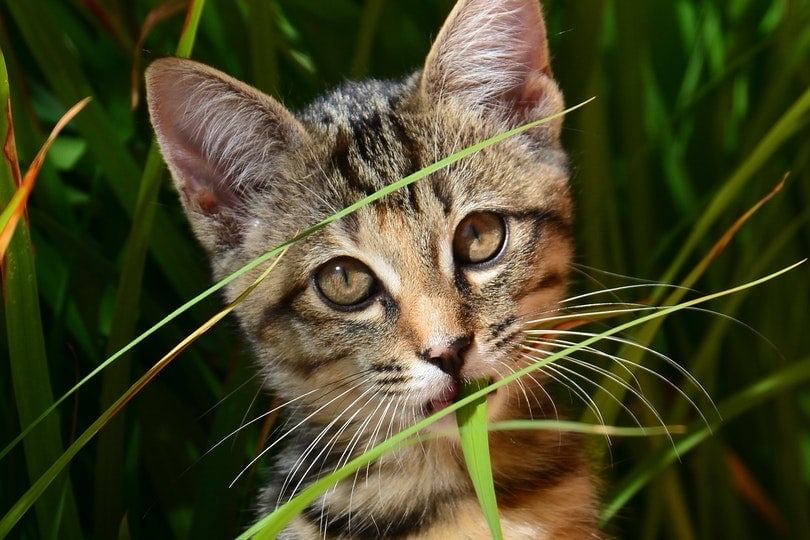
Cats can exhibit some quirky and questionable behaviors now and then because well, they’re cats! If you’re a cat owner, you’ve probably noticed your feline friend munching away at grass every once in a while, and wonder why?
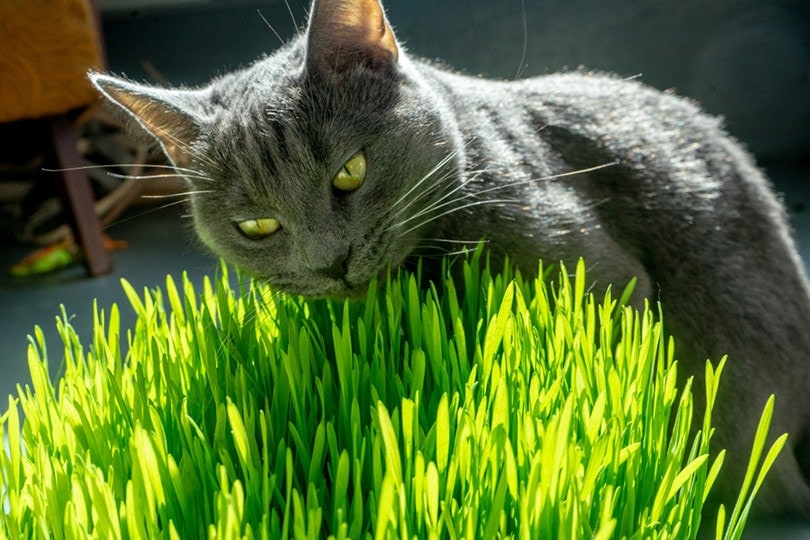
It’s perfectly normal for cats to eat grass and most cats do it. The main reason scientists believe cats eat grass is because it is instinctive and may have helped support their overall health by expelling intestinal parasites. Here are a few more reasons why cats may enjoy eating grass, and a few anecdotal ones that don’t yet have scientific backing.

It’s an Evolutionary Trait
Scientists now believe that cats are eating grass as part of their instinctual behavior, possibly to help them get rid of intestinal parasites.1 Grass is a source of indigestible fiber that increases gut motility and contraction of the smooth intestinal muscles, which may assist in expelling parasites. Most of these cats were not sick prior to eating grass, nor after, and eating grass no longer seems to be associated with a stomach upset. Researchers believe this trait is inherited from their feline ancestors.
Cats appear to eat less grass than dogs, and they may have less parasitic burden than dogs, as they tend to bury their poop, while dogs are notorious for eating other dog’s feces, infesting themselves with parasites.
It May Help Some Cats Vomit Other Things They’ve Eaten
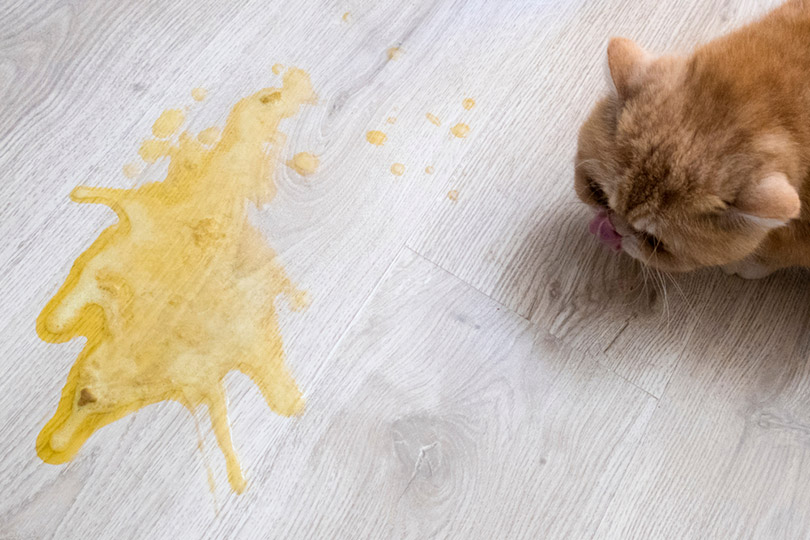
The stomach of a cat does not contain the enzymes needed to break down and digest grass. This is why some cats may vomit up the grass they’ve eaten, or at least part of it, particularly if they have overeaten grass. Together with the grass, comes other things they can’t digest like inedible parts of prey such as bones and fur and hairballs. Based on the previously mentioned research, it seems that only around 27% of cats actually vomit after eating grass.
The next time you’re grossed out by your cat throwing up a chunk of fur and bone, consider that your cat may have eaten some grass to help them vomit up those inedible parts of prey, as disgusting as it may be!
It May Help Them Poop
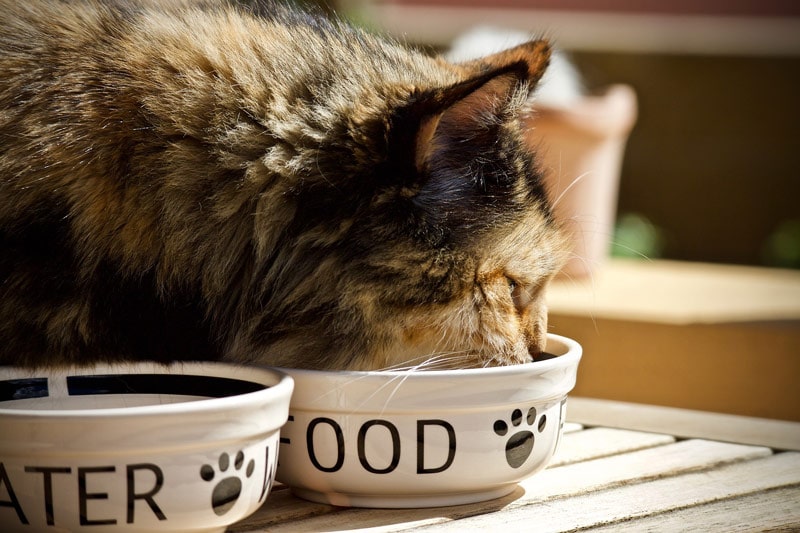
Sometimes cats may eat something they can’t digest properly, and instead of regurgitating, it moves through the digestive tract, so passing it out might be a challenge. When this happens, one yet unproven theory is that cats may eat some grass to help them poop. It’s not all that different from humans eating things like fibrous bread or salads to help us move our bowels.
When a cat eats grass, the grass may work as a natural laxative due to the fiber it contains.
Grass Contains Folic Acid That Supports Good Health
Many experts believe that cats benefit from eating grass because it contains folic acid, which is a B vitamin. Folic acid helps the body build hemoglobin, a compound responsible for carrying oxygen in the red blood cells, and grass is full of it.
Eating Chemically Treated Grass is Not OK
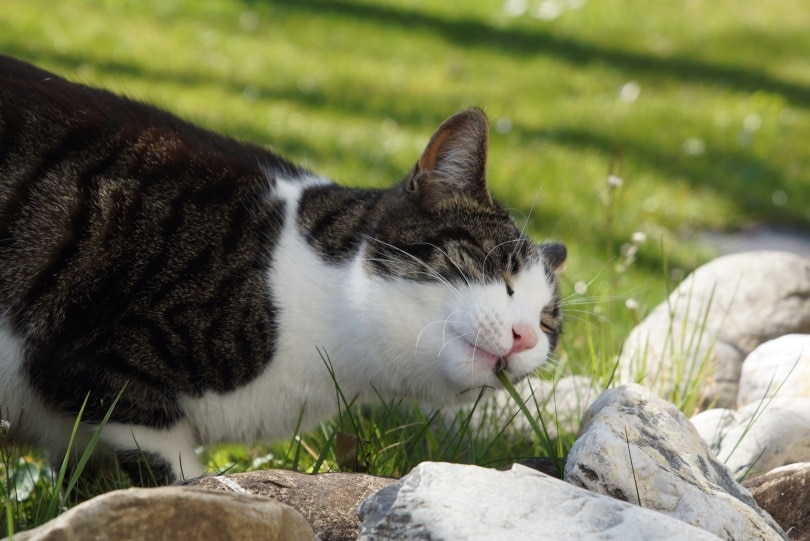
It’s safe for cats to graze on grass unless the grass has been sprayed with fertilizers or chemicals. If your cat is allowed out in your yard, don’t spray your grass with fertilizer to make it grow long and lush or treat it with any chemicals. This way, you’ll know that the grass your cat is grazing on is safe to eat.
If your cat roams freely around the neighborhood, there’s not much you can do about monitoring their grass-eating behavior. You’ll just have to keep an eye on your cat to ensure they’re feeling healthy. If your cat seems to be in pain, is lethargic, or exhibits some other unusual signs, get them to the vet right away.
Indoor Cats Can Be Given Cat Grass
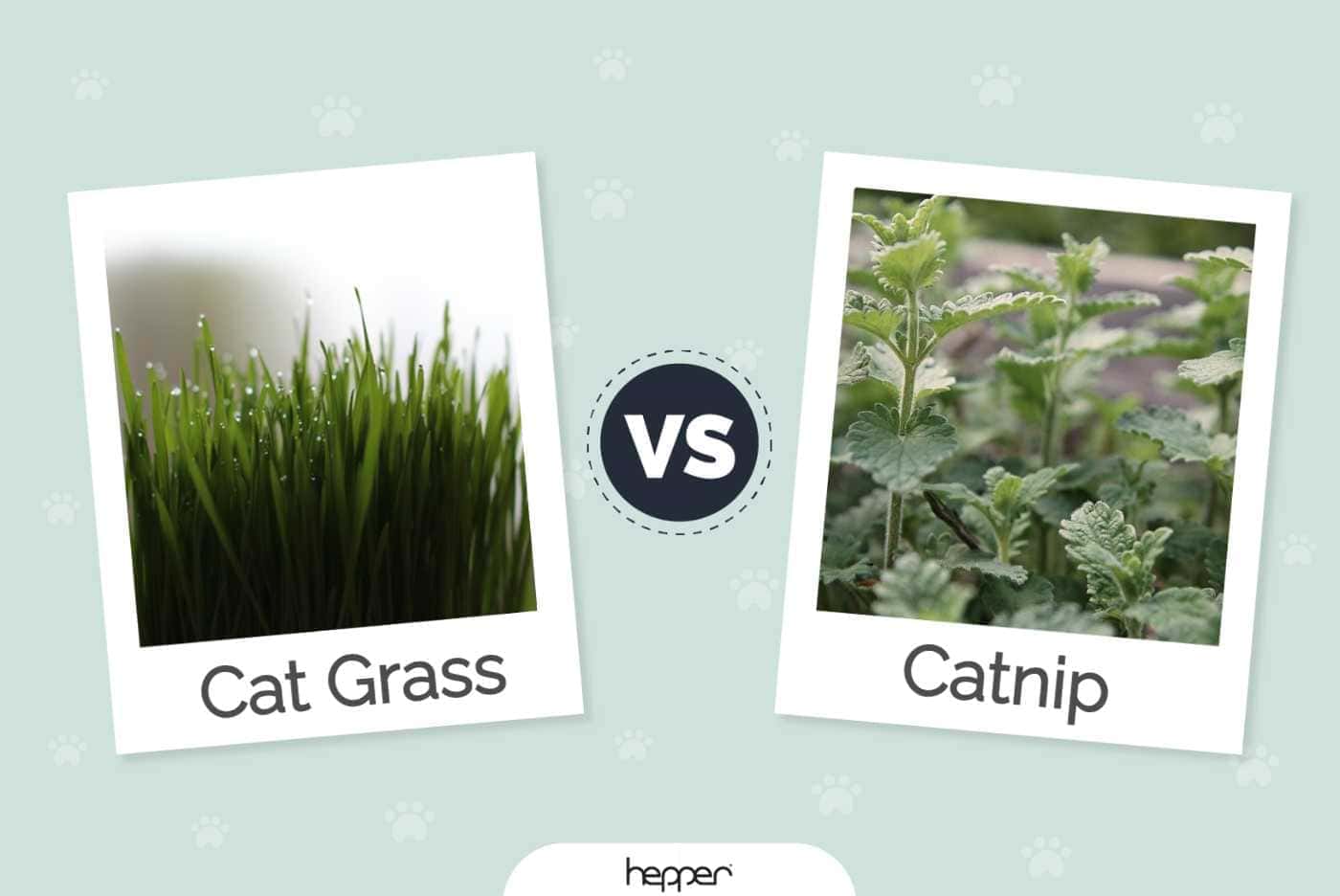
If you have an indoor cat that never has the chance to munch on a little grass, we’ve got a helpful tip! You can buy a cat grass growing kit and grow your own grass in just a few short days. This type of kit is easy to use and it’s a safe alternative to outdoor grass with zero harmful chemicals.
Your indoor kitty cat will love having some fresh green grass to munch on whenever they like! This type of grass is a good source of vitamins and minerals cats need to maintain good health so do your feline friend a big favor and grow some cat grass!
Related Reads:
Featured Image Credit: Alexas Fotos, Pixabay
Get Hepper In Your Inbox


Pet care tips from our vets and experts, straight to your inbox.
You may opt-out at any time. View our Privacy Policy for more information.
Nicole is a lover of animals of all sizes but is especially fascinated with the feline variety. She’s the proud mom of Baby, a Burmese, and works every day so he can relax in the sunshine or by the fire. She’s always had a cat in her home and has spent countless days with others, observing behaviors and softening up even the grouchiest of the lot. Nicole wants to share her kitty expertise with you so you and your cat can live happy, healthy, and care-free.
Join the conversation
Ask a question, share your story, or send private feedback.