Hepper is reader-supported. When you buy via links on our site, we may earn an affiliate commission at no cost to you. Learn more.
Why Do Dogs Lick Their Wounds? 4 Vet-Verified Reasons & When to Stop It


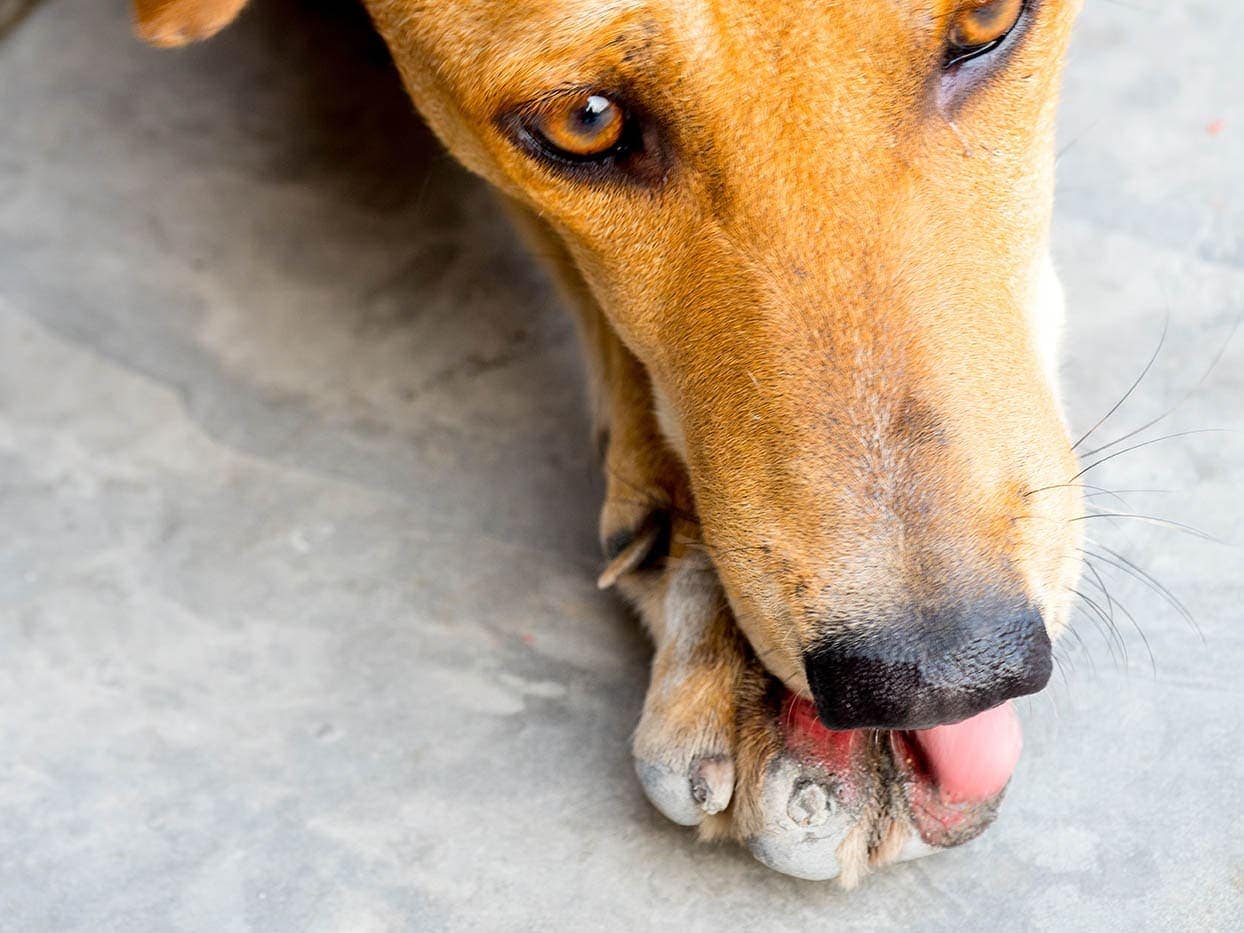
If you have a pet dog, you’ve likely seen him lick his own wounds and maybe even yours. It’s even likely that you’ve watched your dog repeatedly lick one area or spot on his body for an extended period of time before you realized he was actually licking a wound.
Whether it was a cut, bite, or puncture wound, your dog was licking that wound seemingly obsessively for a reason. Here are four of the most common reasons your dog licks his own wounds and yours.

The 4 Reasons Why Dogs Lick Their Wounds
1. Licking is Instinctual
Anyone familiar with dogs knows that they all have their own personalities. Despite each dog being unique, there are some traits and behaviors they all have in common. Some traits seen in dogs come from years’ worth of instincts, long before dogs were domesticated to become a part of our families. After tens of thousands of years, your four-legged canine friend cannot shake the wild instincts ingrained in him.
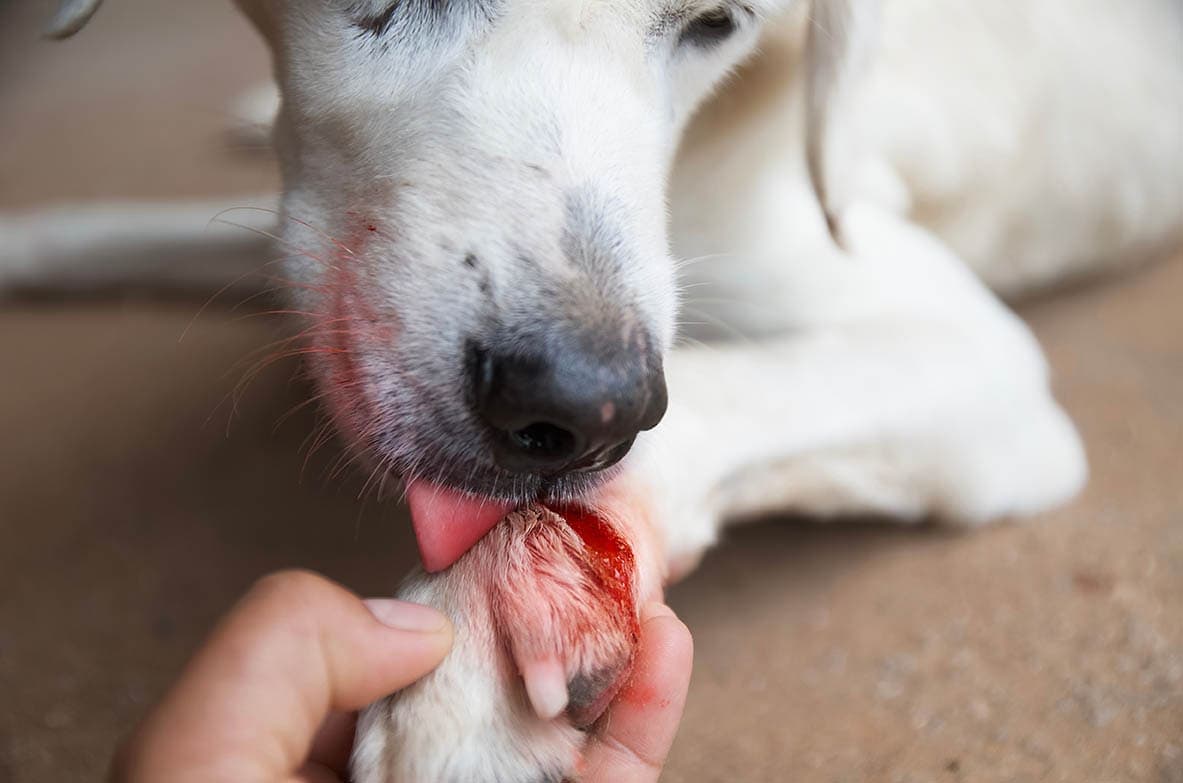
Licking is a common dog behavior stemming from wild instincts. In other words, it’s natural for a dog to lick his wounds and even yours. Dogs, like people, have instinctual behaviors designed to help them survive. When your dog licks a wound, he’s doing it out of instinct to clean the wound to help it heal. A dog instinctively knows that an unattended wound can lead to extreme illness, weakness, vulnerability, and even death.
2. A Dog’s Mouth is His Only Tool
Unlike us humans, who have two hands to attend to our injuries and wounds, the only tool a dog has is its mouth. When you stop and think about it, your dog uses his mouth for many important functions, including barking, chewing food, showing affection, grooming, and cleaning wounds.
3. Licking is a Soothing Behavior
One possible reason a dog licks their wounds is that it's soothing. By licking its wounds, a dog can calm themself down, alleviate stress & anxiety.
4. To Remove Debris
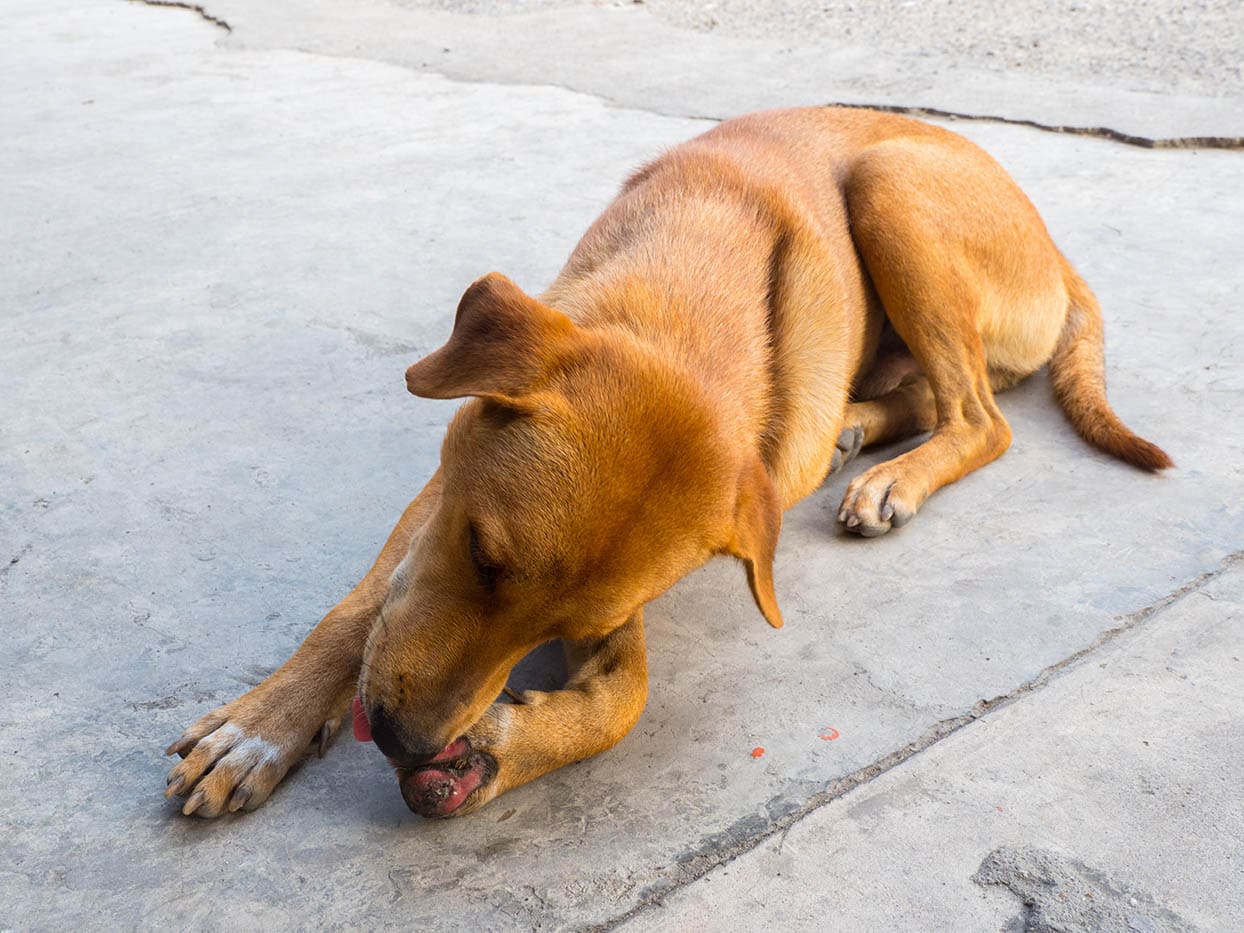
Dogs often lick their wounds in an attempt to clean them and remove debris. While dog saliva does have some mild antibacterial properties, it is not recommended to allow a dog to lick a wound in an attempt to “disinfect” it. In fact, dog saliva can harbour potentially harmful bacteria such as Staphylococcus aureus, Capnocytophaga canimorsus, Salmonella, and Pasteurella multocida, which can increase the risk of wound infection.

What to Do If Your Dog Tries to Lick Their Own Wounds
As explained above, licking a wound can be detrimental. It may transfer pathogenic bacteria and create a moist environment that can delay healing.
There are a few things you can do to prevent your dog from licking their wounds. These methods range from distractions to using behavior modification to putting a special collar on your dog.
1. Use a Special Collar
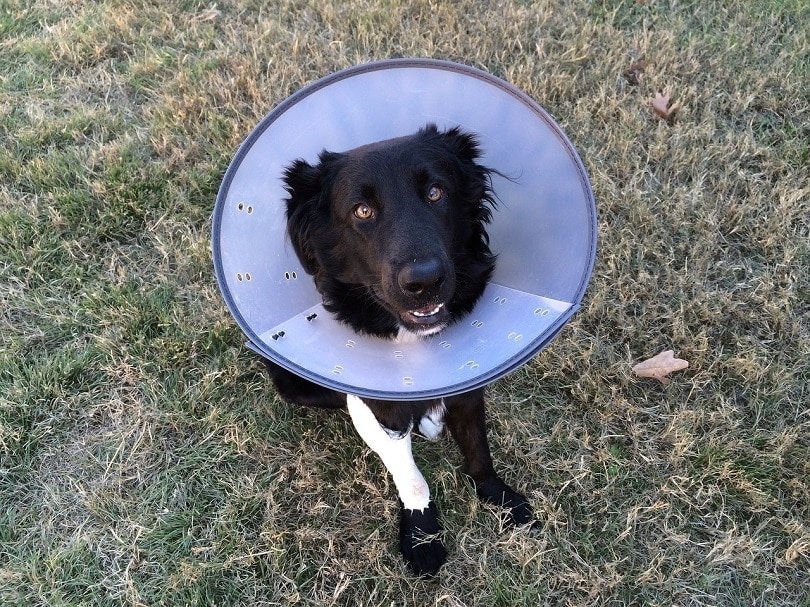
You’ve probably seen those big, round plastic collars on dogs. They’re big and have to be adjusted and modified so they are always longer than your dog’s nose. Called Elizabethan collars in the veterinary world, but often referred to as the “cone of shame”, these cone-shaped collars are designed to prevent dogs from licking wounds.
If your dog won’t tolerate wearing a plastic collar, look for a less bulky one that’s made of a soft foam material. You can also find inflatable donut-style collars. Regardless of what type you choose, it’s important that it fits properly and prevents your dog from reaching the wound with his tongue.
2. Apply a Bandage to Their Wound
You can apply a bandage to your dog’s wound to prevent over-licking. While a bandage is a great lick-deterrent, many dogs won’t tolerate wearing them. The only way to find out if your dog will put up with having a bandage on his wound is to try. If he lets the bandage be, then great! If he starts chewing the bandage, discourage the chewing or try another method.
3. Keep Your Dog Distracted
Another way to stop your dog from licking their wounds is to keep them distracted. You can do this by taking a walk with your dog, playing with a new toy, or getting your dog one of those puzzle treats he has to work at.
4. Use a Bitter Spray
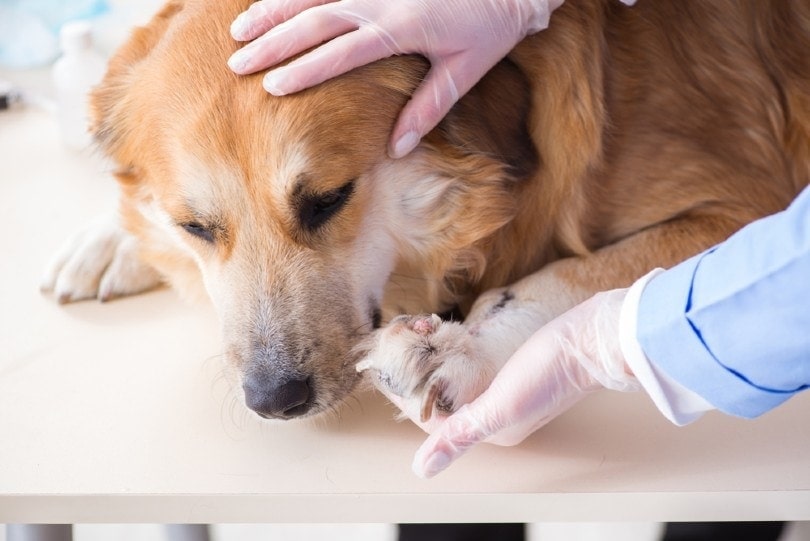
Many dog owners have luck with bitter-tasting sprays designed to deter dogs from licking. These sprays are safe to use as often as needed. The only problem with these products is that they don’t always stop a determined dog from licking. Some dogs will continue licking regardless of what something tastes like.
Whatever method you decide to try, if your dog is licking their wound, don’t just ignore them or expect them to leave the wound alone. That’s simply not going to happen. As soon as your dog becomes bored, he’ll begin licking the wound just to have something to do. A bored dog can do a lot of harm to a wound in a matter of minutes. That’s why you need to keep your eyes peeled and discourage the licking the best way you can.
You might also be interested in: Why Does My Dog Lick Metal Objects? Should I Worry?
Featured Image Credit: Wichaiwish, Shutterstock
Get Hepper In Your Inbox


Pet care tips from our vets and experts, straight to your inbox.
You may opt-out at any time. View our Privacy Policy for more information.
Nicole is a lover of animals of all sizes but is especially fascinated with the feline variety. She’s the proud mom of Baby, a Burmese, and works every day so he can relax in the sunshine or by the fire. She’s always had a cat in her home and has spent countless days with others, observing behaviors and softening up even the grouchiest of the lot. Nicole wants to share her kitty expertise with you so you and your cat can live happy, healthy, and care-free.
Join the conversation
Ask a question, share your story, or send private feedback.