


If you find that your dog urinates in your bed frequently, you will need to find out why in order to reduce and eventually stop the behavior. The reasons can include anything from not being properly housebroken to having a medical condition that needs to be treated by a vet. In this article, we dive into the possible reasons your dog may be peeing in your bed and how you can address the problem.

The 4 Possible Reasons Why Your Dog is Peeing in Your Bed
1. Your Dog Is Excited or Frightened

Oftentimes, young dogs and especially puppies can easily get excited and may not be able to control themselves, leading to a bit of an accident. And this accident may occur when they’re on your bed. Generally, it’s followed by a somewhat submissive body language, with the puppy often lying on their back, exposing their bellies, or sitting down and wagging their tails.
It’s important not to get mad or yell at them, as this will only worsen the situation. Instead, use positive reinforcement to teach them where it’s appropriate for them to use the toilet, while trying to ignore their excitable behavior until they calm down.
On the other hand, frightful and anxious dogs may urinate on the bed when they feel scared and stressed, either due to noise, visitors, being told off, or other sudden and uncomfortable changes in their environment.
2. Your Dog May Have a Medical Condition
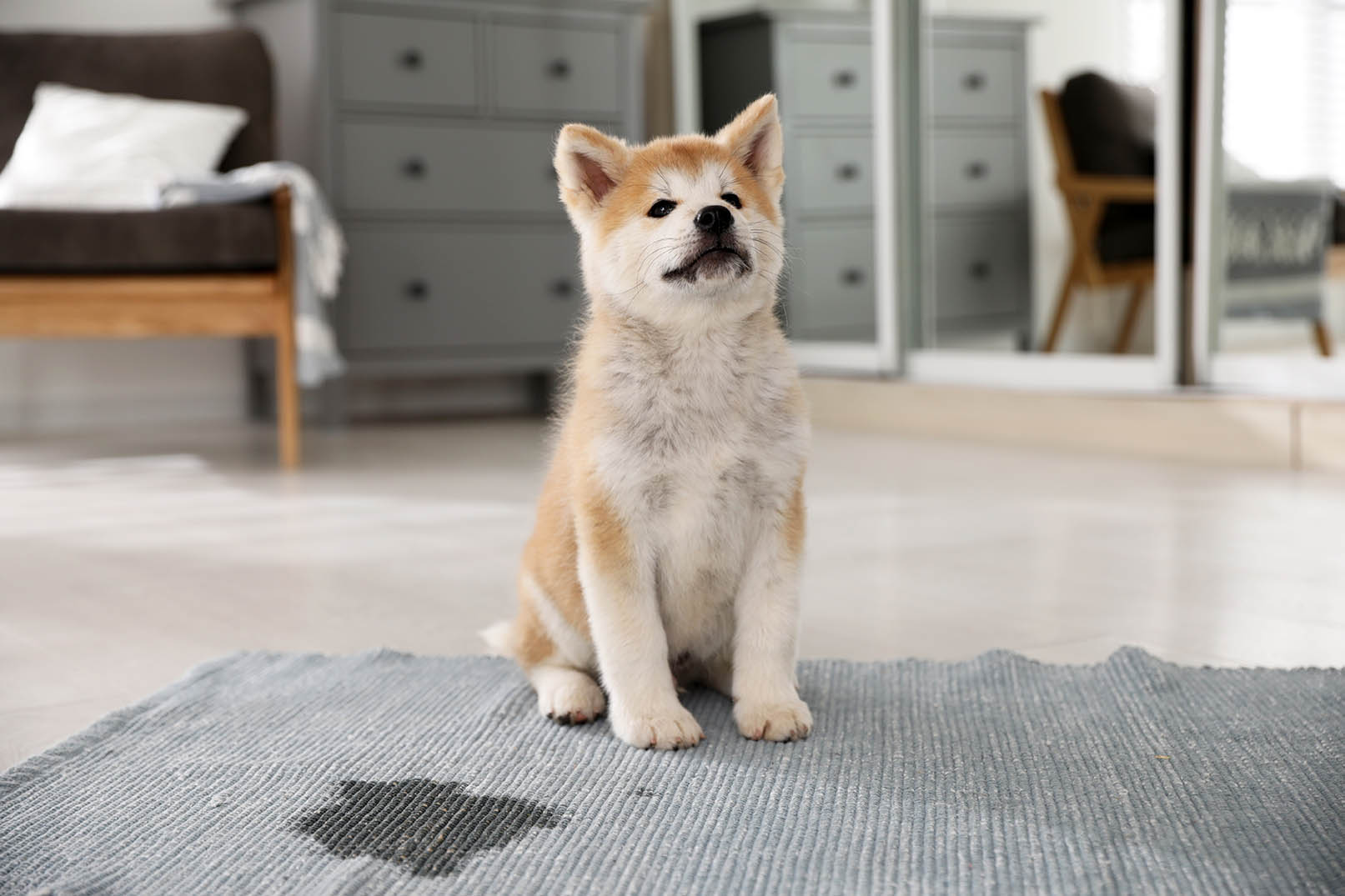
One possible explanation for your dog peeing in your bed could be a urinary tract infection (UTI). This can cause pain while peeing and an urge to urinate more often than normal. The vet can help treat a UTI, which should resolve the problem.
Another medical condition that could cause frequent urination is diabetes. Your dog could be a diabetic if you find that they are frequently peeing — not just in your bed, but in general. Diabetes is accompanied by other signs, such as an increase in thirst and appetite, and weight loss. Be on the lookout for these other signs if you suspect that your dog may have diabetes, and promptly see a vet for diagnosis and treatment. There are other conditions, such as an endocrine disorder called Cushing’s disease, which can also increase a dog’s drinking and cause excessive peeing, increasing the likelihood of accidents.
3. Your Dog Is Not Properly Housetrained
Perhaps your dog never fully became housebroken when they were a puppy, and now they are unsure of where they actually can and cannot urinate. Luckily, your dog can still become housebroken even after leaving puppyhood. You just need to take them back to basics with plenty of patience and time. Use positive reinforcement and reward them for peeing and pooping outdoors. It’s likely to take some time, and there may be accidents again, which shouldn’t set you off. During training, make sure to take your dog out frequently, praise them, and offer treats for every toileting outside. In the meantime, you may want to keep them out of your bedroom and take them out for late-night and early morning toilet breaks. Reintroduce other areas of the house as the training becomes consistent and successful.
4. Your Dog May Be Marking
“Marking” is done by male dogs after adolescence and into adulthood as a way to claim territory, but females can do it too. Your dog may be marking your bed as a territorial stance to claim their spot. They may also mark other areas of your house. If this is the case, you need to take your dog back to the basics of housebreaking as outlined above to make sure they know where to urinate. This should be done with consistent training using positive reinforcement, and never punishment, which is likely to only make things worse.
If your dog is peeing on your bed, you need to first rule out medical conditions, stress, or anxiety. Take them to see a vet to get them cleared. Once you do that, consider whether your dog could be marking or if they simply need a refresher on Housebreaking 101. Regardless of what the issue ends up being, you need to make sure to use an enzyme-based cleaner to remove the stain and odor from previously marked places in your house and in your bed. The scent will linger if it’s not cleaned properly. Even if you don’t smell it, your dog does, and they may continue to urinate in the same places as a way to keep their territory marked or because they are used to using this place to urinate. Using an enzyme-based cleaner will help get rid of those marked areas.

Finally
If your dog is peeing in your bed, it’s important to be vigilant and get down to the bottom of the issue as soon as possible. Your vet can help rule out medical issues and can discuss common stressors and causes for anxiety, while behavioral causes may require a return to training with plenty of patience, dedication, and positive reinforcement.
Related Reads:
- How to Stop a Dog From Urinating in a Certain Spot Outside
- How to Stop Your Dog From Peeing in Their Crate (8 Simple Steps)
Featured Image Credit: cunaplus, Shutterstock
 The 4 Possible Reasons Why Your Dog is Peeing in Your Bed